What Did Anthony Bourdain Say About San Sebastian?
What Anthony Bourdain said about San Sebastián in Spain's Basque Country: his verdict on the city, the pintxo bars he made famous, and how to eat the city the way he told viewers to.
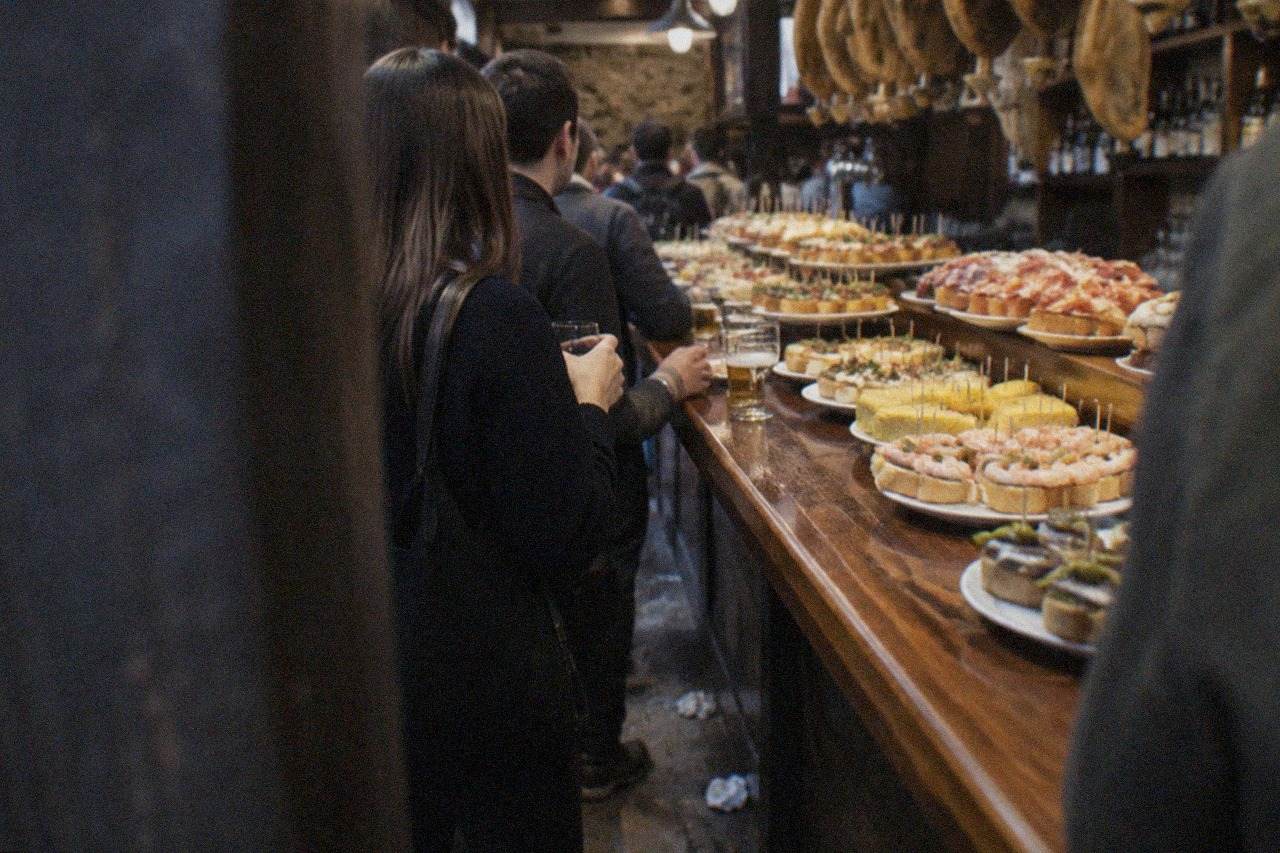
San Sebastián, in the Basque Country of Spain, is the small city on La Concha bay whose official name is Donostia / San Sebastián, and it owes a measurable slice of its modern fame to one travelling television host. Anthony Bourdain came here, ate his way through the Old Town, filmed the cider houses and the grill restaurants of the region, and told his audience, in his own blunt register, that this stretch of coast was one of the great places on earth to be hungry. His words carried weight because he had eaten everywhere, and because he was not given to polite praise. A city that already held a dense cluster of Michelin stars did not need a celebrity endorsement to justify its food, but Bourdain gave the world a permission slip to think about San Sebastián as an eating destination first and a beach destination second, a framing this San Sebastian Spain Guide whole site is built around.
What Did Anthony Bourdain Say About San Sebastian?
Anthony Bourdain's message about San Sebastián, in his television episodes and writing, was that this Basque city is one of the best places to eat in the world, and that the eating happens everywhere: at standing counters on pintxo bars, at cider houses, at grill restaurants and at temples of avant-garde cuisine. He framed the city as a place where ordinary bars take food as seriously as famous chefs do, and where a casual evening crawl can be as memorable as a tasting menu.
The essence of what he communicated, across the Basque Country segments he filmed and the pieces he wrote, was admiration for the culture rather than for any single restaurant. He was drawn to the way the city eats: standing up, moving from bar to bar, ordering a small skewered bite with each drink, talking the whole time. That is the pintxo culture, a small item, often skewered with a toothpick, served from a counter display or made to order, and eaten standing with a drink. Bourdain treated it as a genuinely superior way to spend an evening, not as a tourist gimmick, and his enthusiasm helped turn the Parte Vieja's bar counters into an international pilgrimage site.
He also made clear that the city's reputation rests on more than glamour. The MICHELIN Guide Spain 2026 counts 11 stars across 6 restaurants inside the municipality, with Akelaŕe and Arzak each holding three, and the wider province of Gipuzkoa holding 19 stars across 11 restaurants. Bourdain's point was never that you must eat at a starred table. It was that a city where the baseline bar food is this good, and the top end is this serious, is doing something structurally different from anywhere else.
Why Did Bourdain Rate San Sebastian So Highly?
Bourdain rated San Sebastián so highly because the city combines three things he rarely found together: everyday eating of an exceptional standard, a drinking culture built around moving between bars rather than sitting at one table, and a top-end restaurant scene with global influence. He admired places where craft was ordinary, where the person behind a bar counter cared as much as a chef with an international reputation, and this city offered that at almost every corner of its Old Town.
The first thing to understand is the pintxo bar itself. A pintxo is served from a counter display or made to order, and eaten standing with a drink, usually a small glass of txakoli, the young local white wine, or a beer or a zurito. The custom is to take one or two at a bar, finish the drink, and move to the next bar. Bourdain loved this because it turns dinner into a mobile social event, and because the bars are competitive: a bar that serves lazy food does not survive in a neighbourhood where every customer can compare it to the bar next door.
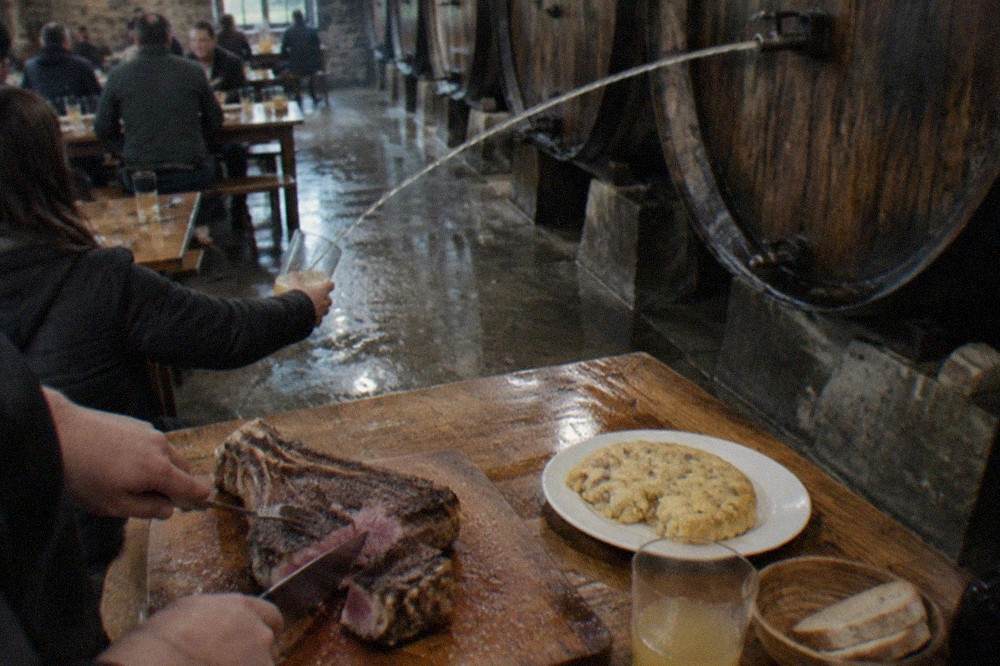
The second thing is the seasonality and ritual around it. The txotx cider season, which the tourism board describes as running from the middle of January to the end of April, draws crowds to the cider houses of Astigarraga and the surrounding countryside, where the cider is poured straight from the barrel from height and drunk with a cod omelette and a thick txuleta steak. Bourdain filmed this ritual and treated it as one of the great drinking experiences of the world: loud, communal, unsophisticated in the best sense, and completely without pretension.
The third thing is the sheer depth of the scene. The city's cooking tradition produced techniques and chefs that shaped modern high-end cuisine, and the Michelin density per resident is extraordinary by any standard. Bourdain's argument was that you could arrive with no reservations anywhere, eat at counters all week, and leave having eaten better than in most cities' famous restaurants. The dedicated Anthony Bourdain San Sebastian guide on this site covers his connection to the city in full.
Which Places Did Bourdain Put On The Map?
Bourdain put three kinds of San Sebastián eating on the map: the pintxo bars of the Parte Vieja, the Old Town, where the bar-crawl culture is at its densest; the cider houses of the surrounding countryside with their txotx ritual; and the serious restaurants, including Arzak, whose three Michelin stars in the 2026 guide make it one of the most influential kitchens in Spain. His attention made specific counters and specific rituals famous far beyond Spain.
The Parte Vieja is where many people start, and rightly so. The neighbourhood holds a concentration of bars that is hard to match anywhere, and the evening crawl there, the txikiteo or poteo, is the social backbone of local life. Bars display their pintxos on the counter, you point at what you want, and you settle up at the end, often by the honour system of counted toothpicks. It is loud, fast and completely informal. For where the locals themselves actually eat rather than where the guidebooks send you, this site has a dedicated answer on where the locals eat in San Sebastian.
The cider houses are a different register entirely. They sit in and around Astigarraga, a separate municipality a short journey from the city, and they open for the txotx season with a fixed ritual: you stand, you shout "txotx" when you want the barrel tapped, you catch the jet of cider in your glass from arm's length, and you drink it fast and flat and cold. The meal that goes with it is cod omelette, fried cod with peppers, and txuleta, the enormous bone-in rib steak cut through with old, fatty beef, a cut this site's txuleta steak guide covers in full.
At the top end, the city's starred restaurants are the ones Bourdain's audience most associated with his Basque episodes. The table below shows the full Michelin picture inside the city, from the 2026 edition of the guide.
| Restaurant | Michelin stars, 2026 guide | Location |
|---|---|---|
| Akelaŕe | 3 | Donostia / San Sebastián |
| Arzak | 3 | Donostia / San Sebastián |
| Amelia by Paulo Airaudo | 2 | Donostia / San Sebastián |
| iBAI by Paulo Airaudo | 1 | Donostia / San Sebastián |
| Itzuli | 1 | Donostia / San Sebastián |
| Kokotxa | 1 | Donostia / San Sebastián |
For the question of which single table Bourdain himself championed most famously, this site has a dedicated answer on Anthony Bourdain's favourite restaurant in San Sebastian, and for the wider star count, including why Martín Berasategui's three stars belong to Lasarte-Oria and not to the city, see how many 3-star Michelin restaurants there are in San Sebastian.
How Do You Eat San Sebastian The Way Bourdain Recommended?
To eat San Sebastián the way Bourdain recommended, you do three things: you crawl the pintxo bars of the Old Town on foot, standing and moving, one bite and one drink per bar; you take at least one meal at a cider house during the txotx season, from mid-January to the end of April; and you treat the city's serious restaurants as a bonus rather than the point, because the bar counters are the daily glory. He wanted visitors to eat like locals, not like critics.
The practical version of the bar crawl is simple. Start in the early evening, when the counters fill up after work. Order by pointing, take one or two pintxos and one drink at each bar, and move on within fifteen or twenty minutes. The classic drink is txakoli, the lightly sparkling, high-acid white wine poured from a height into a flat tumbler. A gilda, the anchovy, guindilla pepper and olive skewer, is the canonical first bite, and it is the one item almost every bar in the Old Town makes its own version of.
The table below pairs the city's signature items with what they actually are, because the vocabulary is half the battle on a first visit.
| Item | What it is | How it is served |
|---|---|---|
| Pintxo | A small bite, often skewered, made to order or from the counter display | Eaten standing at the bar with a drink |
| Gilda | Anchovy, guindilla pepper and green olive on a skewer | Cold, from the counter, the classic opener |
| Txakoli | Young, high-acid local white wine | Poured from height into a flat glass, drunk young |
| Txuleta | A thick bone-in rib steak from older beef | Carved at the table at cider houses and grill restaurants |
| Basque cheesecake | A burnt-top, crustless cheesecake created at La Viña | Served warm, in wedges, without a base |
| Sidra | Still, dry Basque cider | Poured straight from the barrel during the txotx ritual |
One warning worth carrying: the city is not a cheap place to eat at the top end, and the question of whether it is expensive deserves its own reading, because the density of starred kitchens and the summer demand both push prices up, though the bar counters remain the affordable alternative. The cheesecake, meanwhile, has become a global export with a strange history of its own, covered in what is so special about San Sebastian cheesecake.
Is The City Still The Food Destination Bourdain Described?
The city Bourdain described is still exactly there, and in some ways it has only deepened: the pintxo bars of the Parte Vieja still run the same standing, mobile ritual, the cider houses still open for txotx each winter, and the MICHELIN Guide Spain 2026 still counts 11 stars across 6 restaurants inside the municipality. What has changed is the crowd, because his attention helped make the Old Town bars busier, and the smart move is to eat the same things at the same hours the locals do.
The fundamentals have not moved. The Old Town still holds its dense bar scene, the cider season still runs from mid-January to the end of April by the tourism board's own wording, and the restaurant scene still ranks at the very top of Spain. The Michelin count must be attributed to the 2026 edition by name, because the 2027 edition is announced on 24 November 2026 in Huesca and every star figure changes hands that day. But the underlying culture, the standing counters, the toothpick tallies, the poured-from-height txakoli, is older than any guide and slower to change than any ranking.
The one honest adjustment for a visitor today is timing. August is the peak hotel month by a wide margin, with 245,769 hotel overnight stays recorded in August 2025 against 115,910 in January, and the Old Town bars are at their most crowded exactly when the visitors are. The shoulder months give you the same food with more elbow room, and the city's rain, 1,507 mm a year across 141 rain days at AEMET's Igeldo station, is a fact of life in every season, so a wet evening is a bar-crawl evening by design rather than by accident. For a longer discussion of the weather, see what is the rainiest month in San Sebastian.
For eating the city with a local steering you between the counters, the shared pintxo tour below is the closest modern equivalent to the crawl Bourdain filmed, with drinks and tapas included and a local leading the route.
If you would rather plan the same route yourself, the site's guide to the best pintxo bars names the counters worth crossing the Old Town for. For a fuller picture of the city beyond the food, the root page on things to do in San Sebastian covers the beaches, the Monte Igueldo funicular and the rest.
Common Questions About Anthony Bourdain And San Sebastian
What did Anthony Bourdain say about San Sebastian?
He presented the city, in his Basque Country episodes and writing, as one of the world's great places to eat, praising the standing pintxo bar culture of the Old Town, the txotx cider house ritual, and the seriousness of the restaurant scene. His emphasis was on the everyday eating culture rather than on any single table.
Which restaurant in San Sebastian was Bourdain's favourite?
He is most associated with Arzak, the three-star restaurant in the city, and this site has a dedicated answer on Anthony Bourdain's favourite restaurant in San Sebastián that covers the connection in detail.
Did Bourdain visit the pintxo bars or only the Michelin restaurants?
Both, and the bar counters were central to what he filmed. The pintxo crawl, one bite and one drink per bar while moving through the Old Town, was the part of the culture he praised most directly.
Is the San Sebastian Bourdain describes still worth visiting for food?
Yes. The MICHELIN Guide Spain 2026 still counts 11 stars across 6 restaurants inside the city, the cider houses still open for the txotx season from mid-January to the end of April, and the Old Town bar scene continues the same standing, mobile ritual he admired.
What should a first-time visitor eat in San Sebastian?
Work the Old Town pintxo bars in the early evening, starting with a gilda and a glass of txakoli, take a cider house meal during the txotx season if the calendar allows, and finish with a wedge of the burnt-top Basque cheesecake that the city invented.
The city Bourdain talked about is not a museum piece, it is a working evening culture that happens every night, and the best way to understand what he was praising is simply to join it: start at one counter, order one bite and one drink, and walk to the next bar.