Amara Neighbourhood
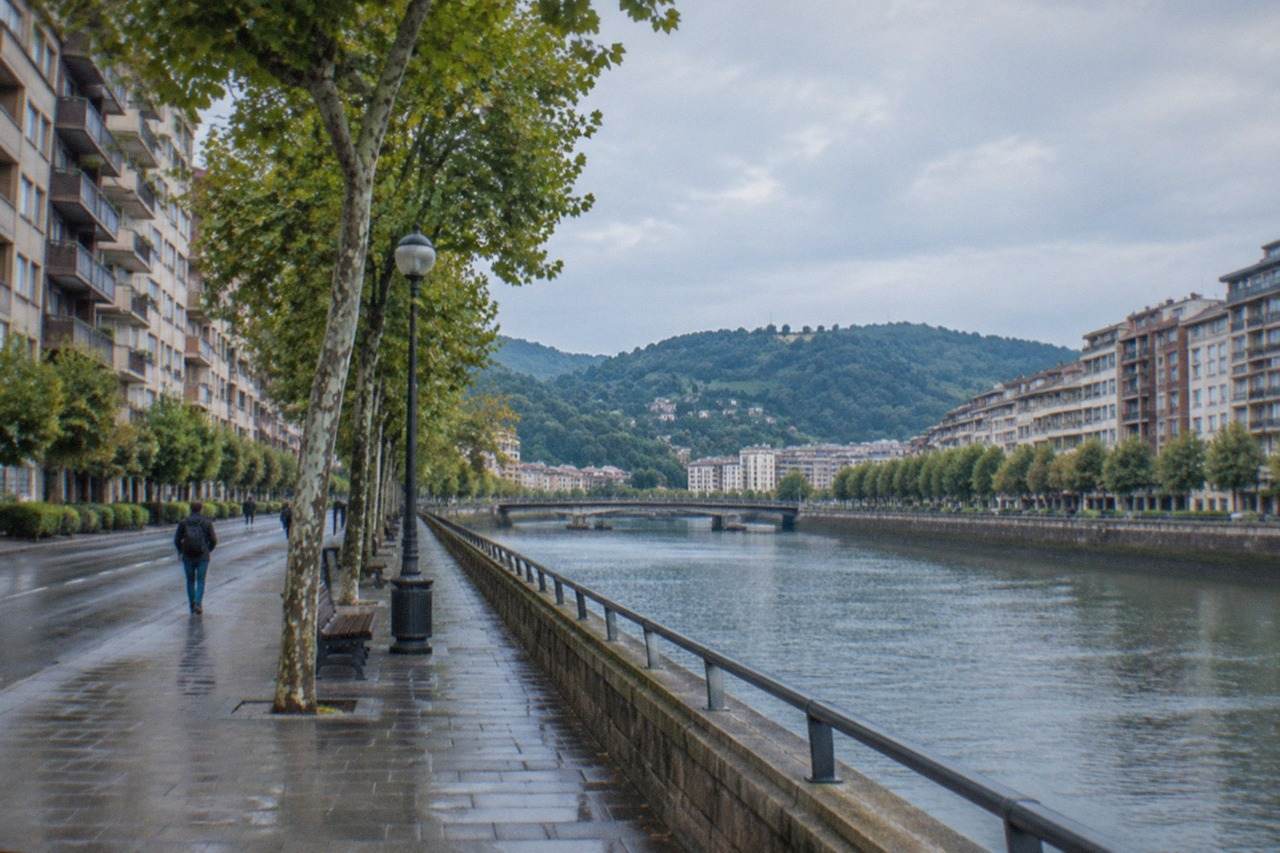
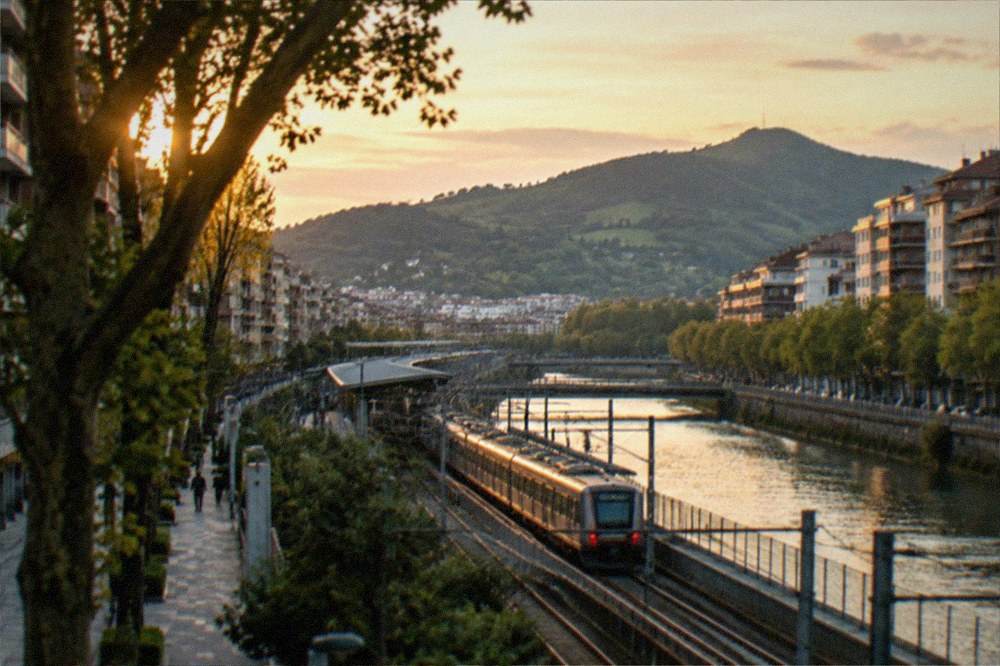
Amara is the inland residential neighbourhood that grew around San Sebastián's Euskotren station, a practical base within walking distance of the centre and the direct rail line to the French border.
Short answer
Amara is a residential neighbourhood inland from La Concha bay in San Sebastián, Basque Country, Spain, best known for holding the Amara-Donostia Euskotren station, the working terminus of the Topo line to the French border at Hendaia.
Amara is the neighbourhood that wraps around San Sebastián's inland rail hub in the Basque Country, Spain, the city on La Concha bay whose official name is Donostia / San Sebastián. Donostia is the Basque name, and Amara is one of the districts locals mean when they talk about living in the city rather than visiting it. The area grew up around the station and the river plain south of the centre, and today it is the address of the Amara-Donostia Euskotren terminus, the working end of the Topo line that runs east along the coast to the French border at Hendaia. For a visitor, Amara is less a sightseeing destination than a practical one: accommodation, transport connections and ordinary Basque city life, with the beaches and the Parte Vieja a walk or a short bus ride away.
Where Is Amara In San Sebastian?
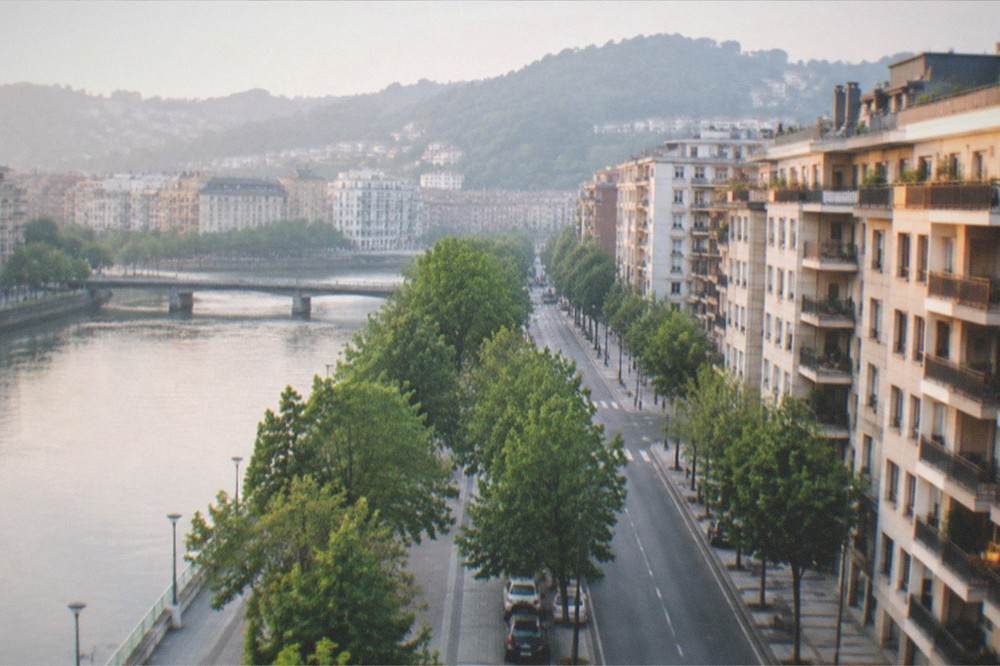
Amara sits inland and south of the city centre, on the flat ground along the Urumea river's western side below the hills that frame the city, in San Sebastián, Basque Country, Spain. It is the district around the Amara-Donostia Euskotren station, which the Basque Government's transport records treat as the city's working rail terminus for the coastal Topo line. The centre, the beaches and the Parte Vieja all lie to the north, and the neighbourhood connects to them by city bus, by the Euskotren line and on foot.
The city's shape explains Amara's role. San Sebastián curls around La Concha bay between two hills, Monte Igueldo at the west end and Monte Urgull at the east, with the river Urumea cutting through the middle. The buildable flat land runs out quickly, and the districts inland from the bay, Amara among them, are where the city's everyday population lives. The municipal register counted 189,866 people at 1 January 2025, and districts like this one hold most of them.
Amara's position makes it a hinge. The Euskotren Topo line starts here and runs east through Pasaia and on to Hendaia in France, and the Basque Government's news service confirmed in June 2026 that the civil works for the new underground through-line, including the station beside La Concha, are finished, with no opening date published. Until that line opens, Amara remains the terminus, which is why so many journeys through the city pass through it.
For orientation, the neighbourhood sits between the centre and the districts further inland, with Gros across the river to the east and the beaches to the north. The guide to the city's neighbourhoods places Amara in context against the better-known areas.
Is Amara A Good Base For Visiting San Sebastian?
Amara works well as a base for visitors who want ordinary city prices and fast transport connections rather than a sea view, because the Euskotren station, several dBus city bus routes and the roads out of the city all meet here. The trade is simple: no beachfront, no Old Town atmosphere, but easier access to day trips along the coast and into France, and a quieter night than the Parte Vieja. It suits longer stays and travellers arriving by train from the east.
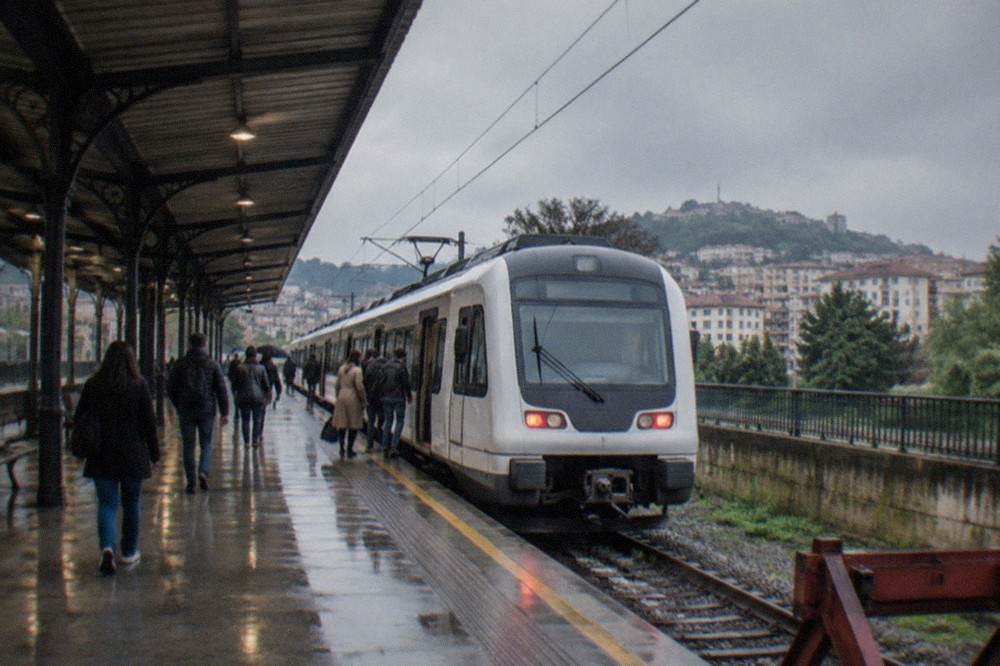
The strongest argument for staying here is the Topo line. Computed from Euskotren's own published timetable data, the journey from Amara-Donostia to Hendaia, just inside France, takes 37 to 38 minutes, with the busiest service day showing a departure roughly every 30 minutes. The occasional fare for that trip is 2.90 EUR under the MUGI system. That puts the French border towns, the coastal villages of Pasaia and the eastern shore within an easy return trip for someone based in Amara, without a car.
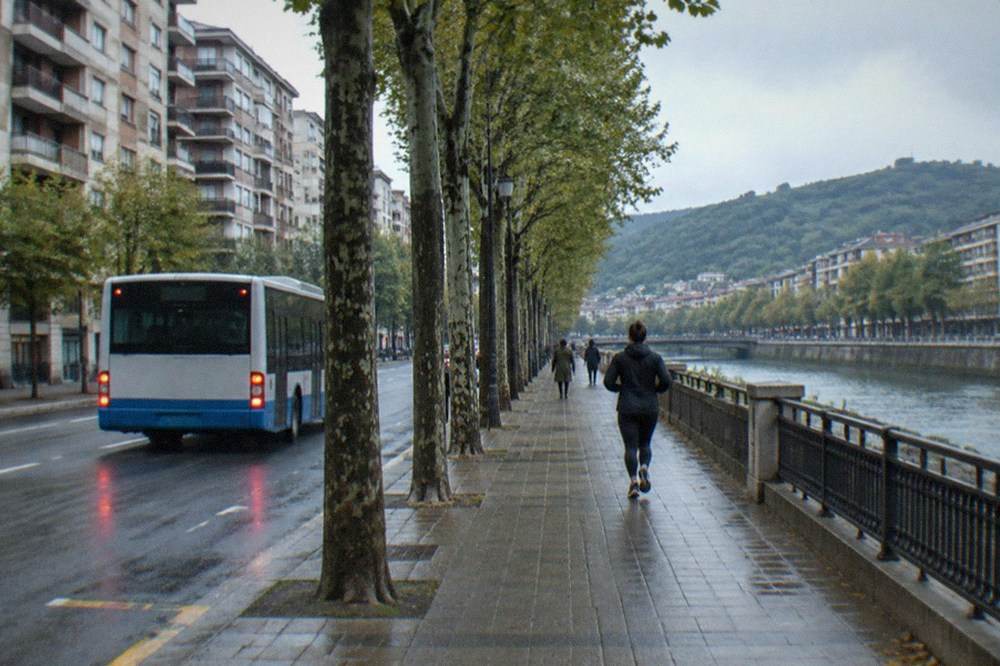
The neighbourhood also sits on the city's bus network. dBus, the municipal operator, runs across the city from stops in and around Amara, and its own fare page lists the occasional ticket at 1.95 EUR paid in cash to the driver, with a night ticket at 2.65 EUR, though cash payment does not allow free transfers. The MUGI card system covers dBus, Lurraldebus and Euskotren together, which matters for anyone planning to mix city buses with coastal train trips.
A stay in Amara pairs naturally with a proper introduction to the city on foot. The city highlights walk covers the Old Town and the Romantic Area with separate English and Spanish departures, and the e-bike history ride follows the bike trails out to the beaches, which is a comfortable way for an inland base to reach the shore.
How Do You Get Around From Amara?
Getting around from Amara means three connected systems: the Euskotren Topo line east along the coast, dBus city buses across San Sebastián, and walking north into the centre, all tied together by the single MUGI fare card of Gipuzkoa. The MUGI tariff page sets fares by the number of zone jumps, with an occasional single journey inside the city at 1.95 EUR in cash and 0.78 EUR on an anonymous MUGI card. One card works on all three.
The MUGI system is a detail that many visitors miss. Gipuzkoa, the province San Sebastián belongs to, runs one fare structure across its city buses, regional buses and trains, and the price depends only on how many zone boundaries a journey crosses. The tariff page defines the city itself as "Urbano 1", which includes Donostia and the Pasaia harbour area, so most journeys a visitor makes from Amara sit in the cheapest columns.
| Ticket | Urban 1 and 0 jumps | 1 jump | 2 jumps | 3 jumps | 4 jumps | 5 jumps |
|---|---|---|---|---|---|---|
| Occasional ticket (cash) | 1.95 | 2.90 | 5.40 | 7.90 | 10.25 | 13.65 |
| Night ticket | 2.65 | 3.70 | 6.45 | 8.95 | 11.30 | 14.75 |
| MUGI anonymous card | 0.78 | 1.16 | 2.16 | 3.16 | 4.10 | 5.46 |
| MUGI personalised, trips 1 to 20 in the month | 0.59 | 0.88 | 1.64 | 2.41 | 3.12 | 4.16 |
All amounts are EUR, as the MUGI tariff gives them. The personalised card's first 20 trips each month carry the steepest discount, 69.5 percent off the occasional fare, which rewards a longer stay.
The Topo line is the second piece. The table below gathers what the official machine-readable timetable and the MUGI tariff give for the line that starts at Amara.
| Topo line fact | Figure given by the source |
|---|---|
| Journey time Amara-Donostia to Hendaia | 37 to 38 minutes |
| Frequency on the busiest service day | Every 30 minutes for most of the day |
| Occasional fare Amara zone to Hendaia zone | 2.90 EUR |
| New underground through-line status | Civil works complete, fitting-out under way |
| Published opening date for the new stations | None given |
The Basque Government's June 2026 note on the underground works gave no opening date, so the Amara terminus remains the practical end of the line in the city for now.
City buses complete the picture. The dBus fare page, headed "from 1 July 2025" for its card fares, gives two cash prices, and the operator's own published timetable data carries exactly those two and no others.
| dBus ticket | Price | Note from the operator |
|---|---|---|
| Occasional ticket, cash to the driver | 1.95 EUR | Cash payment does not allow free transfers |
| Night ticket | 2.65 EUR | Applies to the special night services |
For a first day in the city, a guided walk saves the orientation work. The city highlights tour runs separate English and Spanish departures through the Old Town and the Romantic Area, and booking carries free cancellation if the Atlantic weather turns.
Where Do You Eat In And Around Amara?
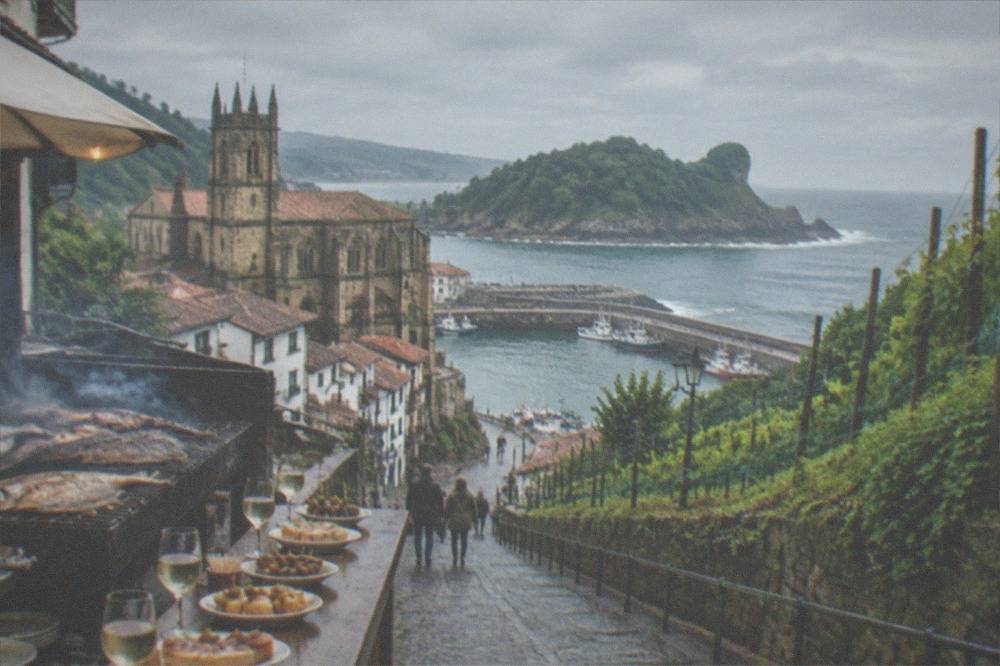
Eating around Amara means the everyday Basque version of the city's food culture: neighbourhood bars serving pintxos, small restaurants that locals use weekly, and the cider house and txakoli traditions of the wider province, rather than the star-driven dining of the seafront. The Parte Vieja's pintxo bars are a walk or short bus ride north, and the pintxo itself, the small skewered or sliced bar snack, is the unit of eating across the whole city.
Pintxos are the city's signature way of eating, and the guide to what pintxos are explains the form: a slice of bread topped with something deliberate, held with a skewer, ordered at the bar and eaten standing. Amara's own bars serve them in the same style as the famous Old Town, with fewer visitors competing for the counter. When the evening calls for the full crawl, the best pintxo bars guide and the Old Town walk are the references.
The province's cider tradition also reaches the neighbourhood. The tourism board describes the txotx season as running from the middle of January to the end of April, when cider houses open their barrels for tasting straight from the cask, and it names houses in Donostia and Astigarraga, the cider village just inland. The cider house tour below runs the full ritual with lunch included.
For a structured introduction to the city's food, a guided pintxo tour turns the bar count into an itinerary. The small-group Old Town crawl moves through pintxo bars, restaurants and gourmet shops, and the eight-guest culinary tour is capped at eight people with a culinary expert leading.
What Is The Weather Like In Amara, San Sebastian?
Amara shares the wet Atlantic climate of the whole city: AEMET's normals for its Igeldo station, covering 1981 to 2010, record 1,507 mm of rain a year over 141 rain days, and even July, the driest month, averages 86 mm. No month is dry. The station sits 250 m up on Monte Igueldo, so the seafront and the low ground of Amara run slightly warmer than these figures, but the pattern holds: mild, green, and never to be counted on for sunshine.
The honest way to read the table is by rain days rather than by rainfall totals. July averages 9.8 days with at least 1 mm of rain and November averages 13.0, which is a narrow band: the difference between the driest and wettest months is a matter of degree, not of kind. Anyone packing for Amara packs a rain layer in every season.
| Month | Mean temperature C | Rain mm | Days with rain 1 mm or more | Sun hours |
|---|---|---|---|---|
| January | 8.5 | 141 | 13.2 | 98 |
| March | 10.3 | 113 | 12.4 | 144 |
| May | 14.4 | 120 | 12.2 | 181 |
| July | 18.9 | 86 | 9.8 | 196 |
| September | 18.0 | 111 | 10.1 | 179 |
| November | 11.3 | 169 | 13.0 | 102 |
November is the wettest month at 169 mm and July the driest at 86 mm, and August, at 117 mm, is wetter than June, July or September. That last fact surprises visitors who assume the summer is uniformly dry, and it is the reason any guide to the city's seasons has to be written around what is happening in them rather than around rainfall alone. The wettest and driest months sit only 83 mm apart, which tells the real story of this coast better than any sunshine promise.
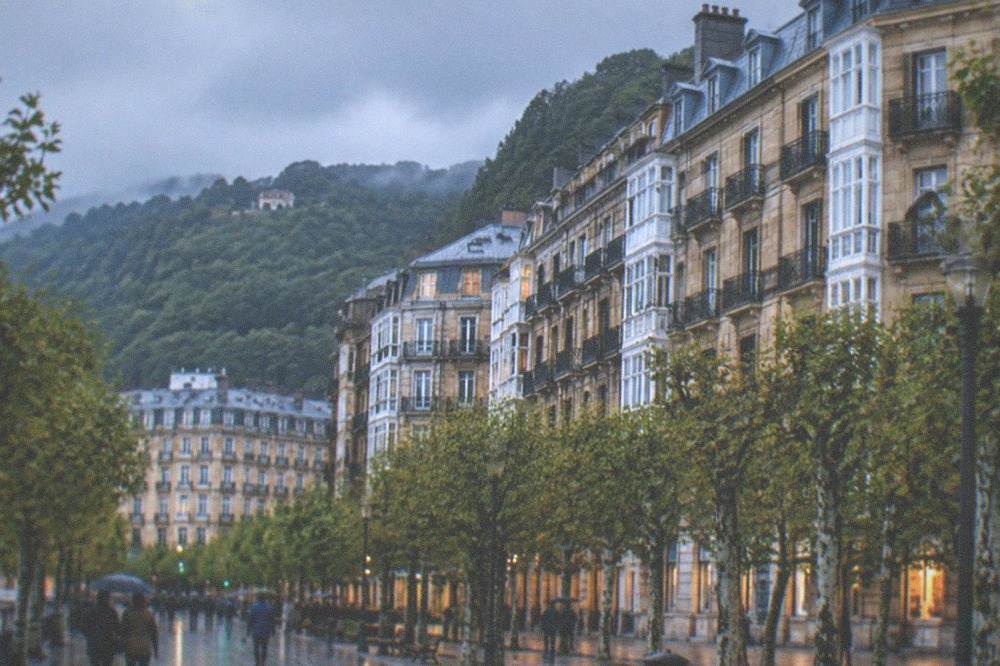
The rain is also why Amara is greener than most city districts of its kind. The hills above the neighbourhood stay covered in grass and tree cover year round, and the parks and river walks hold their colour through winter.
What Is Within Walking Distance Of Amara?
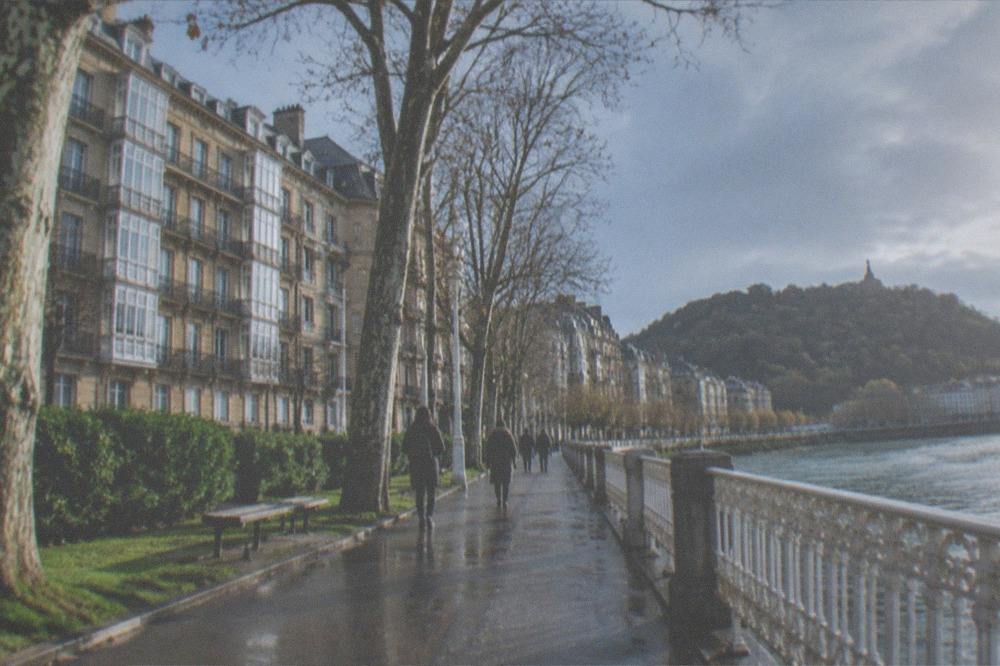
The walkable reach of Amara covers the whole city centre, the river Urumea's banks and the parks on the inland hills, because San Sebastián is a compact city whose central districts sit within a short walk of each other. North of the neighbourhood lie the centre and the beaches, east across the river is Gros and the Kursaal, and the green spaces along the Urumea connect the district to the sea without crossing busy traffic. The hills of Urgull and Igueldo sit at either end of the bay beyond.
The city's own scale does most of the work here. The three beaches, La Concha, Ondarreta and Zurriola, sit inside one continuous bay-and-river shoreline, and the council's beach pages describe them as 1,350 m, 600 m and 800 m long respectively, which gives a sense of how little ground the whole waterfront covers. A visitor based in Amara walks north, reaches the river, and follows it to the sea.
The season rules along that shoreline matter for planning. The council states the lifeguard service on all three beaches runs 1 June to 30 September, with hours of 10:00 to 20:00 from 15 June to 15 September and 13:30 to 19:30 for the rest of September, and the assisted bathing service for reduced mobility runs 15 June to 15 September. Monte Urgull, the hill at the east end of the bay, keeps access hours of its own.
| Place near Amara | Season or access rule | Source of the rule |
|---|---|---|
| Beach lifeguards, all three beaches | 1 June to 30 September | City council beach pages |
| Assisted bathing service | 15 June to 15 September | City council beach pages |
| Monte Urgull, summer access | 1 May to 30 September, 08:00 to 21:00 | Tourism board |
| Monte Urgull, winter access | 1 October to 30 April, 08:00 to 19:30 | Tourism board |
| Santa Clara island boats, high season | 1 June to 30 September | Operator's tariff page |
| Hondalea, island lighthouse installation | 1 June to 30 September, 11:00 to 18:30, free | City council page |
None of these are year-round services, so a winter stay in Amara plans differently from a summer one. The island's Hondalea installation, by the artist Cristina Iglesias in the old lighthouse, needs no booking for the visit itself, only for the boat, and it is free, but only in its stated season.
For the fuller picture of the shoreline, the beaches guide and the pages on La Concha, Zurriola, Monte Urgull and Monte Igueldo cover each stretch in detail.
Which Tours And Day Trips Work Best From Amara?
Tours that start from the city centre or the station area work best from Amara, and the neighbourhood's rail link makes the coastal and French-Basque day trips the ones it handles better than any other district: the Topo line runs east from here, and the coach day trips depart from the bus station a short distance away. Walking, bike and pintxo tours all meet within the centre. The cider house trips pick up in the city, and the Getaria txakoli tour includes hotel pickup.
The pattern is to match the tour to the direction Amara already points. East along the coast, the train itself does the work, and the guided options add the interpretation: the coastal winery trail walk starts from Amara station and includes a train ticket back, which is the most literal fit between the neighbourhood and a tour in the whole roster.
For the city itself, the small-group electric bike tour uses the city's bike-lane network and runs from the Old Town side, an easy ride from Amara's flat streets, and the walking tour with a pintxo and drink included is the budget option that ends with something to eat. Both meet the need for a first-day orientation.
The day trips divide by direction. West along the Gipuzkoa coast, the half-day runs to Zarautz, Getaria and Zumaia and the Getaria txakoli wine tour cover the fishing towns and the local white wine, and the full-day Rioja trip goes further inland to the wineries and the walled town of Laguardia. East and across the border, the French Basque Country coach excursion covers Biarritz, Bayonne and Saint-Jean-de-Luz in one long day, and the half-day to Hondarribia, Pasajes de San Juan and San Pedro stays closer.
| Direction from Amara | Day trip | What it covers |
|---|---|---|
| West, Gipuzkoa coast | Zarautz, Getaria and Zumaia | Three coastal towns by vehicle with a guide |
| West, wine country | Getaria txakoli tour | Txakoli tasting in Getaria, hotel pickup |
| South, wine region | La Rioja and Laguardia | Winery visits and a walled town |
| East, border region | Hondarribia and Pasajes | Half-day to the fishing villages and the border town |
| North, across the border | French Basque Country excursion | Biarritz, Bayonne and Saint-Jean-de-Luz |
| Inland, art | Chillida Leku, Hernani | Guided visit of the sculpture museum outside the city |
Chillida Leku, the sculpture museum in Hernani, a separate municipality inland from the city, opens every day except Tuesday and Wednesday and charges 14 EUR for adults, with its own free car park, so it suits a half day out of Amara by train or taxi.
How Does Amara Compare With Other San Sebastian Neighbourhoods?
Amara is quieter, cheaper and better connected than the seafront districts, and weaker on atmosphere and views than any of them: the Parte Vieja has the pintxo bars, the centre has the Belle Epoque streets, Gros has the surf beach and Antiguo has Ondarreta and Monte Igueldo at its back, while Amara has the station, the buses and residential streets that locals actually live in. It is the choice for transport and value, not for a view of the bay.
The comparison matters because the city's districts are close together and the choice of base is really a choice of trade. The Antiguo district sits under Monte Igueldo beside Ondarreta beach and feels like its own small town. Egia, across the river, holds the Cristina Enea park and the Kursaal's side of the water. The centre carries the shopping streets and the grand buildings. Amara trades all of that for the rail line and the room.
| Neighbourhood | Character | Best for |
|---|---|---|
| Parte Vieja | Old Town, pintxo bars, festivals | Food, atmosphere, first visit |
| Centro | Belle Epoque streets, shops, hotels | Walkability, sightseeing |
| Gros | Surf beach, younger bars, the Kursaal | Surfing, informal eating |
| Antiguo | Residential, Ondarreta, Monte Igueldo | Quieter beach stays |
| Egia | Parks, river side, cultural venues | Green space, local pace |
| Amara | Station district, buses, plain value | Transport, longer stays, day trips |
A base in Amara answers the how-many-days question differently from the beachfront: a longer stay uses the neighbourhood better than a two-night sprint, because the day trips the rail line makes easy are what fill days four and five.
Common Questions About Amara In San Sebastian
Is Amara in the centre of San Sebastian?
Amara sits immediately inland and south of the centre, connected to it by walking routes, dBus city buses and the Euskotren station. It is a residential district rather than part of the sightseeing core, but the core is within easy reach on foot or by a short bus ride.
Does the train to France leave from Amara?
Yes. The Euskotren Topo line's Amara-Donostia station is the working terminus for services running east along the coast to Hendaia in France, a journey of 37 to 38 minutes with departures roughly every 30 minutes on the busiest service day, at an occasional fare of 2.90 EUR under the MUGI system.
Is Amara cheaper than staying by the beach?
As a residential district without sea views or Old Town addresses, Amara generally sits on the plainer, more local end of the city's accommodation and eating prices. The city is known as an expensive one overall; no specific Amara rate is published in the sources this site uses.
Can you walk to La Concha beach from Amara?
Yes, on foot through the centre and along the river, without needing transport. The city is compact, and the whole shoreline from La Concha through Ondarreta to Zurriola covers a short continuous stretch, so the walk from Amara to the bay is an ordinary city walk rather than a hike.
What is the difference between Amara and the Old Town?
The Old Town, the Parte Vieja, is the historic district of pintxo bars and festivals beside the bay, while Amara is the inland station district where much of the city's resident population lives. Visitors stay in Amara for transport and value and go to the Parte Vieja to eat and wander.
Does it rain more in Amara than in the rest of San Sebastian?
No, the climate is the same across the city: AEMET's Igeldo station records 1,507 mm a year over 141 rain days, with the station 250 m up on Monte Igueldo so the low ground runs slightly warmer than the published figures. The rainfall pattern is a city-wide fact, not a neighbourhood one.
Amara rewards the visitor who treats San Sebastián as a working city rather than a postcard: the trains leave from here, the buses cross here, and the coast and the border are both a short ride away. For more on the city as a whole, San Sebastian Spain Guide covers every district, beach and table in the city.