Barcelona To San Sebastian
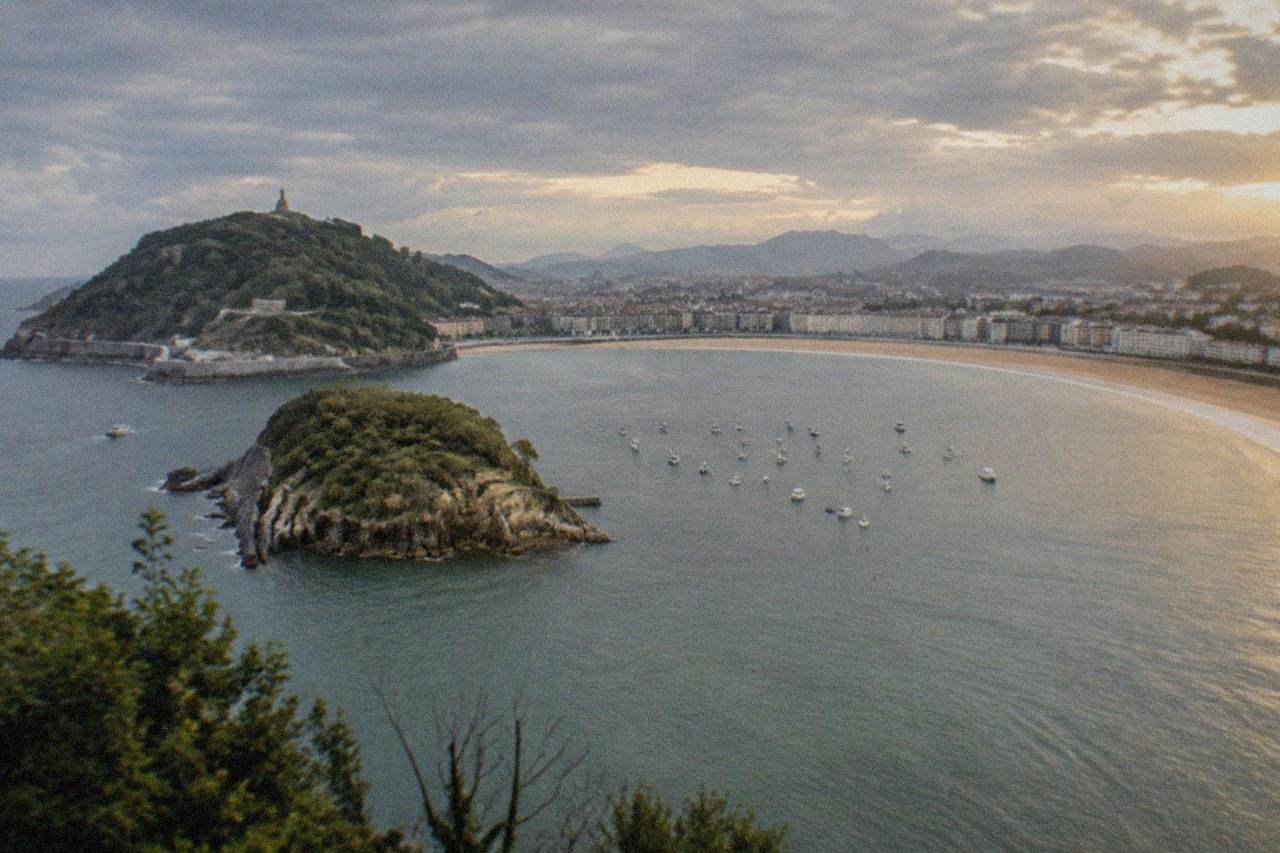
Barcelona to San Sebastián is a trip across northern Spain from the Mediterranean to the Atlantic coast, ending in the Basque city on La Concha bay whose official name is Donostia / San Sebastián.
Short answer
Madrid is closer to San Sebastián than Barcelona is. From Barcelona the practical route is a flight, either direct into San Sebastián Airport at Hondarribia or into Bilbao followed by a coach, because no fast rail link serves the city.
Barcelona sits on the Mediterranean; San Sebastián sits on the Bay of Biscay, in the Basque Country of northern Spain, and the trip between them crosses the entire width of the country's north. San Sebastián, whose official municipal name is Donostia / San Sebastián and whose Basque name is Donostia, is the city on La Concha bay in the province of Gipuzkoa, famous for its beaches, its pintxos bars and its concentration of Michelin-starred kitchens. It is not the San Sebastián in Puerto Rico, not the San Sebastián Winery in Florida, and not San Sebastián de los Reyes beside Madrid. This page, like every route page on San Sebastian Spain Guide, covers the journey from Barcelona: which of Spain's two big cities is actually closer, the flight and train options, the airports you can use, and what to do with the first day once the bay comes into view.
Is San Sebastián Closer To Barcelona Or Madrid?
Madrid is closer to San Sebastián than Barcelona is. Madrid lies inland to the south of the Basque Country, while Barcelona sits on the Mediterranean coast at the far eastern end of the Pyrenees, so the run from Barcelona crosses far more of Spain than the run from Madrid does. Both are long journeys by Spanish standards, but if the choice is between the two, Madrid is the nearer starting point and the one with more direct transport links into the Basque Country.
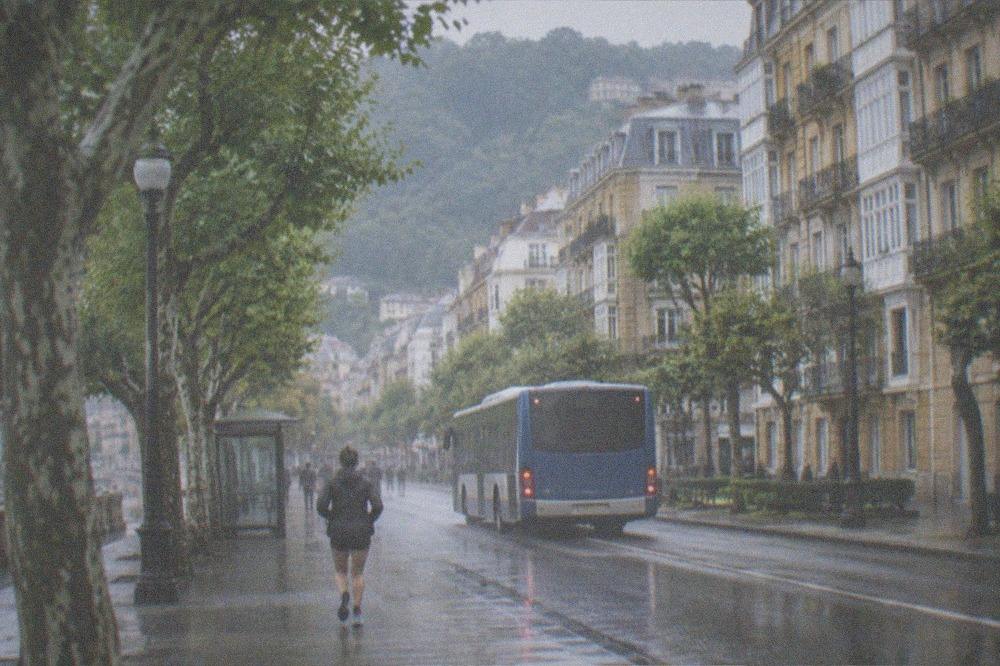
That geography shapes everything else on this page. Barcelona and San Sebastián are both coastal cities, but they face different seas and belong to different worlds: Catalonia and the Basque Country have separate languages, separate cuisines and separate climates. AEMET's climate normals for its Igeldo station above San Sebastián record 1,507 mm of rain a year over 141 rain days, which is Atlantic weather, not Mediterranean weather, and it is the single biggest surprise for travellers arriving from Barcelona's dry summers. Pack for it.
The practical consequence of the distance is that travellers from Barcelona tend to fly, or they break the journey with a stop in Madrid or Zaragoza. The train alternative exists and has its admirers, but it is a full day of travel, and the fly-or-train comparison has its own detailed treatment on the fly versus train from Barcelona answers page. If you are starting from Madrid instead, the Madrid to San Sebastian guide covers that route, including whether the train ride from Madrid is scenic.
What Is The Best Way To Get From Barcelona To San Sebastian?
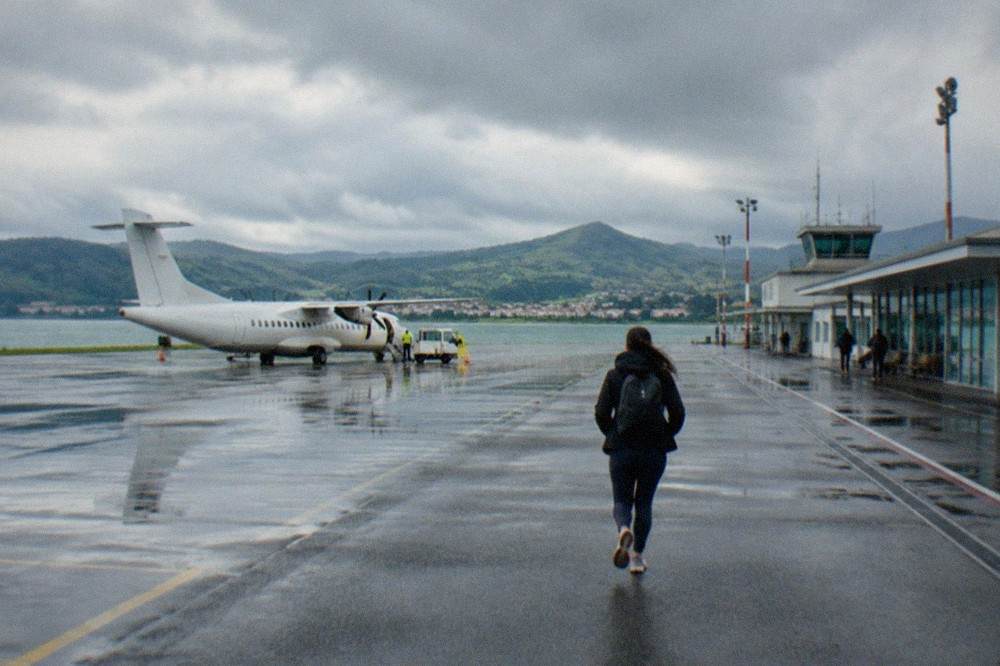
A flight is the fastest way from Barcelona to San Sebastián, and the choice comes down to which airport you land at. The city's own airport at Hondarribia is the closest, 20 km away, but it is small with a limited route network, so many travellers fly to Bilbao and take the direct airport coach the rest of the way. The train is the alternative, a long conventional-rail journey best suited to travellers who want scenery more than speed.
The tourism board for San Sebastián lists three airports within a little over 100 km of the city, two of them international, and that list is the real decision table for this trip. San Sebastián Airport at Hondarribia is served by Ekialdebus lines, with E30 the direct line between the airport and the city, since line E21 stopped serving the airport on 1 June 2026. Biarritz, just across the border in France, is 45 km away and has its own direct service listed. Bilbao is the biggest of the three and the usual fallback when the Hondarribia schedule does not fit.
The table below shows what the tourism board publishes for each airport.
| Airport | Code | Distance from San Sebastián | Direct service to the city listed |
|---|---|---|---|
| San Sebastián Airport, Hondarribia | EAS | 20 km | Yes, Ekialdebus airport lines |
| Biarritz | BIQ | 45 km | Yes, direct service listed |
| Bilbao | BIO | 105 km | Yes, direct service listed |
| Vitoria-Gasteiz | VIT | 100 km | No direct service listed |
One detail that catches people out: the Bilbao airport coach to San Sebastián costs 17.10 EUR as listed on the Basque Government's airport page, with a journey time of about 75 minutes, running hourly on working days in the winter timetable and every 30 minutes in July and August. That page carries no date stamp, so check the operator before relying on the fare. The equivalent detail for the Hondarribia airport bus, its journey time and fare zone, is not published in a form this site can confirm, so ask the operator when you book.
If you land in the city itself, the rest of the trip is short, and a guided walk is a good way to spend the first afternoon while the luggage is at the hotel. The options below cover the historic centre on foot, the Old Town's food scene, and a day across the French border if the trip has room for one.
Which Airport Should You Fly Into From Barcelona?
San Sebastián Airport at Hondarribia is the airport to aim for if a flight from Barcelona fits its schedule, because it is only 20 km from the city and the E30 bus line runs direct. When no convenient flight lands there, Bilbao is the practical second choice, 105 km away but covered by an airport coach of about 75 minutes. Biarritz in France at 45 km is a third option with a direct service listed.
Each of the three workable airports suits a different kind of traveller. Hondarribia keeps the transfer short and puts you beside the water quickly; its limitation is network, since a small airport has fewer flights and fewer fallbacks when something is cancelled. Bilbao trades a longer transfer for a big airport with dense domestic connections from Barcelona, and the coach at the other end is frequent and cheap. Biarritz works well if the trip continues into France afterwards, and it pairs naturally with a stop in Biarritz itself, covered in the Biarritz day trip guide.
A word on the airport bus lines, because one piece of stale information circulates widely. The tourism board's own page still names line E21 as serving the airport, but the operator, Ekialdebus, states that E21 has not stopped at the airport since 1 June 2026, neither to board nor to alight. The lines the operator currently lists under its airport services are E20, E23, E25, E27, E28, E29 and E30, and E30 is the direct Donostia to airport line. The operator's own pages are the place to confirm times before you fly.
How Do You Get From Bilbao Airport To San Sebastian?
The Basque Government's Bilbao airport page lists a PESA Lurraldebus coach to San Sebastián at 17.10 EUR with a journey time of about 75 minutes. In the winter timetable it runs hourly from the airport on working days between 07:45 and 23:45, and in July and August it runs every 30 minutes. That page carries no date, so the fare should be treated as listed rather than guaranteed.
The coach is the standard answer for Barcelona travellers who land in Bilbao, and it removes the main objection to that routing: the transfer is short, cheap and frequent enough that the extra distance stops mattering. PESA is part of the Avanza group and its Gipuzkoa site carries the airport line in its menu. You arrive at the San Sebastián bus station, which sits at the edge of the centre, and from there the city is walkable or a short dBus ride away.
The same routing works in reverse for a day in Bilbao, and the Bilbao day trip guide covers what to do there, including the Guggenheim. If the flight lands at Biarritz instead, the position is different: the Basque Government page lists no equivalent confirmed coach detail for that route, and this site publishes nothing it cannot source, so check the connection before booking a Biarritz flight. The Biarritz airport to San Sebastian guide sets out what is and is not confirmed.
What About Taking The Train From Barcelona?
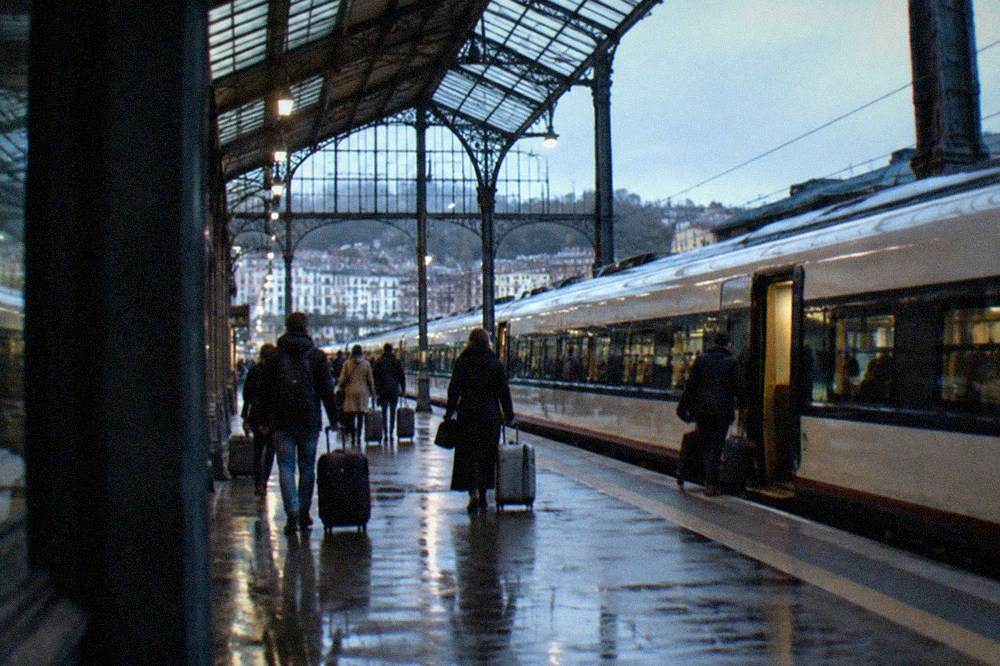
The train from Barcelona to San Sebastián is a long journey on conventional track, because no high-speed line reaches the city, and it takes the better part of a day rather than a few hours. It suits travellers who want to see northern Spain from the window and who are not in a hurry, and it becomes more attractive if you break it with a night somewhere along the way.
Whether the train beats the flight depends on what you value, and that comparison has its own page: the fly versus train answers page settles it in detail. The rail route runs inland, usually through Zaragoza and Madrid or through the Ebro valley, and the final stretch into the Basque Country is slow, scenic track rather than high-speed rail. The Basque Y high-speed project will change that one day, but no arrival date is confirmed and this site does not guess one. What the train does offer is a genuine view of the country you are crossing, and the question of whether the return leg is worth it for the scenery alone is answered on the is the train from San Sebastian to Barcelona pretty page.
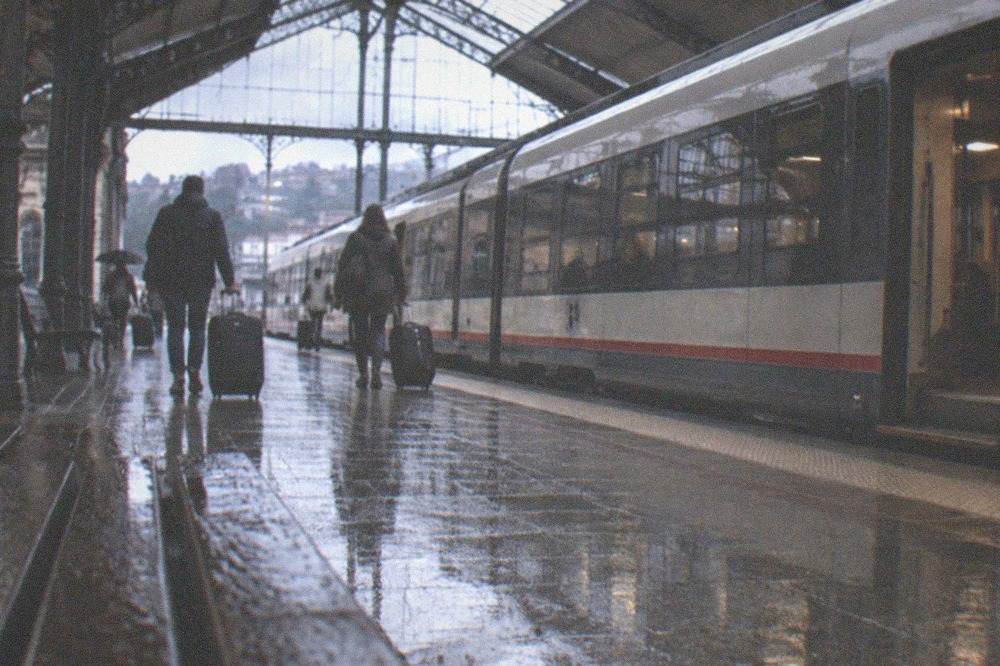
Once you are in the region, the local rail picture is better than the long-distance one. The Euskotren Topo line runs from Amara station in the city to Hendaia on the French border, a journey of 37 to 38 minutes on the busiest service day with departures roughly every 30 minutes, and the occasional fare for that trip is 2.90 EUR. That makes the train genuinely useful for day trips to the coast after you arrive, even if it was not the way you got there. The Euskotren guide covers the Topo in detail.
How Do You Get Around San Sebastian Once You Arrive?
San Sebastián is a compact, walkable city, and visitors can get between the centre, the beaches and the Old Town on foot. For everything else there is dBus, the city bus network, with a cash fare of 1.95 EUR paid to the driver, and the MUGI card system covering dBus, Lurraldebus and Euskotren across the province, with card fares from 0.78 EUR for an urban trip. The bus and rail stations sit at the edge of the centre, so settling in takes minutes.
The fare table below is what the operators publish. Cash on dBus does not allow free transfers, which is the main reason a card pays for itself quickly.
| Ticket | Urban, 0 jumps | 1 jump | 2 jumps | 3 jumps |
|---|---|---|---|---|
| dBus occasional, cash | 1.95 EUR | - | - | - |
| dBus night ticket | 2.65 EUR | - | - | - |
| MUGI anonymous card | 0.78 EUR | 1.16 EUR | 2.16 EUR | 3.16 EUR |
| MUGI occasional ticket | 1.95 EUR | 2.90 EUR | 5.40 EUR | 7.90 EUR |
The MUGI system charges by zone jumps, and the urban fare covers Donostia and the Pasaia harbour area, so even the boat trip across the bay at Pasaia sits inside the urban fare band. The getting around San Sebastian guide has the full picture, and the is San Sebastian a walkable city answers page addresses the question directly.
What Should You Do With Your First Day In San Sebastian?
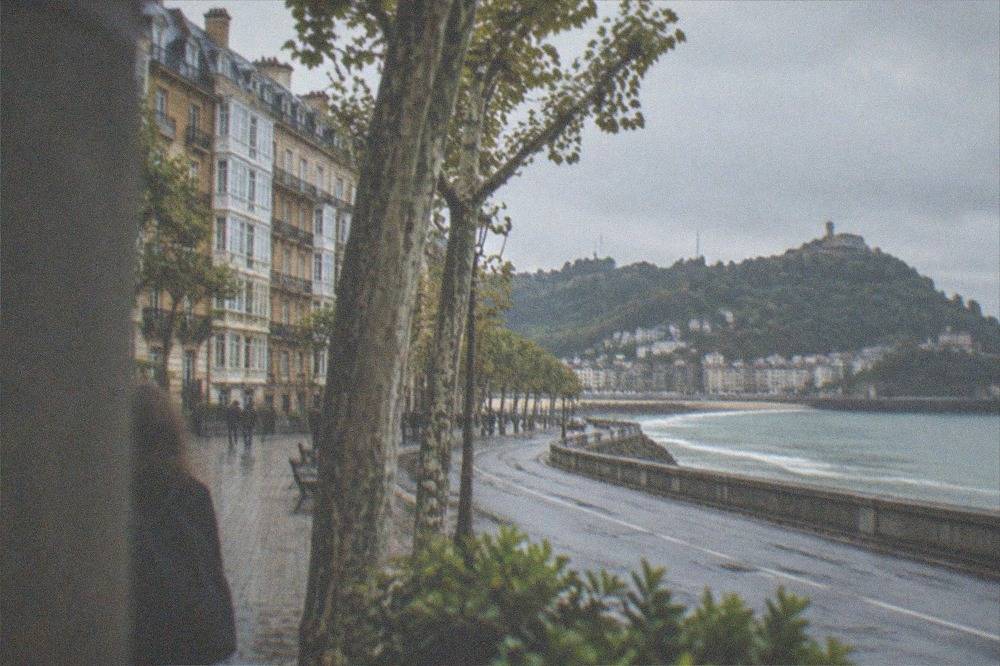
Spend the first day on the bay and in the Old Town, because San Sebastián's essential sights sit within a walk of each other: La Concha beach, the 1,350 metre crescent of sand that defines the city, Monte Urgull with its castle above the Old Town, and the Parte Vieja's pintxo bars, which are the reason many people made the trip from Barcelona in the first place. A guided walk of the historic centre is the most efficient first move.
The three beaches give the city its shape, and the council publishes their dimensions.
| Beach | Mean length | Mean width | Character, per the council |
|---|---|---|---|
| La Concha | 1,350 m | 40 m | Sandy and shallow, the tide often limits usable area |
| Ondarreta | 600 m | 100 m | Sandy, mass use, the walk to the Peine del Viento starts at its west end |
| Zurriola | 800 m | 110 m | Sandy, fairly open, strong swell, remodelled in 1994 |
Lifeguards are on all three beaches from 1 June to 30 September, with hours of 10:00 to 20:00 from 15 June to 15 September, so a summer arrival swims under supervision and an October arrival swims on a quieter, unguarded beach. The San Sebastian beaches guide covers each one, and the is San Sebastian worth visiting guide makes the case for the city as a whole.
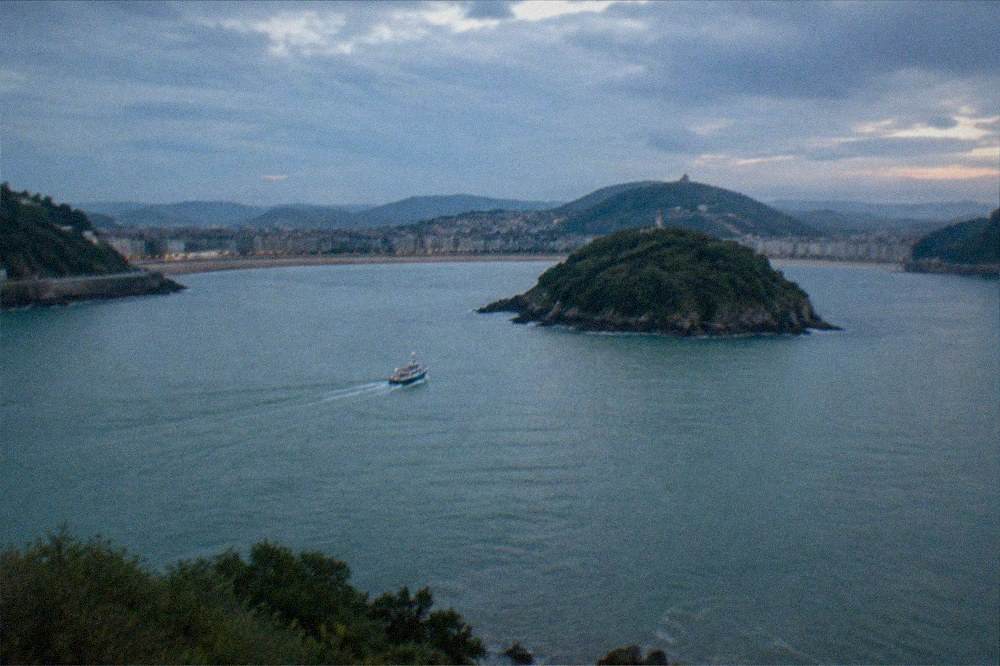
The must-see walk of the historic centre runs with a small group or as a private option, and it pairs well with a bay boat afterwards; the boat with the island stop has a ticket valid for the whole day, so the landing on Santa Clara can be as long or short as you like. The island's high season for boats is 1 June to 30 September, plus Easter and long weekends, and Hondalea, the Cristina Iglesias installation in the island's lighthouse, runs on the same seasonal rule, free and without booking, in half-hourly sessions while the boats run. Outside those windows the island is a view from the shore rather than a destination.
When Is The Best Time To Make The Trip From Barcelona?
The best months to travel from Barcelona to San Sebastián are June and September, when the sea and the beaches are warm, the lifeguard season is running, and the August peak has either not arrived or has just ended. July is the driest month by AEMET's normals for the Igeldo station, with 86 mm of rain over about 10 rain days, and August is the busiest month of the year in the city's hotels, so the shoulder months trade a little weather certainty for a lot of calm.
The climate table below is AEMET's own series for the station above the city, and it should be read honestly: this is a wet Atlantic city, and even the driest month averages 86 mm of rain. The station sits 250 m up on Monte Igeldo, so the seafront runs slightly warmer than these figures.
| Month | Mean C | Mean max C | Rain mm | Rain days | Sun hours |
|---|---|---|---|---|---|
| May | 14.4 | 17.7 | 120 | 12.2 | 181 |
| June | 16.9 | 20.0 | 90 | 10.6 | 189 |
| July | 18.9 | 21.8 | 86 | 9.8 | 196 |
| August | 19.5 | 22.5 | 117 | 10.5 | 190 |
| September | 18.0 | 21.1 | 111 | 10.1 | 179 |
| October | 15.5 | 18.5 | 159 | 11.8 | 140 |
August rainfall can surprise visitors expecting a Mediterranean August, and November is the wettest month of the year at 169 mm. The best time to visit guide weighs the whole year, month by month. Hotel demand follows the weather: INE's hotel occupancy figures for the city record August 2025 as the peak month with 245,769 overnight stays, a little over twice January's total, and July and August together account for 22 percent of the year's hotel nights.
Where Should You Eat Once You Arrive?
Eat pintxos in the Old Town on the first night, because the pintxo bar crawl is the city's signature evening and the Parte Vieja's bars sit within a few minutes' walk of each other. San Sebastián holds 11 Michelin stars across 6 restaurants inside the city in the MICHELIN Guide Spain 2026, including two three-star houses, Akelaŕe and Arzak, so the fine dining ceiling here is as high as anywhere in Spain, but the pintxo bars are what visitors tend to remember.
The Michelin count is worth stating precisely, because loose versions circulate. The province of Gipuzkoa holds 19 stars across 11 restaurants in the 2026 edition, but Martín Berasategui is in Lasarte-Oria and Mugaritz is in Errenteria, both separate municipalities, so they do not count toward the city's own total. The 2027 edition is announced on 24 November 2026 in Huesca, and every figure in that list changes that day.
| Restaurant | Stars, 2026 edition | Location |
|---|---|---|
| Akelaŕe | 3 | Donostia / San Sebastián |
| Arzak | 3 | Donostia / San Sebastián |
| Amelia by Paulo Airaudo | 2 | Donostia / San Sebastián |
| iBAi by Paulo Airaudo | 1 | Donostia / San Sebastián |
| Itzuli | 1 | Donostia / San Sebastián |
| Kokotxa | 1 | Donostia / San Sebastián |
For the evening crawl itself, the what are pintxos guide explains the form, the best pintxo bars guide names the bars, and the La Viña cheesecake guide covers the city's other famous export. A small-group Old Town pintxo and wine tour is the guided version of the same evening, and it is a reliable first-night move for travellers who arrived from Barcelona that morning.

Common Questions About Traveling From Barcelona To San Sebastian
Is San Sebastián closer to Barcelona or Madrid?
Madrid is closer to San Sebastián than Barcelona is. Barcelona sits on the Mediterranean coast at the far side of the country, while Madrid lies inland and nearer to the Basque Country, so the journey from Madrid is the shorter of the two in both distance and travel time.
What is the best way to get from Barcelona to San Sebastian?
A flight is the fastest option, either into San Sebastián Airport at Hondarribia, 20 km from the city, or into Bilbao followed by the airport coach of about 75 minutes. The train is the scenic alternative but takes the better part of a day on conventional track, since no high-speed line reaches the city.
Does the E21 bus still serve San Sebastian Airport?
No. Ekialdebus states that line E21 has not stopped at the airport since 1 June 2026, neither to board nor to alight. The operator's current airport lines are E20, E23, E25, E27, E28, E29 and E30, and E30 is the direct line between the airport and the city.
How much is the bus from Bilbao Airport to San Sebastian?
The Basque Government's airport page lists the PESA Lurraldebus coach at 17.10 EUR with a journey time of about 75 minutes. That page carries no date, so treat the fare as listed and confirm with the operator before travelling.
Do you need a car in San Sebastian once you arrive?
No. The city is compact and walkable, dBus covers the urban area with a 1.95 EUR cash fare, and the Euskotren Topo line runs from Amara station to Hendaia on the French border in 37 to 38 minutes for day trips along the coast. A car only earns its keep if the itinerary ranges deep into the province or Rioja.
Is San Sebastian rainy compared with Barcelona?
Yes, very much so. AEMET's Igeldo station records 1,507 mm of rain a year over 141 rain days, and even July, the driest month, averages 86 mm. Barcelona's Mediterranean climate is far drier, so travellers arriving from there should pack a rain layer in any month.
The route from Barcelona to San Sebastián is a crossing between two different Spains, Mediterranean and Atlantic, and the city at the end of it repays the journey with beaches, pintxos and more starred kitchens per street than anywhere else in the country; plan the flight, respect the rain, and the bay will be waiting when you land.