Euskotren And The Topo Line
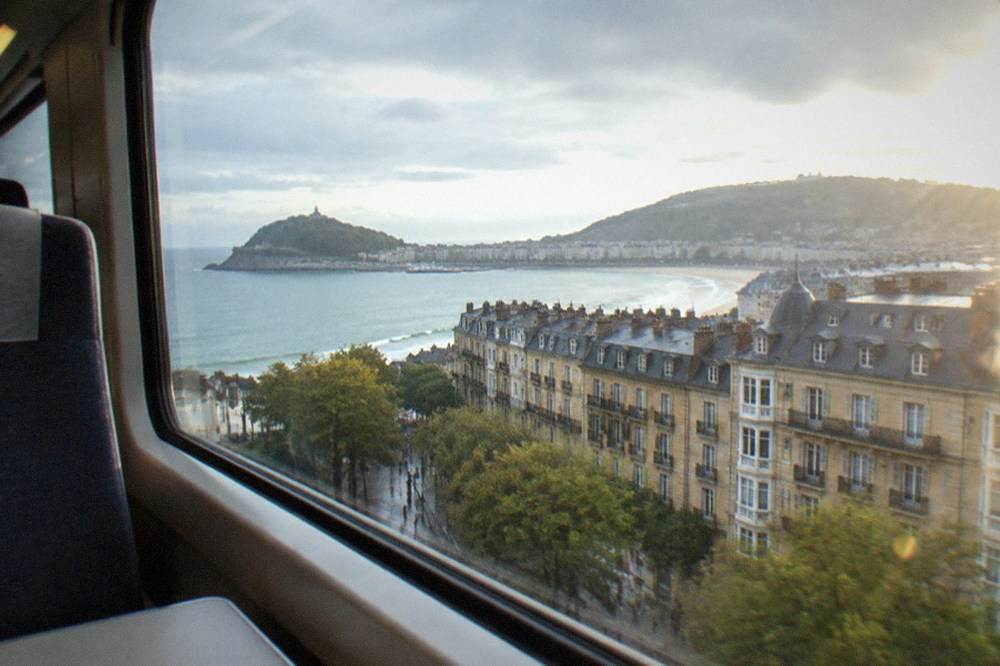
The Euskotren Topo is the narrow-gauge railway that threads the Basque coast, and in San Sebastián, the Basque Country's city on La Concha bay, it is both a commuter line and a practical tool for visitors.
Short answer
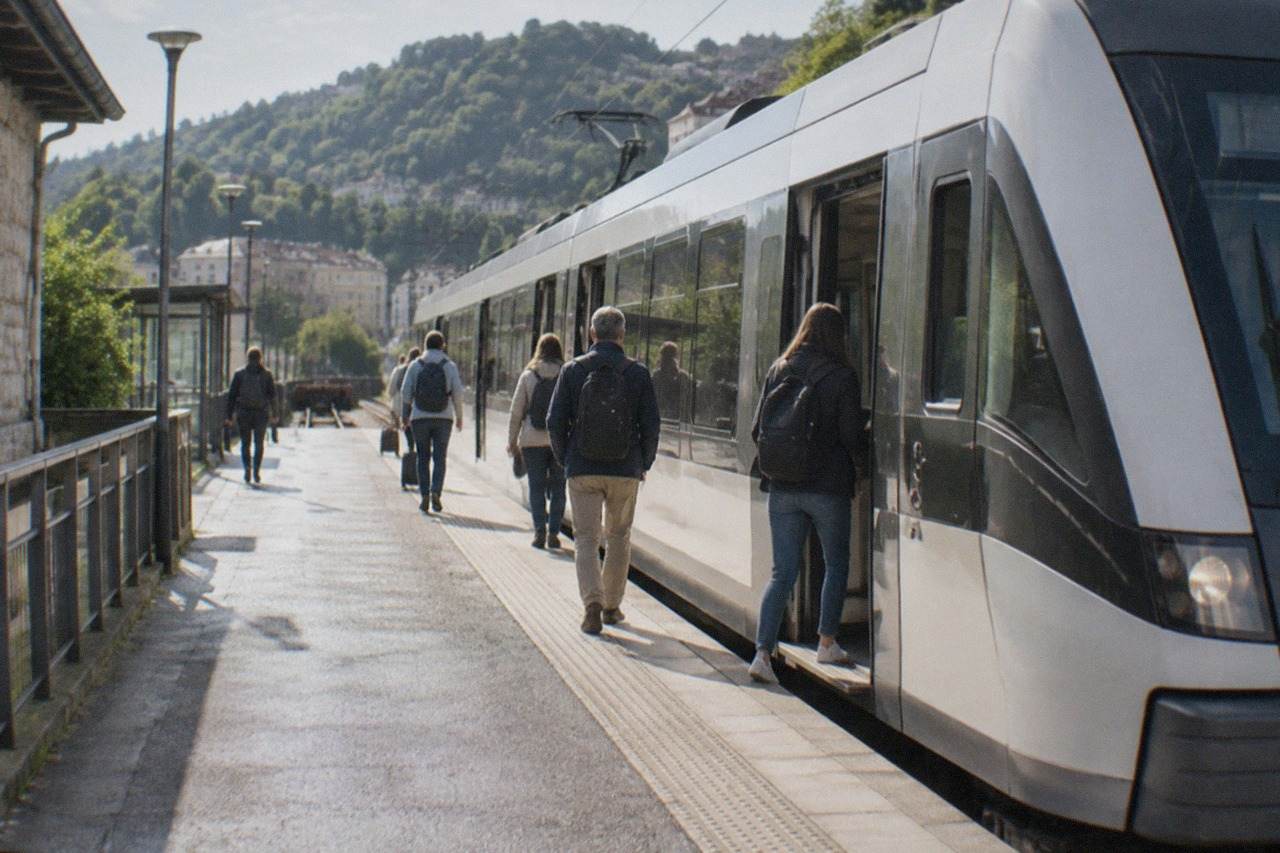
The Euskotren Topo connects Amara-Donostia station to Hendaia across the French border in 37 to 38 minutes, running every 30 minutes on the busiest service day, with an occasional fare of 2.90 EUR. Amara remains the working terminus while the new underground city section is fitted out, and no opening date for it has been published.
The Euskotren Topo is the narrow-gauge railway that runs along the Basque coast, and in San Sebastián, the city on La Concha bay in the Basque Country of Spain whose official name is Donostia / San Sebastián, it does two jobs at once. For locals it is a commuter line. For visitors it is the train that links the city to the border country east of it, including the French seaside town of Hendaia, on a route that hugs the coastline the whole way. This page covers what the Topo is, what it costs, how often it runs, what the MUGI card does, and what the new underground section under the city actually is, using the operator's own published timetable data and the Gipuzkoa fare system's own tariff.
What Is Euskotren And Where Does It Run In San Sebastian?
Euskotren is the Basque Government's regional railway operator, and its Topo line is the coastal route that starts at Amara-Donostia station in San Sebastián and runs east to Hendaia in France, covering the journey in 37 to 38 minutes. The line sits inside the MUGI fare system that covers all of Gipuzkoa province, so the same card that pays a city bus pays the train. Amara, at the inland edge of the city centre, is the line's working terminus.
The name needs untangling for anyone arriving fresh. Euskotren is the brand of Eusko Trenbideak, the Basque rail company, and it operates several lines across the Basque Country. The Topo is the one that matters to San Sebastián, because it is the one that starts here. Its eastern terminus is Hendaia, the French border beach town, which makes it one of the very few local trains that crosses an international frontier. The Basque name of the city, Donostia, appears in the station's own designation, Amara-Donostia, which is the form the operator's timetable data uses. The name Topo, meaning mole, refers to the tunnelled sections the line uses along the coast.
For orientation, the station sits in the Amara district, a short walk south of the Centre and the Parte Vieja. If you are still building your mental map of the city, the San Sebastian map guide and the guide to the city's name, Donostia or San Sebastián, are the places to start. The train is not the only way to move around, and for anything inside the city itself, walking or the dBus network usually beats it, but for the coastal strip east of the city it is the most direct option there is.
How Often Does The Topo Run And What Does A Ticket Cost?
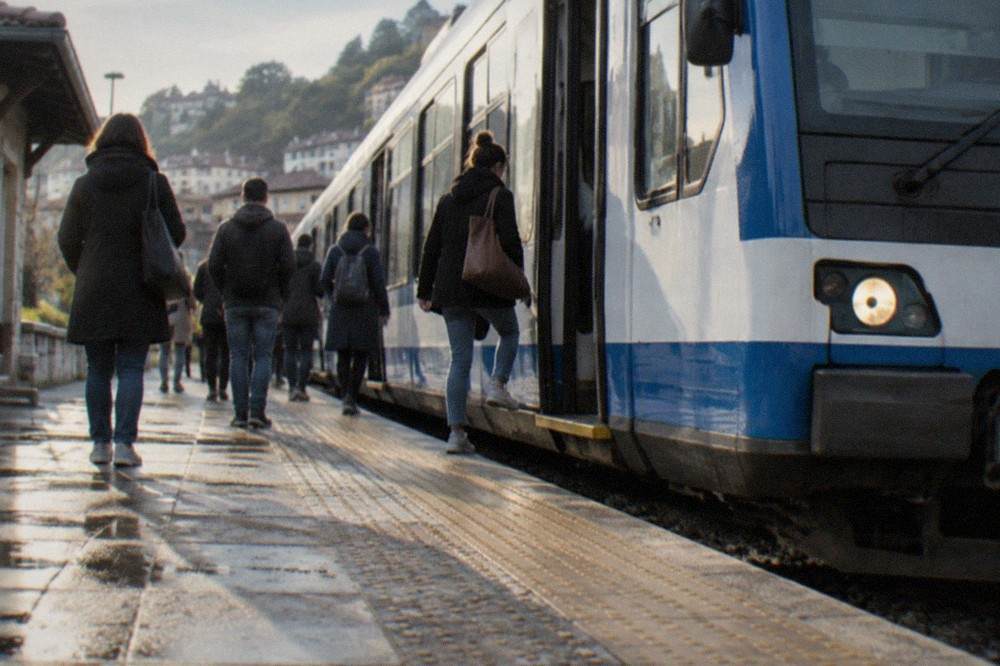
On the busiest service day in the operator's published timetable, the Topo runs from Amara-Donostia to Hendaia every 30 minutes, with 39 departures across the day, and the occasional single fare for the journey is 2.90 EUR, which is the MUGI system's one-jump cash price. The journey takes 37 to 38 minutes from end to end. That fare figure comes from Euskotren's own published timetable data cross-checked against the MUGI tariff, and it is a cash, pay-as-you-go price, not a card price.
The frequency figure deserves a careful reading. In the feed the operator publishes, 31 of the 38 gaps between departures on the busiest day are 30 minutes, and the rest are 60 minutes, so the service is genuinely half-hourly for most of the day but not every single hour. If you are planning a tight connection, a border shopping trip or a timed arrival in Hendaia, check the operator's current timetable rather than assuming a clock-face departure on the hour.
The fare is where the MUGI system matters. MUGI is the single fare system for Gipuzkoa, covering dBus city buses, Lurraldebus regional buses and Euskotren, and prices are set by the number of zone "jumps" you make rather than by distance. The Amara to Hendaia journey is a one-jump trip, which is why the occasional fare is 2.90 EUR. The table below shows the full occasional fare ladder from the MUGI tariff, so you can see how a longer journey scales.
The MUGI tariff sets occasional, paper-ticket prices by the number of zone jumps, in EUR:
| Ticket | Urban 1 and 0 jumps | 1 jump | 2 jumps | 3 jumps | 4 jumps | 5 jumps |
|---|---|---|---|---|---|---|
| Occasional ticket (cash) | 1.95 | 2.90 | 5.40 | 7.90 | 10.25 | 13.65 |
| Night ticket | 2.65 | 3.70 | 6.45 | 8.95 | 11.30 | 14.75 |
| MUGI anonymous card | 0.78 | 1.16 | 2.16 | 3.16 | 4.10 | 5.46 |
| MUGI personalised, trips 1 to 20 in the month | 0.59 | 0.88 | 1.64 | 2.41 | 3.12 | 4.16 |
Read that table twice before buying anything. The gap between the cash price and the anonymous card price is large: the same one-jump journey that costs 2.90 EUR in cash costs 1.16 EUR on an anonymous MUGI card, and 0.88 EUR on a personalised card for its first twenty trips in a month. A visitor making several train or bus journeys in a week will usually come out ahead with a card, though the purchase price of the card itself is not published in the tariff, so weigh that before committing. For a single round trip to the border, cash is simpler.
While you are weighing how to spend a day, the train is only one of the options. Here are three bookable ways to see the city and its surroundings that pair well with a rail pass.
Is The New Underground Topo Section Open In San Sebastian?
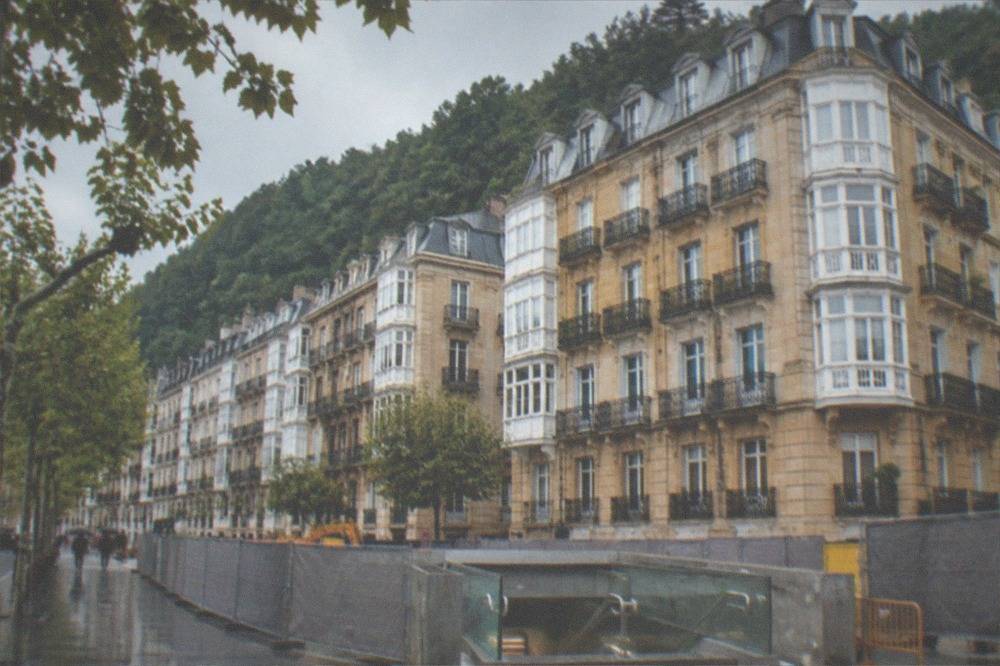
No, the new underground Topo section through San Sebastián has no published opening date, and Amara remains the line's working terminus. The Basque Government announced on 8 June 2026 that the railway civil works of the new through-line, including the station beside La Concha, are complete, and that the project has moved on to electrical installations, ventilation, signalling and communications. That announcement gave no opening date, so any date you read elsewhere is a guess.
This is the single most misunderstood thing about the Topo right now. The underground project is real, well advanced and visibly changing the city: the new through-line brings stations beside La Concha, at Bentaberri and at Amara, turning what is currently a terminus into a through-station. But civil works being finished is not the same as a railway being open. Fitting out a tunnel with signalling and ventilation is a long phase of work, and the Basque Government's own news note, which is the primary source for this, names no date at all.
So plan around what exists. If your accommodation is near La Concha and you imagined stepping from the beach onto a train, that is not yet a thing you can do: today you walk or bus to Amara. The guide to getting around San Sebastian covers the beaches themselves, and the neighbourhood guides cover where the station sits relative to the bay. Nothing about the new stations changes the fare system, because MUGI prices are set by zone jumps, not by which station you use.
How Does The MUGI Card Work For Visitors?
The MUGI card is Gipuzkoa's rechargeable fare card, and it cuts a one-jump Euskotren journey from 2.90 EUR in cash to 1.16 EUR on an anonymous card or 0.88 EUR on a personalised card for its first twenty trips in a month. It works on Euskotren, dBus city buses and Lurraldebus regional buses under one zone-jump tariff. The tariff does not publish what the card itself costs to buy, so that purchase price has to be checked at the point of sale.
Two card types exist, and the difference matters. The anonymous card is the visitor-friendly one: no registration, no personal details, and it carries the 0.78 EUR urban bus fare and the 1.16 EUR one-jump train fare. The personalised card is tied to a person and rewards heavy use, dropping to 0.88 EUR per one-jump trip for the first twenty trips of a month, a 69.5 per cent discount off the occasional fare as the tariff itself describes it. For a visitor staying four days, the anonymous card is the sensible comparison point.
The city bus system has its own fare page, and its cash prices match the MUGI occasional column: 1.95 EUR paid to the driver for a single dBus journey, and a 2.65 EUR special night ticket. One catch the dBus page states plainly: cash payment does not allow free transfers. With a card, the MUGI system handles transfers through its zone-jump logic instead, which is another reason the card wins for anything beyond a single ride.
| Way to pay | Urban bus, cash to driver | One-jump train, Amara to Hendaia | Transfers on cash |
|---|---|---|---|
| Cash occasional ticket | 1.95 EUR | 2.90 EUR | Not allowed |
| Night ticket | 2.65 EUR | 3.70 EUR | Not allowed |
| MUGI anonymous card | 0.78 EUR | 1.16 EUR | Handled by zone jumps |
| MUGI personalised card, trips 1 to 20 | 0.59 EUR | 0.88 EUR | Handled by zone jumps |
One detail from the tariff that surprises people: the urban zone, "Urbano 1", is defined as "Donostia y motora Pasaia", which means the Pasaia harbour ferry sits inside the urban fare. Pasaia, the fishing port east of the city that the coastal Camino passes through, is therefore reachable on urban-fare terms, which is a genuinely useful quirk for a day out. The Camino del Norte guide covers that walking route, whose second stage runs Pasaia to Donostia and third Donostia to Orio, though the tourism board publishes no stage distances.
Can You Use Euskotren For Day Trips Around Gipuzkoa?
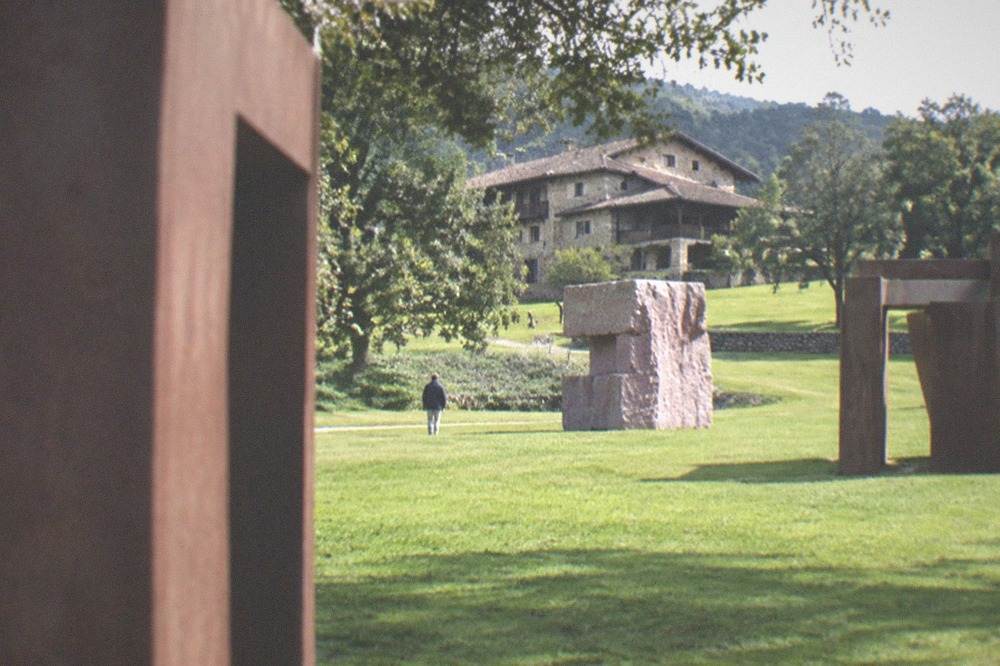
The Topo's own contribution to day trips is the eastern coastal strip: Amara-Donostia to Hendaia in 37 to 38 minutes, with Pasaia inside the urban fare zone. For destinations further afield, such as Hernani's Chillida Leku museum or the fishing town of Getaria, no Euskotren route, journey time or fare is published, so those trips need their own transport planning, and a guided tour with hotel or bus-station pickup removes the guesswork entirely.
Honesty about the limits of the train is worth more than enthusiasm. The Topo is a coastal line, and the journeys this page can state with figures are the ones above. What the region offers beyond the rail line is considerable, though. Chillida Leku, the sculpture museum of Eduardo Chillida, sits in Hernani, a separate municipality south of the city, open every day from 10:00 to 19:00 except Tuesdays and Wednesdays, with adult admission at 14 EUR, reduced at 10 EUR for groups of ten or more, students and visitors over 65, and 7 EUR for under 18s, and free entry for children up to 8. The museum's own practical page also lists a free car park, which tells you something about how visitors arrive.
The coastal Camino stages give a picture of what lies east of the city even if you never walk them: Pasaia to Donostia, then Donostia to Orio, then Orio to Zarautz, then Zarautz to Getaria and Zumaia. Getaria is the txakoli wine town, covered in the txakoli guide, and Zumaia sits inside the Basque Coast UNESCO Global Geopark, a UNESCO Global Geopark since 2015, which is a designation for the geopark territory and not for the city itself.
For the museum day, a guided visit is the simplest version of the trip.
Does The Weather Matter When Planning Train Days In San Sebastian?
Yes, because San Sebastián is a wet Atlantic city: AEMET's Igeldo station records 1,507 mm of rain a year over 141 rain days, and even July, the driest month, averages 86 mm across about 10 rain days. November is the wettest month at 169 mm, and August, at 117 mm, is wetter than June, July or September. The train is therefore a genuine asset on a rain day, not a fair-weather afterthought.
The climate normals below come from AEMET's own published series for the Donostia / San Sebastián, Igeldo station, covering the period 1981 to 2010, the period AEMET publishes on the station page. The station sits 250 m up on Monte Igeldo, so the seafront runs slightly warmer than these values. What the table shows is a city with no dry month at all: the lowest rainfall figure in it is July's 86 mm, and no month averages fewer than about ten days with a millimetre or more of rain.
| Month | Mean C | Mean max C | Mean min C | Rain mm | Days 1mm+ rain | Sun hours |
|---|---|---|---|---|---|---|
| Jan | 8.5 | 11 | 5.9 | 141 | 13.2 | 98 |
| Feb | 8.7 | 11.5 | 5.9 | 110 | 11.6 | 107 |
| Mar | 10.3 | 13.4 | 7.2 | 113 | 12.4 | 144 |
| Apr | 11.3 | 14.5 | 8.1 | 138 | 13.4 | 157 |
| May | 14.4 | 17.7 | 11.1 | 120 | 12.2 | 181 |
| Jun | 16.9 | 20 | 13.8 | 90 | 10.6 | 189 |
| Jul | 18.9 | 21.8 | 16 | 86 | 9.8 | 196 |
| Aug | 19.5 | 22.5 | 16.5 | 117 | 10.5 | 190 |
| Sep | 18 | 21.1 | 14.8 | 111 | 10.1 | 179 |
| Oct | 15.5 | 18.5 | 12.4 | 159 | 11.8 | 140 |
| Nov | 11.3 | 14 | 8.7 | 169 | 13 | 102 |
| Dec | 9.1 | 11.6 | 6.6 | 151 | 12.4 | 93 |
Read the table before promising anyone beach weather. August, the peak hotel month, carries 117 mm of rain, more than June's 90, July's 86 or September's 111. The practical consequence for rail planning is simple: a Topo trip to Hendaia is a plan that survives a shower, and the coastal views from the train do not close for rain. The San Sebastian weather guide and the rainy day guide ideas in the free things to do page pick up where this leaves off.
How Does Euskotren Fit Into A San Sebastian Itinerary?
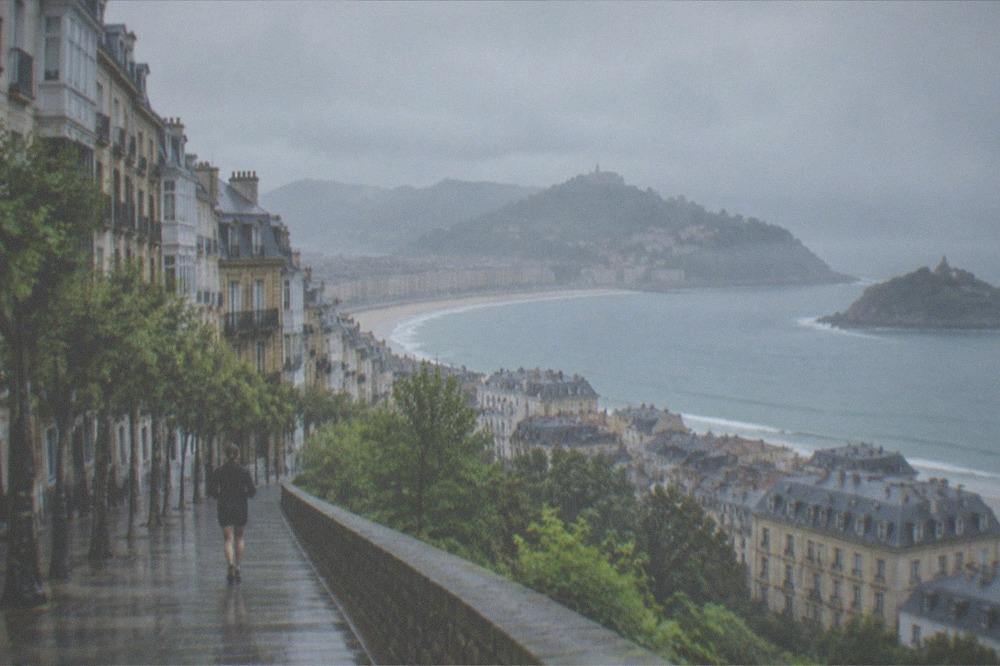
Treat the Topo as your eastern link: a half-day to Hendaia or Pasaia slotted into an itinerary of three or more days, with the train fares paid on a MUGI card if you will make more than a couple of journeys. Inside the city itself, the train is largely irrelevant, because the Centre, the Parte Vieja and the beaches are all within walking distance of each other and of Amara station.
The new underground section, when it opens, will change this calculus by putting a station beside La Concha, but no date exists for that yet, so it belongs in no itinerary today. A sensible pattern for a first visit, using the train where it earns its fare: day one for the city on foot, the Parte Vieja and the pintxo bars covered in the pintxos in San Sebastian guide; day two for the beaches and Monte Urgull, which keeps summer hours of 08:00 to 21:00 from 1 May to 30 September and 08:00 to 19:30 the rest of the year; day three for the Topo east to Pasaia or Hendaia, or a guided day trip if the rail timetable does not suit. The how many days guide works through the lengths in detail.
Seasonality shapes the surroundings more than the train itself. The beach lifeguard service on all three city beaches runs 1 June to 30 September, with hours of 10:00 to 20:00 from 15 June to 15 September and 13:30 to 19:30 from 16 to 30 September. The Santa Clara island boat runs its high season over the same dates, and Hondalea, the Cristina Iglesias work in the island's lighthouse, is open 1 June to 30 September from 11:00 to 18:30, free, in half-hour sessions, with no booking needed for the visit itself, only the boat. None of these depend on the train, but all of them shape what a coastal day looks like.
| Seasonal rule | Dates | Hours or detail |
|---|---|---|
| Beach lifeguards, all three beaches | 1 June to 30 September | 10:00 to 20:00 from 15 June to 15 September; 13:30 to 19:30 from 16 to 30 September |
| Monte Urgull access | 1 May to 30 September | 08:00 to 21:00 |
| Monte Urgull access | 1 October to 30 April | 08:00 to 19:30 |
| Santa Clara island boat, high season | 1 June to 30 September, plus Easter and long weekends | Red line every 30 minutes, 10:00 to 19:00, 5 EUR return |
| Hondalea, island lighthouse | 1 June to 30 September | 11:00 to 18:30, free, half-hour sessions, no booking for the visit |
For the second half of a longer stay, the guided options multiply. An electric bike tour covers the flat ground between the city and its beaches at a pace the train cannot match, and a walking tour of the historic centre fills the gaps the rail line never touches. Here are the same three picks again, because the decision between them is really a decision about how you want to move.
Of those three, the electric bike ride is the one that competes most directly with the train, because both cover the ground between the city and the coast. The difference is simple: the bike follows the seafront and the river at whatever pace you set, while the Topo runs its fixed half-hourly pattern east through the tunnels. On a dry morning the bike wins comfortably, and on one of the city's 141 rain days the train does.
What Should You Know Before Riding The Topo Line?
Bring the practical basics: the emergency number in Spain is 112 and the San Sebastián local police number is 092, the currency is the euro, and Spain is part of the Schengen area of 29 countries, so a train to Hendaia crosses a border with no routine passport control. ETIAS is not in operation, and the EU's page says no applications are being collected, so do not apply for one.
The Topo's cash fare of 2.90 EUR needs no advance booking, and the MUGI card is bought in person.
The border point deserves emphasis, because it shapes the eastern end of the line. Hendaia is in France, and the Schengen area means the frontier is functionally open, but non-European visitors should still carry identification, as border checks can occur anywhere inside Schengen, not only at the line. The currency does not change: the euro serves both sides, so a MUGI card or cash works either way for the Spanish side of the journey.
Money matters beyond the fare, too. A tourist tax exists in law, Norma Foral 3/2026 of Gipuzkoa, published in the Basque official bulletin on 25 June 2026, but it does not take effect until 1 January 2027, so no visitor pays it before then. The law sets bands per person per night, from up to 6.50 EUR for five-star hotels and tourist-use dwellings down to up to 1.25 EUR for agroturismos, with at most six nights charged per stay and under 18s exempt, and each council picks its own rate inside the bands. San Sebastián's own rate has not been published in an official municipal ordinance, so no single figure for this city can be stated.
| Tourist tax band, Gipuzkoa law | Minimum EUR per night | Maximum EUR per night |
|---|---|---|
| Hotel 5 stars | 4.50 | 6.50 |
| Hotel 4 stars | 3.50 | 5.50 |
| Hotel 3 stars | 1.50 | 3.50 |
| Tourist apartments | 1.50 | 3.50 |
| Campsites, rural houses, hostels | 0.75 | 1.75 |
| Tourist-use dwellings | 4.50 | 6.50 |
That table is the law's framework, not a bill: nothing is charged before 1 January 2027, and the city's own rate inside those bands is not yet published. Anyone booking accommodation for 2027 should ask the property what rate its council has set rather than trusting a number read anywhere else, including here.
Common Questions About Euskotren In San Sebastian
Does Euskotren go to France?
Yes. The Topo line runs from Amara-Donostia in San Sebastián to Hendaia in France, a journey of 37 to 38 minutes, with an occasional fare of 2.90 EUR. Spain and France are both in the Schengen area, so there is no routine border control on the train.
How often does the Topo train run?
On the busiest service day in the operator's published timetable, departures run every 30 minutes for most of the day, with 39 departures in total and the remaining gaps at 60 minutes. Check the operator's current timetable for the day you travel.
Is the new underground Topo station at La Concha open?
No opening date has been published. The Basque Government announced on 8 June 2026 that the railway civil works of the new through-line, including the La Concha station, are complete and that fitting-out is under way. Amara remains the working terminus.
Can I use one card for the train and the city buses?
Yes. The MUGI card covers Euskotren, dBus city buses and Lurraldebus under one zone-jump tariff. A one-jump train journey costs 1.16 EUR on an anonymous card against 2.90 EUR in cash.
Do I need to book Euskotren tickets in advance?
No. The occasional fare is a pay-as-you-go price, and the MUGI card is bought and loaded in person. There is no reservation system to worry about for this line.
Does the tourist tax apply to train travel?
No, the tourist tax is a charge on accommodation stays, not transport, and it does not take effect until 1 January 2027 under the Gipuzkoa law. Train fares are unaffected.
The Topo is a small railway with an outsized role in how the eastern half of this coast comes together, and riding it needs nothing more than a card, a fare of a couple of euros and a free afternoon. For everything else the city offers, the San Sebastian Spain Guide covers the beaches, the pintxo bars and the day trips this train connects to.