Madrid To San Sebastian
Train or plane from Madrid to San Sebastián? The honest comparison, the airport trap to avoid, and what to do the moment the bags hit the floor.
Short answer
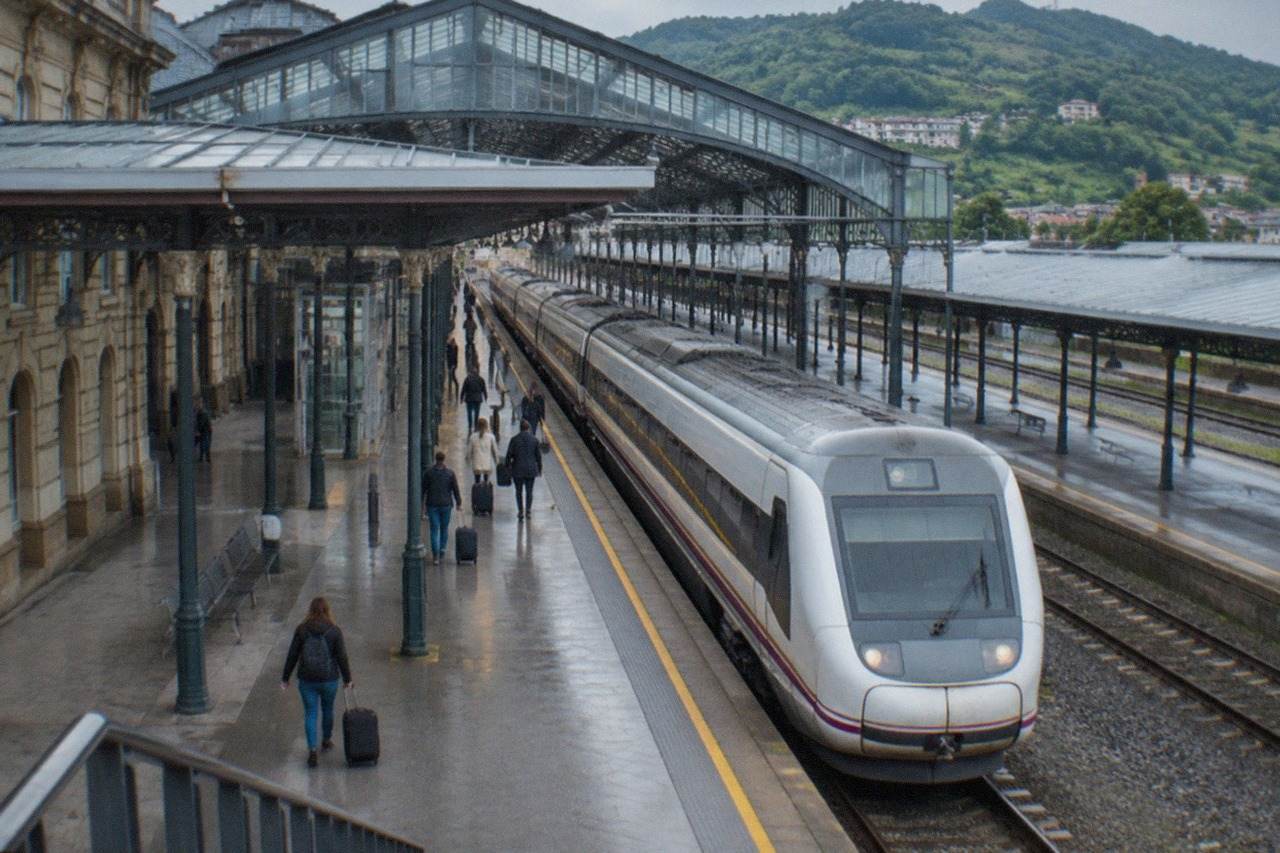
There is no true high-speed rail line into San Sebastián, so the choice is a Renfe train on conventional track, a flight into the small EAS airport 20 km away, or a flight into Bilbao followed by a coach. For most travellers the train wins on convenience because it arrives in the city centre; flying only pays off when the fare and the connection line up.
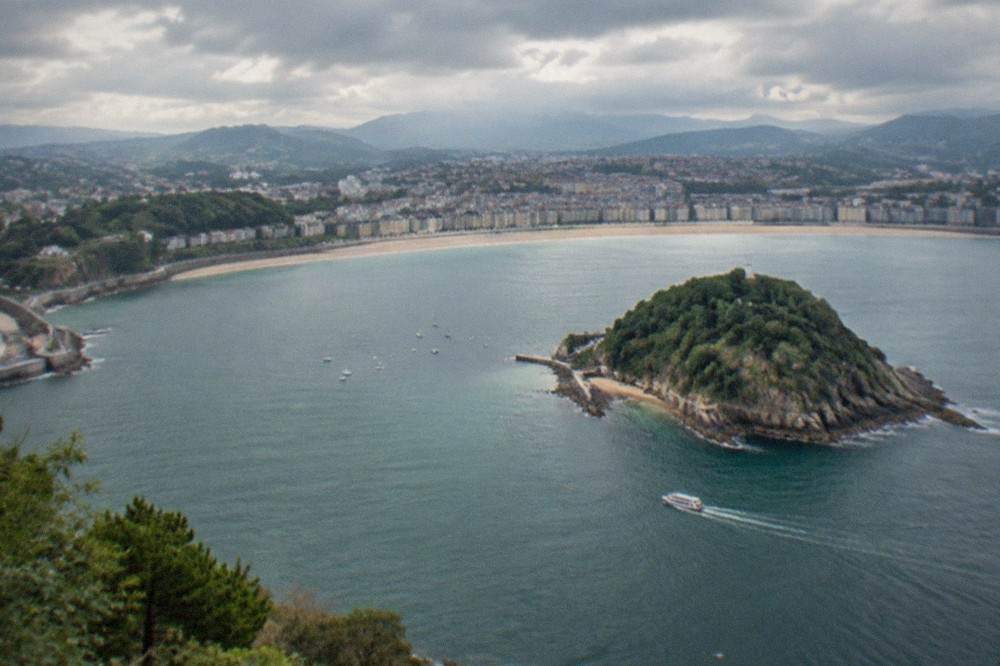
Madrid sits near the geographic centre of Spain, and San Sebastián, the Basque city on La Concha bay whose official name is Donostia / San Sebastián, sits on the Atlantic coast almost at the French border. The run between them crosses three regions and a mountain range, and that geography explains almost everything about the journey: the rail line is scenic but not fully high-speed, the city's own airport is small, and the two biggest airports within reach are in other towns entirely. This page compares every option, and it flags the one airport bus line that no longer serves the airport at all despite still appearing on an official tourism page.
How To Get San Sebastián From Madrid?
There are four realistic ways to reach San Sebastián from Madrid: the Renfe train into the city's own station in the centre, a flight into San Sebastián Airport at Hondarribia 20 km from the city, a flight into Bilbao Airport 105 km away followed by a coach, or a drive. Each has a clear best case: the train for city-centre arrival, the small airport for speed when a direct flight exists, Bilbao for flight choice, and the car for the coastal towns beyond.
The first thing to understand is that San Sebastián is not a hub. The city has 189,866 residents on the municipal register, and its airport, EAS at Hondarribia, is one of the smallest airports serving any major Spanish tourist destination. The tourism board lists three airports within a little over 100 km: San Sebastián Airport at 20 km, Biarritz in France at 45 km, and Bilbao at 105 km. Two of those are international, and one of them is in another country.
The table below sets out the four options with what the verified sources actually say about each. Notice what is deliberately absent: no driving time and no taxi fare appears anywhere, because no official source in the research pack states one for this route.
| Option | Where you arrive | What the sources say | Best for |
|---|---|---|---|
| Renfe train | The city's Renfe station, in the centre | Conventional gauge line, no fully high-speed track into the city | Arriving without transfers |
| Flight to EAS | Hondarribia, 20 km from the city | Small airport; bus lines E20, E23, E25, E27, E28, E29, E30 serve it | When a direct flight fits |
| Flight to BIO | Bilbao, 105 km away | Basque Government lists a PESA Lurraldebus coach at 17.10 EUR, about 75 minutes | Flight choice and frequency |
| Flight to BIQ | Biarritz, France, 45 km away | Tourism board lists direct service to the city; no operator detail is sourced | French-side itineraries |
| Car | Door to door | No driving time is sourced for this route | Coastal touring beyond the city |
One warning before anything else, because it changes plans. The tourism board's "how to get there" page still tells readers that bus line E21 serves San Sebastián Airport all year. That is stale. The operator Ekialdebus states that since 1 June 2026 inclusive, line E21 does not stop at the airport at all, neither at the exterior stop B nor at Terminal 1 stop A, to board or to alight. Anyone planning around that line from an outdated page will be standing at a stop no bus visits.
Is It Better To Fly Or Train From Madrid To San Sebastián?
For many travellers the train is the better choice, because it delivers you into the city centre in one seat and the flight does not. Every flight option adds a second leg: EAS is 20 km from the city, Bilbao is 105 km, and Biarritz is 45 km in another country. The train also avoids airport arrival windows and security queues entirely.
Flying wins when a direct flight into EAS exists at a good fare and the bus connection lines up, or when the train timetable for your date is poor.
The arithmetic that matters is total door-to-door time, and the pack's figures make the shape of it clear. A flight into Bilbao is followed by a coach the Basque Government lists at 17.10 EUR and roughly 75 minutes, and that page carries no date, so confirm with the operator before relying on the fare. A flight into EAS is followed by a much shorter hop, but the airport is small and flight choice from Madrid is limited. The train has no second leg at all.
There is also the matter of what you do when you arrive. The Renfe station sits within walking distance of the centre, and the city is famously compact: the whole bay, the Old Town and the Gros district sit inside a walkable crescent. If the question is whether to fly or take the train from Barcelona instead, the same logic applies with different numbers, and there is a dedicated page on that route.
Once you are in the city and the bags are dropped, the fastest way into its culture is its food, and a guided introduction does the work of a week of guesswork. These are the three tours that fit a first evening or a first morning best.
Is There A Bullet Train From Madrid To San Sebastián?
No, there is no bullet train from Madrid to San Sebastián. Spain's high-speed network, built to standard gauge, does not reach the city on dedicated track, and the trains that serve it from Madrid run on conventional Iberian-gauge line for the final approach. The city's own rail future is the Euskotren Topo, a commuter line, and its new underground section has no published opening date. So the honest answer is a train, but not a bullet train.
The word "bullet train" usually means the AVE, Spain's flagship high-speed service, and the AVE does not serve San Sebastián. Renfe's Alvia trains handle long-distance services onto mixed-gauge routes, and the line into the Basque coast is conventional. The research pack deliberately states no Renfe journey time, fare or frequency to Madrid, because no official figure for that exact journey is in it: consult Renfe's own timetable for the departure that fits your date.
What is verified is the local picture once you are there. The Euskotren Topo, the narrow-gauge commuter line, runs Amara-Donostia to Hendaia every 30 minutes on the busiest service day, for a 2.90 EUR occasional fare, computed from Euskotren's own published timetable data and the MUGI tariff. Amara is still the working terminus. The Basque Government announced on 8 June 2026 that civil works on the new underground through-line, including the station beside La Concha, are complete and fitting-out has begun, and it gave no opening date, so nobody can honestly tell you when the underground stations open.
Is There A High Speed Train Between Madrid And San Sebastián?
Not in the strict sense: no train between Madrid and San Sebastián runs on dedicated high-speed track for the whole journey. The Basque Y, the high-speed line intended to connect the three Basque capitals, has no sourced arrival date, and the research pack stays silent on any works at the Renfe station. Until that changes, the answer is a conventional long-distance train, comfortable but not AVE-fast, and no amount of marketing copy changes the gauge of the rails.
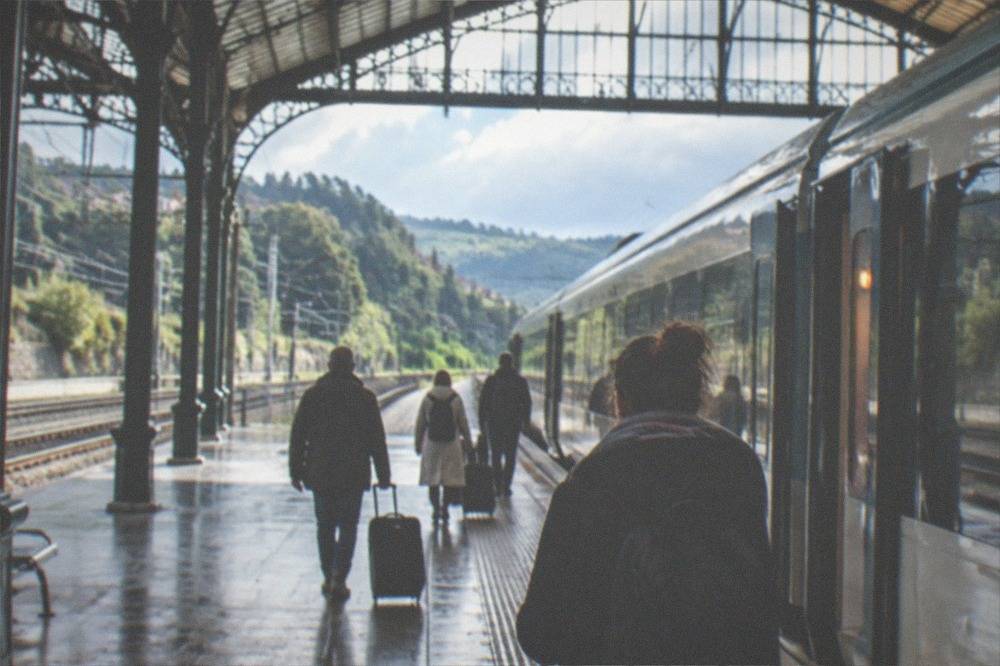
This matters for planning because expectations drive satisfaction. Travellers who board expecting a three-hour AVE-style run and then experience a slower, stopping service rate the journey badly, and the fault is the expectation, not the train. The scenery compensates: the route crosses the northern meseta edge and then the green mountains of the Basque Country, and the change from Spain's dry interior to its wet Atlantic coast is visible from the window. AEMET's normals for its Igeldo station record 1,507 mm of rain a year over 141 rain days in San Sebastián, against a far drier interior, and the landscape tells you so before any weather app does.
The question of high-speed rail's arrival in the Basque Country has its own answer page, which tracks what is and is not announced, and the sister question of whether the ride is worth it for the views alone is answered separately: is the Madrid train ride scenic.
For filling the hours after arrival, a short guided walk is the cheapest structured option on the roster. The listing for the walking tour with pintxo and drink ends with a pintxo and a drink included in the price, and it exists precisely for the afternoon a train delivers you at lunchtime.
How Long Does It Take To Get From Madrid To San Sebastián By Train?
No verified journey time for the Madrid to San Sebastián train appears in the research pack, so this page will not print one, and any number you read elsewhere should be checked against Renfe's own timetable for your exact date. What can be said is structural: the journey is a long-distance conventional-gauge run, not a high-speed one, so plan for the better part of a day rather than a hop, and treat the timetable, not a blog's average, as the source of truth.
The reason for the caution is that journey times on this route vary by departure, and a single figure quoted in a guide becomes wrong within a season. Renfe publishes its own timetable, and that is the only source worth planning against. What the pack does verify is everything at the San Sebastián end: the station's position in the centre, the Topo commuter line out of Amara, and the fact that the city is small enough that the last kilometre from any station is a walk or a short city bus ride at 1.95 EUR cash, the dBus occasional fare from the operator's own fare page. Everything else covered here is indexed on San Sebastian Spain Guide.
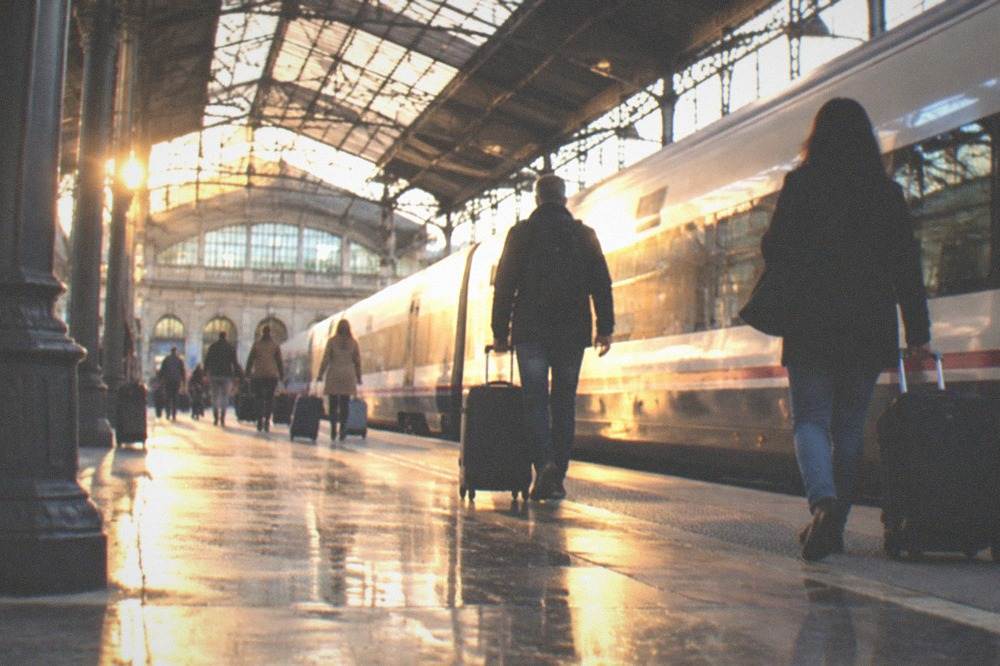
If the plan is to eat well the evening you arrive, a market-and-cooking class turns the arrival day itself into the highlight. The market tour and hands-on Basque cooking class opens with a market visit and then cooks Basque signature dishes in English, which suits a first day when the city is still unfamiliar.
What's The Best Way To Get From Madrid To San Sebastian?
The best way is the direct train, because it is the only option that ends at the destination rather than near it. Book it when the timetable suits your dates and you want a single seat from Madrid to the city centre. Choose a flight into EAS instead when a direct connection exists at a good fare, a flight into Bilbao when flight frequency matters more than the transfer, and a car only when the trip continues along the coast to Getaria, Zumaia or France.
The decision tree is short. Count the legs. The train is one leg. A flight is two or three: the flight, the airport-to-city transfer, and sometimes a wait between them. Every additional leg is a new chance for delay, and the Bilbao coach, at about 75 minutes as listed by the Basque Government, is a real leg of real length, not a shuttle.
| Your priority | Best option | Why |
|---|---|---|
| Fewest transfers | Renfe train | One seat, city-centre arrival |
| Fastest when it fits | Flight to EAS | Airport is 20 km from the city |
| Flight choice and frequency | Flight to BIO plus coach | Bilbao has the widest network; coach listed at 17.10 EUR, about 75 minutes |
| Coastal touring after arrival | Car | Getaria, Zumaia and the French Basque coast are awkward by train |
| Cheapest structured arrival activity | Walking tour with pintxo | Short guided walk, pintxo and drink included |
For choosing between the airports in more depth, the site has a full comparison at which airport for San Sebastian, and the Bilbao route, including the coach detail, has its own page on Bilbao to San Sebastian.
Can You Do A Day Trip To San Sebastian From Madrid?
A day trip from Madrid to San Sebastián is not realistic, because the journey each way takes the better part of a day on a conventional rail line and no flight-plus-transfer combination reliably compresses it into a morning. The city deserves at least one night, ideally two, and the food culture, which is the main reason to come, only opens properly in the evening when the pintxo bars fill. Plan a short stay, not a dash.
The structure of the city argues for the overnight. The three beaches, La Concha at 1,350 m, Ondarreta at 600 m and Zurriola at 800 m, plus Monte Urgull and Monte Igueldo on either flank, are a two-day landscape at a relaxed pace, not a checklist. The pintxo bars of the Parte Vieja run all day but hit their stride after dark, and the cider houses and Michelin-starred tables need bookings made well ahead. A visitor who arrives at noon and leaves at six sees the bay and misses the city.
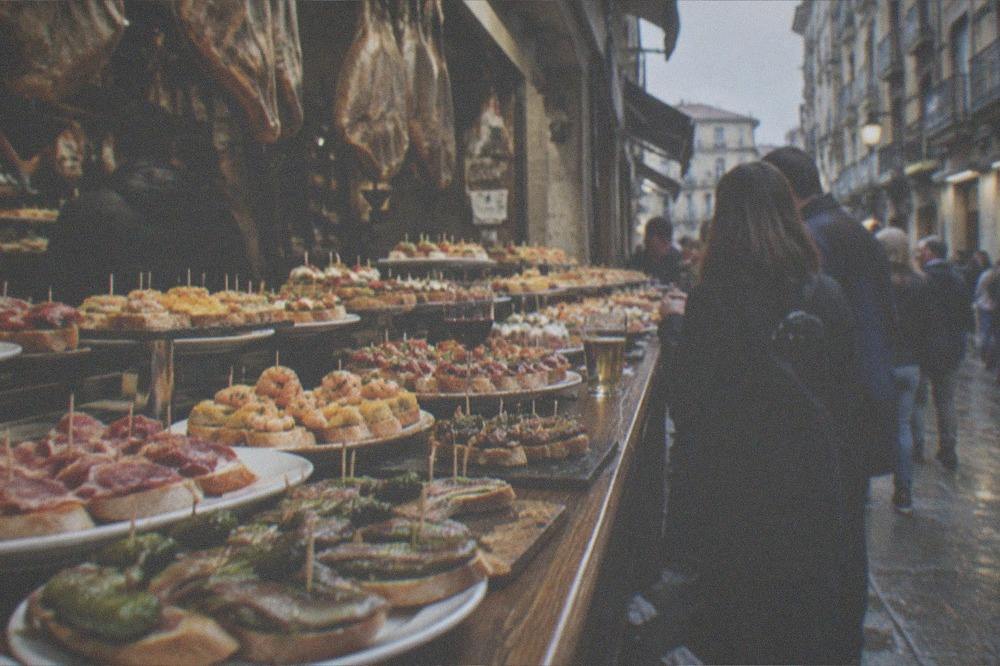
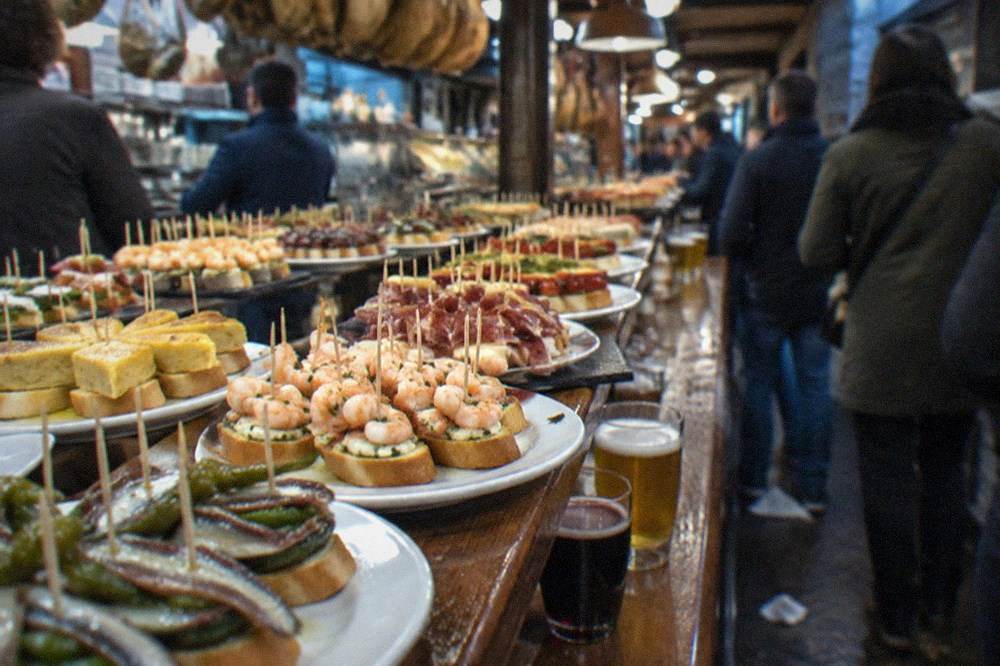
For how long to stay, the site's own answer is how many days in San Sebastian, and for the first evening the strongest single introduction to the city is the small-group Old Town crawl: the Old Town pintxos and wine tour moves through pintxo bars, restaurants and gourmet shops in a small group, and its rating and review count render on its own listing. Check availability
Which Airport Should You Fly Into For San Sebastian?
Fly into San Sebastián Airport (EAS) at Hondarribia when a suitable flight exists, because it is only 20 km from the city and the operator lists seven bus lines serving it, including the direct E30. Fly into Bilbao (BIO), 105 km away, when flight choice matters more, and take the coach the Basque Government lists at 17.10 EUR and about 75 minutes. Biarritz (BIQ), 45 km away in France, suits itineraries that continue along the French coast.
The airport comparison comes down to frequency against distance, and the figures are these:
| Airport | Distance from the city | Airport bus lines listed by the operator | Notes |
|---|---|---|---|
| San Sebastián Airport (EAS), Hondarribia | 20 km | E20, E23, E25, E27, E28, E29, E30 | E30 is the direct Donostia to airport line; E21 has not stopped here since 1 June 2026 |
| Bilbao Airport (BIO) | 105 km | PESA Lurraldebus coach to San Sebastián | 17.10 EUR, about 75 minutes, listed by the Basque Government; confirm with the operator |
| Biarritz Airport (BIQ), France | 45 km | Direct service listed by the tourism board | No operator, fare or frequency is sourced; check before booking |
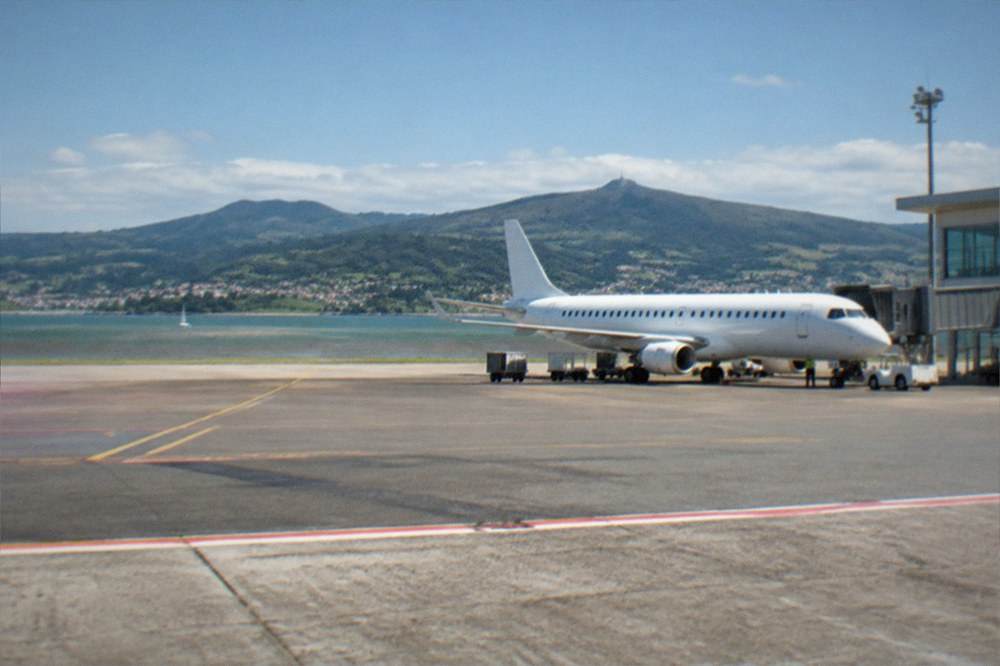
The E21 trap deserves one more paragraph because it is the single most misleading line a traveller can inherit. The tourism board page still lists E21 as an all-year airport line. The operator's own notice says the stop was withdrawn on 1 June 2026 at both the exterior stop and Terminal 1. The operator's airport services page is the live truth: E20, E23, E25, E27, E28, E29 and E30, with E30 running direct between Donostia and the airport. Its timetable page is stamped with a June 2026 update and warns that times are approximate because of traffic.
For where everything arrives and connects, the stations page covers the Renfe station, the Topo and the bus terminals in one place: San Sebastian train and bus stations.
What Should You Know Before You Arrive In San Sebastian?
Arrive prepared for rain, book food ahead, and know the season rules: AEMET's Igeldo station records 1,507 mm of rain a year over 141 rain days, July the driest month still averages 86 mm, and the beach lifeguards, the Santa Clara island boats and the Hondalea lighthouse installation all run 1 June to 30 September only. Museums close on set weekdays, San Telmo is free every Tuesday, and the city's tourist tax does not exist before 1 January 2027.
The climate table below, from AEMET's normals for the Igeldo station, period 1981 to 2010, at 250 m on Monte Igeldo so the seafront runs slightly warmer, is the honest planning tool. Note that August, at 117 mm, is wetter than June at 90, July at 86 or September at 111, so no summer month is a dry guarantee.
| Month | Mean C | Mean max C | Rain mm | Rain days | Sun hours |
|---|---|---|---|---|---|
| January | 8.5 | 11.0 | 141 | 13.2 | 98 |
| April | 11.3 | 14.5 | 138 | 13.4 | 157 |
| July | 18.9 | 21.8 | 86 | 9.8 | 196 |
| August | 19.5 | 22.5 | 117 | 10.5 | 190 |
| November | 11.3 | 14.0 | 169 | 13.0 | 102 |
The season rules are equally concrete, and they are the difference between a plan that works and one that meets a closed gate:
| What | Season rule | Source detail |
|---|---|---|
| Beach lifeguards, all three beaches | 1 June to 30 September | Hours 10:00 to 20:00 from 15 June to 15 September; 13:30 to 19:30 from 16 to 30 September |
| Santa Clara island boats | High season 1 June to 30 September | Red line 5 EUR return, every 30 minutes; low season, consult departures |
| Hondalea, the lighthouse installation | 1 June to 30 September, 11:00 to 18:30 | Free, sessions every half hour, no booking needed for the visit itself |
| Monte Urgull access | 08:00 to 21:00 to 30 September; 08:00 to 19:30 from 1 October | The hill is closed at night |
| San Telmo Museoa | Tuesday to Sunday; closed Mondays | Free every Tuesday; 10.00 EUR general, 4.00 EUR reduced |
| Chillida Leku, Hernani | Daily 10:00 to 19:00 except Tuesday and Wednesday | 14 EUR adults; it is outside the city |
The museums deserve their own word of caution about days. San Telmo Museoa is closed Mondays except holidays and long weekends, and free for everyone every Tuesday, with hours of 10:00 to 19:00 in winter and 10:00 to 20:00 in summer. The Aquarium closes on Mondays from October to March unless a long weekend intervenes, and its last entry is 60 minutes before closing. Tabakalera is free to enter but also shuts on Mondays. A Monday arrival, in short, is a beach-and-bars day, and the site's rainy day guide exists for exactly the days AEMET's 141 rain days deliver.
Before locking the itinerary, these three tours are the ones that consistently fit a Madrid arrival, whether the train delivered you at noon or a flight at dusk.
Common Questions About Travel From Madrid To San Sebastian
Is it better to fly or train from Madrid to San Sebastián?
The train is better because it arrives in the city centre in one seat. Flying only pays off when a direct flight into EAS exists at a good fare, or when Bilbao's wider flight choice matters more than the coach transfer that follows it.
Where does the train from Madrid arrive in San Sebastián?
The Renfe station sits in the centre, close enough that the last kilometre to most hotels is a walk or a 1.95 EUR dBus cash fare. The Euskotren Topo commuter line uses Amara as its working terminus, 37 to 38 minutes to Hendaia on the busiest-day frequency of every 30 minutes.
Do I need a car in San Sebastián?
No. The city is compact, the bay and the Old Town are walkable, and the dBus network covers the rest with a 1.95 EUR occasional fare. A car earns its keep only for the coastal day trips to Getaria, Zumaia and the French Basque towns, several of which also run as guided excursions from the bus station.
Is there a tourist tax in San Sebastián?
Not yet. Norma Foral 3/2026 of Gipuzkoa takes effect on 1 January 2027 and sets bands per person per night, with at most 6 nights charged and under 18s exempt. Until the city council publishes its own rate, say nothing firmer than "up to" the band maximum, and nobody pays anything before 2027.
What is the wettest month in San Sebastián?
November, at 169 mm of rain over 13 rain days at AEMET's Igeldo station. July is the driest month and still averages 86 mm over about 10 rain days, so pack for rain in any season.
Can you walk everywhere in San Sebastián?
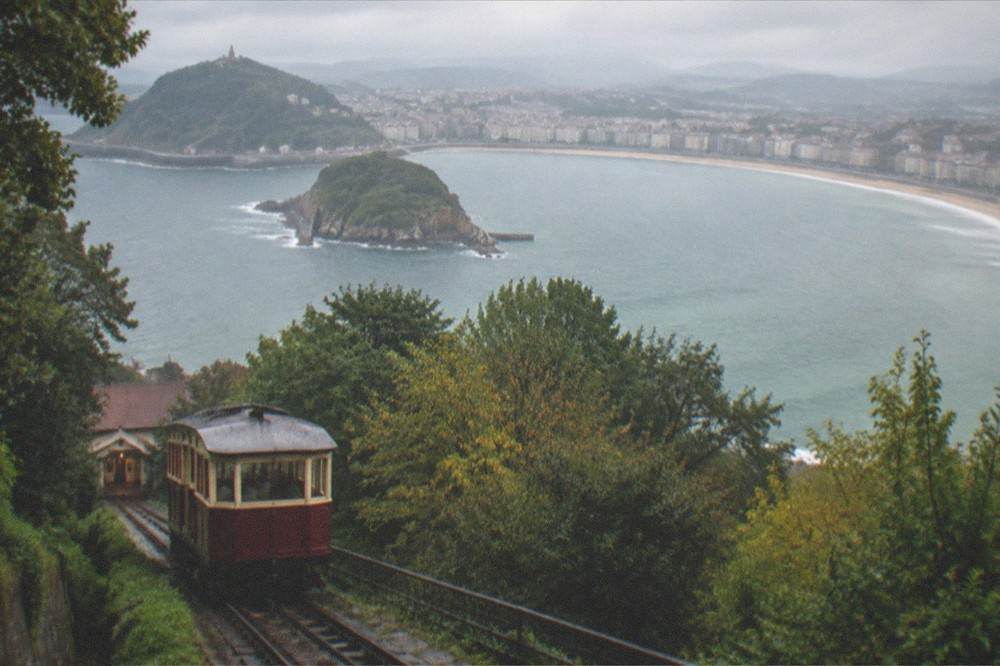
Almost. La Concha at 1,350 m, Ondarreta at 600 m and Zurriola at 800 m form one walkable crescent, and Monte Urgull's access hours run to 21:00 in summer and 19:30 in winter. The one climb worth a ticket is Monte Igueldo, whose funicular charges 5.50 EUR return for an adult and includes entry to the grounds, and whose own site sells no downhill-only ticket.
Whether the rails or a runway bring you, the city at the end of the journey repays an overnight: book the pintxo crawl for the first evening, keep Tuesday free for San Telmo, and let the rain do what AEMET says it will.