Hondarribia Day Trip
Hondarribia is a separate walled town on the Spanish side of the Bidasoa river mouth, a short hop east of San Sebastián and home to the city's airport, with a marina quarter of painted timber houses and a Michelin-starred restaurant in the MICHELIN Guide Spain 2026.
Short answer
Hondarribia is a town in Gipuzkoa, Basque Country, Spain, on the border with France at the mouth of the Bidasoa river, east of San Sebastián. The tourism board places San Sebastián Airport, which sits at Hondarribia, 20 km from San Sebastián.
Hondarribia is a walled border town in the province of Gipuzkoa, in the Basque Country of northern Spain, sitting on the Spanish bank of the Bidasoa river where it meets the Bay of Biscay, with France directly across the water. It is a municipality in its own right, never a district of San Sebastián, and it gives its name to the strip of coast where San Sebastián's own airport sits, which the tourism board lists at 20 km from the city. Day-trippers come for the painted timber balconies of the Marina quarter, the old walled centre on the hill, and a restaurant holding one star in the MICHELIN Guide Spain 2026. This page, from San Sebastian Spain Guide, covers how to get there, what to see, where to eat, and which guided tours from San Sebastián include the town.
Where Is Hondarribia Spain?
Hondarribia is a town in Gipuzkoa, the province that also holds San Sebastián, in the Basque Country of northern Spain. It stands on the Spanish bank of the Bidasoa river at the river mouth, facing the French town of Hendaye across the water, and the border with France runs through the river between them. San Sebastián Airport sits at Hondarribia, and the official tourism board lists that airport as 20 km from San Sebastián.
San Sebastián, whose Basque name is Donostia and whose official municipal name is Donostia / San Sebastián, sits west of Hondarribia on the arc of La Concha bay. Between the two run the beaches and hills of the Gipuzkoa coast, and the airport corridor that serves the whole region. The town's position at the river mouth has shaped everything about it: it was fortified because the border needed defending, its fishermen worked the river and the open sea, and today the airport runway occupies the sand flats beside the water.
The geography is worth getting straight before anything else, because the name confuses people. Hondarribia is in Spain, on the east bank of the Bidasoa; Hendaye is in France, on the west bank. Whether the town counts as Spain or France is a question with its own page, and the short answer given there is that it is unambiguously Spanish, Hondarribia's country explained. The river is the frontier, and the two towns face each other across it.
Here is the town at a glance.
| Fact | Detail |
|---|---|
| Status | Its own municipality in Gipuzkoa, separate from San Sebastián |
| Country | Spain, Basque Country, on the border with France |
| Setting | Spanish bank of the Bidasoa river, at the river mouth on the Bay of Biscay |
| Across the water | Hendaye, France |
| Airport | San Sebastián Airport (EAS) sits at Hondarribia, 20 km from San Sebastián per the tourism board |
| Michelin | Alameda, one star, Hondarribia, MICHELIN Guide Spain 2026 |
| Guided option | Half-day tours from San Sebastián cover Hondarribia with Pasajes de San Juan and San Pedro |
How Do You Get From San Sebastian To Hondarribia?
The verified options are the airport bus lines the operator actually lists, a taxi or hire car, or a guided half-day tour from San Sebastián that includes the town. Ekialdebus, the operator, lists lines E20, E23, E25, E27, E28, E29 and E30 as its San Sebastián Airport services, and E30 is the direct Donostia to airport line. No journey time or fare for that run is listed here, so check the operator's own timetable before travelling.
The bus detail matters more than it sounds, because a stale line is still circulating. Since 1 June 2026, line E21 has not stopped at the airport at all, neither at the exterior stop nor at Terminal 1, whether boarding or alighting. The operator says so plainly; a tourism board page still naming E21 for the airport has not caught up. Anyone planning the trip around an old timetable should work from the operator's current list instead, and treat E30 as the direct line.
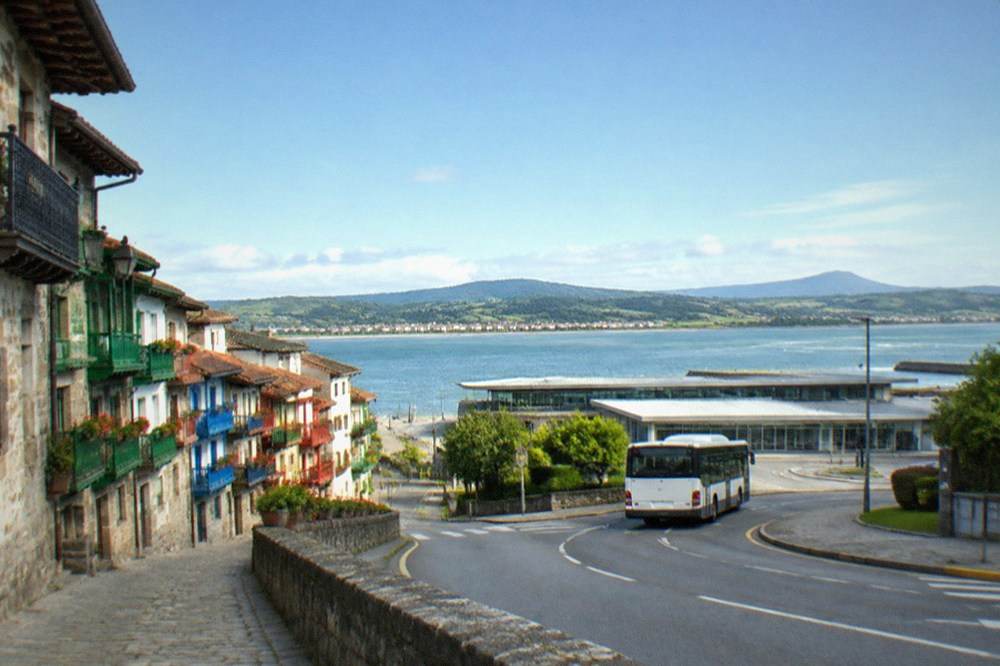
The guided route is the simplest for a day trip, because the tour handles the driving and adds two stops that are hard to piece together independently in one morning. The related tour on this page does exactly that, and there are other options if your plans point elsewhere.
If you would rather go under your own steam, the honest position is that no driving time, taxi fare or bus journey time is printed here for the San Sebastián to Hondarribia run. What the record does give is the airport's distance, 20 km from San Sebastián, and the operator's line list. Plan around those, and confirm times with the operator on the day.
What To See In Hondarribia On A Day Trip
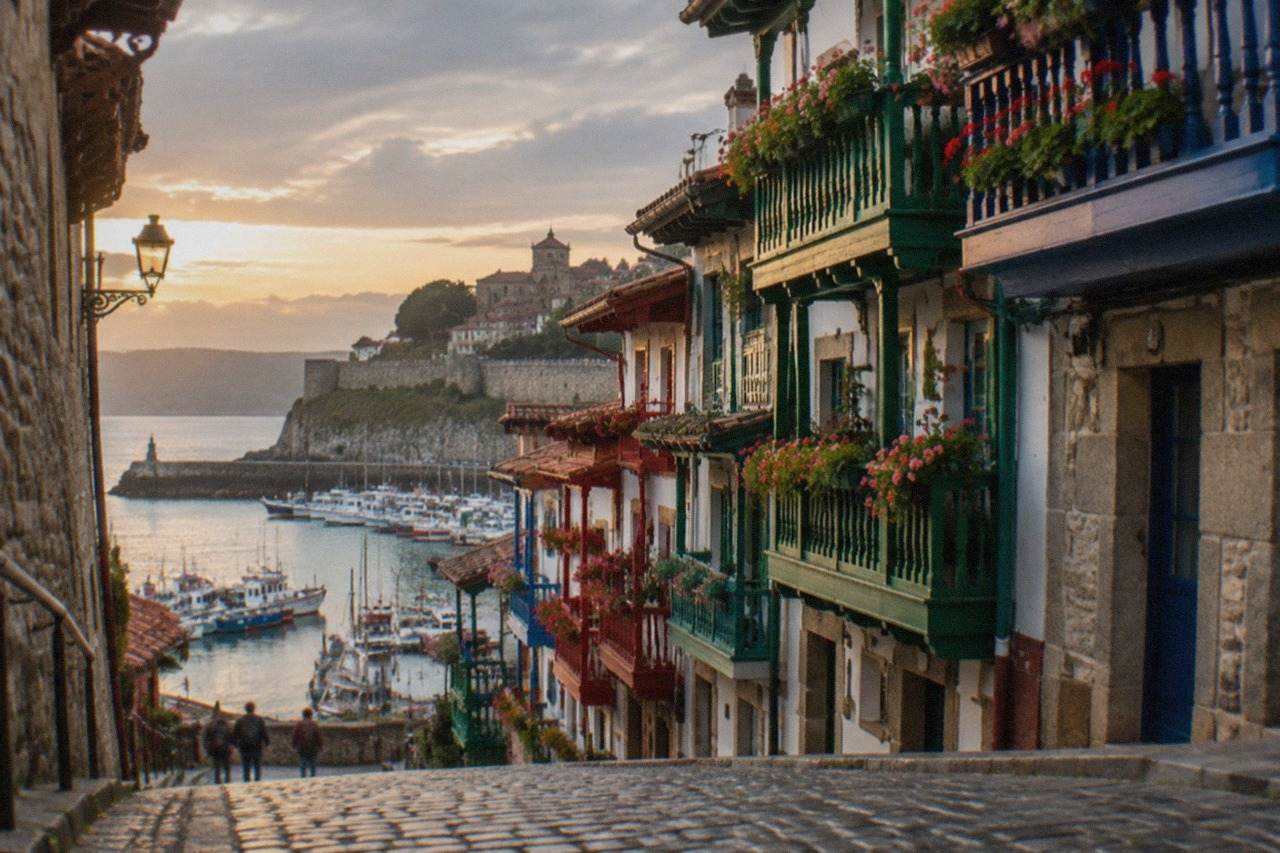
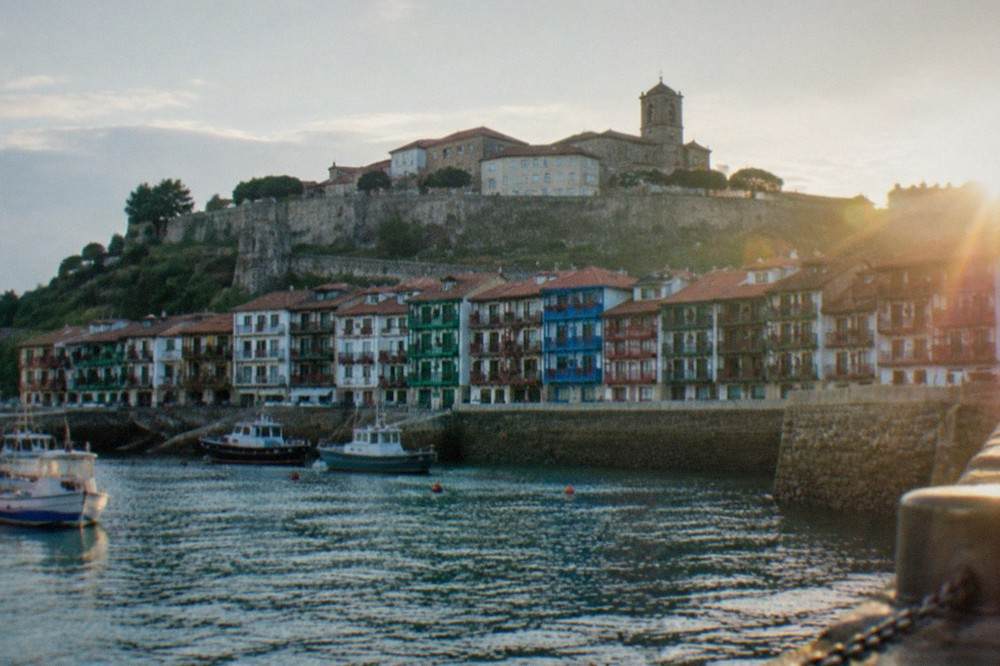
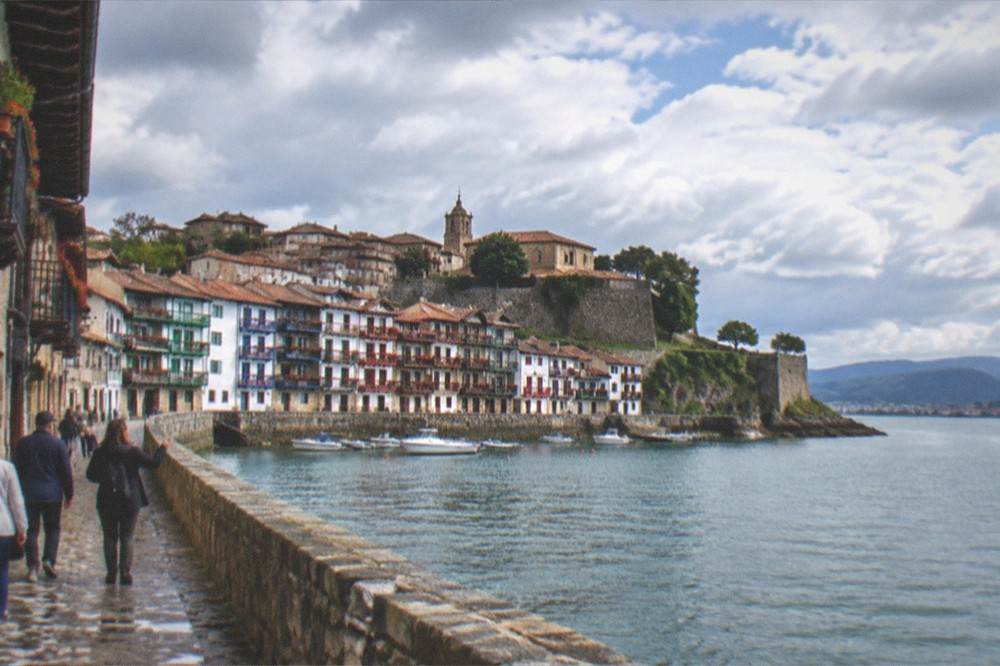
The two sights that define the town are the Marina quarter, a row of fishermen's houses with painted timber balconies running along the shore of the fishing port, and the walled old town on the hill above it, where ramparts and narrow streets survive from the fortified era. Below them sits the working fishing port, and across the river the French coast is visible on a clear day.
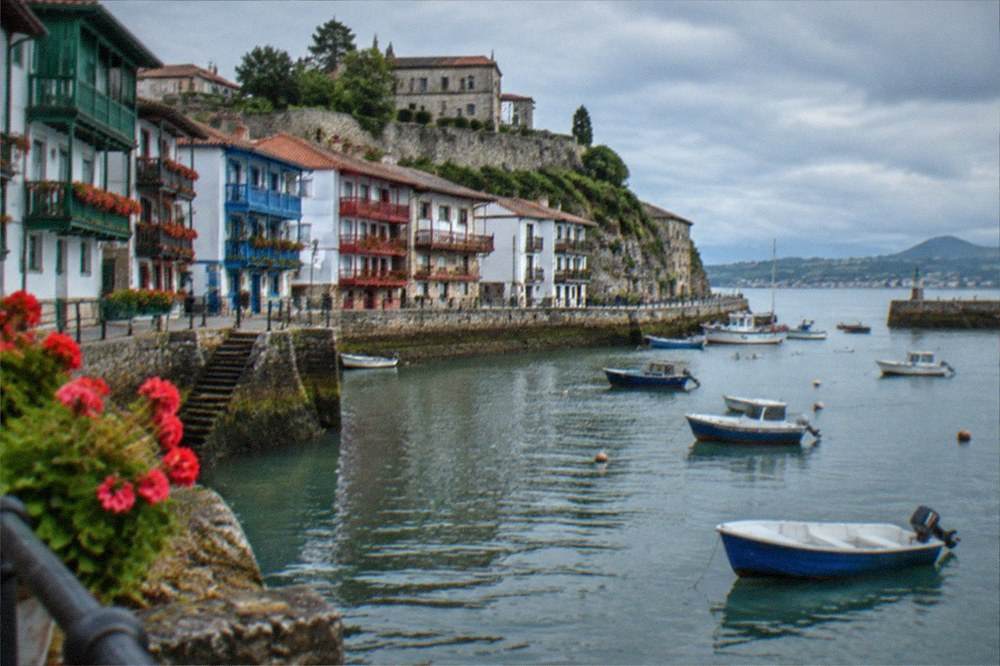
The Marina quarter, the Barrio de la Marina, is what many visitors photograph first. The houses are traditional Basque coastal buildings, timber-framed and painted in strong colours, with overhanging balconies that were built so fishermen could watch the water. The street runs directly along the harbour, so the walk from one end to the other takes in boats, nets and the river mouth at the same time. It is a working port rather than a set, and the boats still use it.
Above the Marina, the old town climbs the hill inside its walls. Hondarribia was fortified because it sat on a contested border, and the ramparts that remain shape the streets inside them: stone buildings, narrow lanes, and the main square at the top. The walls give the quarter its character, and the view from the high ground takes in both the river mouth and the Bay of Biscay.
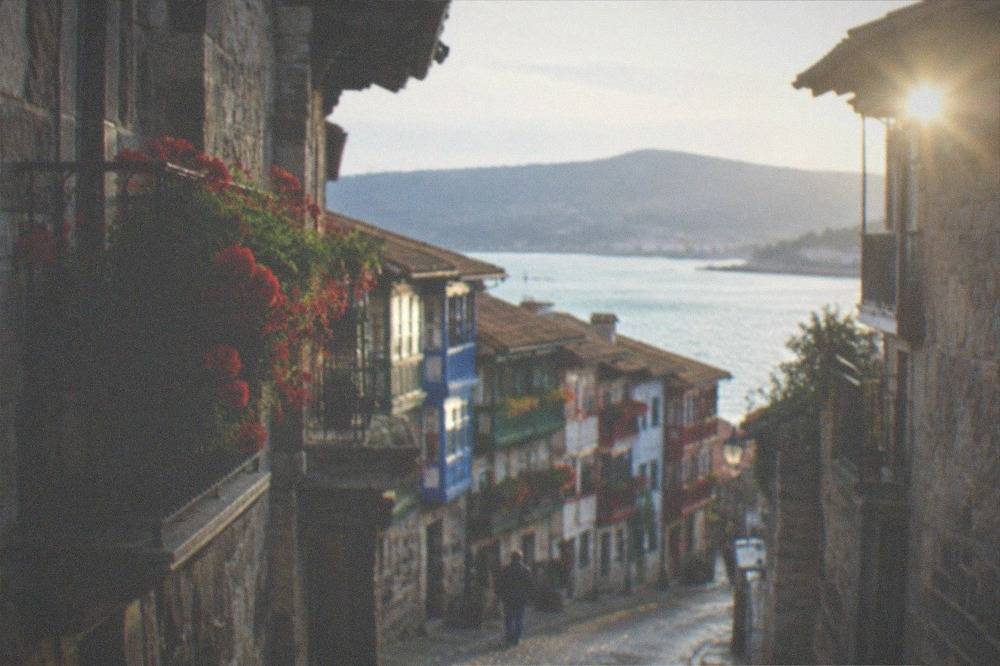
The town rewards slow walking more than a checklist. A sensible half-day looks like this.
| Stop | What It Is | What To Do There |
|---|---|---|
| Barrio de la Marina | Painted fishermen's houses with timber balconies along the harbour | Walk the full harbour front, photograph the balconies, watch the boats |
| Fishing port | Working harbour at the river mouth | See the day's catch landed and the river views |
| Walled old town | Fortified quarter on the hill, ramparts and narrow streets | Climb from the Marina, wander the lanes, reach the main square |
| The riverfront | Spanish bank of the Bidasoa, France across the water | Look across at Hendaye and the mouth of the river |
| Alameda | Restaurant holding one star in the MICHELIN Guide Spain 2026 | Book well ahead if you want a table |
Whether the trip is worth the effort at all is a fair question, and it has its own page: the case for and against is laid out in is Hondarribia worth visiting. The short version is that the town is compact, distinctive and very different in feel from San Sebastián's Belle Époque seafront, which is exactly why it works as a contrast on a multi-day stay.
Is Hondarribia Good For Food?
Yes, and the detail is specific: Alameda in Hondarribia holds one star in the MICHELIN Guide Spain 2026, one of 19 stars across 11 restaurants in the province of Gipuzkoa. Below that level, the town's food culture runs on grilled fish and the pintxo bars of the Marina quarter, in the same Basque tradition as San Sebastián's own Old Town.
The star matters because of what it says about scale. The province's 2026 Michelin list runs from three-star houses in Donostia / San Sebastián and Lasarte-Oria down to one-star tables in Getaria, Hondarribia and Tolosa, and Hondarribia's Alameda sits in that company. It is a small town carrying a provincial-level food reputation, which is the pattern along this whole coast: Getaria has Elkano, Hondarribia has Alameda.
Everyday eating is simpler and cheaper. The Marina quarter's bars serve the pintxo tradition San Sebastián is famous for, and the fish comes off the boats in the harbour beside them. If your trip is built around food, the natural pairing is a half-day in Hondarribia with a return to San Sebastián for the evening crawl, or the reverse. The city side of that plan is covered in pintxos and food tours in San Sebastián, and the wider menu of what to eat is in what to eat in San Sebastián.
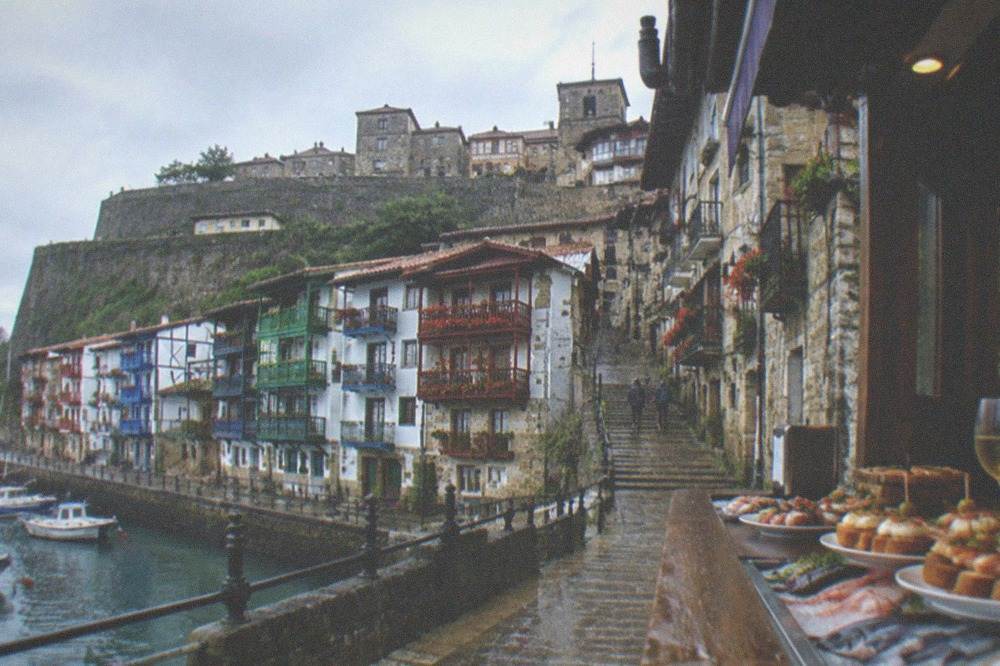
A guided food-adjacent day is also possible without committing the whole trip to it. The coastal tour below runs the Gipuzkoa coast west rather than east, and suits a second day of a stay.
What About The Airport And The Border?
San Sebastián Airport, EAS, sits at Hondarribia, and the tourism board lists it 20 km from San Sebastián, the closest of the region's three airports; Biarritz is 45 km and Bilbao 105 km. The airport's bus services are the Ekialdebus lines listed above, with E30 the direct line, and line E21 has not stopped there since 1 June 2026. Across the river, Hendaye is the first French town, reachable on the Euskotren Topo line from Amara in 37 to 38 minutes.
That Topo figure comes from the operator's own timetable data, and it is the one cross-border journey time tracked for this itinerary. It matters here for a different reason: Hondarribia and Hendaye sit at the same river mouth, so a day built around the border can take in both banks. The Spanish side is this page's subject; the French side branches into the French Basque Country day trip, with Biarritz and Saint-Jean-de-Luz covered on their own pages.
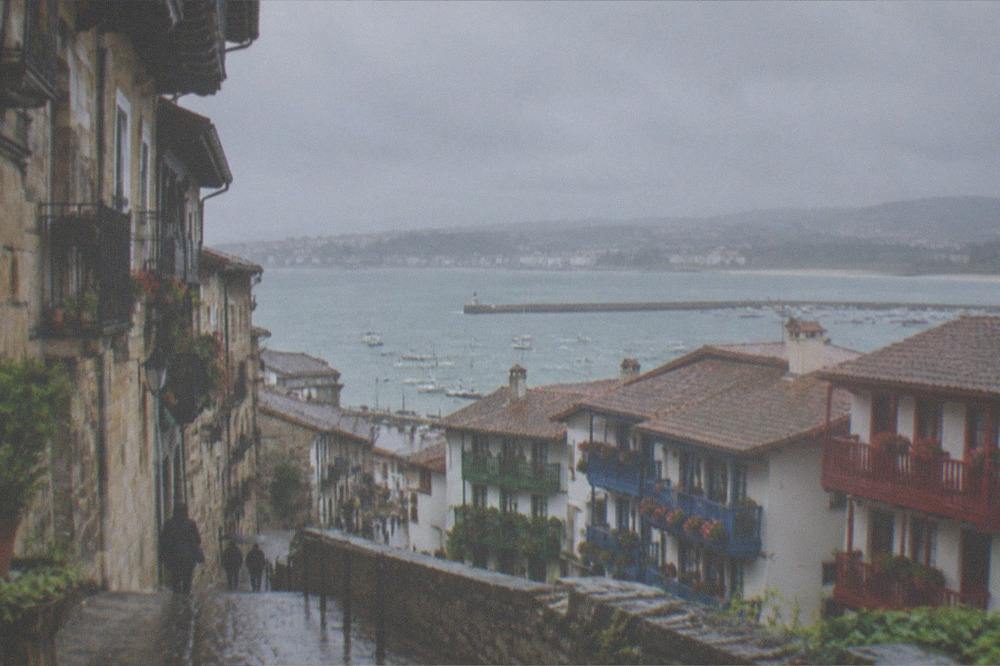
The airport's presence cuts both ways for a day trip. It is the reason the road and bus links are good, and it is the reason the town is noisier than its postcard suggests when flights are operating. The practical detail to carry away is the bus one: work from the operator's current line list, not from older guides, because the E21 change in June 2026 is recent enough that stale pages still rank.
Which Other Day Trips Pair Well With Hondarribia?
The natural pairings are Pasaia, which the related half-day tour combines with Hondarribia in one trip, and the French towns across the river, Hendaye, Biarritz and Saint-Jean-de-Luz. West of San Sebastián, the Gipuzkoa coast runs to Zarautz, Getaria and Zumaia, and inland options include Tolosa and the Rioja wine country. Each is a separate municipality or region with its own character.
Pasaia is the pairing most people miss. The same bay that holds San Sebastián opens east into the inlet where Pasaia's fishing villages sit, Pasajes de San Juan and San Pedro, and the boat that crosses between them is inside the urban MUGI fare, which makes it one of the cheapest things in the whole region. Albaola, the shipyard in Pasaia building the San Juan whaleship, is on the same shore. The related tour covers Hondarribia and both Pasaia villages in one half-day, which is the efficient way to do all three.
The wider menu of options, with the verified details that exist for each:
| Day Trip | What It Is | Verified Detail Worth Knowing |
|---|---|---|
| Pasaia | Fishing villages on an inlet east of the city, home of the San Juan whaleship project | The Pasaia motor boat is inside the urban MUGI fare |
| Getaria | Fishing town and txakoli country on the coast west | Balenciaga Museoa: 14 EUR, reduced 9 EUR; July and August daily 10:30 to 20:00 |
| Zarautz | Long beach town on the Gipuzkoa coast | Covered with Getaria and Zumaia on a half-day coastal tour |
| Zumaia | Flysch cliffs of the Basque Coast UNESCO Global Geopark, a geopark since 2015 | The geopark covers Zumaia, Deba and Mutriku |
| Hendaye | First French town, across the river from Hondarribia | 37 to 38 minutes from Amara on the Topo |
| Biarritz and Saint-Jean-de-Luz | French Basque seaside towns | Biarritz airport is 45 km from San Sebastián per the tourism board |
| Bilbao | The Basque Country's largest city, with the Guggenheim | Bilbao airport is 105 km from San Sebastián per the tourism board |
The full list with more options is on the day trips from San Sebastián page. If you are building a week rather than a weekend, Bilbao and Pamplona extend the range, and a wine day in Rioja breaks up the coastal rhythm.
When Is The Best Time To Visit Hondarribia?
The same Atlantic pattern that governs San Sebastián governs Hondarribia: mild, green and wet, with no dry month anywhere in the year. AEMET's normals for its Igeldo station, period 1981 to 2010, show July as the driest month at 86 mm of rain over about 10 rain days, and November as the wettest at 169 mm. Summer brings the warmest weather and the biggest crowds; spring and autumn trade a few degrees for quieter streets.
The honest way to read that climate is to plan around rain rather than hope against it. The station sits 250 m up on Monte Igeldo, so the seafront at both towns runs slightly warmer than the table, but the pattern holds: this is a wet Atlantic coast, and even the driest month averages rain on roughly ten days. A walled old town and harbour front are actually good rain-day material, because both are compact and the bars are close together; the same logic drives the rainy day in San Sebastián plan.
| Month | Mean C | Rain mm | Rain Days | Sun Hours | Day-Trip Read |
|---|---|---|---|---|---|
| March | 10.3 | 113 | 12.4 | 144 | Cool and quiet, changeable skies |
| May | 14.4 | 120 | 12.2 | 181 | Warm afternoons, green countryside |
| July | 18.9 | 86 | 9.8 | 196 | Driest and warmest, busiest |
| August | 19.5 | 117 | 10.5 | 190 | Peak warmth, but wetter than July |
| September | 18.0 | 111 | 10.1 | 179 | Sea still warm, crowds thinning |
| November | 11.3 | 169 | 13.0 | 102 | The wettest month, indoor plans first |
August deserves a specific warning, because it is the month people assume is dry. AEMET's table shows August, at 117 mm, is wetter than June at 90 mm, July at 86 mm and September at 111 mm. The peak-hotel numbers tell the same story: August is the busiest month of the year in San Sebastián's hotels, with 245,769 overnight stays recorded in August 2025 against 115,910 in January. You get the fullest town and not the driest weather.
Should You Take A Tour Or Go Alone?
Take the tour if you want Pasaia's villages in the same morning and a guide who explains the border history; go alone if you want to linger in the Marina quarter or time the trip around a restaurant booking. The half-day guided option covers Hondarribia, Pasajes de San Juan and San Pedro in one run, which is hard to piece together by public transport in a morning, while the town itself is compact enough that an independent half-day works well.
The deciding factor is usually Pasaia. Hondarribia alone is a short visit: the Marina, the walls and the port fill a morning at walking pace, and a self-guided visitor with the bus timetable sorted loses nothing by going alone. Adding the Pasaia villages changes the arithmetic, because they sit on a different stretch of coast and the crossing boat, cheap as it is, runs on its own rhythm. The guided half-day buys you all of it without the planning, with a bilingual group option.
If you prefer to walk at your own pace with commentary, a self-guided audio tour covers the same city ground for less commitment, and it pairs with an independent Hondarribia afternoon.
Common Questions About Hondarribia
Where is Hondarribia Spain?
Hondarribia is a town in Gipuzkoa, in the Basque Country of northern Spain, on the Spanish bank of the Bidasoa river at its mouth on the Bay of Biscay, facing Hendaye in France across the water. San Sebastián Airport sits at Hondarribia, 20 km from San Sebastián per the official tourism board.
Can you visit Hondarribia and Pasaia in one day?
Yes, and a half-day is enough for both. The related guided tour from San Sebastián covers Hondarribia plus Pasajes de San Juan and San Pedro in a single run, which is the simplest way to combine them.
Is Hondarribia walkable without a car?
The town itself is entirely walkable: the Marina quarter, the fishing port and the walled old town are all within a compact area on foot. The part that needs planning is the journey from San Sebastián, where the current bus lines or a tour are the options covered above.
Does Hondarribia have a beach?
That question has its own page with the full answer: see is there a beach in Hondarribia.
Is Hondarribia safe for tourists?
The safety question is answered in detail on its own page: how safe is Hondarribia for tourists. For general emergencies anywhere in Spain the number is 112, and San Sebastián's local police are on 092.
How many days should a first visit include?
Hondarribia works as a half-day or a full slow day. If the wider region is the plan, the guides on how many days in San Sebastián and one day in San Sebastián show where a border-town morning fits into a longer stay.
Hondarribia is the easiest contrast trip on San Sebastián's doorstep: a fortified border town with painted harbour houses and a Michelin star, close enough for a morning and different enough to feel like a second country, which, from the middle of the river, it very nearly is.