French Basque Country Day Trip
The French Basque Country begins at the Bidassoa river, a short hop from San Sebastián, and a day there buys you Biarritz's surf beaches, Bayonne's chocolate and Saint-Jean-de-Luz's sheltered bay without changing currency or leaving the Schengen area.
Short answer
The classic French Basque Country day trip from San Sebastián is Biarritz, Bayonne and Saint-Jean-de-Luz, either on a guided coach excursion or independently. The Euskotren Topo also runs to Hendaia on the French border, so you can cross under your own steam.
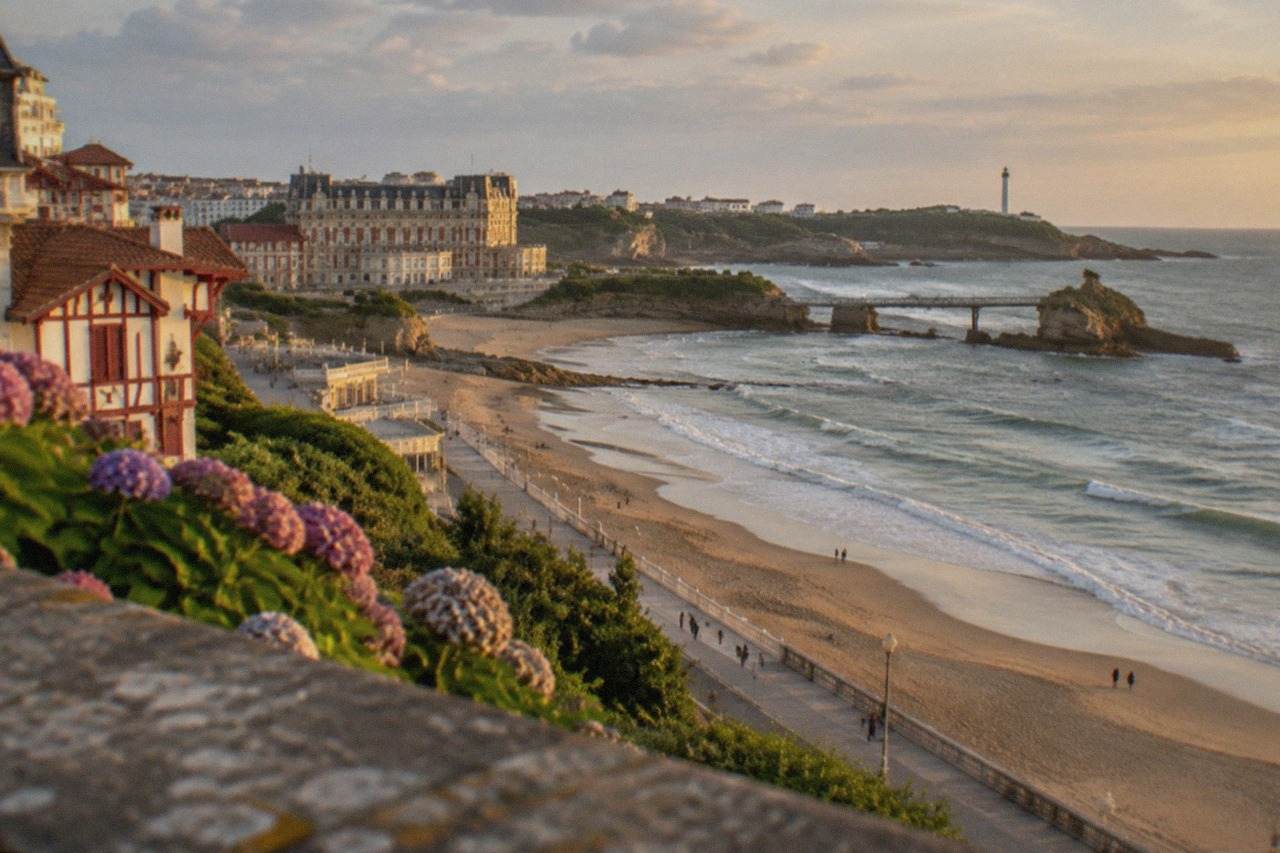
San Sebastián, whose Basque name is Donostia and whose official municipal name is Donostia / San Sebastián, sits close enough to the French border that a day trip across the Bidassoa river is a normal Saturday plan rather than an expedition. The French Basque Country, the Pays Basque, starts at that river and runs along the Atlantic coast through Biarritz, Bayonne and Saint-Jean-de-Luz, three towns that feel distinctly French while keeping the Basque language, the pelota courts and the red-and-green frontons you already know from the Spanish side. The euro is the currency on both sides of the border, the whole route sits inside the Schengen area of 29 countries, and the same 112 emergency number works in France as in Spain, so the practical friction of crossing is close to zero. What changes is the architecture, the café culture and the light: the French coast faces the same Atlantic swell but frames it with Belle Époque hotels and half-timbered Basque houses painted ox-blood red.
This page lays out the three French towns, the train option to Hendaia, the guided coach alternative, and the practical details that decide whether you plan the day yourself or let someone else drive. For the wider menu of trips in both directions, the companion page on day trips from San Sebastián covers the Spanish side too.
Why The French Basque Country Is The Easiest Border Day Trip From San Sebastian
The French Basque Country is the closest genuinely foreign day trip from San Sebastián: the border sits at the Bidassoa river, the currency stays the euro, the whole route is inside the Schengen area, and the Euskotren Topo crosses it on a scheduled suburban service to Hendaia. No ferry, no flight and no currency exchange is involved at any point.
The border here is quiet by design. Spain and France are both Schengen members, so there are no routine passport checks on the crossing, though French and Spanish police do run occasional joint controls and you should carry ID. The EU's own travel pages state that ETIAS, the planned electronic travel authorisation, is not in operation and collects no applications, so non-EU visitors need no extra document beyond what brought them into Spain. That makes the French coast the lowest-effort international excursion available from the city: you can decide in the morning and be standing on the Grand Plage in Biarritz by lunch, or on the Nive quays in Bayonne if the coast wind is up.
The cultural continuity is the part first-time visitors underestimate. The Pays Basque is not a French theme park of Basqueness: it is the other half of the same nation, with its own provinces, its own pelota variants and its own cider and txakoli equivalents. The tourism board in San Sebastián lists Biarritz at 45 km from the city, close enough that surfers historically treated both coasts as one playground. What you notice instead of distance is style: the French towns are built lower and redder, the café terraces run longer, and the cakes change from Basque cheesecake to gâteau basque.
What Are Some Good Day Trips From San Sebastian To France?
The three good day trips from San Sebastián to France are Biarritz for its surf beaches and Belle Époque seafront, Bayonne for its half-timbered old town and chocolate, and Saint-Jean-de-Luz for its sheltered bay and fishing-port restaurants. A guided coach excursion covers all three in one day, while the Topo train to Hendaia lets you build your own smaller trip.
Biarritz is the headline. The town grew from a whaling village into Empress Eugénie's bathing resort, and its seafront still shows it: the Grand Plage, the Rocher de la Vierge, the casino and the Hôtel du Palais line up along a coast that faces the full Atlantic. The surf beaches, including the Côte des Basques below the lighthouse, are the reason a lot of visitors cross at all. The dedicated page on Biarritz as a day trip goes deeper on what to do once you are there.
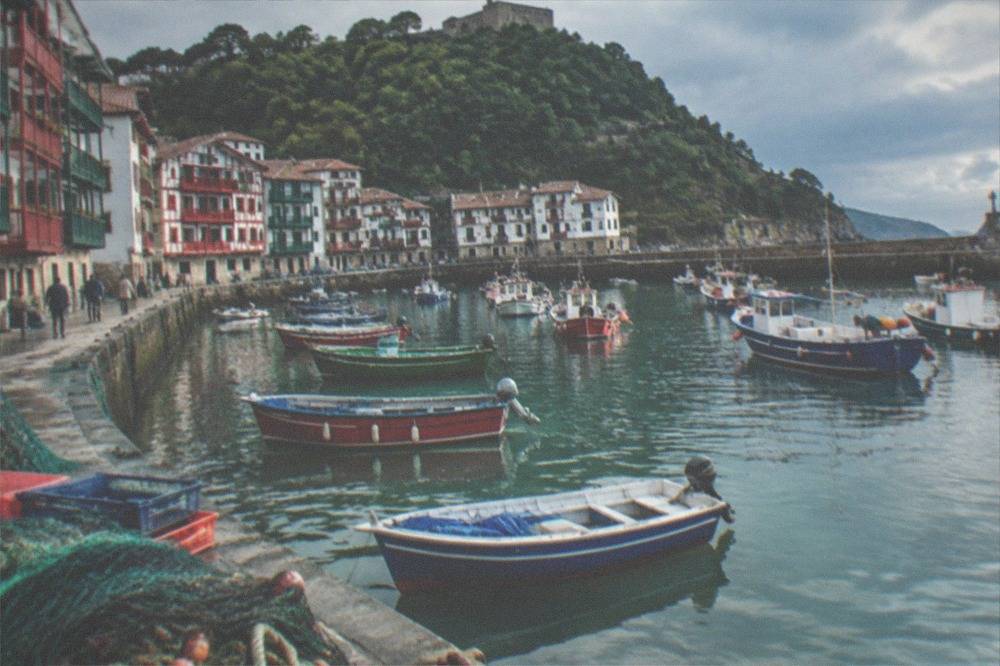
Bayonne is the inland anchor, where the Nive river meets the Adour, and it trades coastal glamour for the densest old town on the trip: half-timbered houses in red and green, the Gothic cathedral, and a chocolate trade that goes back to the era when Sephardic Jewish refugees brought cocoa processing to the city. Saint-Jean-de-Luz is the soft option in the best sense: a working fishing port whose bay, once the harbour of Louis XIV's wedding fleet, is enclosed enough that families swim there when the outer coast is rough.
A coach day is not the only shape the trip can take, and the table below compares the three towns so you can decide which one deserves your hours.
| Town | What it is known for | Best if you want | Character of the seafront |
|---|---|---|---|
| Biarritz | Surf beaches, the Rocher de la Vierge, the Hôtel du Palais | Ocean drama, waves, imperial architecture | Open Atlantic, rocky headlands, surf breaks |
| Bayonne | Half-timbered old town, chocolate, the Nive quays | A city walk, rivers, food shops | No beach: two rivers meet at the port |
| Saint-Jean-de-Luz | Sheltered bay, fishing port, Louis XIV history | Calm swimming, a family beach, fish restaurants | Enclosed bay facing the town |
If you would rather stay in Gipuzkoa but like the idea of a coastal town with a food tradition, Getaria plays a similar role on the Spanish side, and a Getaria txakoli wine tour pairs the town with its vineyards, though that trip stays in Spain.
Biarritz: The Grand Plage, The Rocher, And A Short Hop Across The Bidassoa
Biarritz is the closest of the three French towns to San Sebastián, a former imperial bathing resort on a rocky Atlantic coast whose Grand Plage, Rocher de la Vierge and surf beaches sit within walking distance of each other. The tourism board lists Biarritz airport at 45 km from San Sebastián, the nearest French airport to the city.
The walk that defines Biarritz runs from the Grand Plage along the seafront to the Rocher de la Vierge, a rock islet joined to the mainland by an iron footbridge, with the lighthouse at the far end. Below the town, the Côte des Basques and the other surf breaks face the same swell that hits Zurriola in San Sebastián, which is why surfers move between the two coasts. The Hôtel du Palais, built for Empress Eugénie, sets the tone of the frontage, and the town's market halls do the food side: Bayonne ham, sheep's cheese from the interior, and gâteau basque.
Two practical notes shape the day. First, parking in Biarritz in summer is scarce enough that many visitors prefer a guided minibus, and the Biarritz and the French Coast excursion exists partly for that reason. Second, the town is a walking town: the sights that matter are all on the seafront strip, so a half day there works well and a full day works better.
Bayonne: Chocolate, Half-Timbered Houses, And The Nive River
Bayonne is the inland capital of the French Basque Country, where the Nive meets the Adour, and its old town of half-timbered houses painted red and green holds a Gothic cathedral and a chocolate industry founded by refugees. It is the stop for a city walk, riverside terraces and food shopping rather than for a beach.
The chocolate story is the one worth knowing before you go. Cocoa processing arrived in Bayonne through Sephardic Jewish communities who had fled the Inquisition on the Spanish side, and the town still counts working chocolate makers in its old streets. The cathedral of Sainte-Marie, a Gothic building whose spire dominates every view of the town, sits at the junction where the Petit Bayonne district begins, and the quays along the Nive are where the town drinks its coffee. Ham is the other claim: Bayonne ham is salted in the Adour basin and sold from the market halls, and jambon-beurre is the local answer to a pintxo.
On the coach excursion Bayonne is the middle stop, which suits it: the town rewards two or three hours of walking and eating rather than a full day. If you build your own trip, Bayonne pairs naturally with Biarritz on the same coastal corridor, and the question of which town to base in, on either side of the border, is covered in the answer page can you do a day trip from Biarritz to San Sebastián.
Saint-Jean-De-Luz: The Bay That Faces Spain
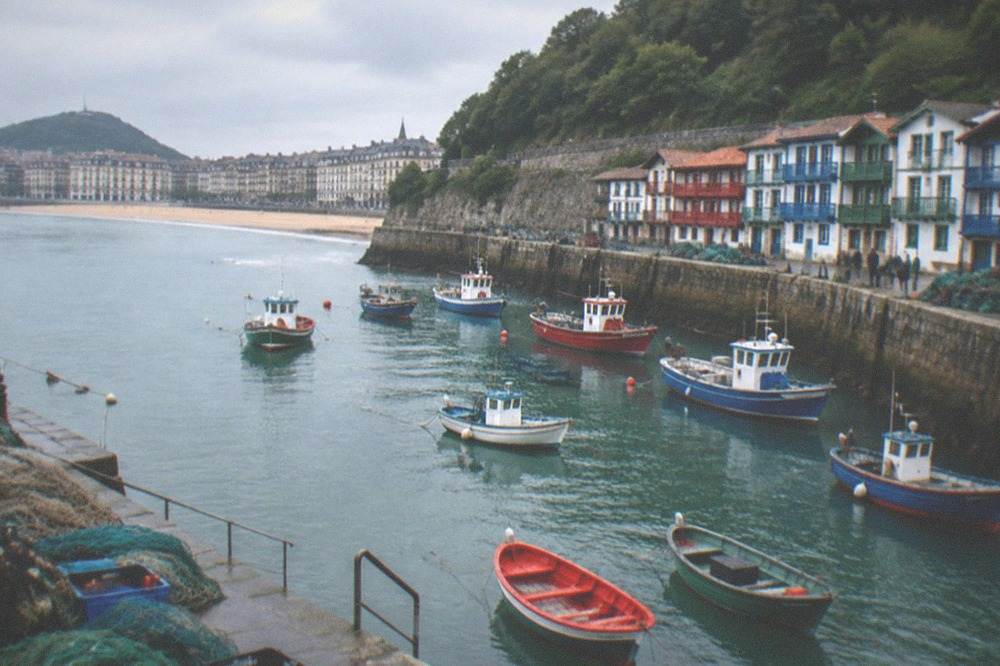
Saint-Jean-de-Luz is the softest of the three French stops, a fishing port whose enclosed bay shelters a town beach that families swim from when the open coast is rough, and whose church of Saint-Jean-Baptiste closed its doors after the wedding of Louis XIV to the Spanish infanta Maria Theresa. It is the stop for calm water, fish lunches and a small old port.
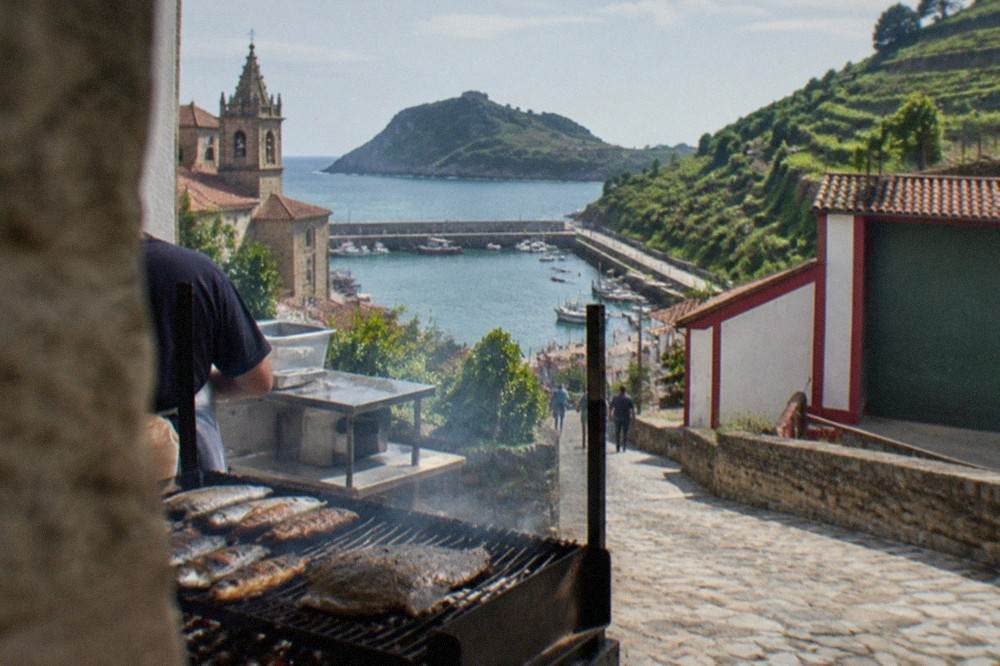
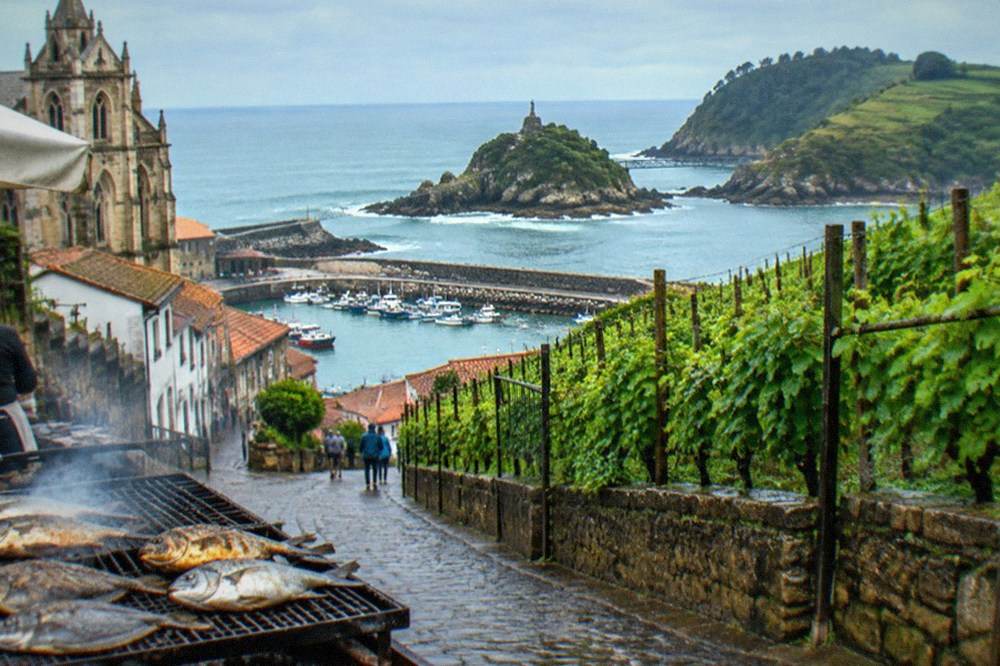
The bay is the whole point. Where Biarritz takes the Atlantic head-on, Saint-Jean-de-Luz sits inside a curve of breakwater and dune, and its plage is the one French beach on this route where small children swim without the swell. The port behind the beach still lands fish, and the restaurants along the frontons serve it grilled, a short cousin of the txuleta tradition on the Spanish side. The town's history is royal: Louis XIV married the Spanish infanta Maria Theresa here, and the church keeps the door closed that the royal couple left through, a story every local retells.
The Saint-Jean-de-Luz page covers the town on its own if you would rather spend the whole day there than split three ways. On the coach excursion it is usually the last stop, which works in summer: the light on the bay is at its best late in the day, and the drive back crosses the border in the evening.
Hendaia And Hendaye: The Train You Can Take Yourself
You do not need a coach or a car to cross into France: the Euskotren Topo runs from Amara station in San Sebastián to Hendaia on the French side in 37 to 38 minutes, with a departure every 30 minutes on the busiest service day, and the occasional fare is 2.90 EUR, the MUGI one-jump tariff. Amara is still the working terminus while the new underground stations are fitted out.
Hendaia is the French border twin of Hondarribia's coast: a long beach of the same Atlantic, a small town behind it, and the terminus of the Topo line. The Basque Government announced on 8 June 2026 that the civil works of the new underground through-line, including the station beside La Concha, are complete, but it published no opening date, so Amara remains the station you leave from. From Hendaia you can walk the beach, eat in the town, or connect onward along the French coast by local train; the border itself sits between the last Spanish and first French stops and involves no formalities beyond carrying ID.
The fare table below is the MUGI system's own, and the Topo's Hendaia fare sits in its one-jump column.
| Ticket | Urban 1 and 0 jumps | 1 jump (to Hendaia) | 2 jumps | 3 jumps |
|---|---|---|---|---|
| Occasional ticket (cash) | 1.95 EUR | 2.90 EUR | 5.40 EUR | 7.90 EUR |
| Night ticket | 2.65 EUR | 3.70 EUR | 6.45 EUR | 8.95 EUR |
| MUGI anonymous card | 0.78 EUR | 1.16 EUR | 2.16 EUR | 3.16 EUR |
| MUGI personalised, trips 1 to 20 in the month | 0.59 EUR | 0.88 EUR | 1.64 EUR | 2.41 EUR |
The Spanish side of the border crossing has its own attractions: Hondarribia and the Hendaye page cover both towns, and the answer to is Hondarribia in Spain or France settles the question the name invites.
How A Guided Coach Day Compares With Going Alone
A guided coach excursion to Biarritz, Bayonne and Saint-Jean-de-Luz suits visitors who want all three towns in one day without parking, borders or train timetables, while going alone by Topo suits visitors happy with one smaller destination, usually Hendaia or a single town reached by local transport. The coach day is the only practical way to see all three French stops in daylight hours.
The trade is simple. Alone, you control the clock: you leave when you like, linger where you like, and the Topo fare is a few euros. But the three-town circuit is a lot of driving for one day, and French town parking in August is its own tax on patience. A coach excursion hands the timing to an operator, drops you at each town's centre, and keeps the day to a single decision in the morning. The roster's coach excursion to the French Basque Country covers all three towns, and the dedicated Biarritz day trip option is the shorter, single-coast alternative.
| Way of crossing | Where it takes you | What you control | What you give up |
|---|---|---|---|
| Guided coach excursion | Biarritz, Bayonne and Saint-Jean-de-Luz in one day | Nothing but the booking | Flexibility, lingering time per town |
| Topo train from Amara | Hendaia, then onward local transport | Your own timetable, your own budget | Reach: no direct rail to Biarritz from here |
| Rental car | Any of the three towns, plus inland villages | Everything | Summer parking, navigation, driving |
| Half-day guided minibus | Biarritz and Bayonne | Little | Saint-Jean-de-Luz, usually |
If the three-town coach day is the one that fits, you can Check availability before you commit to the rest of the plan.
Practical Rules For Crossing The Border On A Day Trip
Crossing into France from San Sebastián needs no currency exchange and no visa step: both countries use the euro and both sit in the Schengen area of 29 countries, the EU states that ETIAS is not in operation, and 112 is the emergency number on both sides. Carry ID, because spot checks happen even without a hard border.
Three details finish the planning picture. First, the tourist tax law passed by Gipuzkoa, Norma Foral 3/2026, applies to stays in the province and takes effect on 1 January 2027, so it does not affect any accommodation bill before then, and it has no bearing on the French side of your day trip. Second, the weather does not respect the border: AEMET's Igeldo station records 1,507 mm of rain a year over 141 rain days in San Sebastián, and the French coast shares the same Atlantic regime, so a rain layer belongs in the bag even in July, which still averages 86 mm. Third, shops and kitchens run on French hours in France: lunch service starts and ends earlier than the Spanish late-afternoon rhythm, so plan the main meal of the day for midday rather than at four.
Not every day of a trip has to point west, either. If the French coast is booked or the weather turns, two of the roster's other options stay inside Gipuzkoa: a Basque farmhouse and cider house visit with the meal included, which pairs the coast's inland cousin with the txotx table, and a surf lesson on Zurriola followed by pintxos and drinks, which keeps the Atlantic theme without the border.
Common Questions About French Basque Country Day Trips From San Sebastian
What are some good day trips from San Sebastián to France?
Biarritz, Bayonne and Saint-Jean-de-Luz are the three standard answers, and a guided coach excursion covers all three in a single day. The Topo train to Hendaia is the self-guided alternative for a smaller, closer trip.
Do you need a passport to go from San Sebastián to France?
You cross inside the Schengen area, so there is no routine border control, but you should carry ID: police on both sides run occasional checks. Non-EU visitors need no additional document beyond what entered them into Spain, and the EU states that ETIAS is not in operation.
Is the French Basque Country worth a day trip?
Yes, if you want the contrast rather than a second Spanish beach day: the architecture, the café culture and the food shift noticeably at the Bidassoa, and Biarritz's seafront alone justifies the crossing. Visitors who want a full beach day at home may prefer to stay on La Concha or Zurriola.
Can you take a train from San Sebastián to France?
Yes. The Euskotren Topo runs from Amara station to Hendaia in 37 to 38 minutes, every 30 minutes on the busiest service day, for a 2.90 EUR occasional fare. It reaches the French border town, not Biarritz directly.
Which is better, Biarritz or Saint-Jean-de-Luz?
Biarritz for ocean drama, surf and imperial architecture; Saint-Jean-de-Luz for a sheltered bay, calm swimming and a fishing-port lunch. Families with small children usually prefer Saint-Jean-de-Luz's enclosed beach.
How many days do you need for the French Basque Country?
One day covers the three-town circuit on a coach excursion, or one town properly if you go alone. Two days let you add the inland villages and the coast east of Saint-Jean-de-Luz, but a single well-planned day from San Sebastián is a normal and satisfying trip.
Whether you hand the day to a coach driver or ride the Topo to the border yourself, the French Basque Country is the rare foreign country you can visit between breakfast and dinner, and the San Sebastian Spain Guide keeps the rest of the planning in one place.