Is Hondarribia Worth Visiting?
Is Hondarribia worth a day of your San Sebastián trip? A clear answer on the walled old town, the beach, the Michelin-starred table and how to get there from the city.
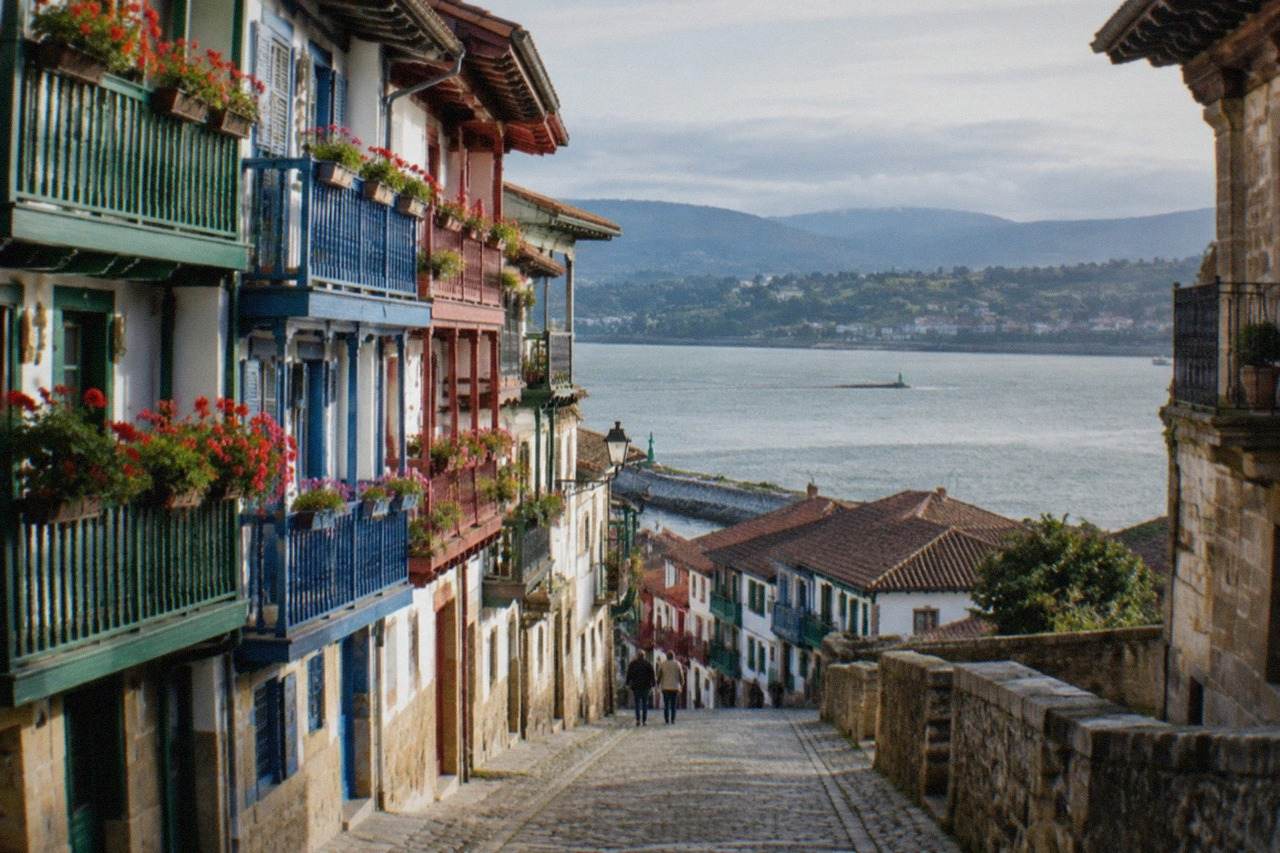
Hondarribia sits on the Bidasoa river mouth directly across the water from the French border town of Hendaye, and it is one of the few day trips from San Sebastián, the Basque city on La Concha bay whose official name is Donostia / San Sebastián, that packs a walled medieval quarter, a beach and a Michelin-starred restaurant into one walkable town. It is not a suburb of the city: Hondarribia is a separate municipality in the province of Gipuzkoa, and it also happens to hold the airport that travelers fly into, San Sebastián Airport (EAS), 20 km from the city. That combination, an old town worth walking, an airport on its doorstep and a border setting on the river, is exactly why the question of whether it deserves your time comes up so often.
The short version of the answer is yes, with one condition: give it half a day rather than a full one unless you are combining it with the coast. The town is small, and the things that make it worth the trip, the Casco Viejo with its painted timber houses, the fishing quarter of the Marina district and the fortifications on the hill above, are all within a short walk of each other. The rest of this page sets out what is verified about the town, what you can actually do there, and how the guided half-day option compares with making your own way.
Is Hondarribia Worth Visiting?
Yes, Hondarribia is worth visiting for most San Sebastián itineraries, because it combines a walled old town, a fishermen's quarter of painted houses, a sandy beach and the Michelin-starred restaurant Alameda in one compact town on the French border. It is a separate municipality in Gipuzkoa, not part of the city, and it works best as a half-day trip. Visitors who enjoy historic streets and border-town atmosphere rate it highly; those looking for big sights may find it quiet.
The honest framing is that Hondarribia is a town of two halves. The upper town, the Casco Viejo, holds the remains of its medieval walls and the church of Santa María de la Asunción, with views over the river mouth toward Hendaye on the French side. The lower Marina quarter, once the fishermen's district, is the part most photographed: rows of wooden-fronted houses painted in greens, reds and ochres, now holding bars and restaurants rather than nets and boats. Between them they give you a couple of hours of genuinely pleasant wandering.
What the town is not is a second San Sebastián. There is no equivalent of the Parte Vieja's pintxo density, no La Concha-scale beach promenade, and no cluster of museums. The MICHELIN Guide Spain 2026 lists one starred restaurant in Hondarribia, Alameda, alongside the six restaurants holding 11 stars inside the city itself, so the town competes on charm and setting rather than volume of attractions. For a fuller profile of the town as a destination, the site's Hondarribia day trip guide covers it in depth.
What Is Hondarribia, And Where Is It Exactly?
Hondarribia is a separate municipality in the province of Gipuzkoa in the Basque Country, Spain, sitting on the mouth of the Bidasoa river opposite Hendaye in France, and it is home to San Sebastián Airport (EAS), which the tourism board lists at 20 km from the city of San Sebastián. It is not inside San Sebastián and never was; the two are neighbouring towns. Its Basque name is the same word, Hondarribia, and the Spanish form is Fuenterrabía.
The border setting is the town's defining fact. The Bidasoa river has marked the frontier between Spain and France here for centuries, and Hondarribia's history as a fortified town grew out of that position. The walls, the castle, now a state-run parador hotel, and the grid of the old town all exist because this was a contested edge of two kingdoms. Today the border is invisible on the ground, since Spain and France are both in the Schengen area, which the European Commission lists as 29 countries, and you can walk the riverside promenade looking straight at Hendaye without any formalities at all.
The airport detail matters for planning. If you are flying into EAS, Hondarribia is effectively on your way, and the town is close enough to the airport that some visitors stop there on arrival or departure day rather than giving it a dedicated trip. One caution from the operator Ekialdebus: since 1 June 2026, bus line E21 no longer stops at the airport at all, at either stop, despite an older tourism board page that still names it. The operator's current airport services are lines E20, E23, E25, E27, E28, E29 and E30, with E30 the direct Donostia to airport line.
For the question of which side of the border things sit on, and whether you can accidentally wander into France, the site has a dedicated answer on whether Hondarribia is in Spain or France.
If a half-day trip with a guide appeals more than planning it yourself, the most direct option from the city runs to Hondarribia and the neighbouring fishing quarters:
What Makes Hondarribia Different From San Sebastian?
The difference is scale and purpose: San Sebastián is a city of 189,866 people on the municipal register with three beaches, a dense Old Town and the Michelin concentration, while Hondarribia is a small border town whose attractions fit into a couple of streets, a fortified hill and one beach. The city rewards days; Hondarribia rewards a morning. Its Marina quarter's painted houses and its castle-parador are things the city simply does not have.
The population figure comes from the municipal register published by INE, which counted 189,866 people in San Sebastián at 1 January 2025. Hondarribia is a fraction of that size, and the contrast is the whole point of going. In the city you plan around neighbourhoods, Gros, Centro, the Antiguo, and around meal times in the Parte Vieja. In Hondarribia you park, walk up to the walls, walk down to the Marina, eat, and you have seen the town.
A fair comparison table, using only figures this site has verified for the city side and describing the Hondarribia side qualitatively:
| San Sebastián (city) | Hondarribia (town) | |
|---|---|---|
| Status | Municipality, official name Donostia / San Sebastián | Separate municipality in Gipuzkoa |
| Beaches | Three: La Concha 1,350 m, Ondarreta 600 m, Zurriola 800 m | One sandy beach on the river mouth and bay |
| Michelin, 2026 guide | 6 restaurants, 11 stars inside the city | 1 restaurant, Alameda, 1 star |
| Lifeguard season | 1 June to 30 September on all three beaches | Seasonal service, check locally before swimming |
| Best use of time | Three or more days | Half a day |
The beach question is common enough that the site carries a full answer on whether there is a beach in Hondarribia, including what the water and the setting are like. The safety question, whether the town feels secure for visitors, also has its own page on how safe Hondarribia is for tourists.
How Do You Get To Hondarribia From San Sebastian?
The verified options are the half-day guided tour from the city's bus station, or making your own way, for which this site has no sourced journey time or fare to print. What is verified: San Sebastián Airport sits at Hondarribia, 20 km from the city per the tourism board, and the airport bus lines are E20, E23, E25, E27, E28, E29 and E30, with E30 the direct service. No driving time or bus fare for the city-to-town run is in this site's research.
That silence on the journey time is deliberate rather than lazy. Plenty of pages quote a figure for the trip between the two towns, but this site only publishes numbers it has read from an official source attached to that exact journey, and none was. What the research does verify is the airport connection, which is genuinely useful here because the airport and the town are effectively the same destination on the map. If you are already flying into EAS, the practical move is to check the E30 timetable with Ekialdebus and decide whether the town fits your arrival or departure day.
The guided alternative sidesteps the planning entirely. The half-day trip runs from the city's bus station to Hondarribia and then on to Pasajes de San Juan and San Pedro, the fishing quarters on the coast toward Pasaia, with a bilingual group option. That combination is worth understanding: the tour is not a deep dive into one town but a loop of the eastern corner of the province, old border town, then the whale-boat heritage coast at Albaola's home port. The Pasaia motor boat across that harbour sits inside the urban MUGI fare, which the tariff page defines as "Donostia y motora Pasaia".
For independent travellers, the same geography works by public transport in pieces, but the site publishes no timetable or fare for that run, so treat the operator's own pages as the source of truth before you commit.
What Can You Actually Do There In A Day?
A realistic half-day in Hondarribia covers the walled Casco Viejo with the church and the parador castle on the hill, the Marina quarter's painted fishermen's houses at the foot of it, the beach and riverside promenade facing Hendaye, and a long lunch, with Alameda the starred option if you book well ahead. A full day lets you add the airport-side walk or cross to France, though the town can reasonably be seen by mid-afternoon.
The walk itself is short and the gradient is mild. Start in the Marina quarter, the flat streets of painted timber houses, then take the lane up to the Casco Viejo, where the walls and the church of Santa María de la Asunción stand, and where the castle that defended the frontier is now the parador. The view from the top takes in the river mouth, Hendaye, and on clear days the coastline running back toward San Sebastián. Come back down for the beach and the promenade, and you have completed the town.
Eating is the other reason people come. The Marina quarter is lined with restaurants serving the fish the port once landed, and the town's name appears on every Basque coastal food list for that reason. If you want the starred table, Alameda holds one star in the MICHELIN Guide Spain 2026 and needs booking ahead; if you want the city's pintxo culture instead, that stays in San Sebastián, and the site's guide to where the locals eat in San Sebastián is the better starting point.
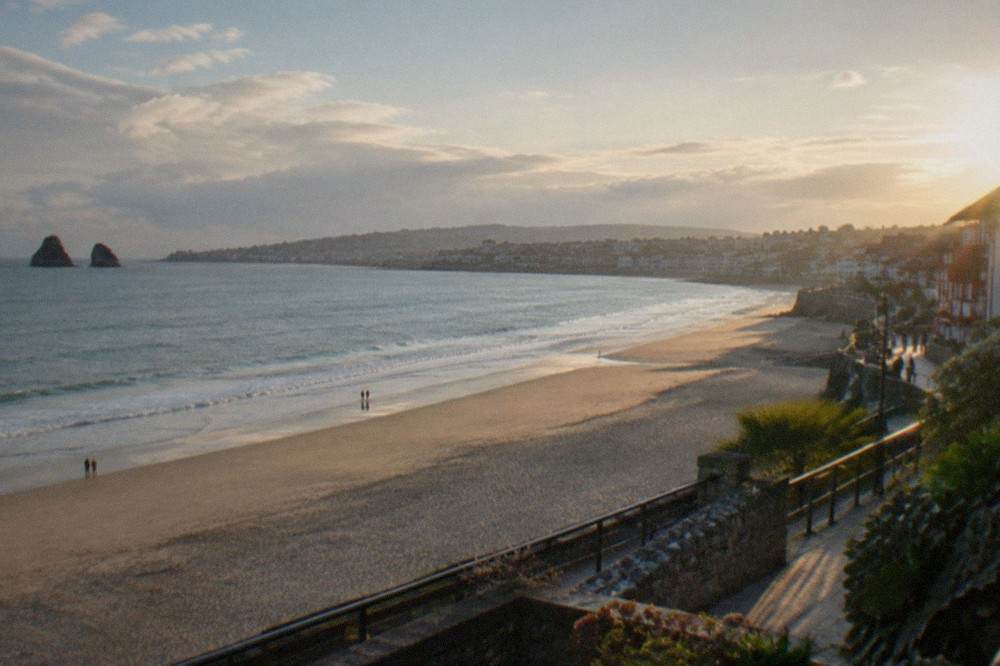
Timing around the seasons matters more than most day-trip pages admit. The city's own beach lifeguards, for instance, work 1 June to 30 September, and Hondarribia's beach service is likewise seasonal, so a beach stop is a summer plan, while the old town and lunch work year-round. Rain is the other constant: AEMET's Igeldo station records 1,507 mm a year over 141 rain days for the area, and even July, the driest month, averages 86 mm, so the walled streets and restaurants are the reliable half of the day, not the beach.
Should Hondarribia Be Your Base Instead Of San Sebastian?
For many visitors, no: basing in San Sebastián and visiting Hondarribia as a half-day trip gives you the city's restaurants, beaches and Old Town every evening, while Hondarribia as a base trades that for a quieter town with fewer beds, fewer bars and one starred restaurant. Hondarribia as a base makes sense mainly for airport-convenience travellers or those who specifically want a small-town stay. The city's hotel offer is the deeper one.
The trade-off is really about evenings. San Sebastián's hotel occupancy figures, hotels only, from INE, show 2,199,966 overnight stays in 2025 with 63.7% of them by residents abroad, and August alone holding 245,769 stays, the year's peak. That scale of demand exists because the city concentrates the things people come for, and the evening pintxo and dinner culture is a large part of it. Hondarribia has a pleasant restaurant scene in the Marina, but it is a town that quietens down.
There is one exception worth naming: if your flights land at and depart from EAS, a first or last night in Hondarribia removes all airport logistics from the trip's edges. The town is close enough to the airport that this is a genuine convenience play, and the old town is a far better place to spend a pre-flight evening than an airport hotel corridor anywhere.
For the wider decision of how long to give the region overall, the site's answer on whether 4 days in San Sebastián is too much covers how day trips like this one fit into a first visit, and the San Sebastian Spain Guide homepage lists the full range of tours, beaches and neighbourhood guides.
If you would rather have the border town and the fishing coast handled for you, these are the options that pair naturally with a Hondarribia day:
The half-day trip is the one this page keeps returning to, and it is worth a closer look for anyone who wants the town plus Pasajes without the planning:
Common Questions About Visiting Hondarribia
Is Hondarribia worth visiting?
Yes, for most itineraries based in San Sebastián. The walled old town, the painted Marina quarter, the beach facing France and the one-star Alameda make a rewarding half-day, and the town's border setting gives it a character the city does not have. Give it a morning and a long lunch rather than a full day.
Is Hondarribia in Spain or France?
Hondarribia is in Spain, in the province of Gipuzkoa in the Basque Country. It sits on the south bank of the Bidasoa river, with the French town of Hendaye directly opposite on the north bank. The border is open, since both countries are in the Schengen area.
How far is Hondarribia from San Sebastian?
What this site's research verifies is that San Sebastián Airport, which sits at Hondarribia, is listed by the tourism board at 20 km from the city. For the town-to-city journey time and fare, no sourced figure exists in this site's research, so check with the transport operator before travelling.
Can you swim at the beach in Hondarribia?
Yes, the town has a sandy beach on the river mouth and bay. As with the city's beaches, lifeguard service is seasonal, so treat swimming as a summer option and check locally for the current service dates before planning a beach day.
Does Hondarribia have a Michelin-starred restaurant?
Yes. Alameda in Hondarribia holds one star in the MICHELIN Guide Spain 2026, one of 19 stars across 11 restaurants in the province of Gipuzkoa. Book well ahead, especially in summer.
Can you visit Hondarribia and France on the same day?
Yes, in principle: Hendaye sits directly across the river and the border is open within the Schengen area. This site's research verified no cross-border transport times or fares, so plan any crossing with the operators' own current timetables rather than a fixed figure.
Hondarribia earns its half-day: a walled border town with a starred table, an airport on its doorstep and France in view from the promenade, all a short trip from the restaurants and beaches of San Sebastián.