Saint-Jean-De-Luz Day Trip
Saint-Jean-de-Luz sits just across the French border from San Sebastián, and it is the closest thing the French Basque coast has to this city's own mix of a working fishing port and a sheltered bay. Here is how the day trip works.
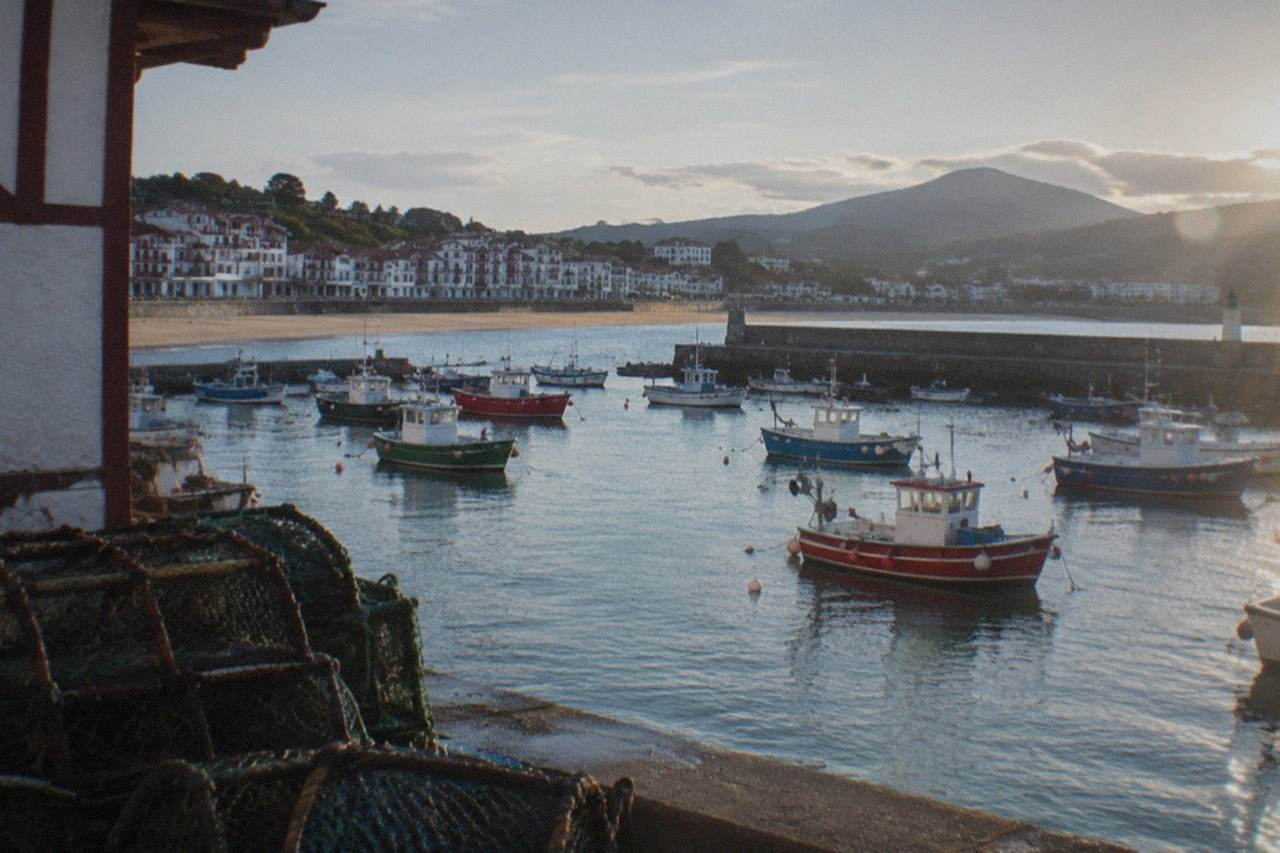
Short answer
Saint-Jean-de-Luz is a small French Basque fishing town on a sheltered bay about half an hour across the border from San Sebastián, reachable by train to Hendaia and a short onward hop, by car, or on a coach excursion that also covers Biarritz and Bayonne. A day is enough for the harbour, the old town and the beach, and the town works best as one stop on a wider French Basque loop.
Saint-Jean-de-Luz sits on the French side of the Basque Coast, a short hop across the border from San Sebastián, the city on La Concha bay in Gipuzkoa, in the Basque Country of Spain, whose Basque name is Donostia. Where Biarritz is grand and a little stiff, Saint-Jean-de-Luz is a working fishing port wrapped around a sheltered bay, with a wide town beach that faces south and old timber-fronted houses painted in the deep reds and greens the French Basque country uses everywhere. The town is small enough that one unhurried day covers it, and close enough that it works as a morning-and-afternoon excursion or as one stop on a longer loop through Biarritz and Bayonne.
This page lays out what the town actually is, how the crossing works from San Sebastián, what a day there looks like hour by hour, and where the guided options fit. The practical detail on the Spanish side is laid out below, and the tour options are the ones on this site's roster, with prices and ratings shown on their own cards rather than typed here.
What Is Saint-Jean-De-Luz, And Why Do San Sebastian Visitors Go?
Saint-Jean-de-Luz is a small French Basque fishing and resort town on a sheltered bay just across the border from San Sebastián, in the French department of Pyrénées-Atlantiques. Visitors from San Sebastián go for its working harbour, its south-facing town beach inside a crescent-shaped bay, its old timbered houses, and its Basque identity on the French side of the line, all reachable on an easy day trip.
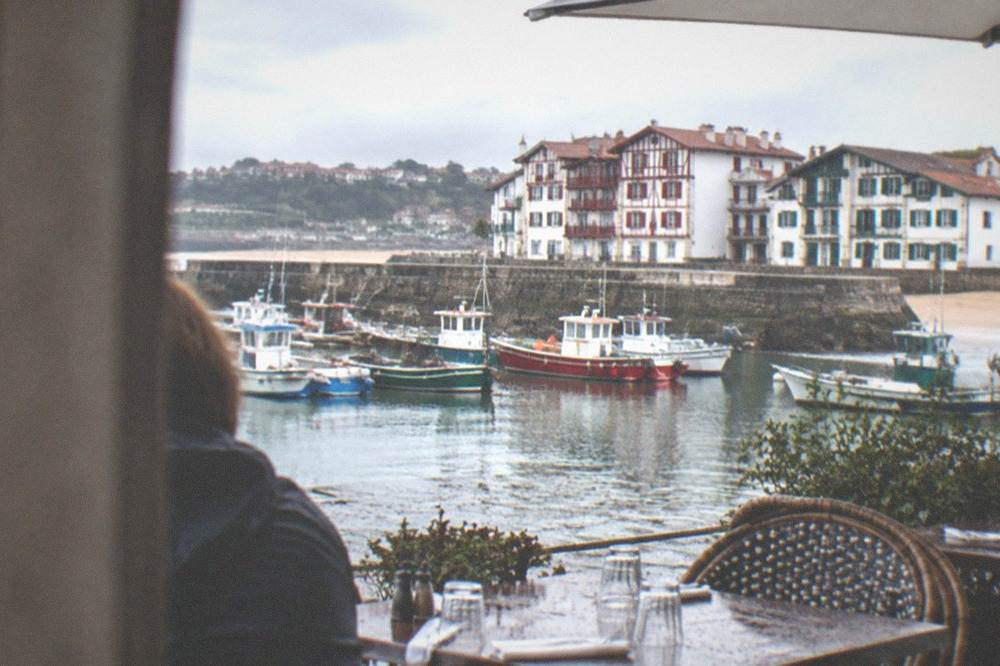
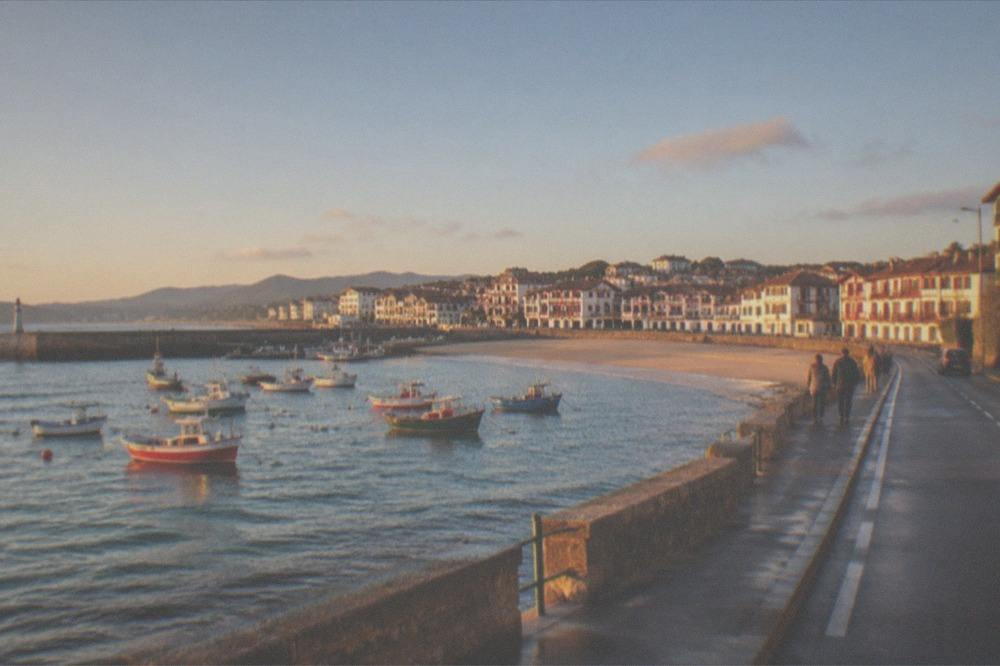
The town's core identity is the port. Boats still land fish here, and the harbour sits directly against the old town, so the day's catch, the fish restaurants and the streets you walk are all within a couple of minutes of each other. The bay is the other half of the draw: unlike the open Atlantic faces of Biarritz, the Saint-Jean-De-Luz bay is enclosed by breakwaters at either end, which is why families favour it and why the town beach sits calm inside the arc.
The Basque character survives strongly on the French side. The town sits in the traditional Basque province of Labourd, the same cultural region that continues into Spain as Gipuzkoa, and the red-and-green timber facades, pelota courts and Basque names on the shopfronts make the point visually before anyone explains it. For a visitor based in San Sebastián, the appeal is the comparison: the same culture, a different country, an hour's worth of it, and a lunch of French Basque cooking at the end.
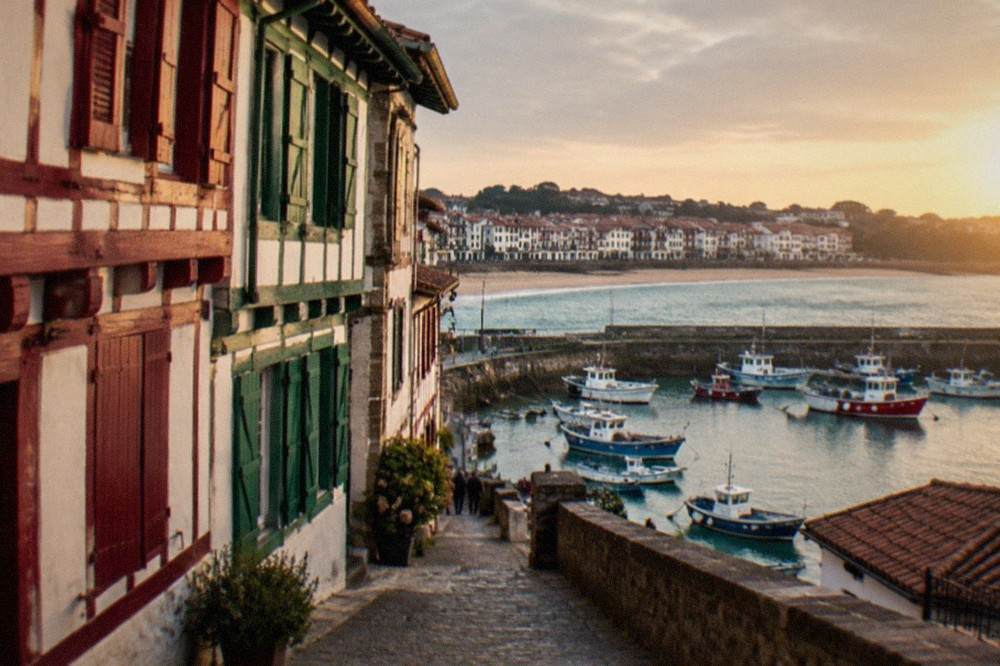
One historical note that gives the town its one unmissable church: Saint-Jean-De-Luz is where Louis XIV of France married the Spanish infanta Marie-Thérèse, sealing a peace between the two crowns, in the church of Saint-Jean-Baptiste that still stands on the main square of the old town. The church is the single most-visited building in the town. The story is worth knowing before you go, because the building is otherwise easy to walk past.
How Do You Get From San Sebastian To Saint-Jean-De-Luz?
The train option from San Sebastián runs on the Euskotren Topo line from the Amara-Donostia station to Hendaia, the French border town, in 37 to 38 minutes, with the busiest-day frequency at every 30 minutes and an occasional fare of 2.90 EUR, and from Hendaia the rest of the way into France is a short onward step. A car crosses the border directly, and coach excursions from San Sebastián run the whole French loop with no border logistics at all.
The Topo is the underrated tool for this trip. The line runs from Amara, the working terminus in San Sebastián, along the coast to Hendaia, the last town on the Spanish side of the Bidasoa river mouth, and the figures above come from Euskotren's own timetable data for the Amara to Hendaia run. The fare matches the MUGI system's one-jump occasional price, and Hendaia itself has a long sandy beach if you want to stop on the way.
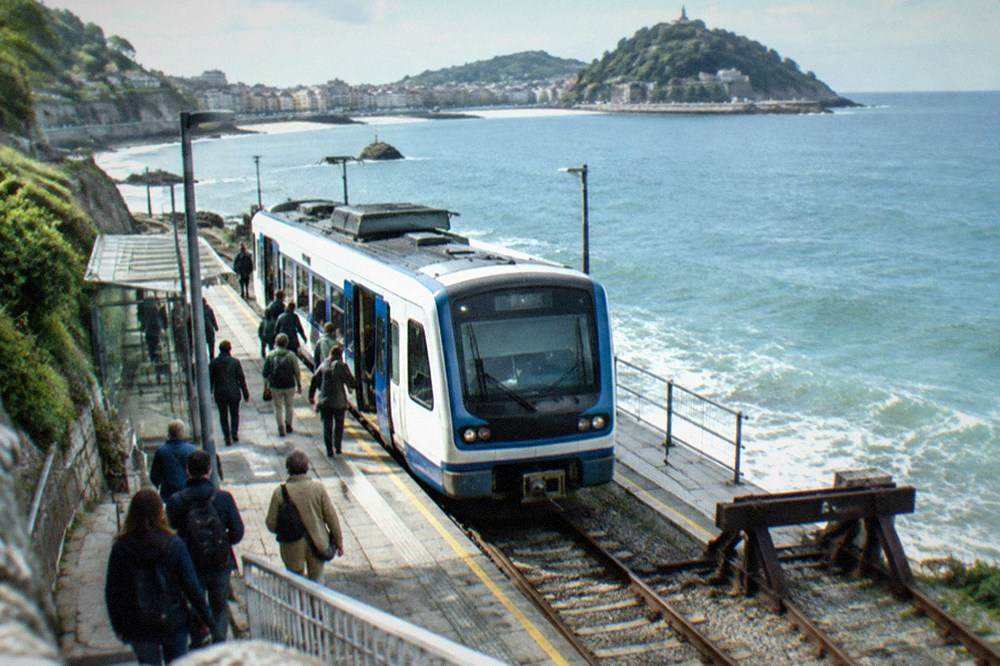
From Hendaia to Saint-Jean-De-Luz the pack gives no verified distance, journey time or fare, so this page does not print one. In practice the two towns are neighbours on the same coastal strip, and the onward leg can be done by a short local train connection on the French side, by bus, or by taxi from Hendaia. Check the French regional timetable before you commit to the train-only plan, or treat Hendaia itself as the destination and save Saint-Jean-De-Luz for a day when you have a car or a tour.
By car, the route follows the coast road east out of the city, through Hondarribia and across the Bidasoa at the mouth, then along the French coast. No published driving time is given, so plan the day loosely and let the border wait, which in the Schengen area is usually a sign you pass at road speed. The 29-country Schengen area, of which Spain and France are both members, means there is no routine passport control on this crossing.
The third option removes all of the logistics. A coach excursion from San Sebastián covers Biarritz, Bayonne and Saint-Jean-De-Luz in one day, and the tour card below shows what that costs and how it is rated.
If the coach loop appeals, the full French Basque picture, including the Biarritz and Bayonne legs, is laid out on the French Basque Country trip guide, and the Biarritz day trip page covers that town on its own. For the reverse question, whether Biarritz works as a base for visiting San Sebastián, see can you do a day trip from Biarritz to San Sebastian.
What Does A Day In Saint-Jean-De-Luz Look Like?
A comfortable day in Saint-Jean-De-Luz runs: the harbour and fish market in the morning, the church of Saint-Jean-Baptiste and the old town streets before lunch, a long French Basque lunch at the port, the town beach and the bay front in the afternoon, and a coffee or a drink on the front before heading back. Everything sits within easy walking distance of the harbour, so the whole day needs no transport once you arrive.
The shape of the town makes the plan for you. The harbour is at one end, the beach runs along the bay front, and the old town fills the block between them, so the three things the town is for are in one compact space. The church of Saint-Jean-Baptiste sits on the main square, the Place Louis XIV, and its galleries and model ships hung inside reward a look round.
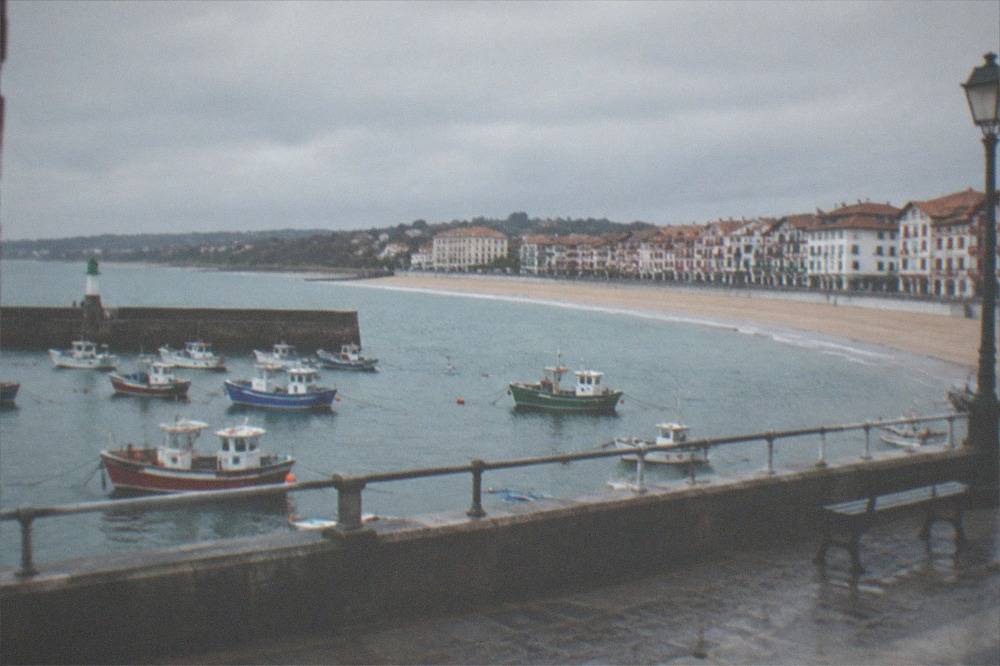
Lunch is the centrepiece of any French Basque day. The port's restaurants serve the local catch, and the region's cooking leans on fish, on the Espelette pepper that grows inland from here, and on the Basque cake, gâteau basque, which every bakery in town will sell you by the slice. Book ahead in summer: the town is a genuine French resort and the good tables fill.
The beach is the afternoon. It faces south into the bay, the breakwaters keep the water calm, and the promenade behind it has the cafés and the ice cream. If the weather turns, and on this coast it can, the old town's covered market and shopfronts absorb an hour easily. For comparison, the rain plan for the Spanish side of the border is on the rainy day in San Sebastian guide.
A sample day, laid out hour by hour:
| Time | Where | What you do |
|---|---|---|
| Morning | The harbour | Watch the boats, see the fish market activity, walk the outer mole |
| Late morning | Place Louis XIV | Visit the church of Saint-Jean-Baptiste, where Louis XIV married |
| Midday | The old town | Browse the timber-fronted streets and the food shops before lunch |
| Early afternoon | Port restaurants | A long French Basque lunch, fish and Espelette pepper dishes |
| Afternoon | The bay front | The town beach, the promenade, swimming in the sheltered bay |
| Late afternoon | Café on the front | A drink, a slice of gâteau basque, then the return leg |
How Does Saint-Jean-De-Luz Compare With The Other Day Trips From San Sebastian?
Saint-Jean-De-Luz is the relaxed, family-friendly, food-led option among San Sebastián's day trips: calmer and more sheltered than Biarritz, smaller and less monumental than Bayonne, and more French in character than the Spanish coastal towns like Getaria and Zarautz. Choose it for lunch, the beach and an easy pace, and choose Biarritz for grandeur, Getaria for txakoli, or Hondarribia for the shortest hop of all.
The comparison matters because the towns overlap in a visitor's head. All of them are fishing ports on the same stretch of coast, all of them have a beach, and from San Sebastián several of them fit the same day slot. The differences are in tone. Saint-Jean-De-Luz is the one that feels like a small French resort: sheltered, soft-edged, built around lunch and the beach. Biarritz, half an hour further along the French coast, was a royal resort and still carries that scale. Getaria and Zarautz, on the Spanish side, are covered on this site's Getaria and Zarautz pages, and Hondarribia, the closest Spanish town of all, sits beside the airport and has its own page at Hondarribia.
| Town | Country | Character | Best for |
|---|---|---|---|
| Saint-Jean-De-Luz | France | Sheltered bay, working port, French resort feel | Lunch, beach, easy pace |
| Biarritz | France | Grand imperial resort, surf beaches | Scale, ocean drama, glamour |
| Bayonne | France | Inland city, timbered old town, rivers | History, chocolate, city feel |
| Hondarribia | Spain | Walled port town beside the airport | The shortest trip, a meal |
| Getaria | Spain | Fishing village, txakoli country | Wine, grilled fish, Balenciaga museum |
| Zarautz | Spain | Long beach town, calm resort | Beach day, coastal walking |
The full menu of options, including the Spanish and inland ones, is on the day trips from San Sebastian page.
Should You Drive, Take The Train, Or Book A Tour?
Drive if you want to stop in Hondarribia or Hendaia on the way and set your own lunch time; take the Topo train to Hendaia if you want the cheap, scenic, car-free option and accept the onward leg into France; and book the coach excursion if you want Biarritz and Bayonne in the same day without parking, borders or timetables to think about. Visitors who want Saint-Jean-De-Luz alone tend to drive, and those who want the French side as a set tend to take the tour.
The trade-off is control versus coverage. The town itself needs no car once you arrive, so a car is only buying you the journey: the coastal road, the stops, the freedom to leave after coffee instead of after dinner. The train buys you the cheapest crossing and a genuinely pretty coastal line, at the cost of the connection at the far end, which this page will not guess at.
The tour buys you the set. Saint-Jean-De-Luz on its own is a half-day town; combined with Biarritz's seafront and Bayonne's old town, it becomes a full French Basque day, which is exactly what the coach excursion on this site's roster runs. The tour's own listing carries its price, rating and duration, and the card below shows them.
Beside the coach option, the operator's live listing shows current dates and availability: Check availability.
What Should You Eat In Saint-Jean-De-Luz?
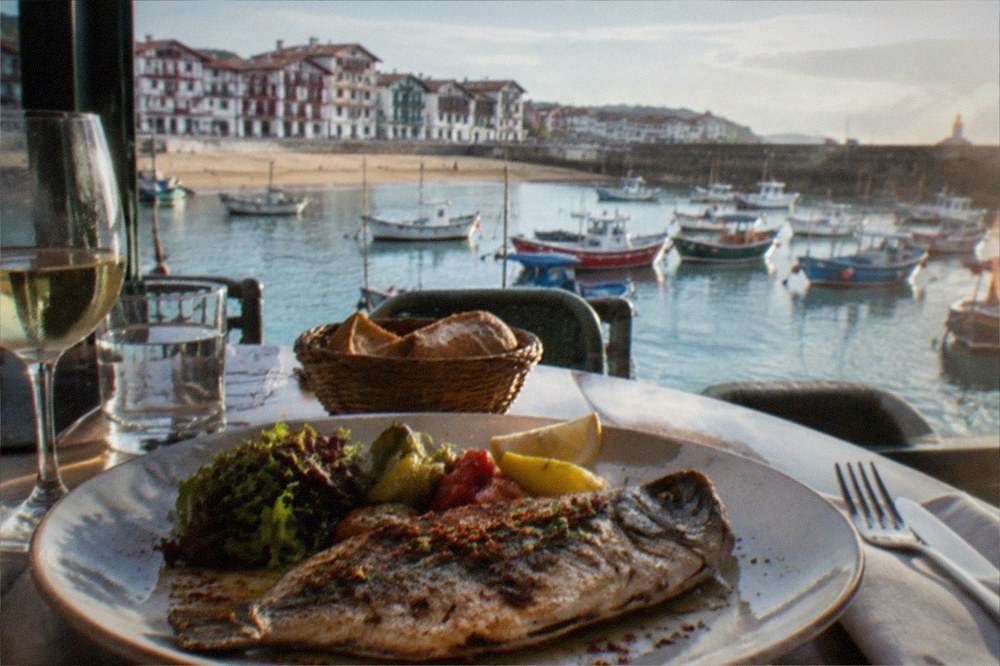
Eat fish, and eat it at the port: the town's restaurants are built on the harbour's catch, and the dishes to look for are grilled fish, ttoro, the local fish stew, and anything made with Espelette pepper. Finish with a slice of gâteau basque, the almond or dark-cherry-filled pastry cake that is the region's signature sweet, and drink the local white if the list has one.
Ttoro is the dish that exists only here, on both sides of the border's French half: a rich stew of fish, shellfish and sometimes squid, in a tomato and Espelette pepper base. The Espelette pepper, dried and strung in garlands all over the region's villages, is the local seasoning that replaces black pepper in much of the cooking, and it shows up in everything from chocolate to the fish dishes.
The gâteau basque is the dessert and the souvenir. Every bakery sells whole ones and slices, and the two fillings are almond cream and black cherry jam, with strong local loyalties on either side. It travels well, which is the reason the bakeries sell them boxed.
A quick ordering guide for the port restaurants:
| Dish | What it is | When to order it |
|---|---|---|
| Ttoro | Local fish and shellfish stew with tomato and Espelette pepper | The signature dish, order once |
| Grilled fish | The day's catch off the boats, grilled whole or filleted | The safe excellent choice |
| Axoa | Veal dish, minced and cooked with peppers, a Basque classic | When you want meat instead |
| Gâteau basque | Pastry cake with almond cream or black cherry filling | Dessert, and a boxed one home |
| Espelette pepper | Dried red pepper, the region's seasoning, sold in garlands and jars | The food souvenir |
For the Spanish side of the same appetite, the pintxo culture and the txuleta steak tradition are covered in what to eat in San Sebastián.
What Is The Best Time Of Year For A Saint-Jean-De-Luz Day Trip?
The best months for a Saint-Jean-De-Luz day trip are May, June and September, when the French resort town is in season but not at its August peak and the beach and the lunch terraces both work; July and August are the fullest and warmest; and October to April suits the port, the old town and long lunches, with the beach as decoration rather than the point of the day.
The weather logic comes from the Spanish side of the border, where AEMET's Igeldo station, 250 m up on Monte Igeldo, records the pattern this whole coast shares: mild summers, rain in every month, and the driest month, July, still averaging 86 mm of rain. August averages 117 mm on that record, and November is the wettest month of all at 169 mm. Saint-Jean-De-Luz, just across the line, sits inside the same Atlantic system, so the planning advice transfers: never promise yourself a dry day, and always have the old town as the rain plan.
| Period | The town | The trade-off |
|---|---|---|
| May to June | In season, warm, terraces open | Best balance of weather and space |
| July to August | Full French summer holidays, peak resort bustle | Warmest water, most crowds, book lunch |
| September | Sea still warm, families gone home | The connoisseur's month |
| October to April | Quiet port town, restaurants for locals | Weather unreliable, beach off the table |
The visitor pattern on the Spanish side, from the INE hotel series for Donostia-San Sebastián, backs this up: August is the peak month for overnight stays and July and August together carry about a fifth of the year's hotel nights, while April to October never drops below 200,000. The French resort next door runs on the same school-holiday calendar.
What Else Can You Combine With Saint-Jean-De-Luz?
The natural combinations are Biarritz and Bayonne, which the coach excursion from San Sebastián covers in a single day alongside Saint-Jean-De-Luz, and on the Spanish side of the border Hondarribia and Hendaia, which sit on the route out and make easy stops on a driving day. Ambitious day-trippers can instead point at the Spanish coastal set, Getaria and Zarautz, or inland at Tolosa, but the French trio is the pairing that shares one road.
The French Basque loop is the classic: one border crossing, three towns, one day. Bayonne, the inland city with the timbered old town and the rivers, and Biarritz, the grand resort on the open ocean, sit in a triangle with Saint-Jean-De-Luz, and the coach excursion runs all three. That tour is the one this site carries for the trip, and its card below shows the price, the rating and the full itinerary.
On the Spanish side, the border towns reward a slower driving day. Hondarribia, beside the airport, has one of the best restaurant rows in Gipuzkoa and a walled upper town, and Hendaia, the Topo's French-side terminus, has the long beach at the river mouth. Both are covered on their own pages on this site.
For the wider menu of single-day and multi-day options out of the city, from the Bilbao day trip and the Guggenheim Bilbao to the Rioja day trip and the flysch coast at Zumaia, the round-up page is day trips from San Sebastian.
Common Questions About Saint-Jean-De-Luz Day Trips
Can You Do Saint-Jean-De-Luz As A Day Trip From San Sebastian?
Yes. The town is just across the French border, reachable by the Topo train to Hendaia with an onward leg, by car along the coast road, or on a coach excursion that also covers Biarritz and Bayonne. One unhurried day covers the harbour, the old town, the church and the beach.
Is Saint-Jean-De-Luz Worth Visiting Over Biarritz?
They serve different moods. Saint-Jean-De-Luz is smaller, sheltered and built around lunch and a calm bay beach, while Biarritz is grander, ocean-facing and more dramatic. Many visitors do both on the same day, which is exactly what the coach excursion from San Sebastián runs.
Do You Need A Passport To Go From San Sebastian To Saint-Jean-De-Luz?
Spain and France are both in the 29-country Schengen area, so there is no routine border control on this crossing. Carry your ID anyway, as carriers and spot checks can ask for it, and non-EU visitors should carry the passport they used to enter Schengen.
What Food Is Saint-Jean-De-Luz Known For?
Fish from the harbour, ttoro, the local fish and shellfish stew made with Espelette pepper, and gâteau basque, the pastry cake filled with almond cream or black cherry jam. The port restaurants are the reason many visitors make the trip.
Can You Swim At The Beach In Saint-Jean-De-Luz?
Yes. The town beach sits inside a sheltered bay with breakwaters at each end, which keeps the water far calmer than the open-ocean beaches at Biarritz. The season runs with the French summer, and the sea is at its warmest from July into September.
What Is The Cheapest Way To Get To Saint-Jean-De-Luz From San Sebastian?
The Euskotren Topo train from Amara-Donostia to Hendaia is the cheapest verified leg, at an occasional fare of 2.90 EUR for the 37 to 38 minute run. The onward connection into France is not detailed in this site's verified record, so check the French regional timetable before committing to a train-only plan.
The town keeps its appeal in every season, because the harbour and the old town do not close and the lunch tables are the point of the day even when the beach is not. For more on the region the trip sits inside, and for the full set of excursions out of the city, start with the San Sebastian Spain Guide and the day trips from San Sebastián round-up.