What Food Is San Sebastian Famous For?
What food is San Sebastián famous for? Pintxos, txuleta steak, cider house meals, txakoli wine, burnt cheesecake and one of the densest Michelin star counts in Spain, explained.
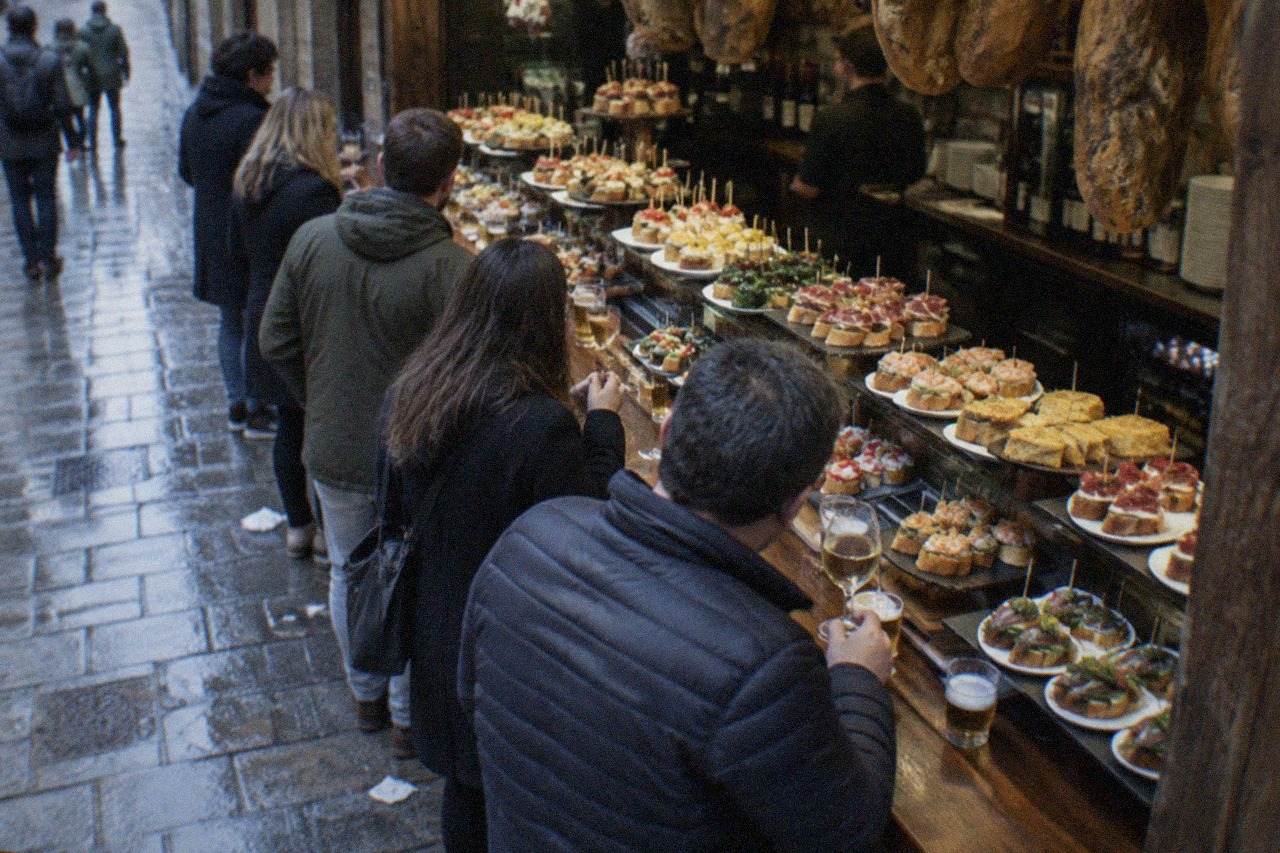
San Sebastián, the Basque name Donostia, sits on La Concha bay in Gipuzkoa in the Basque Country of Spain, and its fame is built on food more than on anything else. The city is famous for pintxos, the small bar snacks eaten standing up in the Old Town; for txuleta, the enormous rib steak carved at the table; for cider house meals and the txotx ritual; for the sharp local white wine txakoli; and for the burnt Basque cheesecake. Around those dishes sits a restaurant culture with more Michelin stars per resident than almost anywhere, counted at 11 stars across 6 restaurants inside the city in the MICHELIN Guide Spain 2026.
What Food Is San Sebastian Famous For?
San Sebastián is famous for pintxos, the small individual bar snacks of the Basque Country, eaten standing at counters in the Parte Vieja old quarter. Around them sit txuleta rib steak, cider house meals with the txotx ritual, txakoli white wine, gilda pintxos and the burnt Basque cheesecake. The MICHELIN Guide Spain 2026 counts 11 stars across 6 restaurants inside the city, which is why food, not scenery, draws people to San Sebastián.
The pintxo is the entry point. Unlike a plate of shared tapas further south, a pintxo is usually a single portion on a skewer or a slice of bread, ordered one at a time, bar by bar. The custom is called a txikiteo or pintxo crawl: one pintxo and one drink in one bar, then move to the next. The Old Town, the Parte Vieja, holds the densest run of these bars in the city, and the full guide to eating here covers how an evening of it works in practice.
The gilda deserves its own sentence: a skewer of anchovy, guindilla pepper and an olive, named after a character in the film Gilda, and treated locally as the definitive pintxo. Alongside it sit anchovies in vinegar or oil, marmitako tuna and potato stew, talo corn cakes with txistora sausage, and bacalao al pil pil, salt cod emulsified in olive oil until the sauce turns silky.
The table below gathers the signature dishes and how each one is served.
| Dish | What it is | How it is eaten |
|---|---|---|
| Pintxos | Small individual bar snacks on bread or a skewer | One or two per bar, standing, with a small drink, moving between bars |
| Gilda | Anchovy, guindilla pepper and olive on a skewer | Eaten in one or two bites at the counter |
| Txuleta | A large bone-in rib steak, grilled over embers | Carved at the table, shared, usually at a steakhouse or cider house |
| Bacalao al pil pil | Salt cod cooked slowly in olive oil with garlic | A hot dish ordered to the table, sauce emulsified by the pan |
| Marmitako | Tuna and potato stew | A spoon dish, most associated with fishing towns along the coast |
| Burnt Basque cheesecake | Baked cheesecake with a deliberately dark, caramelised top | A wedge for dessert, the recipe popularised by a bar in the city |
None of this is a museum piece. The eating customs run on a calendar, and the calendar is part of the answer.
Why Is San Sebastian A Pintxo City Rather Than A Tapas City?
Pintxos differ from tapas in three ways: each one is an individual portion rather than a shared plate, many are displayed on the counter so you point and choose, and the custom is to eat them across several bars in one evening rather than settle in one place. The word comes from pinchar, to skewer. It is a Basque custom with its own rhythm, not a Spanish tapas culture with a local accent.
The evening has a shape. Locals eat late, and the pintxo bars fill after dark. A typical run takes in three or four bars, one or two pintxos and a small glass of wine, txakoli or cider in each. Ordering is informal: you either point at the display or ask for something hot from the kitchen, and you settle up at the end, often by an honour system where the bar counts your skewers. The drink that goes with it is usually txakoli, the local white wine, poured from a height to aerate it.
The city's food reputation is not only a bar culture. The same small streets produced cooking schools and chefs who went on to found the restaurants that now hold the Michelin stars, and the techniques behind the pintxo counters and the tasting menus come from the same tradition. A guided crawl is the fastest way into this, and the operator listings below cover the best of them.
If you would rather learn the cooking than just eat it, a hands-on class takes you from the market to the stove, and you eat the meal you cook.
What Is The Txuleta And The Cider House Meal?
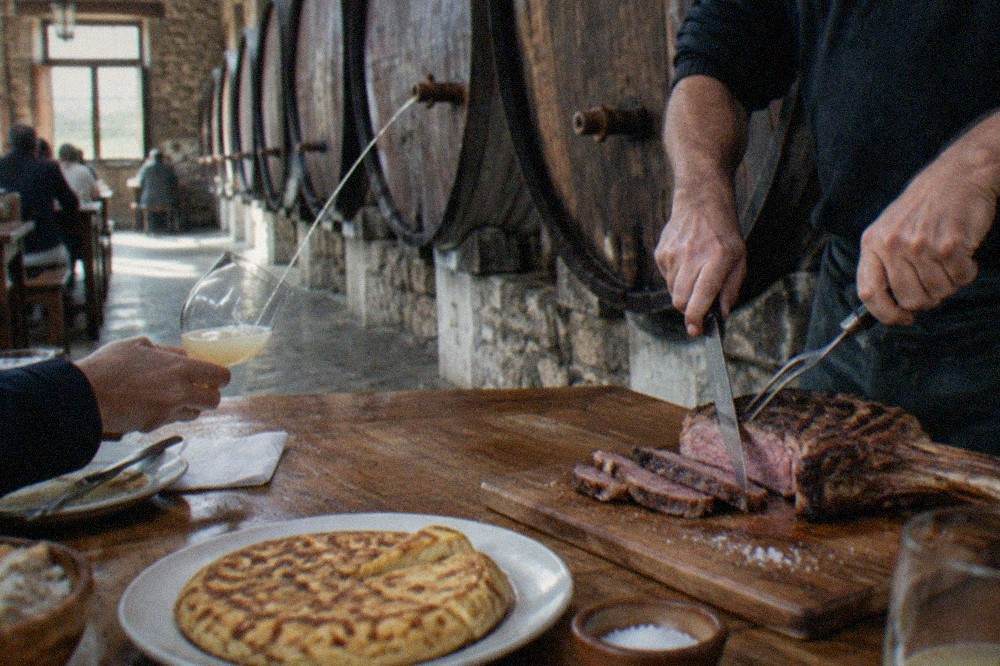
The txuleta is a thick, bone-in rib steak, grilled over wood embers and carved at the table, and it is the centrepiece of the cider house meal. In txotx season, from the middle of January to the end of April, cider houses around the city open their barrels: you hold your glass under the stream directly from the barrel, then eat a fixed menu of cod omelette, fried cod with peppers and the txuleta, with salt, bread and walnuts to finish.
The txotx ritual is the part visitors remember. The barrel is opened and the cider shoots out in an arc; you catch it in your glass at arm's length, drink it standing, and go back for more whenever the shout of "txotx!" goes up. The cider is flat, dry and low in alcohol, nothing like the bottled sweet cider sold elsewhere. Astigarraga, a separate municipality a short ride out of the city, is the heartland of these houses, and the tourism board names cider houses for both Donostia and Astigarraga. The full index of guides sits on San Sebastian Spain Guide.
The steak itself is the same cut that appears in the city's steakhouses year round, but at a cider house it arrives as part of the set meal rather than à la carte. The meal is deliberately unchanging: salt cod in the two classic preparations, then the meat, then cheese with quince and walnuts, all washed down with as much cider as you catch. The cider houses guide covers how the season works, and a guided visit with lunch included handles the transport and the booking.
Where Do The Michelin Stars Sit In San Sebastian?
Six restaurants inside the city of San Sebastián hold 11 stars in the MICHELIN Guide Spain 2026: Akelaŕe and Arzak each hold three stars, Amelia by Paulo Airaudo holds two, and iBAi, the newly starred Itzuli and Kokotxa hold one each. Across the wider province of Gipuzkoa the guide lists 19 stars across 11 restaurants. Martín Berasategui's three stars sit in Lasarte-Oria, a separate municipality, not in the city.
The starred table has shaped how the whole city eats. Arzak, in the Alza district, is the house most associated with the movement, and Akelaŕe sits above the bay with views over La Concha. The full city list from the 2026 edition:
| Stars | Restaurant | Location |
|---|---|---|
| 3 | Akelaŕe | Donostia / San Sebastián |
| 3 | Arzak | Donostia / San Sebastián |
| 2 | Amelia by Paulo Airaudo | Donostia / San Sebastián |
| 1 | iBAi by Paulo Airaudo | Donostia / San Sebastián |
| 1 | Itzuli, new in 2026 | Donostia / San Sebastián |
| 1 | Kokotxa | Donostia / San Sebastián |
A starred dinner here books out far ahead, and the 2027 edition is announced on 24 November 2026 in Huesca, after which the count may change. Visitors, though, eat better at street level than the star chase suggests: the pintxo bars of the Old Town carry the same technique at counter prices, and the question of how many days to give the city usually comes down to how many meals you want to fit in.
What Should You Actually Order In San Sebastian?
Order pintxos by pointing at the counter and asking for one hot dish from the kitchen in each bar, drink txakoli poured from a height or a small glass of cider, and plan one sit-down meal around either txuleta steak or fresh grilled fish. For dessert, order the burnt Basque cheesecake, which was created in this city and is served everywhere from its home bar to ordinary restaurants. End the evening the way locals do, moving between bars rather than staying put.
Fish is the ingredient the city's kitchens grew up on. The Cantabrian coast supplies hake, monkfish, anchovies and tuna, and grilled whole fish, besugo and rodaballo among them, is the classic restaurant order that no pintxo crawl replaces. Getaria, a fishing town along the coast, is where much of that fish culture and the txakoli vineyards meet, and it makes a natural half-day trip for anyone who wants to see where the plate comes from.
The cheesecake deserves its own planning. Baked at a high temperature until the top turns dark and almost bitter, it was popularised by La Viña, a bar in the city, and the story behind it is covered in what is so special about San Sebastian cheesecake. It now travels, but the original is a reason to end a night in the Old Town.
For visitors who want the whole food picture in one structured run, from the market to reserved seats at the best counters, the premium option below is the one to compare first.
The same operator's listing also covers the pintxo and food tour options across the city, if you want to see the full range before committing to one.
Common Questions About San Sebastian Food
What Food Is San Sebastian Famous For?
Pintxos, txuleta rib steak, cider house meals with the txotx ritual, txakoli white wine, gilda pintxos, grilled Cantabrian fish and the burnt Basque cheesecake, all backed by 11 Michelin stars across 6 restaurants inside the city in the MICHELIN Guide Spain 2026.
What Is The Difference Between Pintxos And Tapas?
A pintxo is an individual portion, often on bread or a skewer, displayed on the counter and ordered by pointing. Tapas are more often shared plates brought to the table. The pintxo custom is Basque, and in San Sebastián the habit is to move between several bars in one evening.
When Is Cider House Season In San Sebastian?
The txotx season runs from the middle of January to the end of April, which is when cider houses open the barrels and serve the fixed meal of cod, txuleta steak, cheese and walnuts with cider poured straight from the barrel.
What Drink Goes With Pintxos?
Txakoli, the local white wine, poured from a height into a flat glass, or a small glass of still Basque cider. Both are made for drinking in small quantities between bars, which is the rhythm of a pintxo evening.
Where Was The Burnt Basque Cheesecake Invented?
In San Sebastián, at La Viña, a bar in the city's centre. It is baked until the top is deliberately dark and caramelised, and it has spread worldwide from this one kitchen.
Is San Sebastian Worth Visiting Just For The Food?
For many visitors it is the main reason. The city holds 11 Michelin stars across 6 restaurants inside its boundaries in the 2026 edition of the guide, and the pintxo bar culture below that level is dense enough to fill several evenings on its own.
Between the counters of the Parte Vieja, the steakhouses and the cider houses of the surrounding province, the food this city is famous for is a full calendar rather than a single dish, and the best trips here are planned meal by meal.