Paris To San Sebastian By Train
The full rail route from Paris to San Sebastián, the Basque city on La Concha bay whose official name is Donostia / San Sebastián, including the cross-border Topo connection from Hendaia.
Short answer
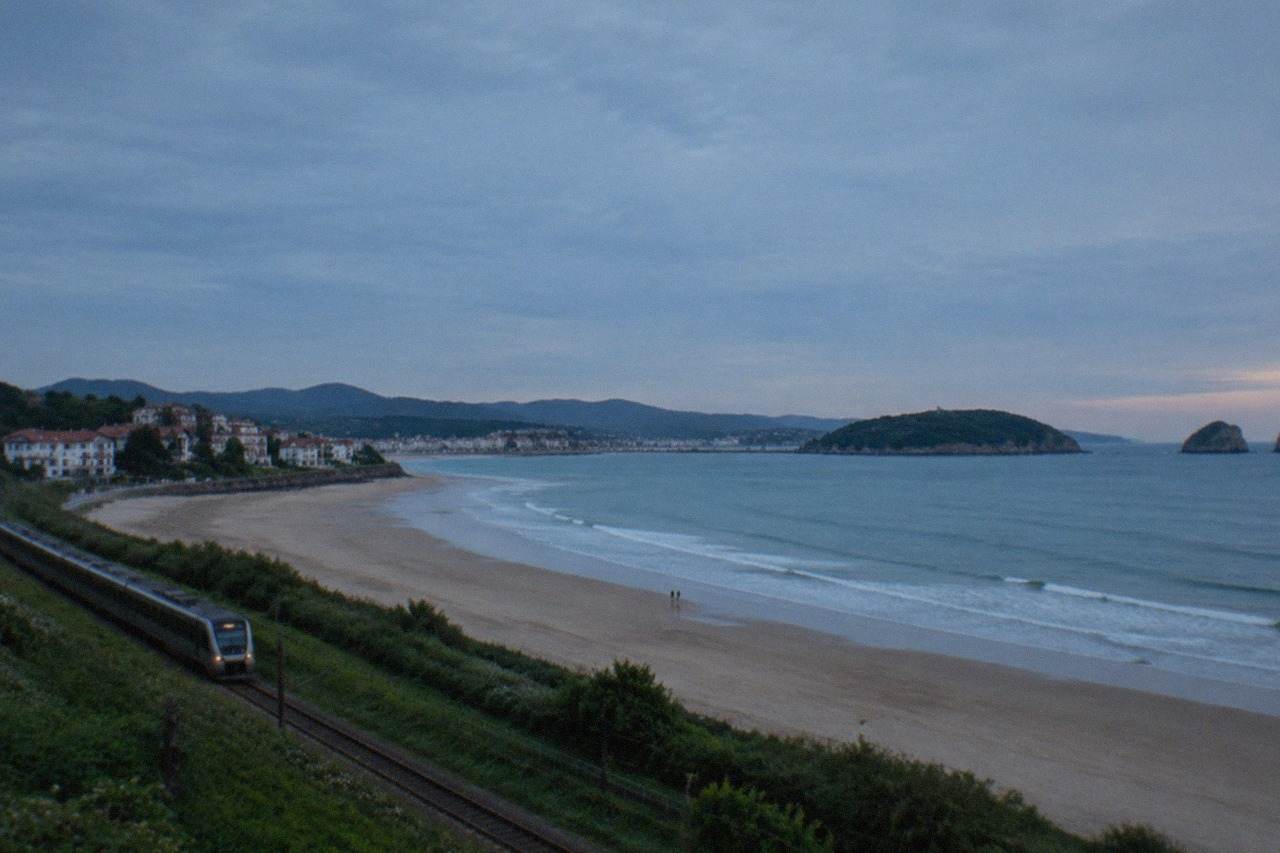
There is no direct train from Paris to San Sebastián. The standard rail route runs from Paris to the French border town of Hendaye (Hendaia), then the Euskotren Topo carries you from Hendaia to the Amara station in the city centre in 37 to 38 minutes for a 2.90 EUR occasional fare.
The rail journey from Paris to San Sebastián, in the Basque Country of northern Spain, is a two-part trip: a French mainline service from Paris to the border town of Hendaye, then a Basque narrow-gauge railway, the Euskotren Topo, across the river Bidasoa and along the coast to the city whose official name is Donostia / San Sebastián. There is no single through train, and the border change is the part that catches many travellers out. This page on San Sebastian Spain Guide sets out the whole route, the stations at each end, what the Topo costs and how often it runs, and what to do with your first evening on La Concha bay once you step off it.
How Do You Travel From Paris To San Sebastian By Train?
There is no direct train from Paris to San Sebastián, and the standard route is a two-ticket journey: a French mainline service from Paris to Hendaye, the last town on the French side of the border, then the Euskotren Topo from Hendaia station across the river into the Basque Country, finishing at the Amara station in the city centre. The Topo leg has an occasional fare of 2.90 EUR, with departures every 30 minutes on the busiest service day.
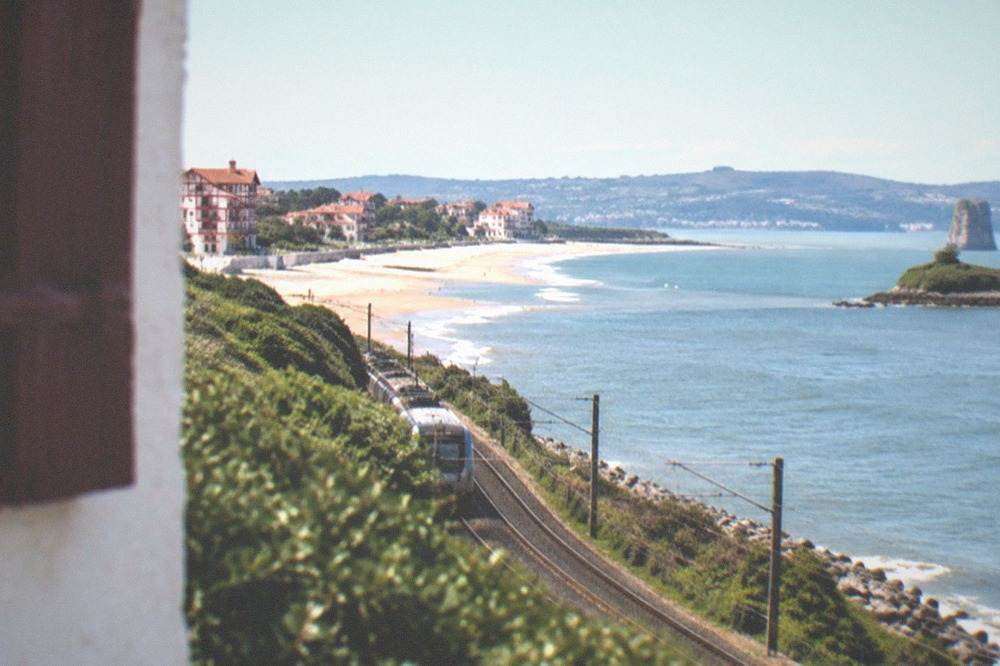
The French leg ends at Hendaye, and the Basque leg begins a short walk away at Hendaia, the same town under its Basque name. The two stations sit on opposite banks of the Bidasoa, which is the international border here, and the walk between them is a few minutes along the riverfront. This border change is the reason the journey needs two tickets: the French network and the Basque Euskotren network are separate systems with separate fares, and no through ticket covers both.
Buy the Paris to Hendaye leg from the French operator and the Hendaia to Donostia leg separately. The Topo uses the MUGI fare system of Gipuzkoa, so the same card that pays for the city's buses pays for the train. The table below shows the MUGI occasional fares by number of zone jumps, as the MUGI tariff gives them.
The table shows the cash occasional fares and the MUGI card fares for each number of zone jumps, in euros.
| Ticket | Urban 1 and 0 jumps | 1 jump | 2 jumps | 3 jumps | 4 jumps | 5 jumps |
|---|---|---|---|---|---|---|
| Occasional ticket (cash) | 1.95 | 2.90 | 5.40 | 7.90 | 10.25 | 13.65 |
| Night ticket | 2.65 | 3.70 | 6.45 | 8.95 | 11.30 | 14.75 |
| MUGI anonymous card | 0.78 | 1.16 | 2.16 | 3.16 | 4.10 | 5.46 |
| MUGI personalised, trips 1 to 20 in the month | 0.59 | 0.88 | 1.64 | 2.41 | 3.12 | 4.16 |
The Hendaia to Amara journey is a one-jump trip on that tariff, which is why the occasional fare is 2.90 EUR. A traveller making several journeys around Gipuzkoa on the same visit will pay less per ride with a MUGI card than with cash, though the card's own purchase price is a detail to confirm with the operator. For a single arrival journey, the cash occasional ticket is the simplest option and can be bought at the station.
Where Does The Train Arrive In San Sebastian?
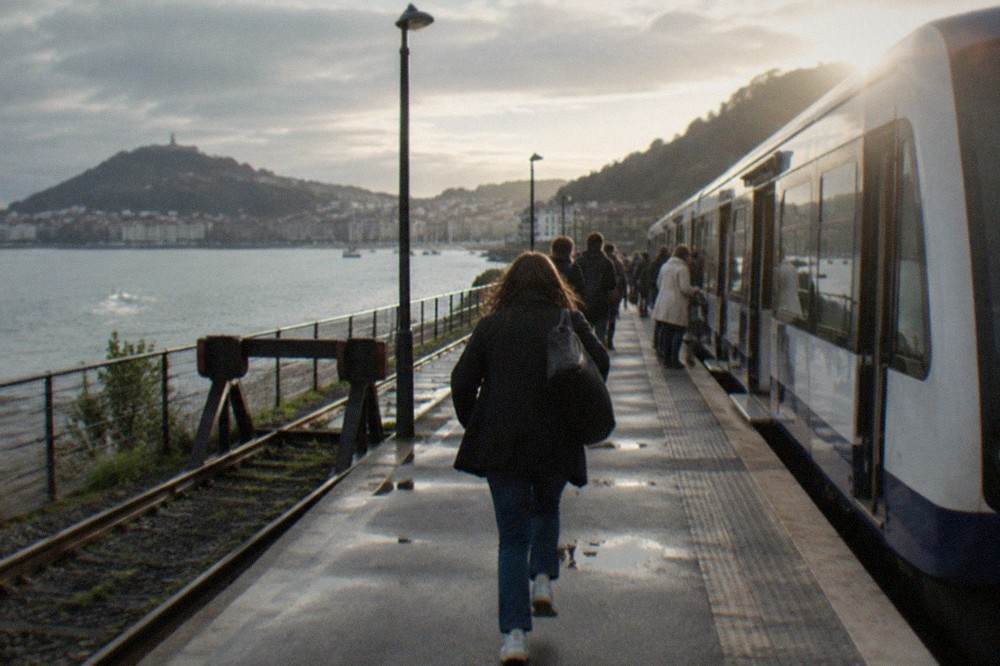
The Topo from Hendaia terminates at Amara, the working terminus station of the Euskotren network in the city, which sits south of the centre within walking distance of the Egia and Amara neighborhoods and a short bus or taxi ride from the Old Town and La Concha. Amara is still the station every arrival from the French border uses, and no other city-centre rail station is open on this line.
The Basque Government announced on 8 June 2026 that the civil works of a new underground through-line, with stations beside La Concha, at Bentaberri and at Amara, are complete, and that fitting-out of electrical systems, ventilation, signalling and communications has begun. That announcement gave no opening date, so Amara remains the station to plan around. Nothing on this page should be read as a promise that the underground section opens soon.
From Amara the rest of the city is straightforward. The dBus city network runs from stops around the station, with a cash occasional fare of 1.95 EUR and a night ticket of 2.65 EUR, and the dBus fare page notes that cash payment does not allow free transfers. The station area is also on the flat, and the walk to the eastern edge of the centre passes the Cristina Enea park. For arrival with luggage, a taxi or the bus is the easier first move, and the station pages on this site describe the facilities in detail.
For the wider rail picture, the long-distance Renfe services use a separate station nearer the river, and the page on the city's train and bus stations covers both. Travellers weighing the train against flying will find the Barcelona fly-or-train comparison useful for the same question from a different starting point.
What Is The Euskotren Topo From Hendaia?
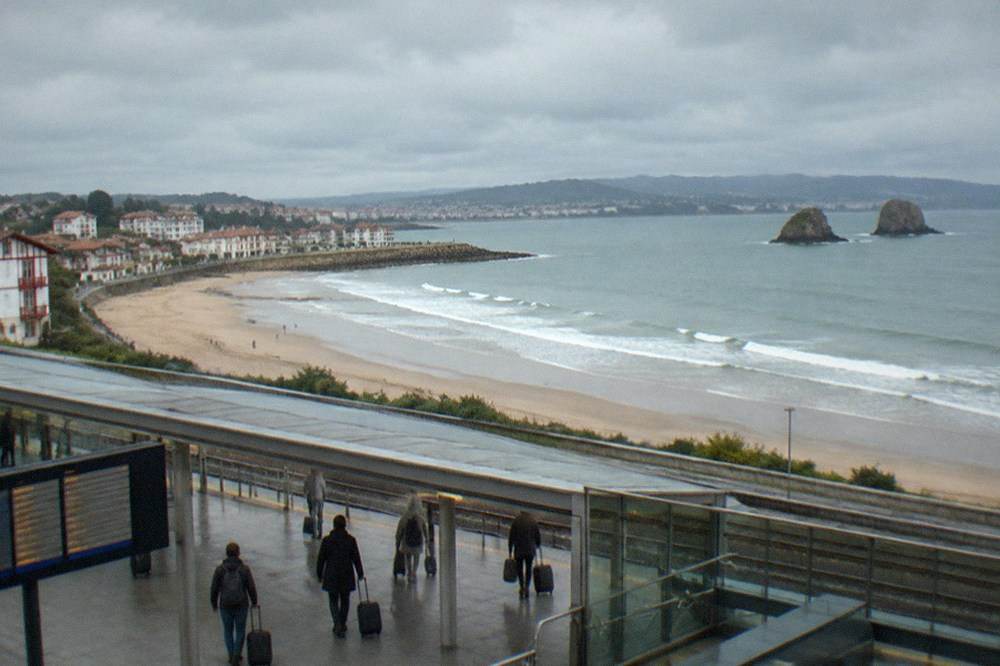
The Topo is the Euskotren narrow-gauge line that runs from Amara-Donostia to Hendaia in 37 to 38 minutes, with departures every 30 minutes on the busiest service day of the published timetable, and an occasional fare of 2.90 EUR for the one-zone-jump journey. It is the only rail link across the Bidasoa border at Hendaye, and it is the final leg of every rail arrival from Paris.
The name means "mole", and the line earned it from the tunnelled sections it uses along the coast. The published timetable data, from Euskotren's own feed, shows 316 trips between the two termini with a minimum journey time of 37 minutes and a median of 38, so the 37 to 38 minute figure holds for essentially every departure. On the busiest service day the feed shows 39 departures with 31 of the 38 gaps at 30 minutes and the remainder at 60, which is why the honest description is every 30 minutes at the busiest, not a flat all-day frequency.
The table summarises the Topo journey from the operator's own published data.
| Detail | Figure | Source in the pack |
|---|---|---|
| Journey time, Amara-Donostia to Hendaia | 37 to 38 minutes | Euskotren GTFS, 316 trips |
| Frequency, busiest service day | Every 30 minutes | 39 departures, 31 gaps of 30 min |
| Occasional fare | 2.90 EUR | MUGI tariff, 1 jump |
| Terminus in the city | Amara-Donostia | Working terminus |
Because the Topo is inside the MUGI system, the fare is the same whether you buy at a machine or tap a card, and the urban fare zone "Urbano 1" is defined on the MUGI page as Donostia and the Pasaia motora, so the harbour ferry at Pasaia sits inside the urban fare. That is a detail worth knowing for day trips: a MUGI card holder travelling within the city pays the 0.78 EUR urban card fare, not a zone fare.
One practical note for the border crossing itself: the two stations are a few minutes' walk apart in Hendaye, and the walk crosses the river between France and Spain. Both countries are in the Schengen area, which counts 29 countries including Spain and France, so there is no passport control at the bridge. The EU's own travel-authorisation page states that ETIAS is not in operation and no applications are collected, so there is nothing extra to apply for before this journey.
Should You Fly Or Take The Train From Paris To San Sebastian?
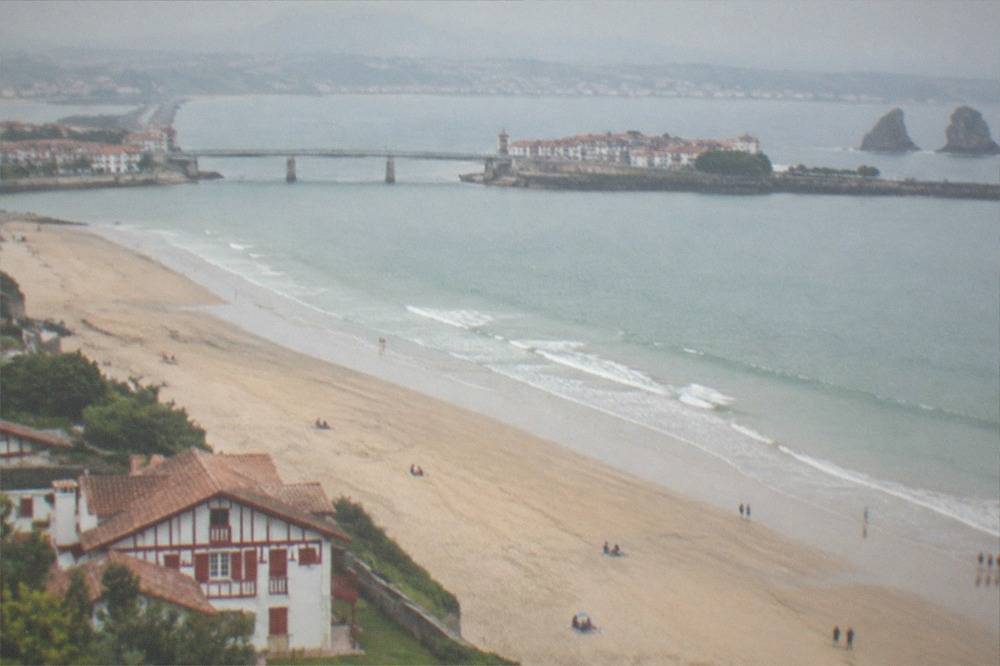
The train lands you in the city centre, at Amara, with no airport transfer at either end, while every flight requires a second journey by bus or taxi from an airport to the city. The city's own airport at Hondarribia is 20 km away and is served by the Lurraldebus airport lines, including the direct E30; Biarritz is 45 km and Bilbao is 105 km. The trade-off is journey time against connection friction, and the train wins on simplicity.
The tourism board lists the city's three nearest airports as San Sebastián Airport (EAS) at Hondarribia, 20 km, Biarritz at 45 km, and Bilbao at 105 km. One correction matters for anyone planning the airport bus: line E21 has not stopped at the city's airport since 1 June 2026, and the operator lists the airport lines as E20, E23, E25, E27, E28, E29 and E30, with E30 running direct from Donostia to the airport. A tourism board page still names E21, and it is stale. The airport's own pages do not publish a journey time for the bus, and this site does not invent one.
The rail route avoids all of that. The table compares the two approaches on the points that actually decide the question.
| Factor | Train from Paris | Flying from Paris |
|---|---|---|
| Arrival point | Amara station, in the city | An airport 20, 45 or 105 km away |
| Border crossing | Walk between stations at Hendaye | Schengen airside, no control |
| Tickets needed | Two, one per network | Flight plus ground transfer |
| City transport on arrival | dBus from Amara, 1.95 EUR cash | Airport bus line or taxi |
| Weather exposure | None, covered stations | None, but transfer adds a leg |
The comparison is not about speed alone. A rail traveller changes once, at Hendaye, and then rides a frequent coastal line to the centre. A flyer changes once at an airport and then faces a bus or taxi. For a city whose station sits within the fare zone that also covers the Pasaia harbour ferry, the train keeps the whole journey on public transport. The pages on Bilbao to the city and Madrid to the city apply the same logic from the other big starting points, and the answer page on whether there is a high-speed train to the city covers the rail-speed question directly.
How Many Days Should You Stay After The Train From Paris?
Two full days is the honest minimum for a first visit, and three lets you add a day trip along the Gipuzkoa coast or across the French border. The city's Old Town, La Concha bay, Monte Urgull and Monte Igueldo fill two days comfortably, and the third day is where the coast towns such as Getaria, Hondarribia and Zumaia come in. The train journey itself consumes a day in each direction, so a weekend trip yields one full day on the ground.
The site's own planning guide on how many days to spend here breaks this down day by day, and the compressed one-day version exists for anyone determined to do the trip over a single weekend. The general answer for a rail traveller from Paris is that the journey is worth at least two nights, because the border change and the coastal leg mean you arrive in the afternoon rather than the morning.
What fills the days is unusually concentrated. The Old Town, the Parte Vieja, sits between the station area and La Concha, and the pintxo bars open from mid-evening. Monte Urgull, the hill between the Old Town and the harbour, keeps access hours of 08:00 to 21:00 from 1 May to 30 September and 08:00 to 19:30 from 1 October to 30 April, so an evening ascent is possible in summer but not in winter. The page on what the city is known for covers the rest.
For the third day, the Topo itself is a day-trip instrument: it runs to Hendaia, and connections along the coast reach Getaria, Zarautz and Zumaia, each of which has its own page on this site.
What Is The Weather Like When You Arrive From San Sebastian By Train?
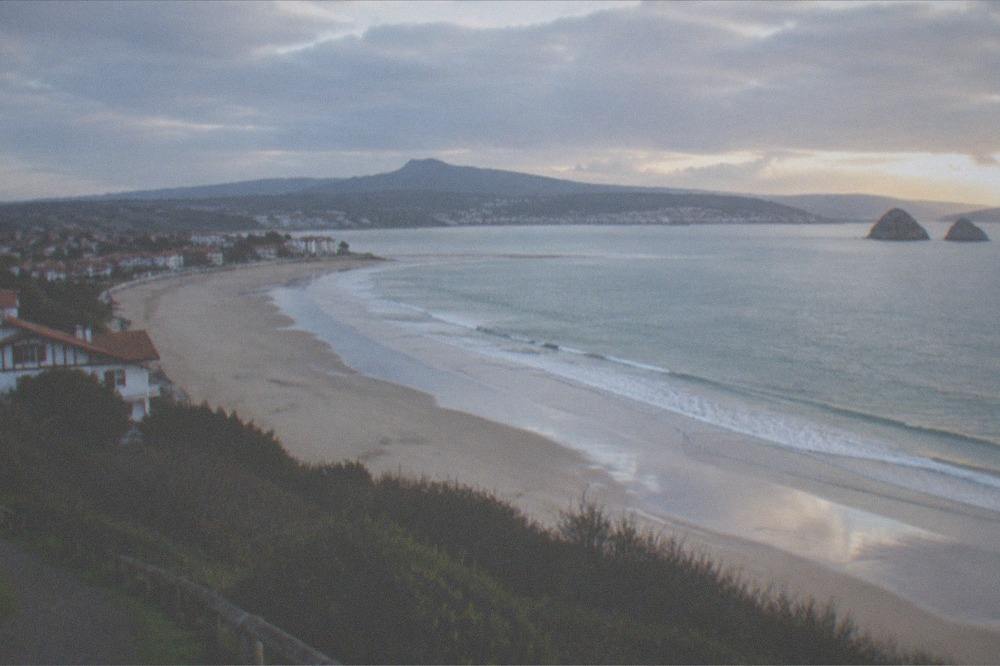
The city is wet by European standards in every month: AEMET's Igeldo station, on the hill above the bay, records 1,507 mm of rain a year over 141 days with at least 1 mm, and July, the driest month, still averages 86 mm over about 10 rain days. Mean temperatures run from 8.5 C in January to 19.5 C in August, with mean daily maxima of 11.0 C in January and 22.5 C in August. Pack a rain layer in every season.
A rail traveller from Paris notices this quickly, because Paris has a drier summer than anything on this coast. AEMET's normals for the station Donostia / San Sebastián, Igeldo, cover the period 1981 to 2010, and the station sits 250 m up on Monte Igeldo, so the seafront runs slightly warmer than the published values. The honest reading of the table is that rain is a year-round feature, not a winter one: August, at 117 mm, is wetter than June at 90, July at 86 or September at 111, and November is the wettest month at 169 mm.
The table gives the monthly normals from AEMET's Igeldo station.
| Month | Mean C | Mean max C | Rain mm | Days 1mm+ rain | Sun hours |
|---|---|---|---|---|---|
| Jan | 8.5 | 11.0 | 141 | 13.2 | 98 |
| Feb | 8.7 | 11.5 | 110 | 11.6 | 107 |
| Mar | 10.3 | 13.4 | 113 | 12.4 | 144 |
| Apr | 11.3 | 14.5 | 138 | 13.4 | 157 |
| May | 14.4 | 17.7 | 120 | 12.2 | 181 |
| Jun | 16.9 | 20.0 | 90 | 10.6 | 189 |
| Jul | 18.9 | 21.8 | 86 | 9.8 | 196 |
| Aug | 19.5 | 22.5 | 117 | 10.5 | 190 |
| Sep | 18.0 | 21.1 | 111 | 10.1 | 179 |
| Oct | 15.5 | 18.5 | 159 | 11.8 | 140 |
| Nov | 11.3 | 14.0 | 169 | 13.0 | 102 |
| Dec | 9.1 | 11.6 | 151 | 12.4 | 93 |
The seasonal rhythm matters for the train traveller's packing more than the averages do. Summer arrivals get mean maxima around 22 C and the year's best sunshine, 196 hours in July, but also the August peak in rainfall. Winter arrivals get 8.5 C means and 93 sun hours in December, which is walking weather with a coat, not beach weather. The weather guide and the best time to visit guide carry the month-by-month detail, and a rainy-day plan B is worth bookmarking before boarding in Paris.
What Can You Do In San Sebastian On The Evening You Arrive By Train?
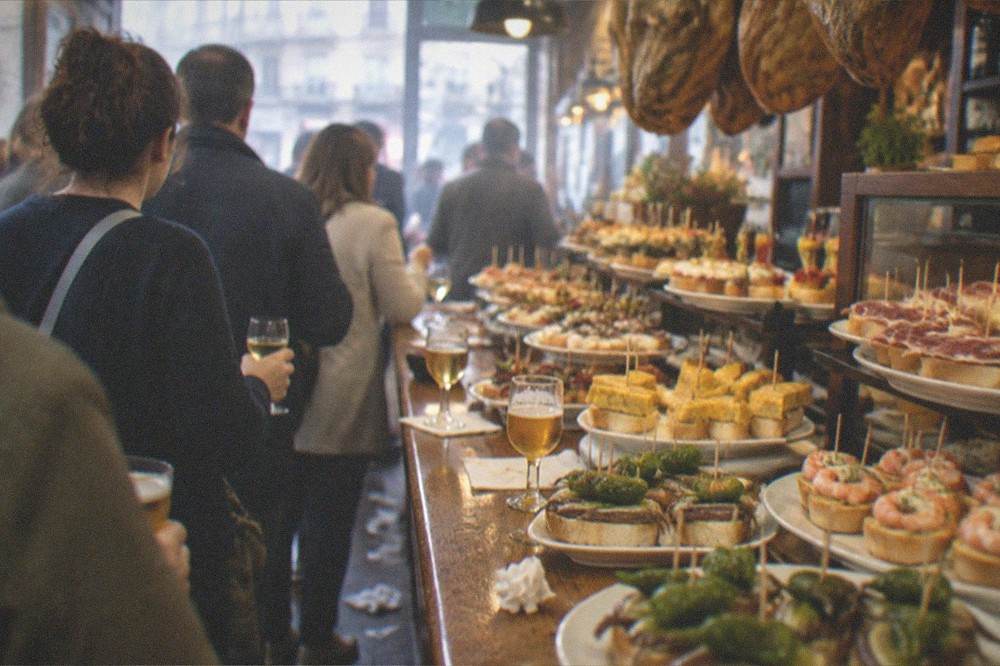
The pintxo bars of the Old Town are the standard first evening, a short bus ride from Amara station, with bars serving from mid-evening onward. A guided pintxo tasting that pairs eight pintxos with five Denomination of Origin wines runs in English or Spanish and starts near the Old Town edge, and the operator's live listing shows current departure times. La Concha is free to walk at any hour, and the 1,350 m beach promenade is the city's default evening stroll.
The first evening is where the city's reputation is earned, and the guide to pintxos explains what a pintxo is and how the bars work, while the best pintxo bars guide ranks the rooms. For a traveller who has spent a day on trains, a guided crawl removes the guesswork of which bar and which pintxo, and the Old Town walk below covers the ground between them.
The guided option below pairs the bars with the wines, which is the local method: each pintxo comes with its Denomination of Origin match, and the tour runs in English or Spanish.
For a second evening, or a wetter one, the cooking class below moves the evening into the kitchen, with a wine and cider tasting and the meal you cook yourself.
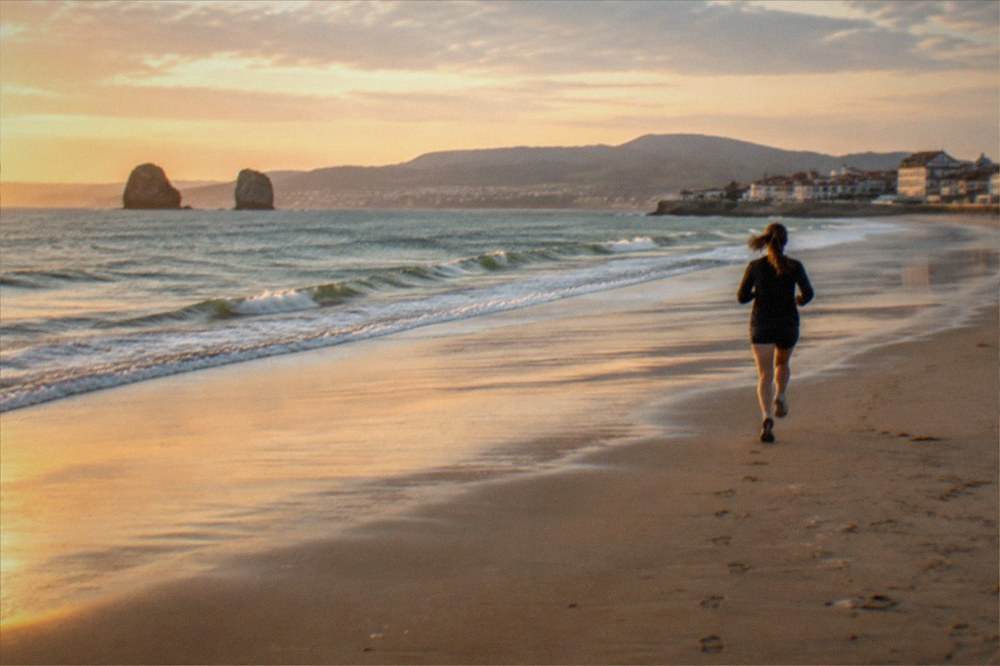
Beyond the bars, the arrival evening has three free options that need no booking. La Concha beach is public and free, and the council lists it at 1,350 m long, with lifeguards only from 1 June to 30 September. Monte Urgull stays open until 21:00 in the summer season, and the hill's paths give the classic view over the bay. The Peine del Viento, the Chillida sculptures at the west end of Ondarreta, is a seafront artwork you can reach on foot and stay with as long as the light lasts.
The table compares the main first-evening options by what they need from you.
| Option | Needs booking | Season limit | Where it starts |
|---|---|---|---|
| Old Town pintxo bars | No | None | Parte Vieja streets |
| Guided pintxo tasting with wines | Yes, on the listing | None | Old Town edge |
| La Concha promenade walk | No | None, lifeguards June to September only | Beachfront |
| Monte Urgull ascent | No | Closes 21:00 May to September, 19:30 October to April | Old Town harbour side |
| Peine del Viento at Ondarreta | No | None | West end of Ondarreta |
Common Questions About The Train From Paris To San Sebastian
Is there a direct train from Paris to San Sebastian?
No. The route is a French service from Paris to Hendaye, then the Euskotren Topo from Hendaia across the border to Amara in the city centre, a 37 to 38 minute final leg with a 2.90 EUR occasional fare.
How long does the Topo take from Hendaia to the city?
Between 37 and 38 minutes. The operator's published timetable shows 316 trips on the route with a minimum of 37 minutes and a median of 38, so nearly every departure lands in that window.
How often does the Topo run from the border?
Every 30 minutes on the busiest service day of the published timetable, with 39 departures and 31 of the gaps at 30 minutes and the rest at 60. Off-peak days can run less often, so check the operator's timetable for your arrival day.
Which station does the train arrive at in San Sebastian?
Amara, the working terminus of the Euskotren line from the border. A new underground through-line with a station beside La Concha has finished its civil works, but no opening date has been published, so Amara is the station to plan around.
Do you need a passport to cross the border at Hendaye?
There is no routine border control at the river crossing between Hendaye and Hendaia, because France and Spain are both in the Schengen area. Carry your ID anyway, as carriers can ask for it, and note that ETIAS is not in operation, so there is no travel authorisation to apply for.
Is it better to fly or take the train from Paris to San Sebastian?
The train lands you at Amara in the city with no airport transfer, while every flight requires a second journey from an airport 20, 45 or 105 km away. The trade-off is total journey time against connection simplicity, and the rail route wins on simplicity.
The border change at Hendaye is the whole character of this journey: one ticket ends in France, a short walk crosses the Bidasoa, and a 37-minute coastal ride on the Topo delivers you to Amara with the evening still ahead of you. Plan the connection with the operator's own timetable, keep a rain layer in the bag whatever the month, and book the pintxo evening before the train leaves Paris.