San Sebastian Train And Bus Stations
San Sebastián in the Basque Country, Spain, runs on two rail systems and a web of bus termini, and knowing which one does what saves a visitor real time.
Short answer
San Sebastián's main rail hub for Euskotren is Amara-Donostia station, the Renfe station sits beside the Urumea river near the centre, and long-distance and airport buses use the central bus station on Plaza Pío XII plus the Boulevard stops. The Euskotren Topo runs to Hendaia in 37 to 38 minutes every 30 minutes for a 2.90 EUR occasional fare.
San Sebastián, whose official name is Donostia / San Sebastián and whose Basque name is Donostia, is a compact city on La Concha bay in Gipuzkoa, in the Basque Country of Spain, but its transport picture is not compact at all. Two separate railway systems serve it, one of them mid-way through a big underground rebuild, and its buses split between an intercity terminus, a cluster of city-centre stops and a set of airport lines run under the Lurraldebus umbrella. Visitors who assume one station does everything end up walking with luggage they did not need to carry. This page lays out what each station is, where it sits, what leaves from it and what the verified fares are, so the city's train and bus stations stop being a puzzle before you arrive.
Which Train And Bus Stations Serve San Sebastian?
San Sebastián is served by two railway systems and several bus termini: the Euskotren Topo network with its working terminus at Amara-Donostia, the Renfe station beside the Urumea river for the national operator's services, the intercity bus station on Plaza Pío XII, the Boulevard and city-centre stops for regional Lurraldebus lines, and a set of airport lines listed by the operator Ekialdebus as E20, E23, E25, E27, E28, E29 and E30. Each serves a different job, and none of them replaces another.
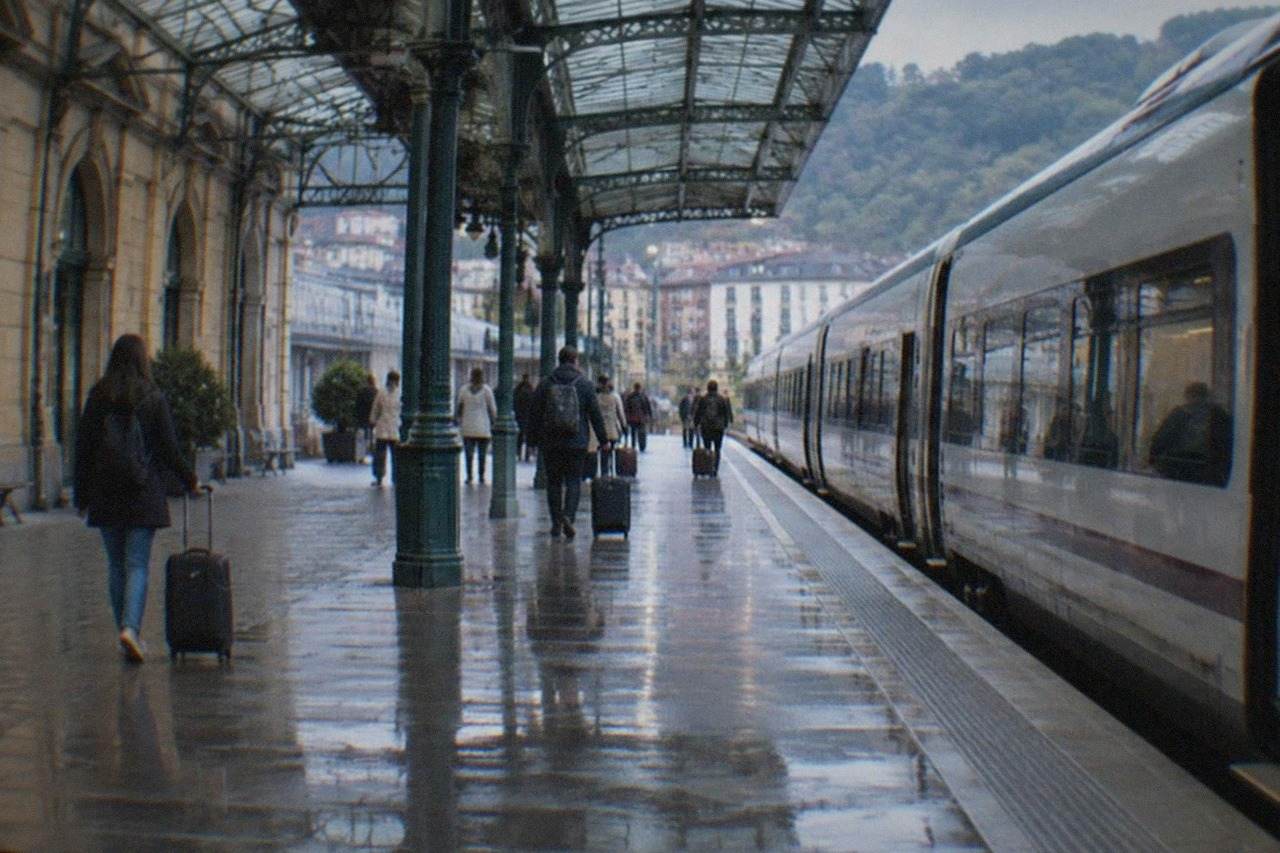
The split matters because the city is small but the region is not. The Topo is a narrow-gauge metro-style line that hops along the coast towards France, and its Amara station, inland in the Amara district, is where every Topo trip currently begins or ends in the city. The Renfe station, closer to the centre and the beaches, is the broad-gauge station used by the national operator; its own page is live, though the operator renders its timetables through scripts, so check times there rather than trusting a printed summary. The bus station on Plaza Pío XII handles the long-distance coaches, including the PESA Lurraldebus service from Bilbao airport and most of the guided day trips that depart the city.
The table below is the map of the whole system in one place.
| Station or stop | System or operator | District | What it is for |
|---|---|---|---|
| Amara-Donostia | Euskotren Topo | Amara | Working city terminus of the Topo line towards Hendaia |
| Renfe station | Renfe | Centre, beside the Urumea | National rail services, including connections towards Madrid and Bilbao |
| Plaza Pío XII bus station | Intercity and regional coaches | Amara edge | Long-distance buses, Bilbao airport coach, guided day-trip departures |
| Boulevard and centre stops | Lurraldebus and dBus | Centro | Regional lines and city buses |
| Airport stops | Ekialdebus lines to EAS | Hondarribia and city | Links to San Sebastián Airport at Hondarribia |
Where Is The San Sebastian Bus Station And What Leaves From It?
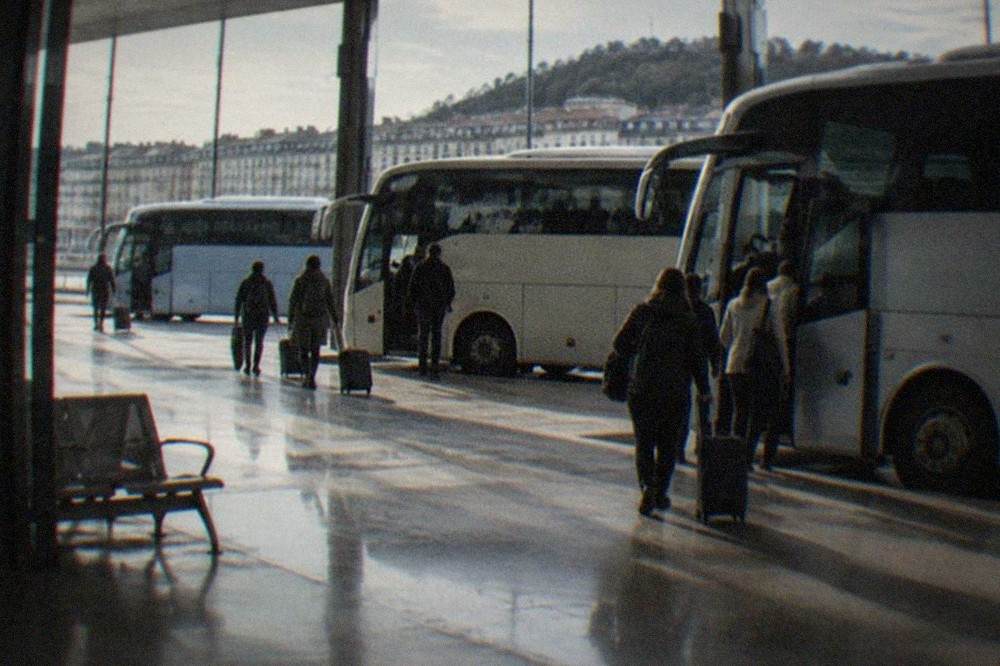
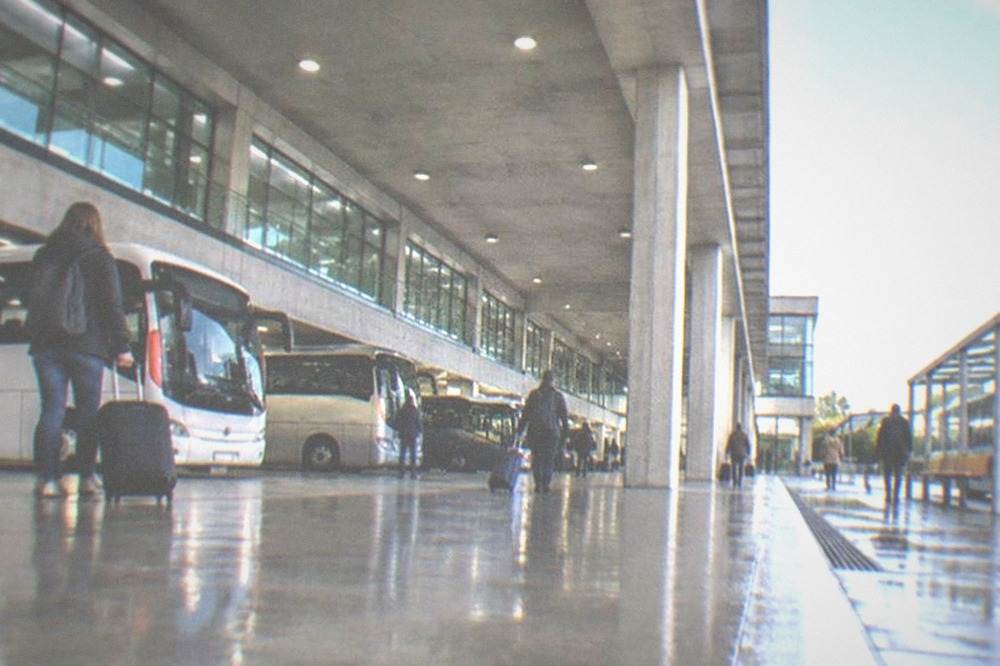
The San Sebastián bus station stands on Plaza Pío XII, on the inland side of the centre within the Amara edge of the city, and it is the terminus for long-distance coaches, the PESA Lurraldebus coach from Bilbao airport listed by the Basque Government at 17.10 EUR for the San Sebastián run, and most small-group day trips to Bilbao, the French Basque Country and the Gipuzkoa coast. Regional Lurraldebus lines also use centre stops around the Boulevard.
The Bilbao airport coach is a popular arrival option, because Bilbao is a well connected airport and it sits 105 km away. The Basque Government's airport page lists the PESA Lurraldebus coach at 17.10 EUR to San Sebastián and about 75 minutes, hourly on working days in winter and every 30 minutes in July and August. That page carries no date, so treat the fare as listed by the Basque Government and confirm with the operator, whose service now sits under the Avanza group, before you travel. The full arrival picture, including the nearer airports at Hondarribia and Biarritz, is on getting to San Sebastian.
Day trips are the other big user of the bus station and the Boulevard departure points. A guided coach day across the border is the easiest way to see three French towns without hiring a car, and the listings below show what the operator's live pages say.
The bus station is also where you weigh a coach against a train. For Bilbao the train is famously slow and the road is fast, a comparison this site covers in is there a fast train from San Sebastian to Bilbao and in why the Bilbao train takes so long. For Madrid the balance is different again, and the Madrid to San Sebastian guide walks through it.
How Does The Euskotren Topo Work From Amara-Donostia?
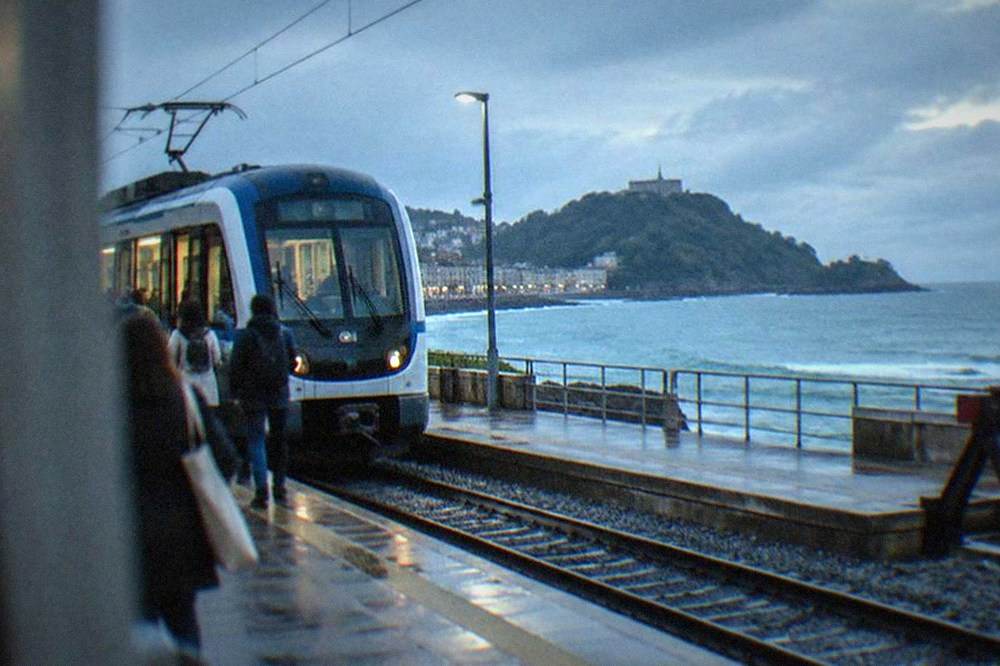
The Topo is Euskotren's narrow-gauge line along the coast, and Amara-Donostia is its working city terminus: every Topo trip towards France starts there. The run from Amara to Hendaia takes 37 to 38 minutes, trains run every 30 minutes on the busiest service day, and the occasional fare for the one-zone-jump trip is 2.90 EUR, or 1.16 EUR with an anonymous MUGI card. Those figures come from Euskotren's own published timetable data and the MUGI tariff.
The Topo is the line visitors actually ride, because it serves the places a car makes awkward: the fishing port of Pasaia, the border towns and the French seaside end at Hendaia, from where the French rail network continues. It is also the line that stops for the Pasaia day trip, one of the quietest good afternoons in the province. The harbour motor boat at Pasaia sits inside the urban fare zone, so the MUGI card that gets you there also covers the crossing.
| Topo fact | Figure | Source |
|---|---|---|
| City terminus | Amara-Donostia | Euskotren network |
| Amara to Hendaia journey time | 37 to 38 minutes | Euskotren published timetable data |
| Frequency, busiest service day | Every 30 minutes | Euskotren published timetable data |
| Occasional fare, one zone jump | 2.90 EUR | MUGI tariff |
| Anonymous MUGI card fare, one jump | 1.16 EUR | MUGI tariff |
The Topo's French end matters for anyone combining the two countries. Hendaia connects to the French SNCF network, so a visitor can ride the Topo out and a French train back, or day-trip into France by rail. The comparison with flying into Biarritz instead is covered on Biarritz airport to San Sebastian, and the question of which town to sleep in is argued out in is it better to stay in San Sebastian or Biarritz.
Does San Sebastian Have A New Underground Station Opening Soon?
A new underground Topo section is being built under the city, with stations beside La Concha, at Bentaberri and at Amara, and the Basque Government announced on 8 June 2026 that the railway civil works are complete. Fitting-out, meaning electrical installations, ventilation, signalling and communications, is under way. No opening date has been published, and Amara remains the working terminus until one is.
That is the whole honest answer. The station beside La Concha was the last and most central piece of the through-line's civil works, and its completion is real news, but the government's own note stops there. Any page promising an opening month is guessing. Until the line opens, a visitor's Topo trips still start at Amara, which is a short walk or a dBus ride from the centre.
For now the practical read is this: the underground will one day put a station within walking distance of the beach, which changes how the city feels, but nothing on this page should be planned around it yet. The same caution applies to high-speed rail, where no arrival date is published either, a point this site makes plainly in is there a high speed train to San Sebastian.
How Do You Get Between The Stations And The Centre?
The stations sit within a compact walkable city: the Renfe station is closest to the centre and the beaches, Amara-Donostia and the Plaza Pío XII bus station sit a short hop inland in the Amara district, and the dBus city network connects them all for a 1.95 EUR cash ticket paid to the driver, or 0.78 EUR with an anonymous MUGI card. Cash payment does not allow free transfers, so a card is the better tool for a day of hopping.
The dBus network is the city's own bus system, with 50 routes and 541 stops in its published timetable data, and its two cash fares are 1.95 EUR for a daytime ticket and 2.65 EUR for the night ticket. The MUGI card is the region-wide layer on top: it works on dBus, on Lurraldebus and on Euskotren, priced by zone jumps, which is why the same card covers a city bus and the Topo to Hendaia. What a MUGI card costs to buy is not published in the material this site uses, so check with the operator before assuming it pays for itself; for a two-zone-jump trip the occasional cash fare is 5.40 EUR against 2.16 EUR on the anonymous card, and the gap widens with every ride.
| Ticket | Urban, 0 jumps | 1 jump | 2 jumps | 3 jumps |
|---|---|---|---|---|
| Occasional, cash | 1.95 EUR | 2.90 EUR | 5.40 EUR | 7.90 EUR |
| Night ticket | 2.65 EUR | 3.70 EUR | 6.45 EUR | 8.95 EUR |
| MUGI anonymous card | 0.78 EUR | 1.16 EUR | 2.16 EUR | 3.16 EUR |
| MUGI personalised, trips 1 to 20 in the month | 0.59 EUR | 0.88 EUR | 1.64 EUR | 2.41 EUR |
Walking is the honest alternative for most station moves, because the centre is flat and small. The city's walkability is one of its real selling points, and the layout that makes it walkable is described in how many days in San Sebastian you actually need. A bike does the same job faster, and a guided ride is an easy way to learn the bike-lane network on day one.
Which Airport Bus Lines Serve San Sebastian?
San Sebastián Airport, EAS, sits at Hondarribia 20 km from the city, and the operator Ekialdebus lists lines E20, E23, E25, E27, E28, E29 and E30 as its airport services, with E30 the direct Donostia to airport line. Line E21 has not stopped at the airport since 1 June 2026, at either stop, to board or to alight, so any page still naming E21 is repeating a stale line. The tourism board's own page is one of them.
The E21 detail matters because it is exactly the kind of fact that goes stale in a printed guide. The operator's notice is unambiguous: from 1 June 2026 inclusive, E21 serves neither the exterior stop B nor the Terminal 1 stop A. The direct line is E30, whose own page is stamped as updated in June 2026 and warns that times are approximate because of traffic. The journey time and fare zone for the EAS airport ride are not published in the material this site uses, so check the operator's E30 page for the timetable rather than a number quoted here.
| Airport | Distance from the city | Bus link |
|---|---|---|
| San Sebastián Airport (EAS), Hondarribia | 20 km | Ekialdebus lines E20, E23, E25, E27, E28, E29, E30; E30 is the direct line |
| Biarritz (BIQ) | 45 km | Direct service listed by the tourism board; operator and fare not published here |
| Bilbao (BIO) | 105 km | PESA Lurraldebus coach, 17.10 EUR listed by the Basque Government, about 75 minutes |
| Vitoria-Gasteiz (VIT) | 100 km | No direct service from the airport, per the tourism board |
For Biarritz airport the tourism board lists a direct service to the city, but the operator, fare and frequency are not confirmed in official material, so this site says nothing further about it; the airport choice question is handled on which airport for San Sebastian. For US visitors the whole arrival question, flights included, is on from the US to San Sebastian.
What About The Renfe Station And Long-Distance Trains?
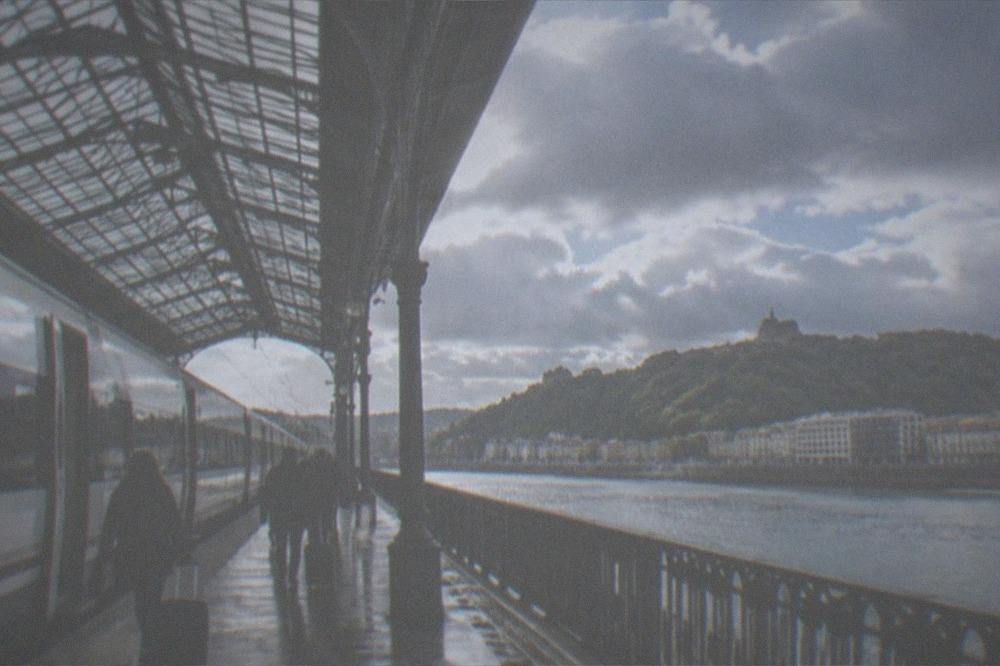
The Renfe station sits beside the Urumea river near the centre and is the city's broad-gauge station for the national operator, whose official Cercanias and long-distance pages are live. This site publishes no Renfe journey time, fare or frequency to Madrid, Bilbao or Barcelona, because none is verified in its research, and the same silence applies to any works at the station itself. Check the operator's own pages for times.
That silence is deliberate. Train facts go stale faster than almost anything else on a transport page, and the operator renders its timetables through scripts that a printed number cannot track. What can be said with confidence is structural: the station's position near the mouth of the Urumea makes it the most central of the city's rail points, close to the Parte Vieja and the eastern end of La Concha, and it is the station to aim for if you are arriving by long-distance rail.
The comparisons visitors most often ask about are covered elsewhere on this site in full: whether to fly or take the train from Barcelona, whether the Madrid ride is scenic, what the Barcelona train looks like, and what the Bilbao train costs. Those pages carry the reasoning; this one carries the geography.
| Question about the Renfe station | Where this site answers it |
|---|---|
| Is the Madrid train ride scenic? | Is the train ride from Madrid to San Sebastian scenic |
| Fly or train from Barcelona? | Is it better to fly or take the train from Barcelona to San Sebastian |
| What does the Bilbao train cost? | How much does it cost to take the train from Bilbao to San Sebastian |
| Is the Barcelona train pretty? | Is train from San Sebastián to Barcelona pretty |
| How do you arrive from Paris? | Paris to San Sebastián |
What Should You Do While You Wait For A Connection?
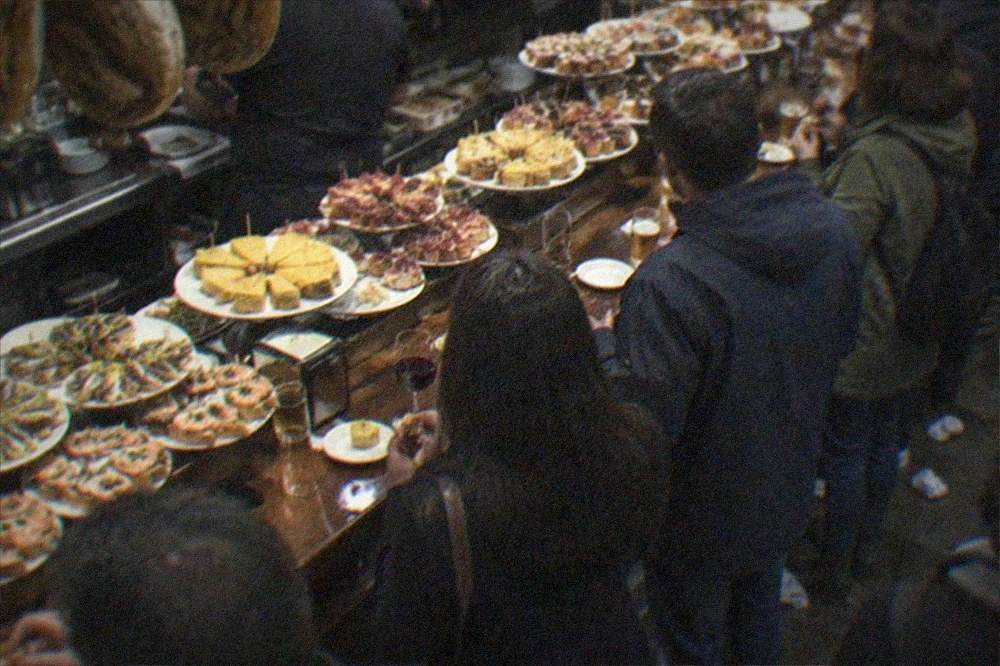
The stations sit inside one of Europe's most walkable small cities, so a connection gap of an hour or two is not dead time: the Renfe station is minutes from the Parte Vieja's pintxo bars, Amara-Donostia is a short hop from the centre, and the bus station's Plaza Pío XII location puts the Amara district's quieter bars within reach. AEMET's Igeldo station records rain on about 141 days a year, so keep an indoor option ready, and the city's museums fill that role well.
The rain point is not a joke. AEMET's normals for the Igeldo station, period 1981 to 2010, show 1,507 mm a year, and even July, the driest month, averages 86 mm over about 10 rain days. A wet hour between trains is a normal San Sebastián experience, and the city is built for it: San Telmo Museoa is 10.00 EUR general, 4.00 EUR reduced and free every Tuesday for everyone, closed Mondays except holidays and long weekends, and Tabakalera is free to enter, Tuesday to Sunday 10:00 to 21:00, also closed Mondays. The full indoor playbook is on a rainy day in San Sebastián.
If the gap is longer, a bay boat fills it: the operator's red line runs direct to Santa Clara island every 30 minutes in high season, 1 June to 30 September, at 5 EUR return, with the last boat back at 20:00 from June to September.
Where Can You Go Next From San Sebastian's Stations?
The stations are gateways to the province and across the border: the Topo reaches Pasaia and Hendaia, the bus station sends coaches to Bilbao, Pamplona, the Gipuzkoa coast and the French Basque Country, and guided day trips cover Hondarribia, Getaria, Zumaia, Rioja and Gaztelugatxe without a car. The half-day coast runs to Zarautz, Getaria and Zumaia, and the full-day runs reach the Rioja wineries and Bilbao's Guggenheim.
The coast is the easiest first move. Getaria is the txakoli town as well as a fishing port, and a half-day trip there with hotel pickup pairs the drive with the wine, which is the version of txakoli worth travelling for rather than only tasting at a bar.
Hondarribia, the town the airport sits beside, is a half-day of coloured houses and a fortified old quarter, often combined with the Pasaia ports. The full spread of options, with distances and reasoning, is on day trips from San Sebastián.
| Direction | Main destinations | Typical trip |
|---|---|---|
| East along the coast | Pasaia, Hondarribia, Hendaia | Topo train or half-day coach tour |
| West along the coast | Zarautz, Getaria, Zumaia | Half-day vehicle tour with a guide |
| Across the border | Biarritz, Bayonne, Saint-Jean-de-Luz | Full-day coach excursion |
| Inland to Bilbao | Bilbao, the Guggenheim, Gaztelugatxe | Full-day small-group tour or coach |
| Wine country | Rioja wineries and Laguardia | Full-day small-group trip |
The French side deserves its own word. A bilingual minibus day to Biarritz and Bayonne is the low-effort version of France: no border paperwork for Schengen visitors, no hire car, no parking in a French seaside town in August. The operator's live listing carries the current price and dates.
The same goes for the biggest single excursion from the bus station, the Bilbao and Gaztelugatxe day, which pairs the hermitage rock with the Guggenheim and is covered in depth on the Bilbao day trip page.
Common Questions About San Sebastian Train And Bus Stations
Where is the San Sebastian bus station?
The intercity bus station stands on Plaza Pío XII, on the inland edge of the centre in the Amara district. Long-distance coaches, the Bilbao airport coach and most guided day trips use it, while some regional Lurraldebus lines use stops around the Boulevard in the centre.
How often does the Topo train run to Hendaia?
Euskotren's own timetable data shows the Amara-Donostia to Hendaia run takes 37 to 38 minutes, with departures every 30 minutes on the busiest service day. The occasional fare for the one-zone-jump trip is 2.90 EUR, or 1.16 EUR with an anonymous MUGI card.
Does bus E21 go to San Sebastian Airport?
No. Since 1 June 2026 line E21 has not stopped at EAS airport, at either stop, to board or to alight. The operator Ekialdebus lists lines E20, E23, E25, E27, E28, E29 and E30 as airport services, and E30 is the direct Donostia to airport line.
How much is a city bus in San Sebastian?
A dBus ticket paid in cash to the driver is 1.95 EUR, and the night ticket is 2.65 EUR. Cash payment does not allow free transfers. With an anonymous MUGI card the urban trip is 0.78 EUR.
Is there a new underground station in San Sebastian?
An underground Topo through-line is being built with stations beside La Concha, at Bentaberri and at Amara. The Basque Government announced on 8 June 2026 that the railway civil works are complete and fitting-out has begun, but no opening date has been published, and Amara remains the working terminus.
How do I get from Bilbao Airport to San Sebastian by bus?
The Basque Government's airport page lists the PESA Lurraldebus coach at 17.10 EUR to San Sebastián, about 75 minutes, hourly on working days in winter and every 30 minutes in July and August. That page carries no date, so confirm the fare and times with the operator before travelling.
What To Remember Before You Travel
The short version of this whole page is four facts: the Topo starts at Amara and reaches Hendaia in 37 to 38 minutes for a 2.90 EUR occasional fare, the Renfe station beside the Urumea is the central one for long-distance rail, the bus station on Plaza Pío XII is where coaches and day trips leave, and the airport is served by Ekialdebus lines E20 through E30, never E21.
Fares are simple once you see them as one system, and the MUGI card makes them cheaper across all of it.
A city bus paid in cash is 1.95 EUR and does not allow transfers, while the same trip on an anonymous MUGI card is 0.78 EUR, and the card also cuts the Topo fare to 1.16 EUR for one zone jump. The underground station beside La Concha is coming, with no date published, so plan around Amara for now and check the operator's own pages for anything time-sensitive. More on the city itself, its beaches and its food, is throughout San Sebastian Spain Guide, starting with what San Sebastián is known for.