La Bretxa And San Martin Markets
La Bretxa is the food market at the top of the Old Town of San Sebastián, in the Basque Country, Spain, and San Martin is its companion market across the river. This guide covers what to buy, how Basque market customs work, and how to turn a stall visit into a meal.
Short answer
La Bretxa is San Sebastián's central food market, steps from the Boulevard and the Old Town, and San Martin sits on the far side of the Urumea river in the Centro district. Both sell the raw material of Basque cooking, and a market visit pairs naturally with a pintxo tour or a cooking class that starts by shopping the stalls.
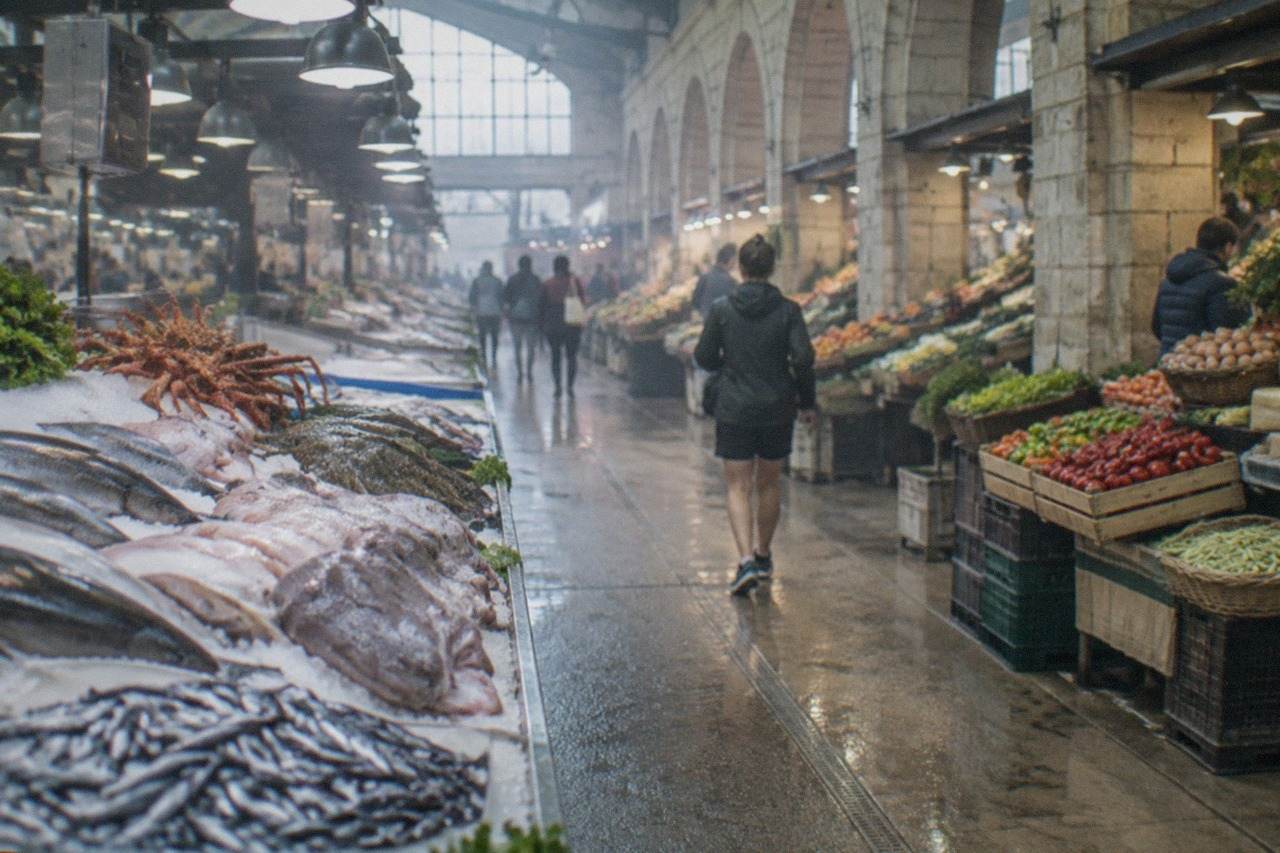
La Bretxa is the food market at the top edge of the Old Town of San Sebastián, in the Basque Country, Spain, the city on La Concha bay whose official name is Donostia / San Sebastián. Donostia is the city's Basque name, and the market sits at the point where the Parte Vieja meets the Boulevard, the tree-lined avenue that has divided the old city from the 19th-century expansion since it was laid out. San Martin is the companion market on the other side of the Urumea river, in the Centro district, and between them the two halls supply the raw material of the most food-obsessed small city in Spain: the fish that becomes dinner, the peppers that become pintxos, the cheese and the cider and the txakoli that wash them down.
A market here is not a sight, it is a working part of the food chain, and the city's cooks treat it that way. The premium pintxo and market tour run in the city opens with a guided visit to Mercado de la Bretxa before the bar crawl begins, which tells you how central the hall is to the way San Sebastián eats. This guide from San Sebastian Spain Guide covers what the two markets are, where they sit, what to buy, how the customs work, and how to fold a stall visit into a meal you will actually remember.
What Is La Bretxa Market In San Sebastian?
La Bretxa is San Sebastián's central food market, sitting at the Old Town edge by the Boulevard, and it is the hall the city's premium food tour uses as the opening act of a pintxo crawl. San Martin is the second market, across the Urumea river in the Centro district. Neither is a craft market or a tourist bazaar: both are working food halls selling the fish, produce, cheese and charcuterie of Basque cooking.
The halls put a visitor next to the people who cook this city's food for a living, which is the whole point of going. The name La Bretxa refers to the breach in the old city walls, and the market's position at the top of the Old Town puts it within a short walk of Plaza de la Constitución, the arcaded square that was for decades the city's market place before the halls moved under roofs. That continuity matters. The city has been buying and selling its food in this one corner for centuries, and the market is simply the current, covered chapter of a much older habit.
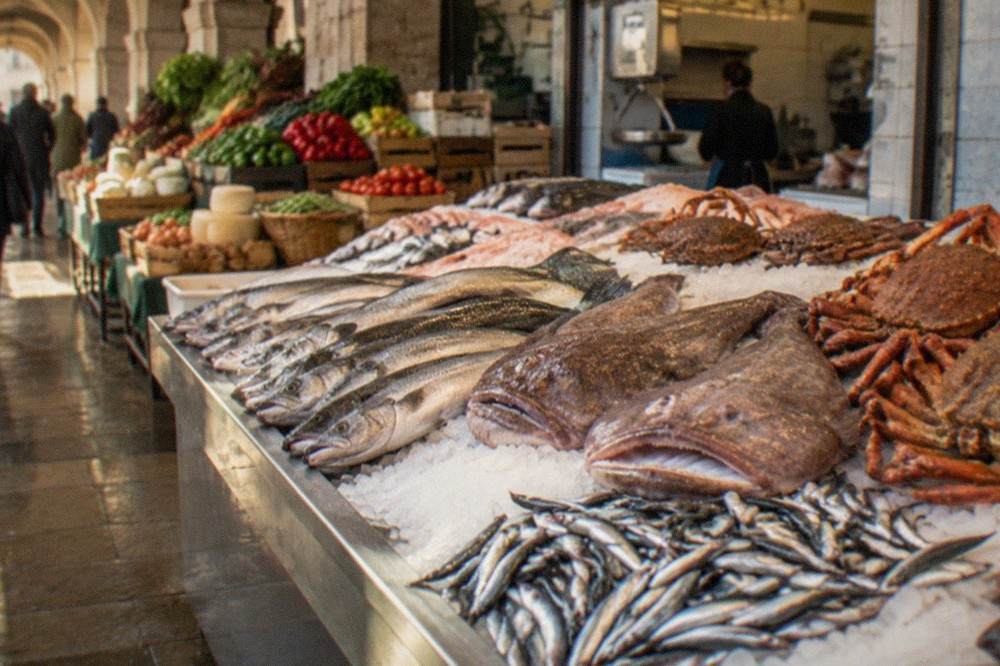
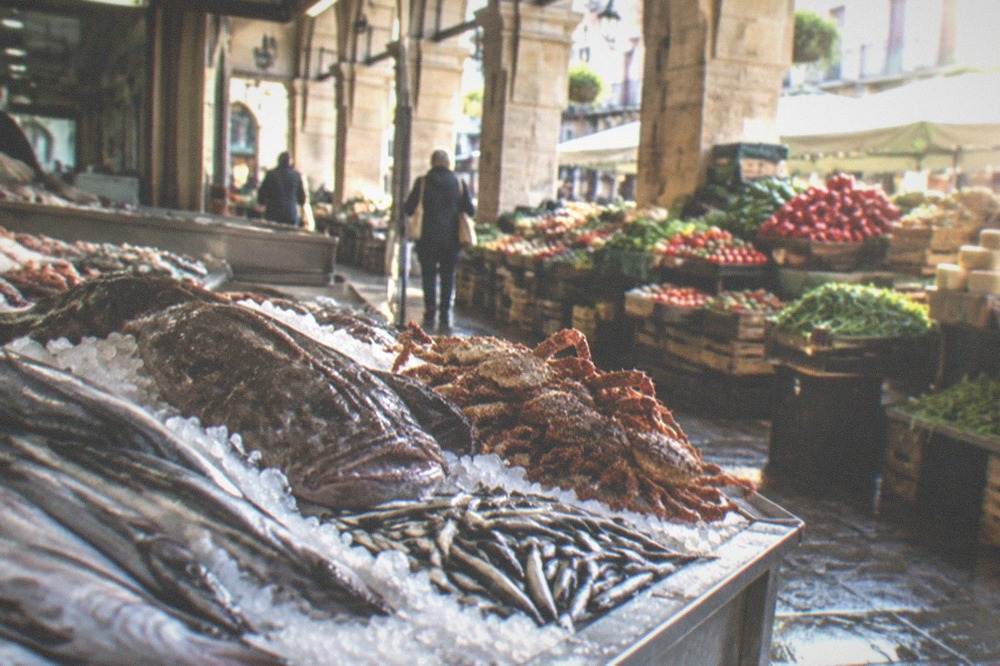
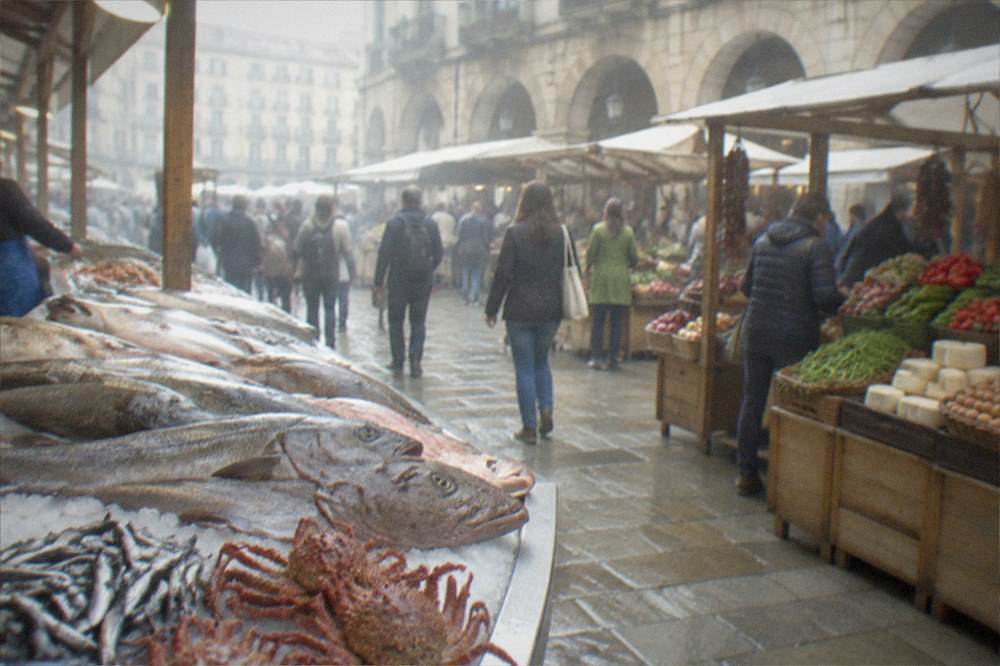
What a visitor actually sees is a Basque food hall: fish stalls with the catch of the Bay of Biscay, produce stands, cheese counters, charcuterie, and the kind of small specialist stalls that only survive where cooks shop daily. The premium pintxo, wine and market foodie tour that starts at the Boulevard builds its whole narrative on this, taking its groups through the market before seating them at bars with reserved places, which is the clearest signal that the hall is treated as the source code of the city's food rather than a curiosity.
Where Are The Markets And How Do You Get There?
Both markets sit inside the walkable core of San Sebastián: La Bretxa at the top of the Old Town by the Boulevard, San Martin across the river in Centro, and the stretch between them is flat city walking. From the La Concha seafront the walk to La Bretxa takes minutes, so no transport is needed. For stays further out, the dBus city network runs on the MUGI fare system, and a single occasional ticket bought with cash from the driver costs 1.95 EUR.
The night ticket costs 2.65 EUR in cash. The city's own bus operator publishes those two fares, and the MUGI tariff gives the card alternative: 0.78 EUR for an urban trip on the anonymous card, and 0.59 EUR on a personalised card within the first twenty trips of the month. Cash does not allow free transfers, the operator states, so a card is the better tool for anyone planning more than one ride. The table below sets out the fares a visitor is most likely to use.
| Ticket | Price | What the tariff says |
|---|---|---|
| dBus occasional ticket, cash | 1.95 EUR | Paid to the driver, no free transfers |
| dBus night ticket, cash | 2.65 EUR | Special night fare |
| MUGI anonymous card, urban | 0.78 EUR | Urban 1 and 0 jumps |
| MUGI personalised card, urban | 0.59 EUR | Trips 1 to 20 in the month, 69.5% off |
On foot, the geography is simple. La Bretxa stands where the Old Town meets the Boulevard; the river crossing to San Martin takes you into the 19th-century grid of Centro, with the Buen Pastor Cathedral as the district's landmark. A sensible loop is La Bretxa in the morning, the Old Town bars at midday, the river crossing in the afternoon, and the seafront at La Concha beach to finish, all without a single ticket.
If you would rather have the market explained than merely walked through, three tours build a market visit into something bigger:
The premium market tour and the market-plus-cooking-class option both use the stalls as a starting point, while the farmhouse and cider house tour takes the same logic out of the city to where the ingredients are actually grown, pressed and cooked.
What Should You Buy At A San Sebastian Market?
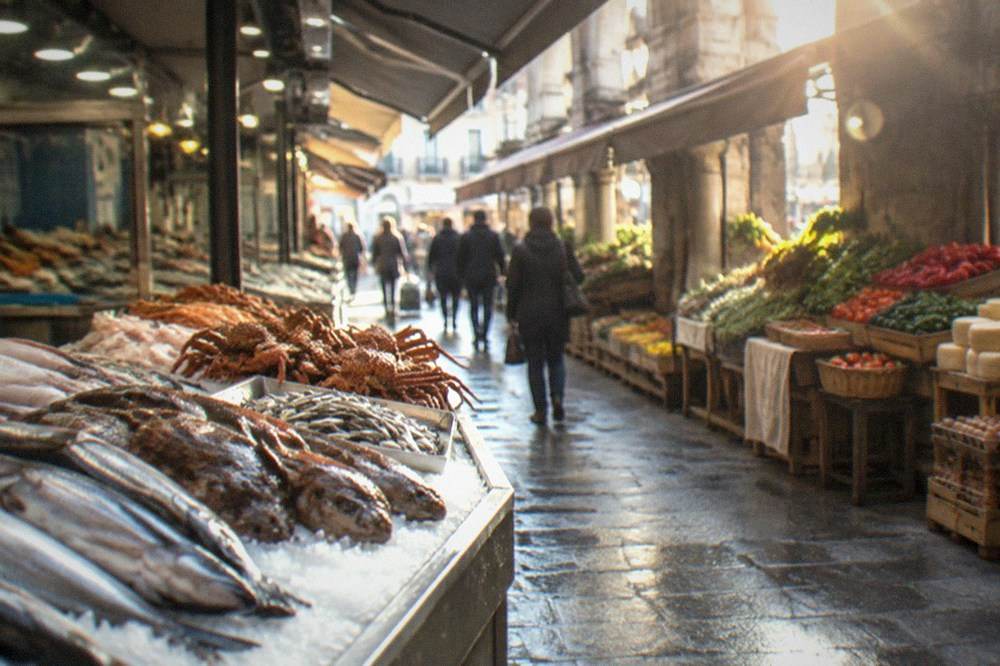
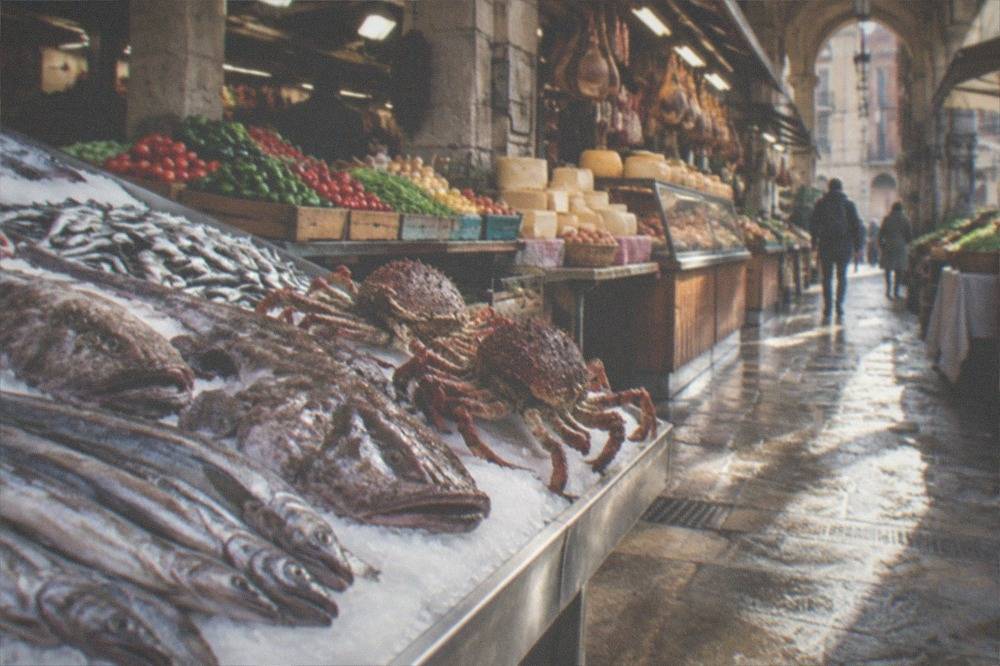
Buy what the city's own kitchens buy: line-caught fish and shellfish from the Bay of Biscay, the hard sheep's cheeses of the Basque Country, cured charcuterie, the seasonal peppers and vegetables of the region, and txakoli, the young local white wine poured by the glass in the pintxo bars. A market haul here is not shopping for home cooking, it is the raw material for a picnic on the seafront wall or a plate eaten standing at a bar.
The stalls sell in exactly those quantities, which is why a market visit explains the pintxo bar so well. The Basque pantry is built on a short list of things done well, and a market stall is the place to see each of them raw. The table below is the glossary that matters: what the item is, and what a visitor does with it.
| Item | What it is | How it is used |
|---|---|---|
| Txakoli | Young, lightly fizzy white wine from coastal Gipuzkoa vineyards | Poured from height into a glass, drunk young with fish or pintxos |
| Idiazabal cheese | Smoked or unsmoked sheep's milk cheese, the Basque standard | Eaten on its own, or as the cheese in a warm pintxo |
| Salt cod, bacalao | Dried salted cod, the historic Basque trade fish | Soaked, then cooked in pil-pil or brandada preparations |
| Gilda pintxo ingredients | Anchovy, guindilla pepper and olive on a skewer | Eaten standing, the city's signature bite |
| Txuleta beef | Large cuts of old dairy cattle, bone-in | Grilled over wood fire at asadores and cider houses |
| Cider, sagardoa | Still Basque apple cider, poured from height in the txotx ritual | Drunk straight from the barrel during cider house season |
Two of those items deserve a special word. The Gilda, the anchovy-pepper-olive skewer, is the city's most famous single bite and it is assembled from exactly the tinned and pickled goods a market sells, which is why a stall visit explains the pintxo bar so well. The story of the Gilda pintxo is told in full elsewhere on this site. Txakoli is the other: it is the local white, young and high in acid, and the coastal route out of the city is lined with the vineyards that make it. The Getaria txakoli tour from the city goes to the fishing town where much of it is grown, with hotel pickup included.
For a picnic, the formula is unbeatable: bread, cheese, charcuterie, a tin of anchovies, fruit, and a bottle of txakoli, carried the few minutes to the seafront. La Concha is a public beach and free to sit on, as this site's answer on whether La Concha beach is free sets out, and the promenade wall was built for exactly this kind of eating.
How Do Market, Pintxo And Basque Food Customs Work?
Basque food customs are unusually codified: pintxos are eaten standing at the bar with the skewer left on the counter, cider is drunk in the txotx ritual straight from the barrel, and the market is where cooks, not tourists, do the buying. A visitor who understands three rules gets the whole system: pay for what you consume, eat at the pace of the bar or the stall, and treat the counter as the dining room.
None of it needs a reservation, and all of it rewards arriving hungry rather than on a schedule. The pintxo bar and the market stall run on the same logic: a small transaction, eaten where you stand, priced by the piece or the portion. The customs worth knowing before a first visit are few, and the table below gives them without ceremony.
| Custom | What it means in practice |
|---|---|
| Eating at the bar | Pintxos are eaten standing at the counter; the bar is the dining room |
| The toothpick rule | Skewers and napkins stay on the counter or a plate, never on the bar itself |
| Paying at the end | In many bars the count is made from the used skewers after you finish |
| The txotx ritual | At a cider house the barrel is opened, you catch the cider from height, and shout txotx |
| Market morning rhythm | Food halls trade hardest in the morning, when the city's kitchens shop |
| The standing lunch | A market or bar lunch is quick, social and eaten at the counter, not a table event |
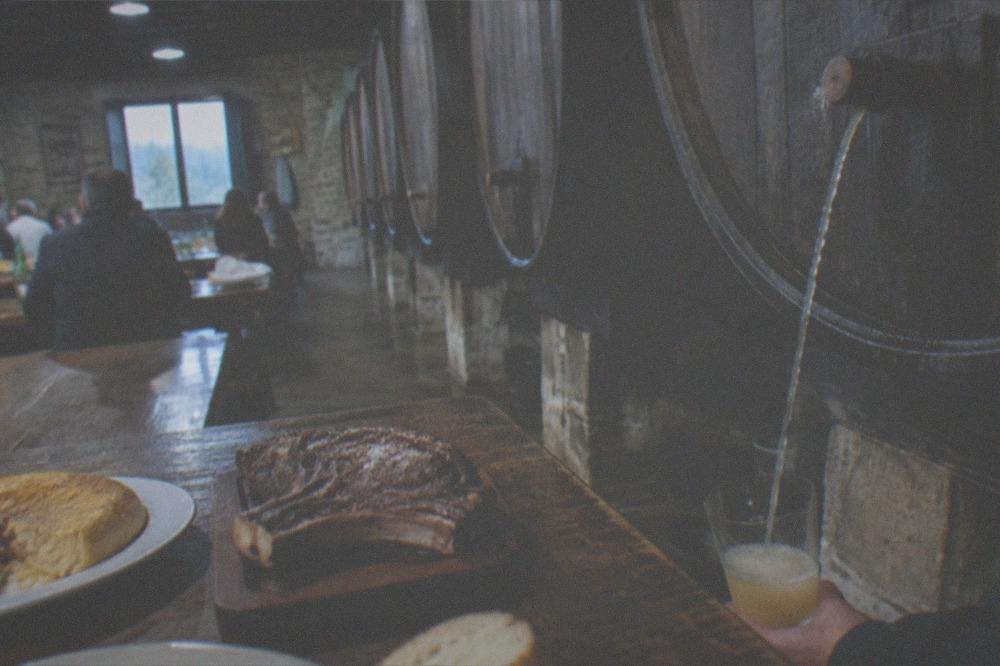
The cider house ritual deserves its own note because it is the one custom with a season. The tourism board gives the txotx season as running from the middle of January to the end of April, and the cider houses of Donostia and Astigarraga, the cider capital just outside the city, run the ritual through those months: a barrel tapped, cider caught at arm's length in a glass, and a fixed meal of cod omelette, fried cod and txuleta steak alongside. The traditional cider house tour with lunch run from the city covers the orchard, the cellar, the ritual and the meal in one outing.
If you want the customs taught rather than decoded, a guide changes the experience entirely. A small-group Old Town crawl such as this one walks the bars with a local who orders with the counters:
For a version that starts where the ingredients come from, the cooking class with wine and cider tasting teaches the dishes themselves, and the shared pintxo tour with a local does the crawl with drinks included at a friendlier price:
When Is The Best Time To Visit The Markets In San Sebastian?
The best time to visit a San Sebastián market is in the morning, any month of the year, because the halls are working food markets that trade hardest before midday. The city's climate never rules a market visit out, either: AEMET's normals for its Igeldo station show a mild, wet Atlantic year in which July, the driest month, still averages 86 mm of rain over about 10 rain days, so a covered market is one of the city's most reliable plans.
No month averages under 86 mm, which means the weather turns often and the market roof is always the right call. The Igeldo station, 250 m up on Monte Igueldo, records 1,507 mm across 141 rain days in an average year, and the seafront runs slightly warmer than the station values. What that means for a market visit is simple: the halls are under cover, the Old Town bars are under cover, and a wet morning in San Sebastián is a morning the city has already planned for. The full picture by month is below.
| Month | Mean max C | Rain mm | Rain days (1 mm or more) |
|---|---|---|---|
| January | 11.0 | 141 | 13.2 |
| February | 11.5 | 110 | 11.6 |
| March | 13.4 | 113 | 12.4 |
| April | 14.5 | 138 | 13.4 |
| May | 17.7 | 120 | 12.2 |
| June | 20.0 | 90 | 10.6 |
| July | 21.8 | 86 | 9.8 |
| August | 22.5 | 117 | 10.5 |
| September | 21.1 | 111 | 10.1 |
| October | 18.5 | 159 | 11.8 |
| November | 14.0 | 169 | 13.0 |
| December | 11.6 | 151 | 12.4 |
Read the table honestly and two things stand out. November is the wettest month at 169 mm, and July is the driest at 86 mm, but even July carries rain on about ten days, so the difference between the wettest and driest month is one of degree rather than kind. August is wetter than June, July or September, 117 mm against 90, 86 and 111. A covered market, in other words, is not a rainy-day fallback in this city, it is a normal Tuesday.
Crowd logic points the same way. The INE hotel figures for the city show August as the peak month for overnight stays, with July close behind, while the winter months run at roughly half that volume, so a market visit in the colder half of the year means shorter queues and more room at the counters. The trade is the weather, and the weather, as above, is exactly what the market roof is for.
What Food Events Shape The San Sebastian Year?
The San Sebastián food year has four fixed points: the txotx cider season from mid-January to the end of April, the Tamborrada drumming day on 20 January, Semana Grande in the week of 15 August, and the Santo Tomás fair on 21 December, the day the city's farm stalls come down from the hills. Each one changes what the markets and bars are selling, and a visit that lands on one of them sees the city's food culture at its loudest.
The calendar below gives the events with their official dates or rules, as the tourism board publishes them, and notes what each means for someone shopping or eating.
| Event | When | What it means for food |
|---|---|---|
| Txotx cider season | Middle of January to the end of April | Cider houses run the barrel ritual with a fixed meal |
| Tamborrada | 20 January every year | The city's founding festival, a full day of drumming and society meals |
| Semana Grande | The week of 15 August, Saturday to Saturday | Peak crowds, the fireworks competition, bars at their busiest |
| La Concha regattas | First two Sundays of September | Rowing crews race in the bay, morning of racing on the water |
| Santo Tomás fair | 21 December every year | Farm produce stalls across the city, the year's biggest market day |
Santo Tomás is the one to travel for if markets are the point of the trip. On 21 December the city fills with stalls selling the products of the Basque farm year, and the fair is the closest thing San Sebastián has to the market culture of an earlier century, unfolded across the streets for a single day. The Tamborrada guide covers the January festival in full, and the La Concha regatta guide does the same for the September races.
Can You Turn A Market Visit Into A Cooking Class Or A Feast?
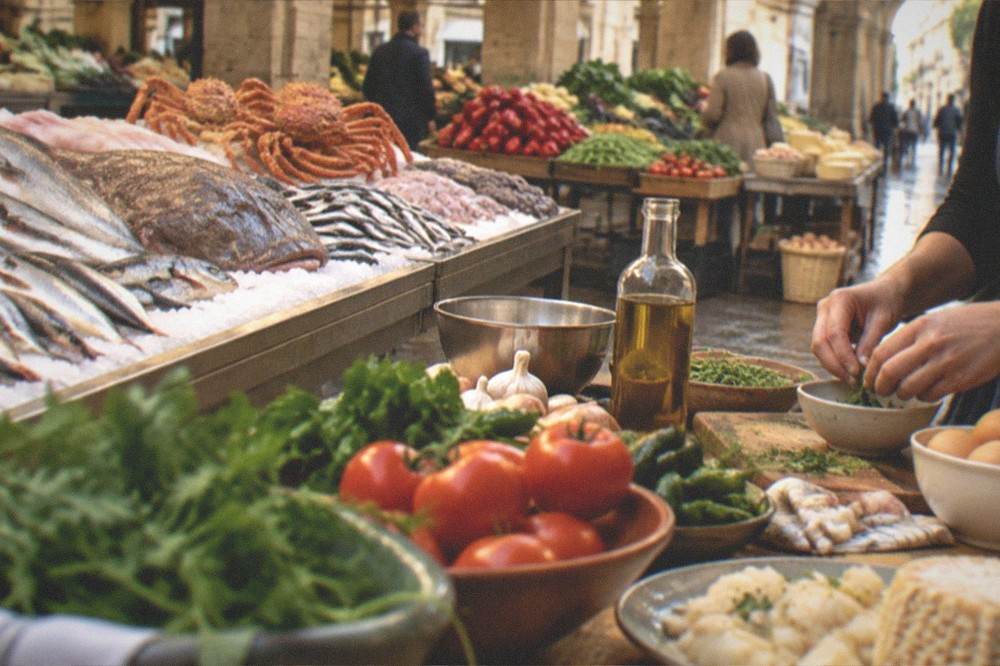
Yes, and it is one of the best-value moves in the city: several tours open with a market visit and end with a cooked meal, so the stalls become the lesson and the kitchen becomes the payoff. The market-and-cooking class run in the Old Town starts with a market visit and then teaches Basque signature dishes hands-on in English, while the premium pintxo tour pairs the Bretxa visit with reserved seats at the bars.
The farmhouse and cider house tour takes the same farm-to-table logic out of the city, with a farmhouse visit, a cider house visit and the cider house meal all included. The cooking class route is the deepest version of the idea. You shop the stalls with a cook, learn what to look for in the fish and the produce, and then cook and eat the result, which converts a morning of looking at counters into a skill you take home. The class below is the one that runs this exact format:
For a full picture of the tour options that orbit the city's food, from crawls to cooking to cider houses, the site's overview of pintxos and food tours lays them out side by side, and the wider list of things to do in San Sebastian places the markets in the context of the beaches, the hills and the day trips that fill out a visit.
A final word on how to plan the day. The markets reward the morning, the pintxo bars come alive from midday, and the evening belongs to the txuleta grills and the cider houses, so the city effectively runs a three-act food day that a visitor can join at any act. If the weather turns, and in this city it turns, the covered halls and the Old Town bars are the plan that never breaks, and the boat trips, the Monte Igueldo funicular and the beach hours can all wait for the sky to clear.
Common Questions About San Sebastian Markets
What Is La Bretxa Market?
La Bretxa is the central food market of San Sebastián, at the top of the Old Town by the Boulevard, named for the breach in the old city walls. It is a working food hall selling fish, produce, cheese and charcuterie, and the city's premium food tour uses it as the opening stop of a pintxo crawl.
Where Is La Bretxa Market In San Sebastian?
La Bretxa sits where the Old Town meets the Boulevard, a few minutes' flat walk from the La Concha seafront and right beside Plaza de la Constitución. San Martin, the companion market, is across the Urumea river in the Centro district. No transport is needed from anywhere in the city centre.
Can You Eat At La Bretxa Market?
The halls sell raw ingredients rather than cooked meals, so the eating happens in the surrounding pintxo bars, which is exactly how the food tours play it: a guided market visit first, then a crawl of the Old Town counters with the ingredients explained. The market is the pantry, the bars are the dining room.
What Should You Buy At A San Sebastian Market?
Buy the Basque pantry: Bay of Biscay fish and tinned anchovies, Idiazabal sheep's cheese, charcuterie, seasonal peppers, and a bottle of txakoli, the young local white wine. All of it makes a seafront picnic on the free public beach at La Concha, which is the classic market-day move in this city.
Is A Market Visit In San Sebastian Worth It?
Yes, because the market explains the rest of the city's food. Seeing the fish, the peppers and the cheese in raw form makes sense of every pintxo bar afterward, and the covered halls make the visit weatherproof in a city where AEMET's Igeldo station records 1,507 mm of rain a year and even July averages 86 mm.
When Is The Best Time Of Year For The Markets In San Sebastian?
Any month works, but three dates stand out: the txotx cider season from mid-January to the end of April, when the cider houses run the barrel ritual, and the Santo Tomás fair on 21 December, the year's biggest market day, when farm stalls take over the streets. Winter visits mean fewer crowds at the counters.
The two markets, taken together with the bars that surround them, are the shortest route to understanding why this small Atlantic city holds 11 Michelin stars across 6 restaurants inside its boundaries in the MICHELIN Guide Spain 2026, and why the cooks who earn them start their mornings at the stalls.