Pasaia And Pasai Donibane
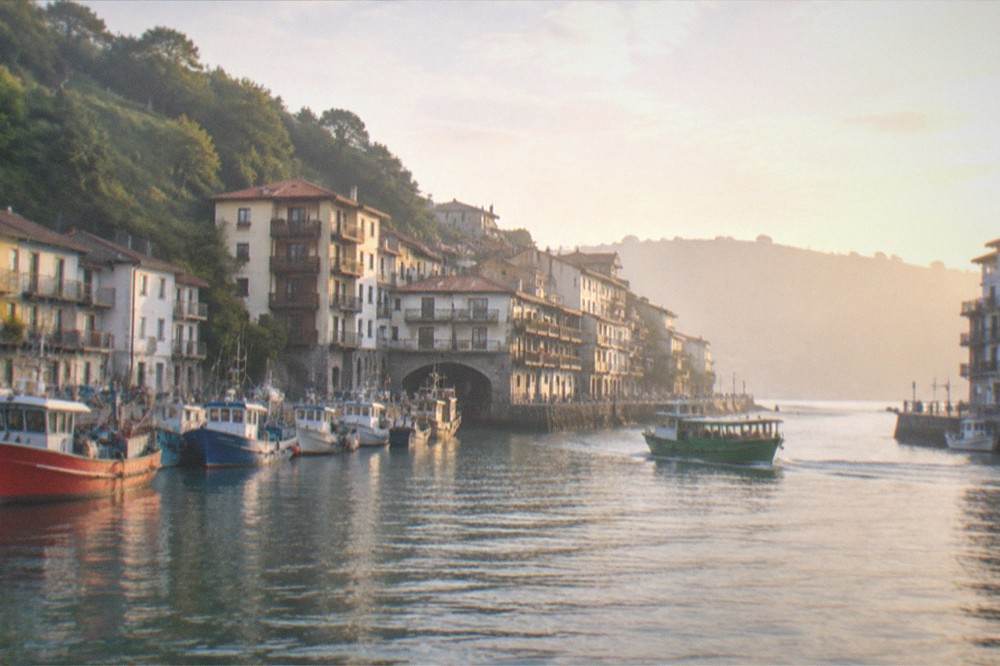
Pasaia is a fishing harbour wrapped around a narrow bay east of San Sebastián, split into villages on each shore and reached from the city by train, boat or a cliff walk over Monte Ulia.
Short answer
Pasaia sits on the coast east of San Sebastián in Gipuzkoa, a separate municipality made of four villages around one natural harbour. The motor boat that crosses its bay is inside the urban MUGI fare, the Albaola shipyard is rebuilding the historic San Juan whaleship, and the Camino de Santiago coastal route links it to the city on foot.
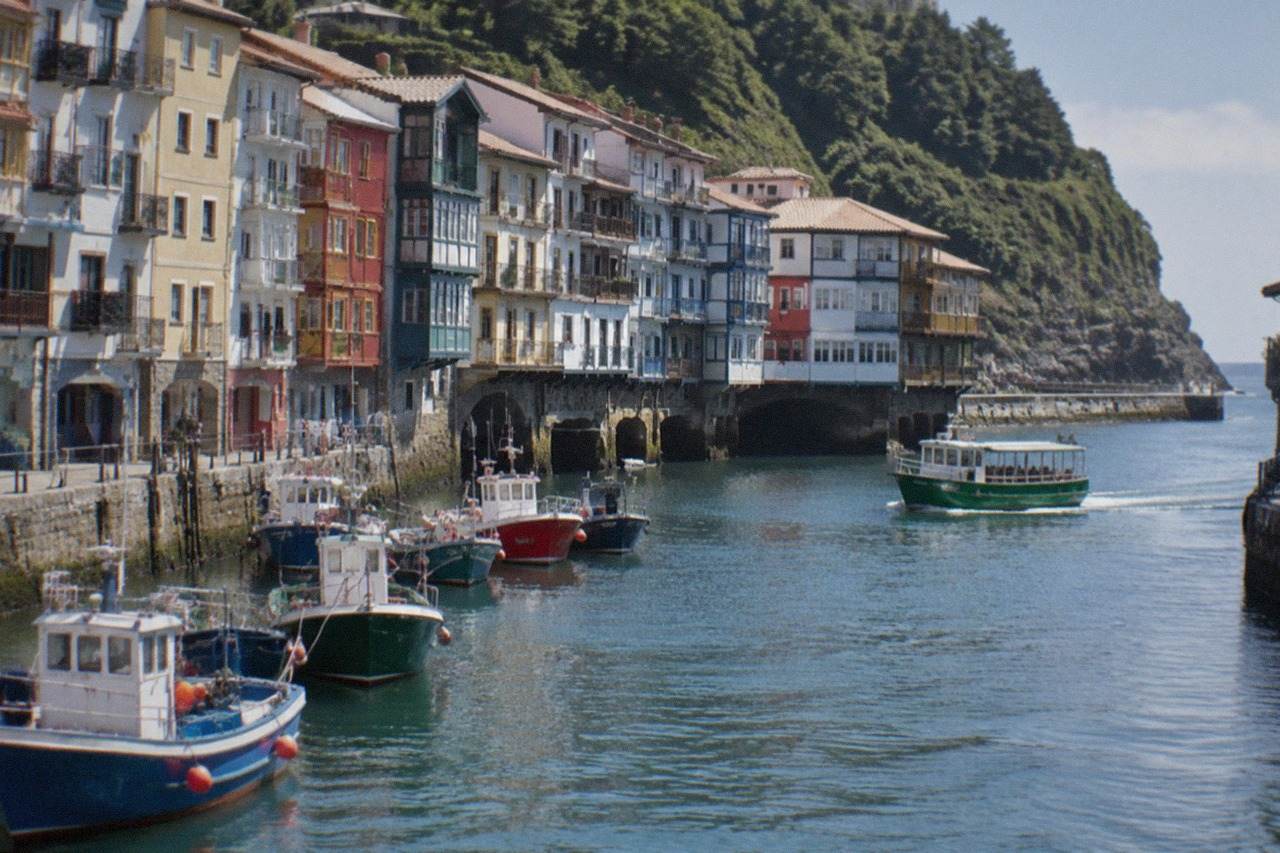
Pasaia is a fishing harbour on the Atlantic coast of Gipuzkoa, in the Basque Country of Spain, a few kilometres east of San Sebastián, whose Basque name is Donostia and whose official municipal name is Donostia / San Sebastián. It is not a district of the city: Pasaia is its own municipality, and it does not look or feel like a suburb. One natural harbour, narrow enough that boats cross it like a street ferry, is shared by four villages, two on each side of the water, and the whole bay is watched over by the green ridge of Monte Ulia, the same hill that closes the eastern end of La Concha bay back in the city.
The reason people go is the contrast. San Sebastián is a belle époque beach city; Pasaia is a working port where the buildings press up against the water's edge and the boat that takes you across the harbour is part of the daily commute. The Camino de Santiago's coastal route passes through it, the Albaola shipyard is building a full-scale replica of a historic Basque whaleship in full public view, and the cliff path over Monte Ulia connects the whole thing back to the city on foot. This page covers how to get there, what each of the four villages offers, the whaleship, the walk and the tours that point in Pasaia's direction.
Where Is Pasaia, And What Kind Of Place Is It?
Pasaia is a separate municipality on the coast of Gipuzkoa, east of San Sebastián, built around one natural harbour with four villages on its shores: Pasai Donibane (San Juan) and Pasai Pasai on the north side, Pasai San Pedro and Pasai Ancho on the south side. It is not part of San Sebastián, and its working fishing port, its shipyards and its boat-crossed bay give it a character the city does not have.
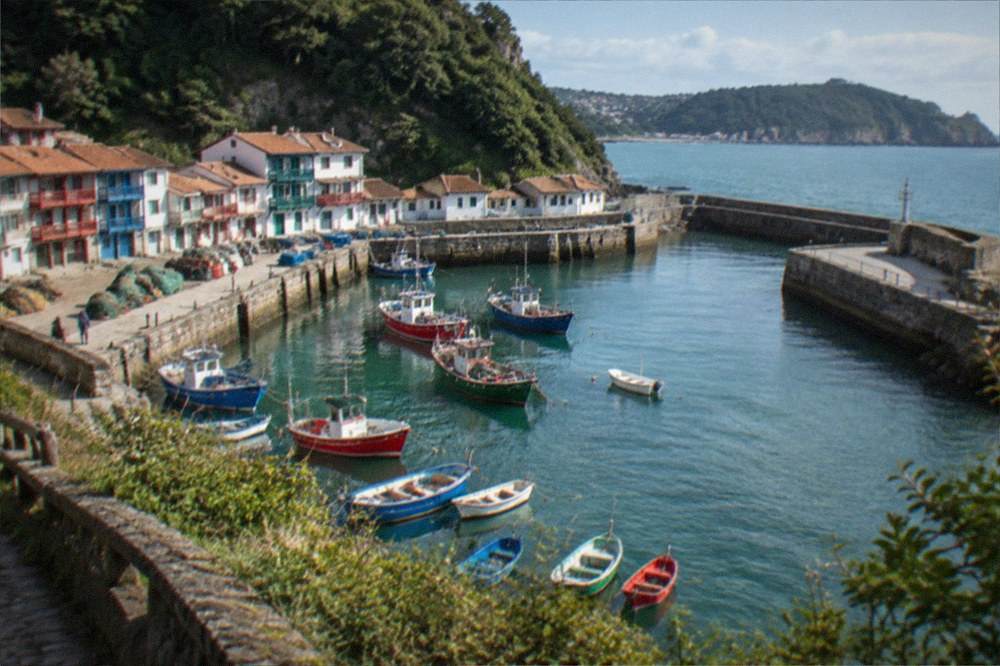
The geography is the whole story. The harbour mouth is a narrow channel between cliffs, and inside it the bay opens into a basin where the fishing fleet moors. The villages are stacked on the slopes around that basin, their painted facades reflected in the water. Pasai Donibane, the old quarter on the north shore, is the one generally meant when people say Pasaia: a tight row of harbour-front buildings, narrow streets climbing behind them, and the departure point for the little motor boat that crosses to Pasai San Pedro. The Basque name Donibane means Saint John, and the Spanish name for the same village is San Juan, so a map may show either.
The port still works. Trawlers and repair yards share the water with the heritage boats of Albaola and the small passenger craft that shuttle across the bay. That working character is exactly what a visitor comes for after a few days of the city's promenades: the same sea, seen from the other side of the hill, with nets and cranes instead of parasols. The tourism board lists Pasaia among the coastal Camino stages of Gipuzkoa, which is the strongest hint about how the two places connect: on foot, along the coast.
How Do You Get From San Sebastian To Pasaia?
You can reach Pasaia from San Sebastián by Euskotren's Topo line, by car around the head of the bay, or on foot over Monte Ulia on the coastal Camino de Santiago; the motor boat that crosses Pasaia's own harbour is inside the urban MUGI fare, so a standard city ticket or card covers the crossing. No single ticket described here costs more than the ordinary MUGI fares listed below.
The train is the simple option. The Topo, Euskotren's coastal line, runs east from the Amara-Donostia station through the eastern neighbourhoods and along the shore toward Pasaia and on toward Hendaye, and Pasaia has its own stations. The MUGI tariff gives the occasional cash fare for an urban journey at 1.95 EUR, the night fare at 2.65 EUR, the anonymous MUGI card at 0.78 EUR and the personalised card, on its first trips of the month, at 0.59 EUR. The pack attaches those figures to urban travel within the "Urbano 1" zone, which the MUGI page defines as Donostia and the Pasaia motor boat, so the harbour crossing sits inside the same urban fare band. The MUGI card itself has a purchase price the pack does not give, so check the operator's counter before assuming a card is worth it for a short stay.
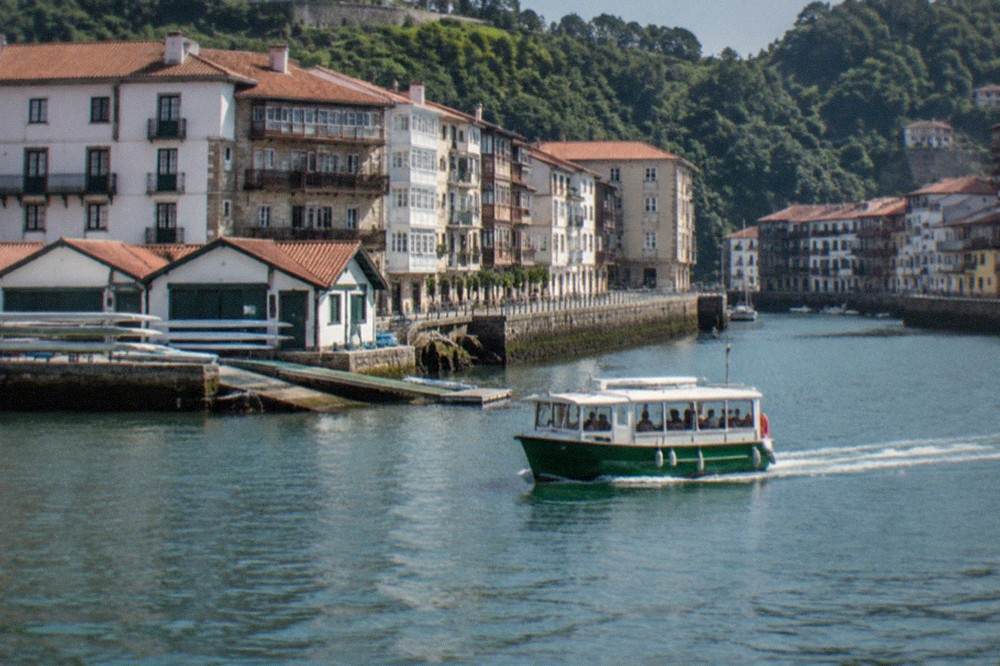
The boat is the part people remember. It is not a tourist cruise: it is the way residents of Pasai Donibane reach the south shore and the way hikers coming down from Monte Ulia connect the Camino's stages. The council's own framing of the crossing, and the MUGI tariff's inclusion of it in the urban zone, both point the same way: treat it as local transport that happens to be one of the better five minutes on the coast.
The walk is the third way, and for many people the best one. The Camino de Santiago's northern route enters the city from the east, and its second stage as the tourism board lists it is Pasaia to Donostia, meaning the path between the two is an official Camino stage walked in reverse by anyone starting in the city. The stage climbs Monte Ulia, follows the clifftops above the sea and drops into Pasai Donibane. The board's stage list gives no distances, and none is invented here: the shape of the walk, a ridge above open water ending in a harbour village, is what matters for planning.
This table sets out the three approaches and what each one suits.
| Approach | What it involves | Best for |
|---|---|---|
| Topo train from Amara-Donostia | Coastal rail line east from the city, Pasaia stations on the route | Quick visits, wet days, returning after dark |
| Car around the head of the bay | Roads circle the harbour from the west; parking is limited near the water | Families, combining Pasaia with other coast villages |
| Camino de Santiago on foot | The Pasaia-Donostia stage walked in reverse, over Monte Ulia | Hikers, photographers, anyone with a full morning |
What Can You See In Pasai Donibane And Pasai San Pedro?
Pasai Donibane (San Juan) is the old fishing quarter on the north shore, a single harbour-front street of painted buildings with lanes climbing behind it, plus the Casa de la Marea where Victor Hugo stayed; Pasai San Pedro, on the south shore, is where the Monte Ulia path arrives, where the lighthouse viewpoint is, and where the motor boat lands you for the climb back up the ridge.
Start on the north shore. Pasai Donibane's waterfront is one compact stretch, and everything worth seeing is within a few minutes of the boat ramp: the harbour wall with the fleet behind it, the narrow entrance lane into the old quarter, and the steep streets that give views back down over the water. The Casa de Marea, the tide-gauge house on the shore, is tied to the story of Victor Hugo, who travelled the Basque coast and wrote about Pasaia; the building today houses a small interpretation space about the port. The listing for the village in tourism board material also names its churches and the fortifications above the harbour mouth, which guarded the channel in earlier centuries.
Crossing the bay takes minutes and is the point of the visit. The motor boat runs between the shores as a scheduled service inside the urban fare, so no booking and no tour ticket is needed. On the south side, Pasai San Pedro is smaller and quieter, a cluster of houses at the foot of the ridge with the path up Monte Ulia leaving from near the shore. Fishermen's associations, boat clubs and a handful of bars make up the village; the real attraction is the geometry, standing on one shore and looking straight across at the facades of Donibane with the hills stacked behind them.
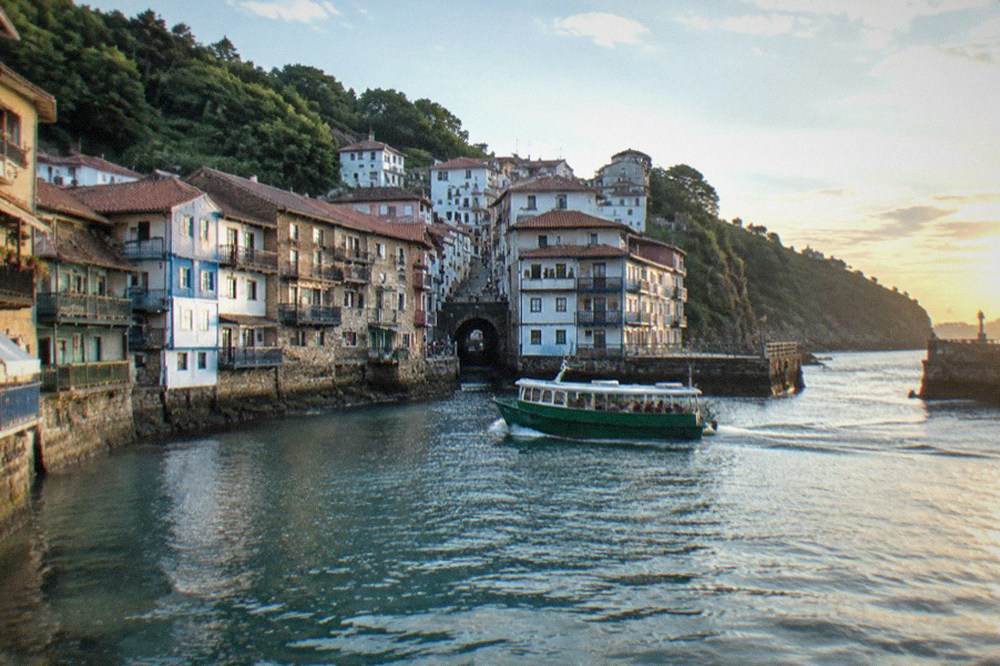
For visitors who want the view without the walk, the boat tour from the city's harbour is the other way to see this coast from the water. The small-boat run east along the cliffs toward Pasaia, with a sunset departure that includes cava, is one of the options in the roster, and the half-day trip to Hondarribia, Pasajes de San Juan and San Pedro covers both shores by vehicle with a guide.
What Is Albaola, And Why Is A Whaleship Being Built There?
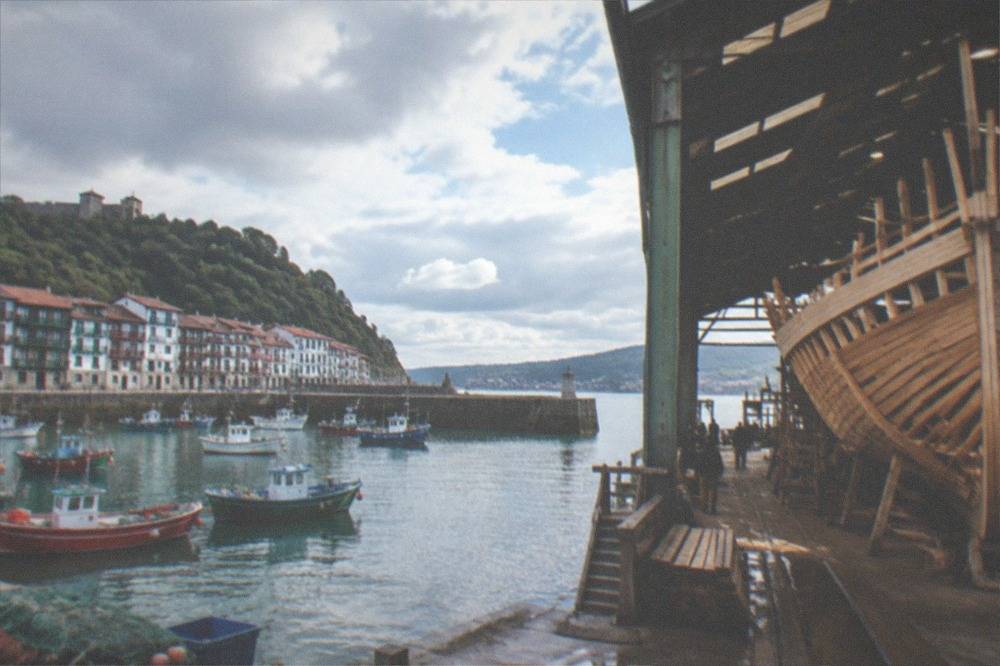
Albaola is the Basque maritime heritage shipyard in Pasaia where a full-scale replica of the San Juan, a Basque whaling galleon, is being built in public view using traditional tools and methods; the original ship was built in Pasaia, sank in Labrador in Canada, and its wreck was excavated and recorded by underwater archaeologists, giving the shipbuilders a documented original to work from.
The story is genuinely unusual. A Basque whaleship from Pasaia sank in Red Bay, Labrador, and the wreck's remains, excavated by underwater archaeologists, became one of the best-documented ships in the world. Albaola's project is to rebuild that ship, plank by plank, in the open at the port where its ancestor was launched, with visitors walking around the yard while the work goes on. The shipyard's own site confirms the subject: the San Juan whaleship under construction. The pack gives no admission price for Albaola, so check the shipyard's own page before visiting; what can be said is that the build is a public-facing project, not a hidden workshop.
Around the ship itself, Albaola's site presents the wider story of Basque maritime history: the whaling industry that took Basque crews across the Atlantic, the shipbuilding traditions of this coast, and the heritage boats kept at the port. For a family day trip it pairs well with the harbour crossing, since the yard sits on the water's edge and the boat ride gives children the sense of the bay as a working space rather than a museum diorama.
Can You Hike From San Sebastian To Pasaia Over Monte Ulia?
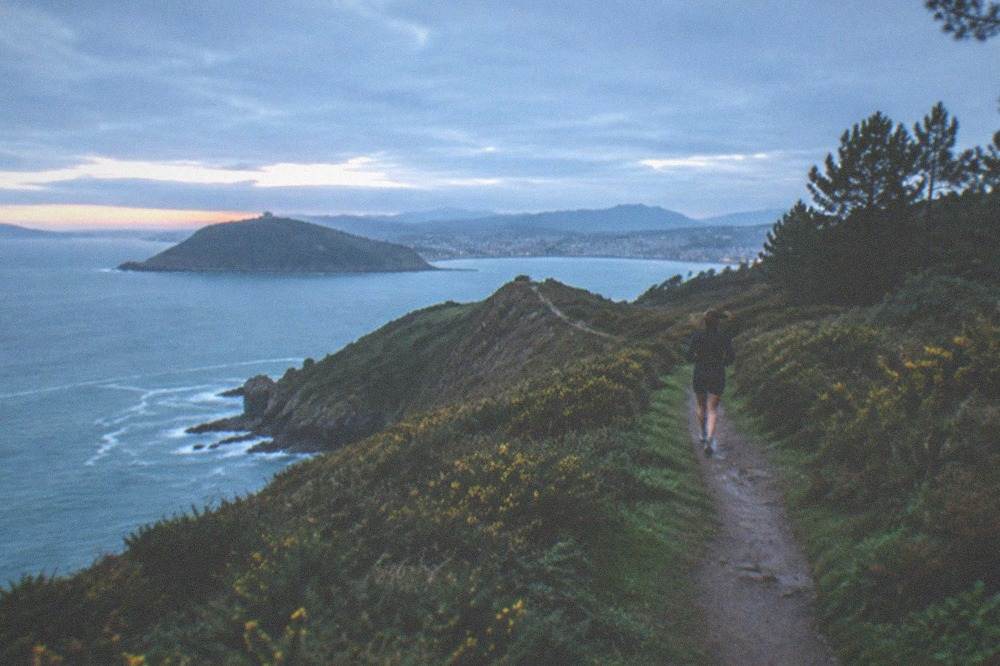
Yes, and it is the best walk on this stretch of coast: the Camino de Santiago's coastal route links the city and Pasaia as consecutive stages, with the path climbing Monte Ulia above La Concha's eastern end, following clifftops and coves above the open sea, passing the Ulia lighthouse and descending into Pasai Donibane. The tourism board lists Pasaia-Donostia and Donostia-Orio as official stages but publishes no stage distances.
Monte Ulia is the hill that stands between the city and Pasaia, and the Camino uses its ridge as a coastal corridor. Walking east from the Gros side of the city, the path gains the hillside above the surfing beach at Zurriola, then runs along the top with the sea directly below. The Ulia lighthouse, the small structures on the headland and the sequence of coves along the cliffs are the highlights; on a clear day the water below is dark blue against the pale rock, and the whole route is above houses until the final descent. The city's own guide to the hill, which covers the paths, the old whale-watching tower and the waterworks ruins on the ridge, is worth reading before setting out: Monte Ulia, the hill above the city's eastern beaches.
The guided version saves the planning. The Camino de Santiago hike over Mount Ulia is a guided walk on the Camino from the city to the Ulia lighthouse, and its listing carries the price, rating and duration; it is the related tour for this page because it is the tour that walks the very ground described here.
Independent walkers should treat the route as a half-day commitment with a boat ride and a train ride at the far end, and should check the weather before committing: AEMET's normals for its Igeldo station show that even July, the driest month, averages 86 mm of rain over about ten rain days, and a clifftop path in wind and rain is a different proposition. The same table gives October 159 mm and November 169 mm, the wettest month, so autumn walkers should expect at least one shower.
Which Tours From San Sebastian Point Toward Pasaia?
Three kinds of tour in the roster touch this coast: the guided Camino hike over Mount Ulia, the small-boat trip east along the cliffs toward Pasaia with a sunset cava departure, and the half-day coach trip to Hondarribia, Pasajes de San Juan and San Pedro that visits both shores of Pasaia's bay by vehicle. Each suits a different visitor, and none of them replaces the simple train-and-boat independent visit.
The boat trip is the one for people who want the coastline from the water. The two-bays run goes east along the cliffs in a small boat, and its listing includes a sunset departure with cava on board. The half-day trip to Hondarribia and Pasaia is the one for people who want both the fishing harbour and the fortified border town in one outing, with a bilingual group option on the listing. The e-bike tours in the roster stay inside the city and its beaches, but for a visitor combining a morning in Pasaia with an afternoon ride along the bay, the small-group electric bike tour is the pairing that fits, and the sunset catamaran sailing closes the day on the water back in the city.
For the small-boat cliffs trip specifically, the listing describes a run east along the coast toward Pasaia, and it can be booked directly through the operator's live listing: Check availability.
Where Should You Eat In Pasaia?
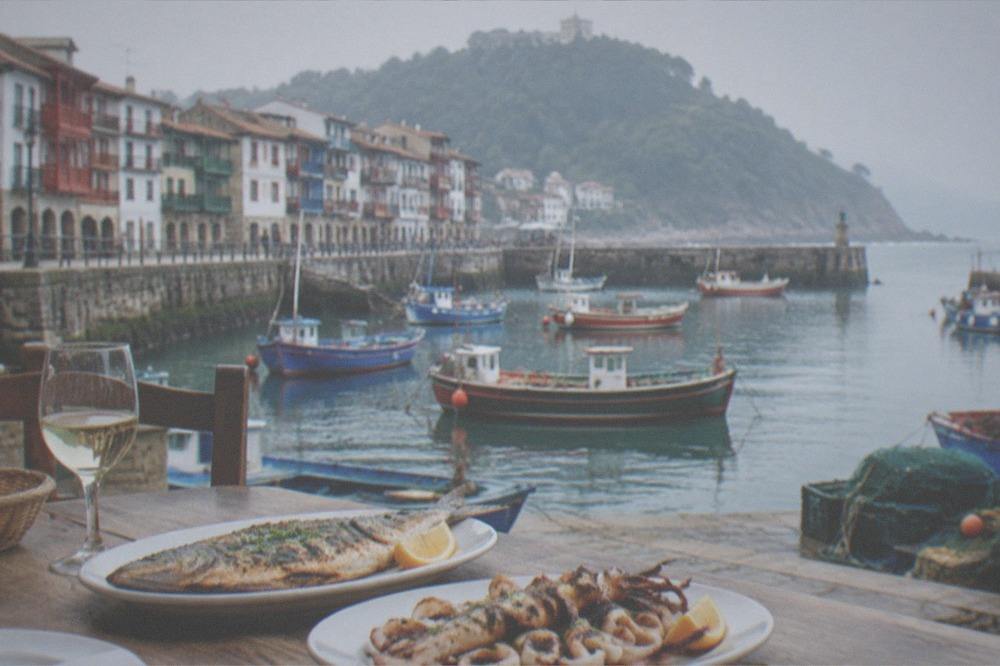
Eat in the harbour-front bars and restaurants of Pasai Donibane, where the menus are built around the day's catch from the fleet moored outside the door; grilled fish, squid in its own ink and the pintxo counters along the water's edge are the standard order, and the villages are small enough that the walk between bars takes minutes rather than a plan.
Pasaia's food culture is a port culture, not a gastronomy-lab culture. The city it sits beside holds 11 Michelin stars across 6 restaurants in the MICHELIN Guide Spain 2026, but Pasaia's kitchens are about fish straight off the boats. The dishes to look for are the ones this coast is known for: whole grilled fish, txipirones (small squid, often served in their ink), and the harbour pintxos that pair the catch with bread and local wine. Txakoli, the lightly sparkling white wine of the region, is the pour that goes with it; the guide to what txakoli is and how it is served explains the pouring ritual, the high thin stream into the glass, that you will see in the bars here.
The cider houses of Gipuzkoa are the other half of the province's food identity, with the txotx season running from the middle of January to the end of April by the tourism board's wording, and Astigarraga, the cider village, sits inland between the city and the cider route. A day that pairs a morning in Pasaia with an afternoon cider house lunch is a full Gipuzkoa day, and the cider house tour with lunch in the roster covers the ritual: the orchard, the cellar, the txotx pour straight from the barrel and the cod-and-steak meal that goes with it.
How Does Pasaia Compare With Other Day Trips From San Sebastian?
Pasaia is the closest-feeling day trip on the coast, the only one that is also an official Camino stage walked from the city, and the best choice for walkers, boat riders and anyone who wants a working port rather than a resort; Getaria and Hondarribia offer bigger names and better-known food, Zumaia offers the flysch geology, and inland options like Rioja and Laguardia are full-day commitments of a different kind.
The comparison that matters is Pasaia against its coastal neighbours. Hondarribia, the fortified border town at the mouth of the Bidasoa, has the walled old quarter and the restaurant row; Getaria has the Balenciaga museum, at 14 EUR general admission and 9 EUR reduced, plus the txakoli hills above the village; Zarautz has the long beach; Zumaia has the flysch cliffs of the Basque Coast UNESCO Global Geopark, a UNESCO Global Geopark since 2015. Pasaia has none of these headline attractions, and that is the point: it is the half-day or full-morning trip, the one you can do on foot, and the one where the harbour itself is the sight.
The table below sets the coastal options side by side, using only what the pack states about each place.
| Day trip | What it is known for | How it connects to the city |
|---|---|---|
| Pasaia | Working fishing harbour, four villages, Albaola whaleship, harbour boat | Camino stage over Monte Ulia, Topo rail line, urban-fare harbour crossing |
| Hondarribia | Fortified walled town, border location, restaurant quarter | Coach day trip in the roster, road along the coast |
| Getaria | Balenciaga museum at 14 EUR, txakoli country, fishing village | Coach day trip and txakoli wine tour in the roster |
| Zarautz | Long sandy beach, surf town | Half-day coast drive in the roster |
| Zumaia | Flysch cliffs of the Basque Coast UNESCO Global Geopark | Half-day coast drive in the roster |
For visitors building a wider plan, the full list of options is laid out in day trips from San Sebastian, and the coastal Camino stages are listed in the board's order below.
| Stage | Camino de Santiago coastal route through Gipuzkoa |
|---|---|
| 1 | Irun, Hondarribia, Lezo, Pasaia |
| 2 | Pasaia to Donostia |
| 3 | Donostia to Orio |
| 4 | Orio to Zarautz |
| 5 | Zarautz, Getaria, Zumaia |
| 6 | Zumaia, Itziar, Deba |
What Should You Know Before You Go?
Take the train or walk in, cross the bay on the motor boat inside the urban fare, carry a layer for the clifftop wind, check Albaola's own page for opening arrangements and prices, and plan the visit around the seasons: the coastal path is at its best from late spring to early autumn, while the txotx cider season, from mid-January to late April, gives a winter visit a different anchor.
A few practical points make the day smoother. The villages are small, so a visit is really two half-visits, one per shore, joined by the boat; allow more time for Albaola than for any single street. The pack gives no opening hours for Albaola and no admission price, so the shipyard's own page is the place to confirm both before travelling. Cash for small harbour bars is still sensible in a fishing port, even though card payment is normal in the city. And the weather rule for this coast is simple: AEMET's normals show no month averaging under 86 mm of rain, so the umbrella stays in the bag regardless of the season.
The cruise-port visitor has a specific version of this question. Ships calling at the city dock closer to the city centre than to Pasaia, and a shore day spent on the Ulia ridge and the harbour may suit better than a long coach excursion; the guide to the cruise port and what fits a shore day covers the trade-offs.
Common Questions About Pasaia Day Trips
Is Pasaia part of San Sebastian?
No. Pasaia is a separate municipality in the province of Gipuzkoa, east of the city. San Sebastián is itself a city and municipality, and Pasaia, Hondarribia, Getaria and the other coastal towns are their own municipalities, never districts of the city.
Can you walk from San Sebastian to Pasaia?
Yes. The Camino de Santiago coastal route lists Pasaia to Donostia as an official stage, and walking it in reverse takes you over Monte Ulia, along the clifftops and down into Pasai Donibane. The tourism board publishes no stage distances, so plan it as a half-day walk with a train or boat return.
How much does the Pasaia harbour boat cost?
The motor boat that crosses Pasaia's bay is inside the MUGI urban fare. The MUGI tariff gives the occasional urban cash ticket at 1.95 EUR, the night ticket at 2.65 EUR, the anonymous MUGI card at 0.78 EUR and the personalised card, in its first trips of the month, at 0.59 EUR.
What is the San Juan whaleship at Albaola?
It is a full-scale replica of a Basque whaling galleon built in Pasaia that sank in Red Bay, Labrador. The wreck was excavated and documented by archaeologists, and Albaola is rebuilding the ship in public view at the port using traditional methods. The shipyard's own page carries current visiting arrangements.
Is Pasaia worth visiting if you only have one day in San Sebastian?
Not as the main event. With a single day, the city's own beaches, the Old Town and Monte Igueldo come first, and the one-day itinerary in the city's guide covers them. Pasaia rewards a second day or a long morning, especially for walkers who want the Ulia ridge.
Does it rain on the Monte Ulia walk?
Frequently, at any time of year. AEMET's Igeldo station records 1,507 mm of rain annually over 141 rain days, and even July, the driest month, averages 86 mm. Check the forecast, carry a shell layer and treat the clifftop section with respect in wind.
The honest summary of Pasaia is that it is the day trip you take for the shape of the coast rather than for a ticketed attraction: one bay, four villages, a boat that costs the same as a bus, a whaleship rising plank by plank in a working shipyard, and a Camino path that ties the whole harbour back to the city along the top of a cliff. San Sebastian Spain Guide covers the city itself in depth; Pasaia is the eastern chapter of the same coastline, and the walk over Monte Ulia is the best way to read it.