La Concha Regatta
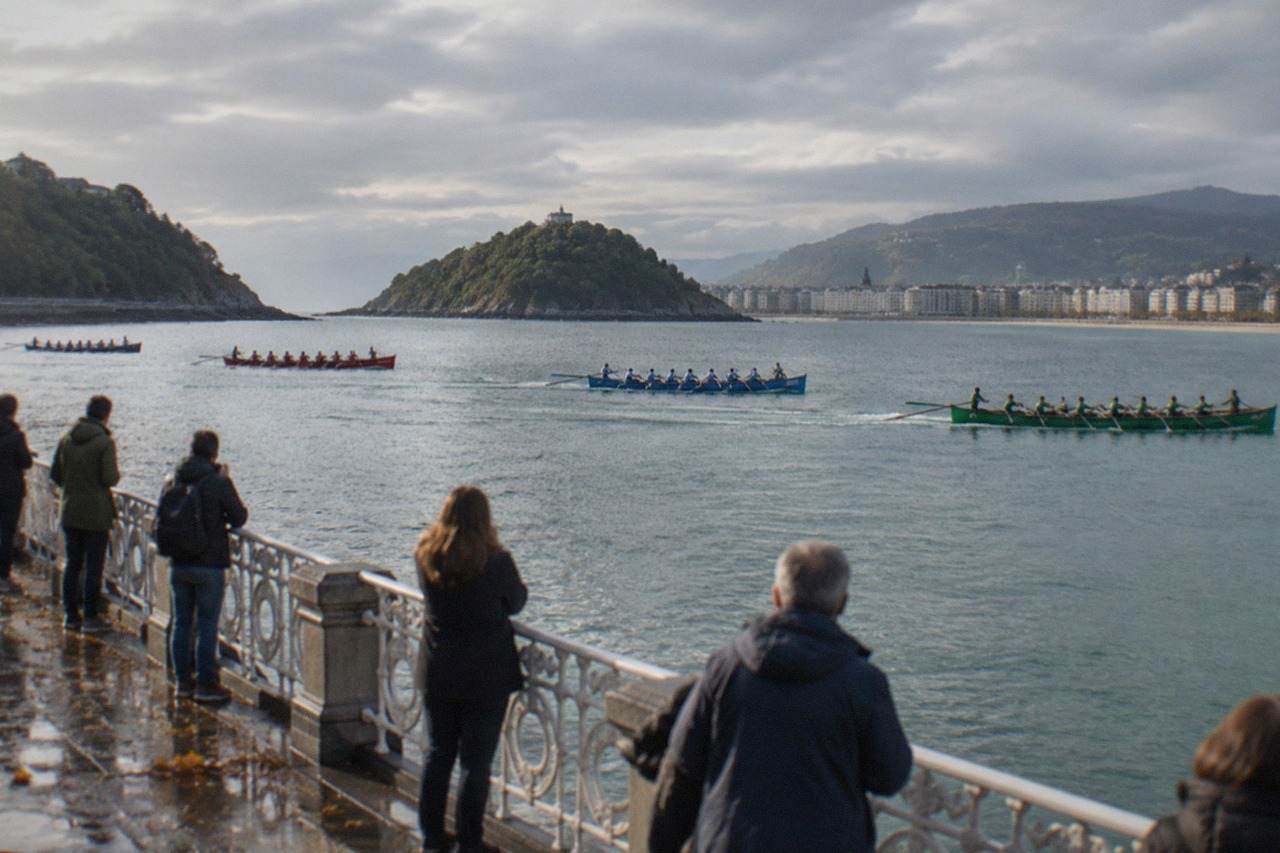
The Bandera de La Concha is the oldest and most watched rowing race in the Basque Country, rowed on the first two Sundays of September in the bay of San Sebastián, Spain.
Short answer
The Bandera de La Concha is rowed on the first two Sundays of September, with the women's race at 11:00 and the men's at 12:00. It was first held in 1879 and the women's flag dates from 2008.
On the first two Sundays of September, the bay of San Sebastián, in the Basque Country of Spain, fills with traineras: twelve-oar Basque rowing boats that race side by side for the Bandera de La Concha, the oldest and most followed rowing flag in the region. The city's Basque name is Donostia, and here the race is simply called La Bandera, the flag, the way a football town says the cup. It was first rowed in 1879, the women's flag has been competed for since 2008, and the races start at 11:00 for the women and 12:00 for the men. This page explains what the race is, how it is rowed, which towns contest it, and where to stand to watch it.
What Is The Bandera De La Concha?
The Bandera de La Concha is the Basque Country's flagship trainera rowing race, rowed on the first two Sundays of September in the bay of San Sebastián, Spain. The women's race starts at 11:00 and the men's at 12:00. It was first held in 1879, the women's flag since 2008, and the winning crew takes a flag plus a cash prize that the organiser publishes each season. It is the oldest big race on the Basque coast.
A trainera is a wooden or carbon racing boat with thirteen crew: twelve rowers, six per side, and a cox at the stern who steers and sets the stroke rate. The boats descend from the fishing boats that once rowed out from ports like Pasaia and Getaria to chase whale and sardine, and the sport kept the hull shape, the oar count and the port loyalty when engines replaced muscle. Each crew races for its home town, and the towns treat the Bandera as the season's title: a crew that wins it has won the year, whatever else it takes.
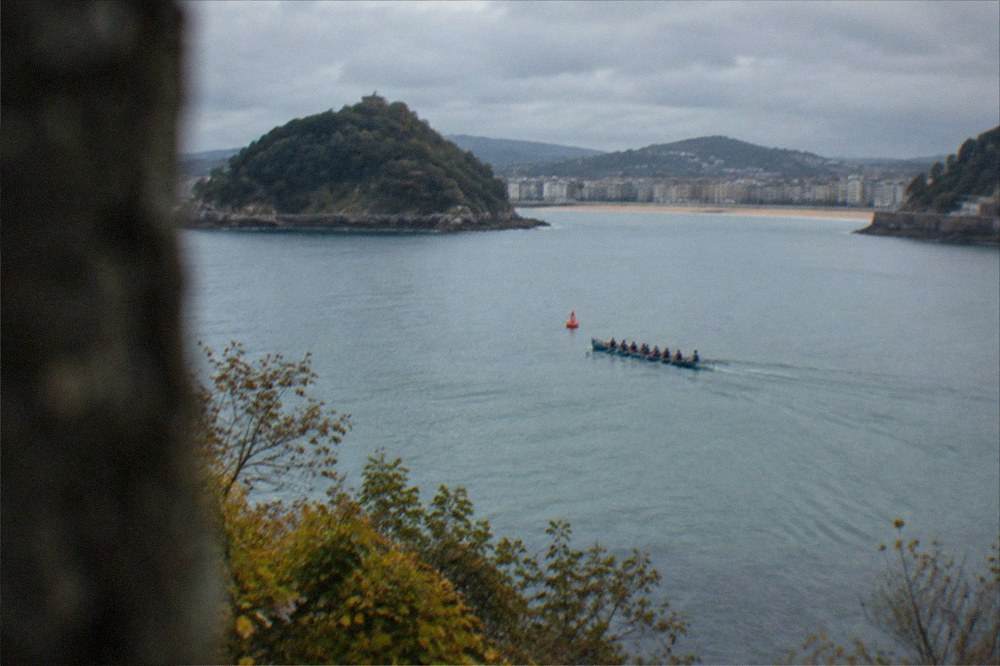
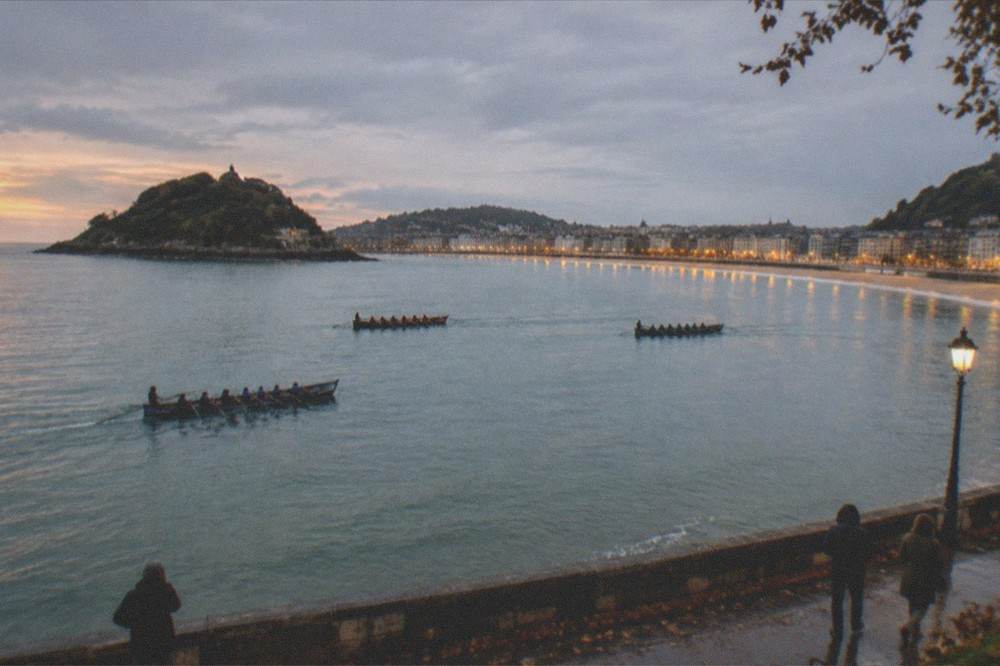
The race is not one day but two. The first Sunday sets the order and the second settles it, with times combined across the two legs, so a crew can lose the first Sunday and still take the flag a week later. The course runs straight out from the bay, around a buoy line and back, and the whole thing happens inside the natural arena of La Concha, with Monte Igueldo on one side, Monte Urgull on the other and Santa Clara island in the middle. Very few sporting events hand the spectator a horseshoe of beach, promenade and hillside for free.
The bay itself is the reason the race lives here. La Concha beach runs 1,350 metres with a mean width of 40 metres, according to the city council's own beach page, sandy and shallow, and the tide often limits the usable sand. The council's figures matter to a regatta spectator because the front row of standing room appears and disappears with the tide, not with the ticket office.
When Is The La Concha Regatta Held In San Sebastian?
The Bandera de La Concha is rowed every year on the first two Sundays of September, with the women's race at 11:00 and the men's at 12:00. In 2026 the two days fell on 6 and 13 September. The rule is fixed, the Sunday dates are not: check the organiser for the year you travel, because the calendar, not the tradition, is what changes.
September is a deliberate choice. The sea is at its warmest of the year by the climate record, and the summer crowds have thinned. AEMET's climate normals for its Igeldo station, the period 1981 to 2010, show September in San Sebastián averaging 18.0 C with a mean maximum of 21.1 C, and 179 hours of sun. The same table shows 111 mm of rain over about 10 rain days in the month, which is a useful thing to know before standing on a seafront for three hours: this is an Atlantic city with 1,507 mm of rain across 141 rain days in an average year, and no month averages under 86 mm.
The dates also sit inside the city's event season. The Quincena Musical's 87th edition ran from 2 to 30 August 2026, and the San Sebastián International Film Festival held its 74th edition from 18 to 26 September 2026, so the regatta weekends land between a music festival and a film festival. Visitors planning a whole week around the race can build a full calendar out of the city's September, and the best time to visit question has a different answer for a regatta fan than for a beach visitor.
The season rules around the bay matter too. The lifeguard service on all three city beaches runs only from 1 June to 30 September, 10:00 to 20:00 from 15 June to 15 September and 13:30 to 19:30 from 16 to 30 September, so the second regatta Sunday is one of the last lifeguarded beach days of the year. The Santa Clara island boats run their high season to the same 30 September date, and Hondalea, Cristina Iglesias's work in the island lighthouse, inaugurated in 2021, is open only from 1 June to 30 September, 11:00 to 18:30, free, in half-hourly sessions, with no booking needed for the visit itself, only the boat.
How Did The La Concha Regatta Start?
The Bandera de La Concha was first rowed in 1879, which makes it the oldest continuously raced trainera event on the Basque coast. It grew out of the working rivalry between fishing ports, whose crews rowed the same boats they worked in, and the women's flag was added in 2008. The race's own history is the history of the bay's fishing towns turned into a league.
The first crews were fishermen, and the first boats were the fishing boats themselves. The ports that rowed then are the ports that row now: Pasaia, Orio, Zarautz, Getaria, Hondarribia and San Sebastián's own crews, along with towns from along the whole Basque coastline. The sport's structure still mirrors the fishing economy that built it, a league of town clubs rather than city franchises, and the clubhouses still sit on the working harbours. A visitor who wants to see where the boats come from can take the same coast the crews train on: the Pasaia area and the Gipuzkoa fishing towns are short hops from the city.
The women's flag is younger than the boats but older than most people assume. Since 2008 the women's Bandera has been rowed on the same Sundays, over the same course, in front of the same crowd, and the women's race now opens each regatta day at 11:00 before the men's at 12:00. The 2026 women's race was rowed on 6 and 13 September alongside the men's, and the race's own notices confirm the dates on the water: Hondalea's first island session was moved to 15:30 on both regatta Sundays because the bay was closed for racing.
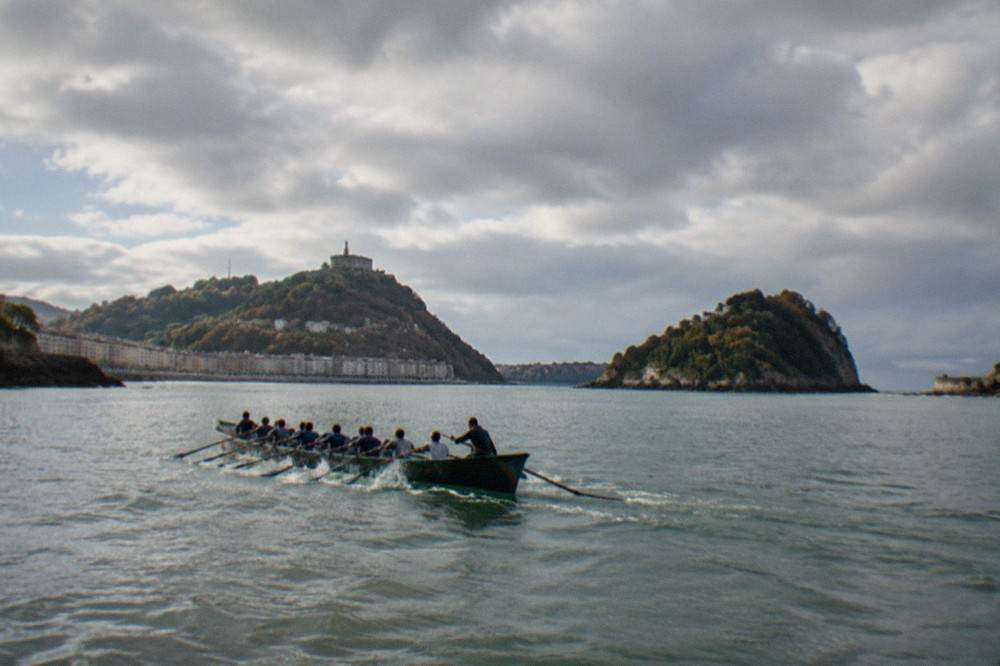
The race belongs to a wider rowing calendar. The Bandera is the season's flagship, but the same crews race a summer league of flags in towns along the coast, and the season builds toward the two Sundays in September. The tourism board's account of the race notes the women's flag since 2008 and the first edition in 1879, and it is those two dates, not the folklore around them, that a reader should carry away.
Which Towns Race In The Bandera De La Concha?
The Bandera de La Concha is contested by trainera clubs from towns along the Basque coast, each racing under its own flag, and the field is set each season by the organiser from the league's standings. The permanent facts are the towns' identities, not the year's lineup: the crews come from Gipuzkoa, Bizkaia and the wider Basque coast, and the port a crew represents is fixed even when the sailors change.
The clubs are the point. A trainera crew is not a scratch team: it is a town's rowing club, training on its own stretch of water, and the town's name is painted on the bow. The classic contenders come from the old fishing ports, and the rivalry between neighbouring towns is the emotional engine of the sport. Orio and Pasaia, Zarautz and Hondarribia, Getaria and San Sebastián itself: these are places within a short drive or train ride of the city, and a regatta weekend is one of the best reasons of the year to visit one of them.
This table shows the Gipuzkoa coastal towns whose crews and harbours are part of the trainera world, with the role attached to each place. Distances and travel times are deliberately omitted, because the pack does not give them for these journeys; the towns are listed with their roles instead.
| Town | Role in the regatta world | What the verified record gives it |
|---|---|---|
| San Sebastián | Host city and home crews | The bay, the race's home since 1879 |
| Pasaia | Historic fishing port and trainera town | The Pasaia harbour ferry sits inside the urban MUGI fare zone |
| Orio | Classic trainera town on the Oria river | Stage end on the coastal Camino de Santiago |
| Zarautz | Coastal trainera town with a long beach | Stage on the Camino's Zarautz-Getaria-Zumaia stretch |
| Getaria | Fishing port, trainera town, txakoli country | Home of Elkano, one star in the MICHELIN Guide Spain 2026 |
| Hondarribia | Border port with a rowing club | Home of Alameda, one star in the MICHELIN Guide Spain 2026 |
The Michelin names are worth a second look, because they show how small and dense this coast is: the province of Gipuzkoa holds 19 stars across 11 restaurants in the MICHELIN Guide Spain 2026, and two of the one-star houses sit in the very towns that send crews to the Bandera. Inside the city itself the 2026 guide counts 6 restaurants holding 11 stars, including the three-star houses Akelaŕe and Arzak. A regatta weekend can pair a morning on the rail with an evening at a table the world queues for, and the Michelin restaurants scene is a short walk from the bay.
Where Is The Best Place To Watch The La Concha Regatta?
The best free viewing for the Bandera de La Concha is anywhere on the La Concha promenade railing between the Kursaal side and Ondarreta, because the course runs down the middle of the bay in full view of the whole beach. Monte Urgull's slopes give an elevated view, and the Paseo de la Concha railing is the traditional standing spot, claimed early on race morning.
The bay is a natural stadium, and the crowd spreads around it. The railing along Paseo de la Concha is the classic spot: the boats pass closest to the shore on the return leg, and the crowd stands three or four deep from mid-morning. Ondarreta's end, by the walk that leads to the Peine del Viento, Eduardo Chillida's 1977 sculpture anchored in the rocks at the end of Monte Igeldo, gives a quieter rail and the same view. Monte Urgull, open 08:00 to 21:00 from 1 May to 30 September and 08:00 to 19:30 from 1 October to 30 April, gives the whole course from the hilltop, and the climb is a standard city walk described on our Monte Urgull page.
On regatta Sundays the bay itself is closed to ordinary traffic, and the island boats and beach services work around the racing. Hondalea's island sessions moved to 15:30 on both 2026 race days, which tells a spectator two things: the water is closed until mid-afternoon, and the island is still reachable later in the day for anyone who combines the race with a visit. The island's own boat service, the red line of Motoras de la Isla, runs 5 EUR return in high season, 10:00 to 19:00 every 30 minutes weather permitting, with the last boat back at 20:00, and children under 4 travel free.
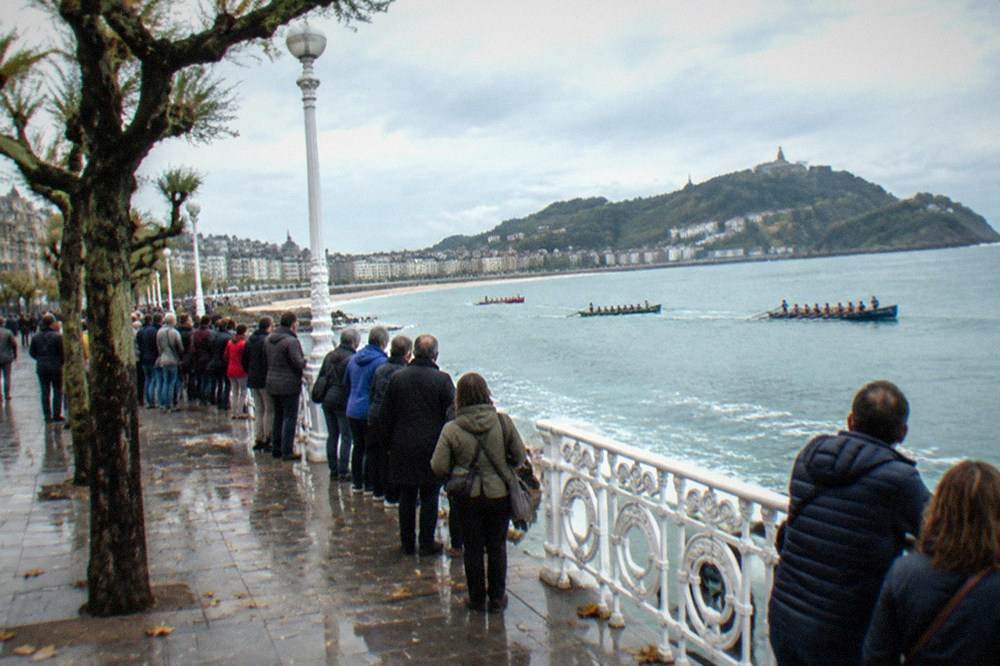
This table lays out the main viewing positions and what each one offers, describing each place on its own terms.
| Viewing position | What you see | What the record says about the spot |
|---|---|---|
| Paseo de La Concha railing | Boats closest on the return leg | The beach runs 1,350 m, mean width 40 m, sandy and shallow |
| Ondarreta end | Quieter rail, whole course | 600 m long, 100 m wide; the Peine del Viento walk starts at its west end |
| Monte Urgull slopes | Elevated view of the full course | Open 08:00 to 21:00 from 1 May to 30 September |
| Santa Clara island | The race from the water's level | Hondalea open 1 June to 30 September, 11:00 to 18:30, free |
| Kursaal side at the east end | The start and the turn | Kursaal inaugurated 23 August 1999, Rafael Moneo's design |
One honest warning belongs here: it rains. AEMET's Igeldo normals show September averaging 111 mm of rain over about 10 rain days, and the regatta has been rowed in drizzle more than once. The crowd on the railing does not leave. Bring a layer, because the mean September minimum is 14.8 C and the sea breeze on the railing is colder than the street behind it.
What Is A Trainera And How Is The Race Rowed?
A trainera is a thirteen-person racing boat, twelve rowers on six benches plus a cox, and the Bandera de La Concha is rowed over a straight-out-and-back course in the bay with the two Sunday times combined. The boat type descends directly from the fishing boats the same ports worked until engines replaced oars, and the cox steers and calls the rhythm from the stern.
The details of the hull are the sport's identity. Twelve oars, six a side, with the rowers facing backwards and the cox facing forward, and the stroke rate in a sprint is high enough that the cox's voice and the crowd's noise merge. Modern traineras are built for speed rather than cargo, but the lineage is unbroken: the boats that race for the Bandera are the daughters of the boats that rowed out of Pasaia after sardine shoals, and the clubs still train from working harbours.
The race format rewards consistency over a single burst. Two Sundays, one combined classification, and the buoy turn where races are won and lost, because a trainera at speed carries momentum that a mistimed turn throws away. The 11:00 women's race and the 12:00 men's race run the same course, and the crowd stays for both: by the men's start the railing is at its thickest, and the noise when a home crew takes the lead is the loudest the bay hears all year.
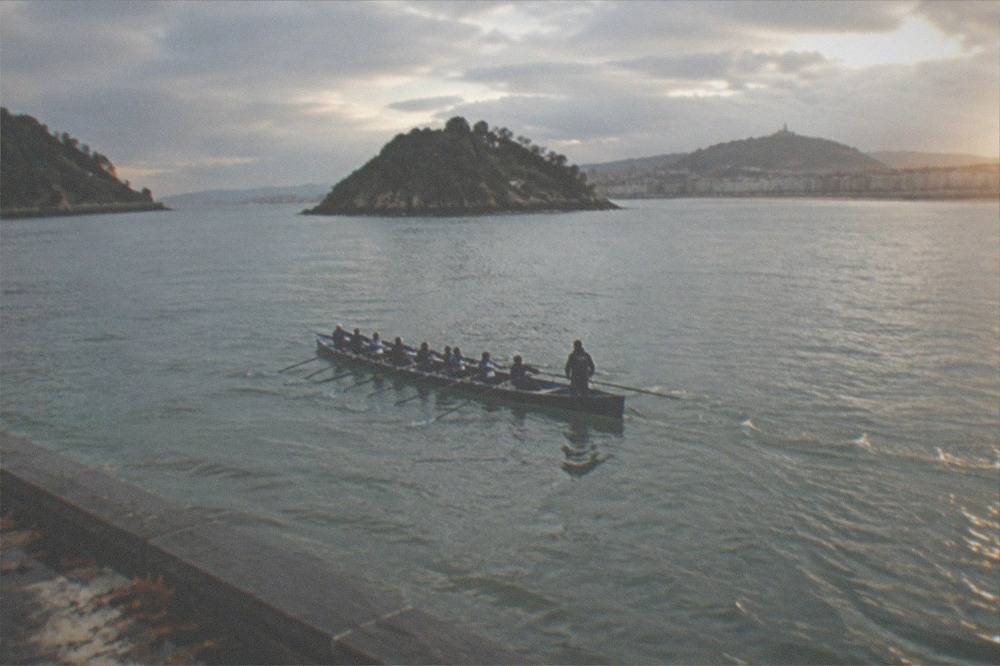
For visitors whose interest in the water goes beyond watching, the bay is a working sailing ground all summer. A private sailboat with a local skipper is one of the ways onto it: The same harbour runs the small-boat trips, the eco-catamaran and the island runs described on the boat tours pages, and the race Sundays are the one weekend when the whole fleet sits out and watches.
What Else Is On In San Sebastian On Regatta Weekend?
Regatta weekend in San Sebastián overlaps the tail of the beach season and the start of the film festival, with the lifeguard service on the beaches running to 30 September and the San Sebastián International Film Festival following the race: its 74th edition ran 18 to 26 September 2026. The first regatta Sunday is one of the last fully lifeguarded weekends on all three beaches.
The practical season lines all converge on the same date. Lifeguards finish on 30 September, the island boats' high season ends the same day, Hondalea closes with them, and parasol and awning hire on the beaches stops on 15 June to 30 September window's final day. A visitor on the second regatta Sunday is getting the last of the full-service beach city, and a visitor two weeks later finds a quieter, rainier, cheaper town. The September question is really a question about which side of that line you stand on.
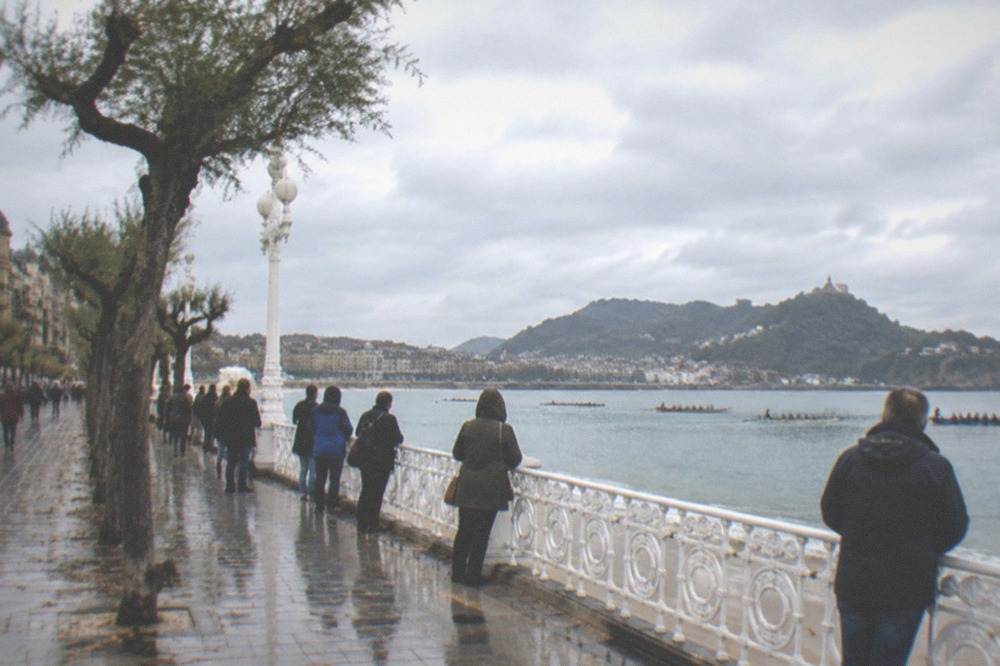
The month-by-month picture below is from AEMET's normals for the Igeldo station, period 1981 to 2010, and it shows why the regatta's September slot is the sweet spot between August's crowds and October's rain.
| Month | Mean C | Mean max C | Rain mm | Rain days | Sun hours |
|---|---|---|---|---|---|
| June | 16.9 | 20.0 | 90 | 10.6 | 189 |
| July | 18.9 | 21.8 | 86 | 9.8 | 196 |
| August | 19.5 | 22.5 | 117 | 10.5 | 190 |
| September | 18.0 | 21.1 | 111 | 10.1 | 179 |
| October | 15.5 | 18.5 | 159 | 11.8 | 140 |
Read the table honestly: August is wetter than June, July or September, with 117 mm against September's 111, and no month in the record is dry. The regatta does not get a weather guarantee, it gets the best available trade-off, warm sea, long days and a town still in beach mode.
How Do You Get To The Bandera De La Concha?
The Bandera de La Concha is watched from the La Concha bayfront in central San Sebastián, Spain, and the whole course is walkable from the city centre, the Parte Vieja and the Gros district, so no transport is needed on race day beyond your own feet. For day-trippers arriving from along the coast, the Euskotren Topo line and the Lurraldebus network feed into the city, and the race is a short walk from the stations.
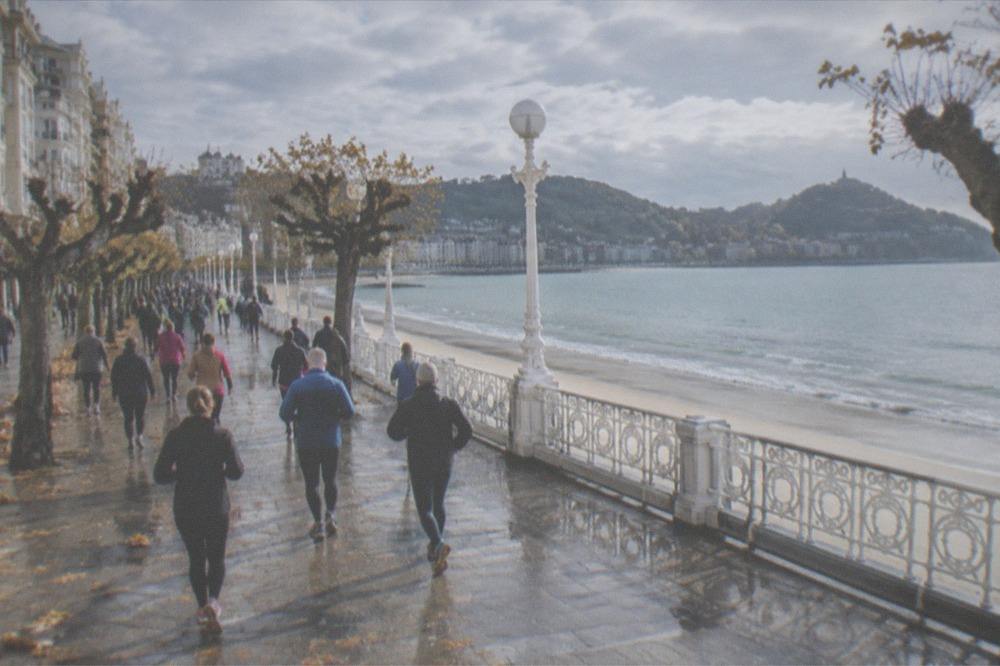
The city is compact, and regatta day is a walking day. The Parte Vieja, the old town, sits directly under Monte Urgull at the east end of the bay, and the Paseo de la Concha starts at its corner, so the classic regatta morning is breakfast in the old town and a two-minute walk to the railing. The Plaza de la Constitución, the old town's main square, is where the bars fill first, and the pintxo bars around it do their biggest Sunday trade of the year on regatta weekends.
For anyone arriving from farther along the coast, the transport facts that are verified are these: the MUGI fare system covers the whole province, with an occasional urban ticket at 1.95 EUR and a MUGI card fare of 0.78 EUR for urban one-and-zero-jump trips, and the Topo line runs Amara-Donostia to Hendaia in 37 to 38 minutes with a 2.90 EUR occasional fare, computed from the operator's own timetable data. The new underground Topo section in the city centre finished its civil works in June 2026 with no published opening date, so Amara remains the working terminus. What the pack does not give, this page does not promise: no journey time from any specific town, no frequency beyond the Topo's, and no fare beyond the ones printed above.
A visitor flying in should note one thing the research record flags clearly: the airport at Hondarribia, 20 km from the city by the tourism board's own figure, is served by Lurraldebus lines E20, E23, E25, E27, E28, E29 and E30, with E30 the direct line, and line E21 has not stopped at the airport since 1 June 2026 despite older pages still naming it. The tourism board's airport page is the place to re-check before travelling, because the operator's list is the current one.
Can You Combine The Regatta With A Day On The Water Or The Hills?
Yes, and the regatta weekend is built for it: the bay, Monte Urgull and Monte Igueldo ring the race course, the island boats run until 30 September, and the coastal Camino de Santiago crosses the city on foot, so a race morning can be followed by a hill walk, an island visit or a sailing afternoon. The only hard limit is the season, because the beach and island services all end on 30 September.
The hills are the underrated half of the weekend. Monte Urgull gives the elevated race view and closes at 21:00 through the summer season, so a spectator can watch the men's finish at street level and then climb for the evening. Monte Igueldo, on the west side, has the 1912 funicular, which the tourism board calls the oldest in the Basque Country, with a return fare of 5.50 EUR for adults and 2.50 EUR for children up to 7 on the funicular's own tariff, running every 15 minutes, and the ticket includes entry to the grounds. The funicular's own site states that downhill-only tickets are not on sale, so plan the ride as a round trip or walk up and walk down.
The Camino de Santiago's coastal route crosses the city, and the tourism board lists its stages through Gipuzkoa, including Pasaia-Donostia and Donostia-Orio, the second and third stages, with no distances given. A guided hike on the Camino over Mount Ulia is one of the ways to walk a piece of it with a guide: The Ulia stretch is the coastline east of the city, the same water the traineras race toward on their way out to the buoy.
The evening after the race belongs to the old town. The pintxo bars of the Parte Vieja are the city's institution, and a regatta Sunday fills them with crews' families and rival towns' supporters, which is the closest the city comes to an away-day atmosphere. A short guided walk that ends with a pintxo and a drink is the lightest way into it: For the deeper dive, the what are pintxos page explains the bar culture the regatta crowd lands in.
What Should You Know Before Planning A Regatta Trip?
Plan around three fixed points: the first two Sundays of September, the 30 September end of the beach and island season, and the fact that the city's hotel demand peaks in August, not September, with August 2025 logging 245,769 hotel overnight stays against September's 216,759. Book a bay-facing room early, expect rain on roughly 10 days of the month, and re-check the organiser's calendar for the year you travel.
The hotel numbers come from the INE's hotel occupancy survey for the city, hotels only, and they show a town that is busy but not at its peak on regatta weekend. September 2025's 216,759 overnight stays sit below August's 245,769 but above every month outside the April-to-October stretch. The share of overnight stays by residents abroad was 63.7 percent across 2025, which tells a visitor the crowd on the railing is as international as it is local, and the race commentary is as likely to be translated for a neighbour as shouted in Basque.
This table gathers the regatta weekend's fixed facts in one place, each attached to the subject it belongs to.
| Fact | Detail | Source of the rule |
|---|---|---|
| Race dates | First two Sundays of September | The regatta's annual rule |
| 2026 dates | 6 and 13 September | The 2026 edition |
| Start times | Women 11:00, men 12:00 | The regatta's annual rule |
| First edition | 1879 | The race's own record |
| Women's flag | Since 2008 | The race's own record |
| Lifeguards | 1 June to 30 September | The council's beach pages |
| Island boats' high season | 1 June to 30 September | The operator's tariff page |
| Hondalea | 1 June to 30 September, 11:00 to 18:30, free | The council's visit page |
The tourist tax question comes up in trip planning, and the verified position is precise: Norma Foral 3/2026 of Gipuzkoa takes effect on 1 January 2027, with bands per person per night, at most 6 nights charged, under 18s exempt, and each council picking its own rate inside the bands. Before that date no visitor pays it, and the city's own rate has not been published in an official source, so no single San Sebastián figure belongs on any page, including this one.
For a fuller plan around the weekend, the how many days in San Sebastián question answers itself differently on a regatta weekend: the race fills two mornings, the hills and the island fill the afternoons, and the old town fills the evenings, which is a three-day shape with no slack in it. More on the city's calendar, its food and its beaches is on San Sebastian Spain Guide, and the race's own organiser publishes each season's entry list, prize fund and course notice, which is the page to check once you have picked your year.
Common Questions About The La Concha Regatta
When is the Bandera de La Concha rowed?
On the first two Sundays of September every year, with the women's race at 11:00 and the men's at 12:00. In 2026 the two days fell on 6 and 13 September. Check the organiser's calendar for the year you travel.
How old is the La Concha regatta?
It was first rowed in 1879, making it the oldest big trainera race on the Basque coast. The women's Bandera de La Concha has been rowed since 2008.
Where is the best free place to watch the regatta in San Sebastian?
The railing along Paseo de La Concha is the traditional spot, with the boats closest on the return leg. Ondarreta's west end is quieter, and Monte Urgull's slopes give an elevated view of the whole course.
What is a trainera?
A thirteen-person Basque racing boat, twelve rowers plus a cox who steers and calls the rhythm, descended from the fishing boats the same ports worked before engines. Each crew races for its home town.
Can you visit Santa Clara island on regatta weekend?
Yes, later in the day. The bay is closed to ordinary traffic while racing, and Hondalea's island sessions moved to 15:30 on both 2026 race days. The island boat's high season runs to 30 September, and Hondalea itself is open 1 June to 30 September, free, with no booking needed for the visit, only the boat.
Does it rain on regatta weekend?
Sometimes. AEMET's Igeldo normals show September averaging 111 mm of rain over about 10 rain days, and no month in this city's record is dry. Bring a layer and a rain jacket; the crowd on the railing stays through drizzle.