San Juan De Gaztelugatxe From San Sebastian
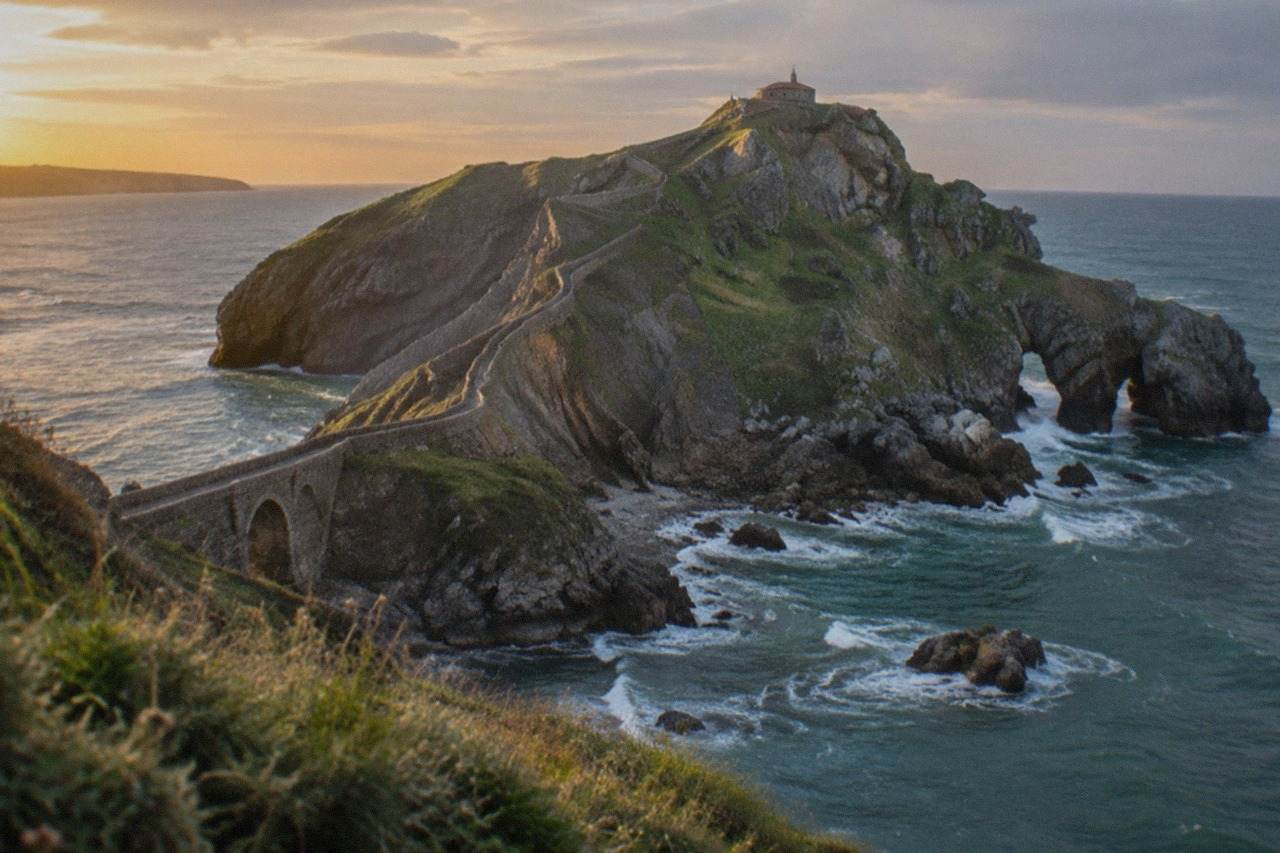
San Juan de Gaztelugatxe is a small hermitage on a rocky islet on the Bizkaia coast, reached by a stone bridge and a stepped path, and it is one of the most popular day trips from San Sebastián, the Basque city on La Concha bay whose official name is Donostia / San Sebastián.
Short answer
San Juan de Gaztelugatxe is a hermitage on a rocky islet on the Bizkaia coast, west of San Sebastián in the Basque Country, Spain. Most visitors from San Sebastián reach it on an organised day trip that pairs it with Bilbao and the Guggenheim, or by driving the coastal route. There is no train to the site itself.
San Sebastián, the Basque city on La Concha bay in Gipuzkoa, Spain, whose official name is Donostia / San Sebastián, sits close to one of the most photographed spots on the entire Atlantic coast of northern Spain: San Juan de Gaztelugatxe. The hermitage stands on a small rocky islet just off the shore, linked to the mainland by a narrow stone bridge and a stepped path that climbs the rock, and its silhouette against the waves has made it the single most requested day trip among visitors who have already walked the Parte Vieja and eaten their fill of pintxos. This page covers what the place is, how the day trip works from San Sebastián, when to go, and what to combine it with.
What Is San Juan De Gaztelugatxe?
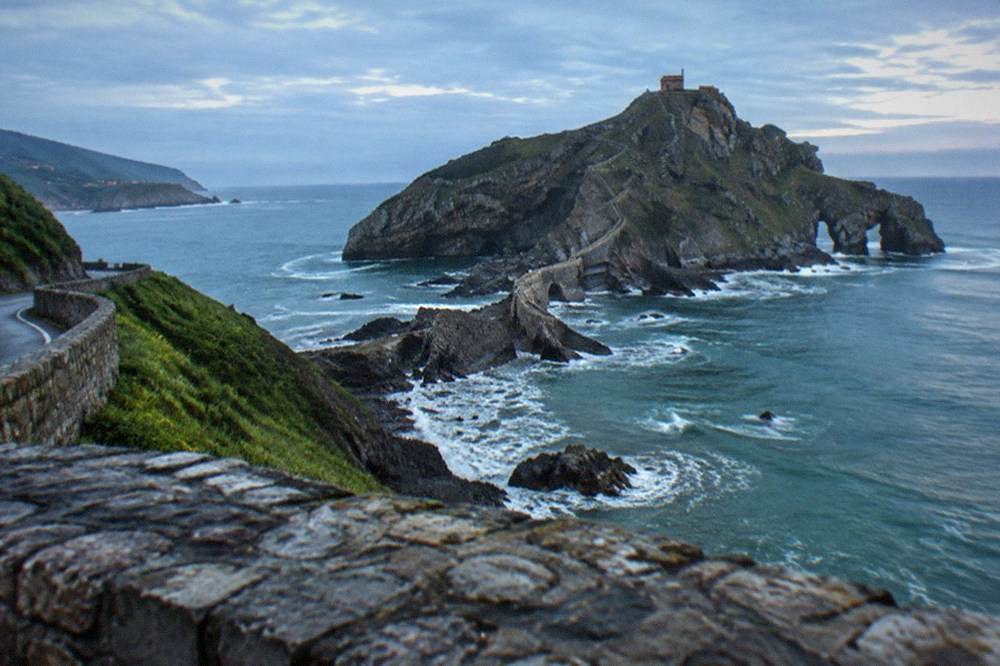
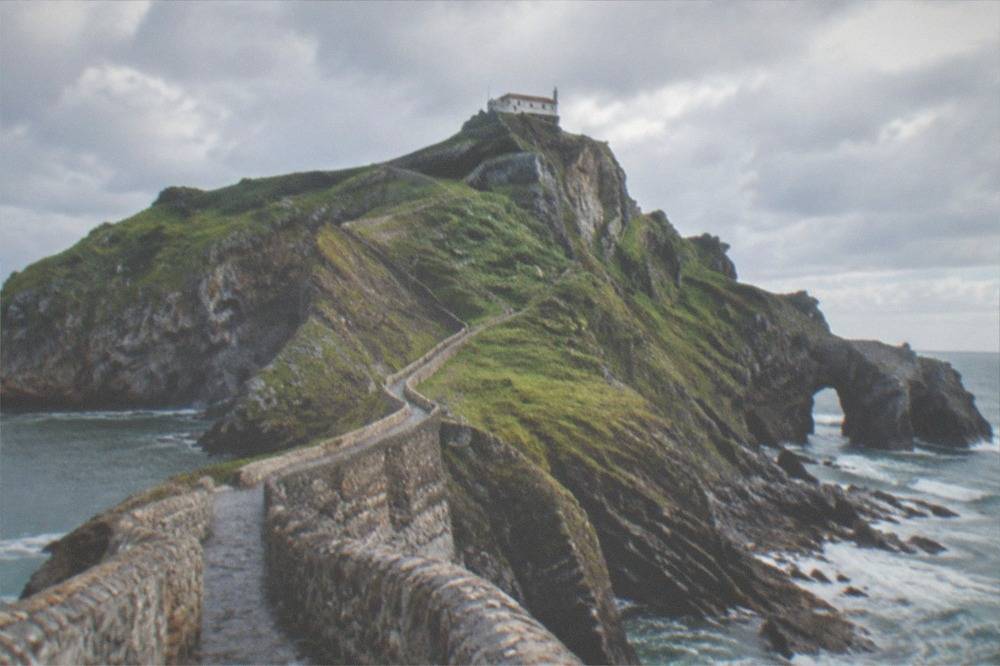
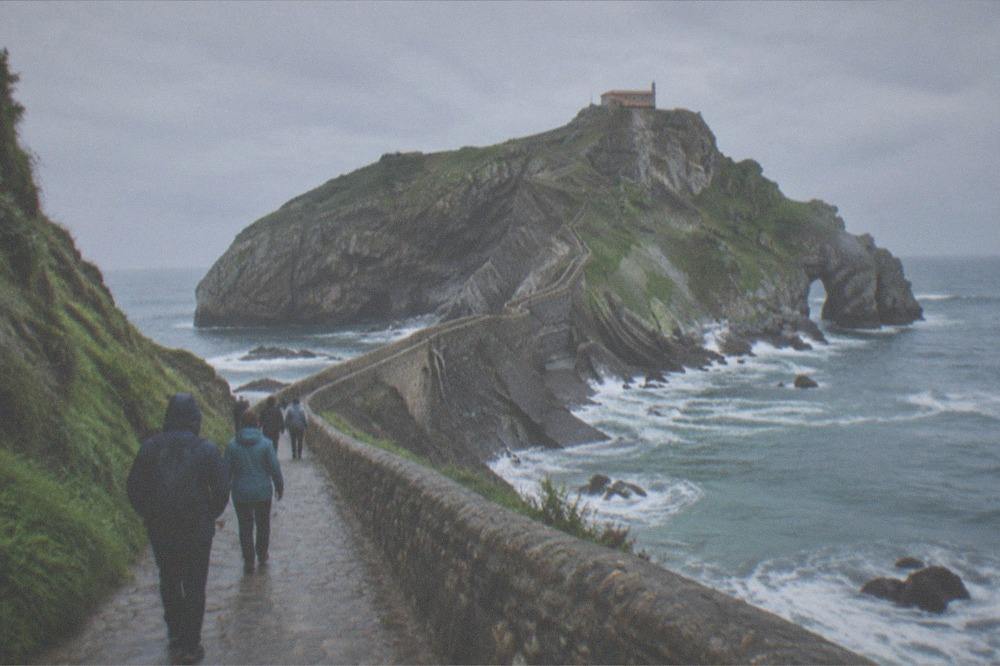
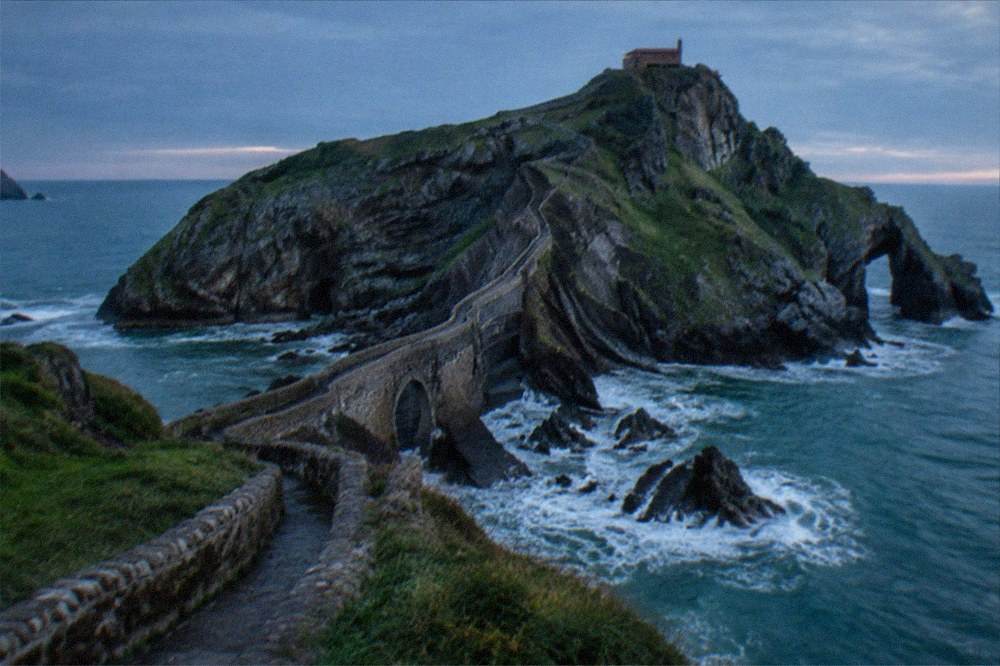
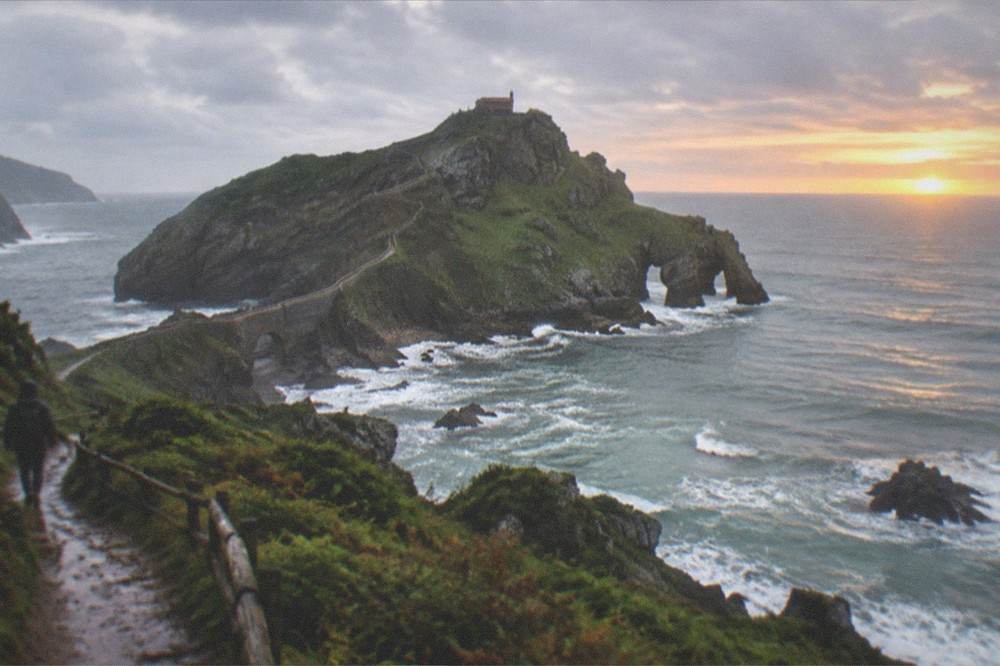
San Juan de Gaztelugatxe is a small hermitage dedicated to San Juan, standing on a rocky islet just off the Bizkaia coast of the Basque Country, Spain, and connected to the mainland by a stone footbridge and a stepped path carved into the rock. It is not in San Sebastián itself: it lies on the stretch of coast you cross travelling towards Bilbao, which is why nearly every day trip from the city pairs the two.
The name is Basque and it is worth pronouncing slowly: Gaztelugatxe, with the tx that also appears in pintxo and txakoli, sounds like the ch in church. The hermitage is a modest stone building, whitewashed and low, and its power is the setting rather than the structure. Waves break against the rocks below, the Atlantic stretches west, and the path back gives views along cliffs that drop straight into green water. The tourism board of San Sebastián lists the site among the signature excursions from the city, alongside the Guggenheim in Bilbao and the flysch cliffs at Zumaia.
The table below breaks the site into its parts, because most first-time visitors only picture the postcard shot and miss what the visit actually involves.
| Part of the site | What it is and what you do there |
|---|---|
| The islet | A rocky promontory standing just offshore, surrounded by breaking Atlantic swell on all sides |
| The stone bridge | A narrow footbridge linking the mainland carpark area to the base of the islet, the only crossing |
| The stepped path | A walkway of stone steps zig-zagging up the rock from the bridge to the hermitage, exposed to wind and rain |
| The hermitage | A small stone chapel dedicated to San Juan, the goal of the walk and the viewpoint over the coast |
| The surrounding coast | Cliffs, coves and viewing platforms on the mainland side, where most photographs are actually taken |
If you are wondering whether the climb and the effort pay off, that question has a dedicated answer page of its own: read is Gaztelugatxe worth visiting.
How To Visit Gaztelugatxe?
You visit Gaztelugatxe from San Sebastián either on an organised day trip that combines the hermitage with Bilbao and the Guggenheim, or independently by car along the coast road towards Bizkaia, parking at the site and walking out to the islet on foot. There is no rail station at the site and no boat service to the islet, so the choice is a guided excursion or your own vehicle. Car-free travellers take the excursion, and the tour listing carries the exact duration and price.
The guided option is a popular choice from San Sebastián, and the reason is simple: the hermitage is not on any train line, and the logistics of parking, timing and the coastal road are handled by the operator. The small-group day trip from the city runs to the Gaztelugatxe hermitage first and then continues to Bilbao and the Guggenheim, which turns a single sight into a full day. The tour departs from the bus station area, and the listing states the meeting point, the duration and the current price.
Whether you need to book ahead of time is a question with its own page: see do you need a ticket for Gaztelugatxe.
Independent visitors drive. The route leaves San Sebastián heading west, and the same road network serves the coastal towns of Gipuzkoa before crossing into Bizkaia. The site has a paid parking area on the mainland side, and from the parking the visit is entirely on foot: the bridge, the steps and the hermitage. Weather matters more here than almost anywhere else on this coast, because the path is exposed stone and the Basque Atlantic delivers rain on roughly 141 days a year at the Igeldo station, so a dry morning is worth chasing.
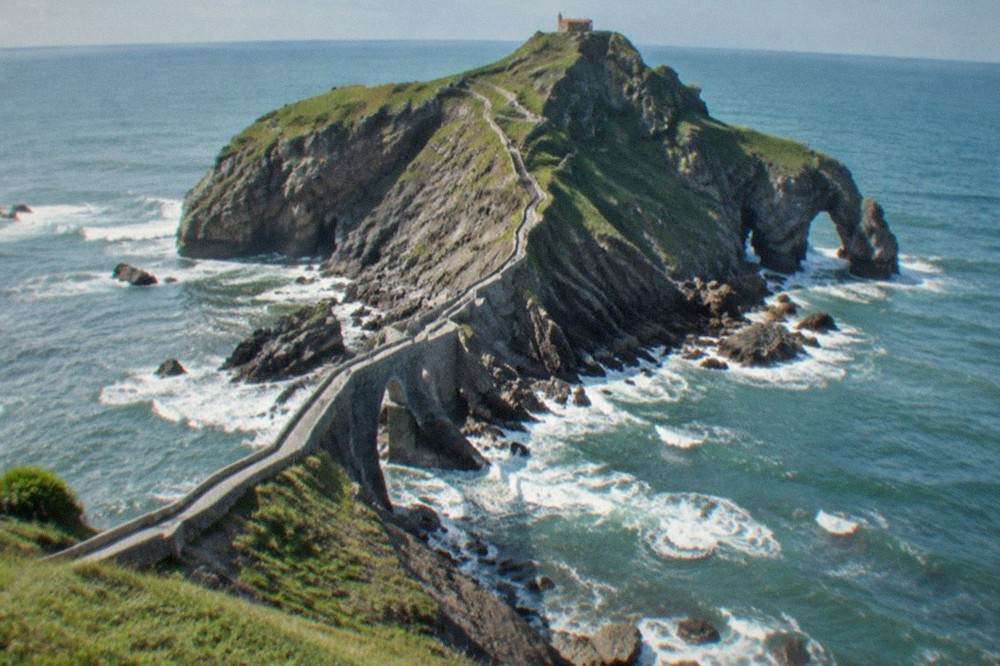
How long the walk out to the hermitage takes, and how steep the steps are, is answered in detail on its own page: how long it takes to walk to Gaztelugatxe.
How To Get To Gaztelugatxe From San Sebastian?
There are two practical ways: an organised excursion from San Sebastián, which handles the drive and usually pairs the hermitage with Bilbao, or a self-drive day along the coast road west through Gipuzkoa into Bizkaia. Public transport does not serve the site directly, so a visitor without a car is effectively choosing the excursion. The excursion listing states its departure point in the city and its full duration, and no train or bus runs from San Sebastián to the hermitage itself.
For the excursion route, the pairing with Bilbao is the standard shape of the day. The small-group tour visits the hermitage in the morning and the Guggenheim afterwards, which spreads the driving across the day and gives the coast the better light. The operator's listing carries the price, the rating and the exact schedule, and booking is through the operator's live listing.
For the self-drive route, the sensible plan is to treat Gaztelugatxe as one stop on a coastal loop rather than an out-and-back. Coming back towards San Sebastián, the road passes the towns that make up the classic Gipuzkoa coast day: Zarautz with its long beach, Getaria with the Balenciaga museum and the grilled fish, and Zumaia with the flysch. Each of these is a separate municipality, not a district of the city, and each has its own page in our day trips from San Sebastian guide.
The comparison below shows how the main day-trip destinations from the city differ, so you can see where Gaztelugatxe fits against the others.
| Day trip destination | Where it is | What the day looks like |
|---|---|---|
| San Juan de Gaztelugatxe | On the Bizkaia coast, west of the city | A stone bridge, a stepped climb and a hermitage on an islet, usually paired with Bilbao |
| Bilbao and the Guggenheim | Bizkaia's largest city, beyond the hermitage | The titanium museum building, the old quarter and the riverside walk |
| Zumaia flysch | The Gipuzkoa coast, inside the Basque Coast Geopark | Layered cliffs along the shore, boat and on-foot viewing of the rock formations |
| Getaria | A fishing town in Gipuzkoa | The Balenciaga museum, txakoli bodegas and a harbour of grilled-fish restaurants |
| Hondarribia | On the Bidasoa estuary at the French border | A walled old quarter and a colourful fishermen's row facing France |
| French Basque Country | Across the border, Biarritz and Bayonne | Grande plage promenades, half-timbered Basque architecture and French café life |
If the excursion appeals, the pairing that covers both headline sights in a single day is the one to consider: the Bilbao, Guggenheim and Gaztelugatxe day trip has its own page on this site, and Check availability on the operator's live listing for the current schedule.
When Is The Best Time To Visit Gaztelugatxe From San Sebastian?
The best months for Gaztelugatxe are May, June and September, when the AEMET normals for the city's Igeldo station show a balance of warmth and rain that suits a coastal walk: May averages 14.4 C with 120 mm of rain, June 16.9 C with 90 mm, and September 18.0 C with 111 mm. July is the driest month at 86 mm over 9.8 rain days, and August is the busiest month in the city's hotels. Winter visits are possible but wet.
The climate table below is the one to plan around. These are AEMET's published normals for the Donostia / San Sebastián, Igeldo station, the 1981 to 2010 series, measured 250 m up on Monte Igeldo, so the seafront and the coast road run slightly warmer than the raw numbers suggest.
| Month | Mean C | Rain mm | Days with 1 mm or more | Sun hours |
|---|---|---|---|---|
| April | 11.3 | 138 | 13.4 | 157 |
| May | 14.4 | 120 | 12.2 | 181 |
| June | 16.9 | 90 | 10.6 | 189 |
| July | 18.9 | 86 | 9.8 | 196 |
| August | 19.5 | 117 | 10.5 | 190 |
| September | 18.0 | 111 | 10.1 | 179 |
| October | 15.5 | 159 | 11.8 | 140 |
| November | 11.3 | 169 | 13.0 | 102 |
Two readings matter for this particular day trip. First, no month on this coast is dry: even July, the driest, averages 86 mm of rain, and November, the wettest, averages 169 mm over 13 rain days. The stepped path to the hermitage is stone, so a rain jacket belongs in the bag in every season. Second, August is wetter than June, July and September, at 117 mm against June's 90, which undercuts the assumption that peak summer is peak weather here.
Crowding runs on a different calendar from the rain. The INE hotel figures for the city, which cover hotels only, show how the year stacks up.
| Month in 2025 | Hotel overnight stays |
|---|---|
| April | 200,055 |
| May | 205,326 |
| June | 211,534 |
| July | 239,124 |
| August | 245,769 |
| September | 216,759 |
| October | 207,158 |
| November | 147,334 |
August holds the peak, and July and August together account for 22 percent of the year's hotel nights in the city. September still carries 216,759 hotel nights but with better rain numbers than August, at 111 mm against 117, which is why early autumn is the quiet sweet spot for the coast road.
What Should You Combine With Gaztelugatxe On A Day Trip?
The classic combination is Gaztelugatxe plus Bilbao and the Guggenheim, which is exactly the pairing the small-group excursion from San Sebastián runs: the hermitage in the morning, the museum and the city afterwards. The alternative is a coastal day turning back east through the Gipuzkoa towns of Zumaia, Getaria and Zarautz, or a border day to Hondarribia and the French Basque Country. Each pairing is a full day, so choose one rather than attempting two.
The Bilbao pairing is the one to pick if this is your only day trip, because it covers the two sights the whole region is famous for. The Guggenheim building itself, the titanium curves beside the Nervión river, needs no introduction, and our Guggenheim Bilbao guide covers what to see inside and around it. The hermitage gives the day its physical half, the museum its cultural half.
The coastal pairing suits a second day or a visitor who has already done Bilbao. Coming back east, Zumaia sits inside the Basque Coast UNESCO Global Geopark, a member of the geoparks networks since 2010 and a UNESCO Global Geopark since 2015, and its flysch cliffs are the other great rock formation of this shore. Getaria adds the Cristóbal Balenciaga Museoa and txakoli, and Zarautz adds a long sandy beach. The half-day coach tour that covers Zarautz, Getaria and Zumaia is the lazy version of this route, and it runs from the bus station. More of these guides are collected on San Sebastian Spain Guide.
| Venue on the day-trip routes | Town | Opening rule or price from the venue's own site |
|---|---|---|
| Cristóbal Balenciaga Museoa | Getaria | 14 EUR general, 9 EUR reduced; April to October Tuesday to Sunday 10:30 to 18:00, July and August daily 10:30 to 20:00 |
| Chillida Leku | Hernani | Open every day 10:00 to 19:00 except Tuesday and Wednesday; adults 14 EUR |
| San Telmo Museoa | San Sebastián | 10 EUR general, 4 EUR reduced, free every Tuesday; closed Mondays |
| Tabakalera | San Sebastián | Free access, closed Mondays, building open 10:00 to 21:00 |
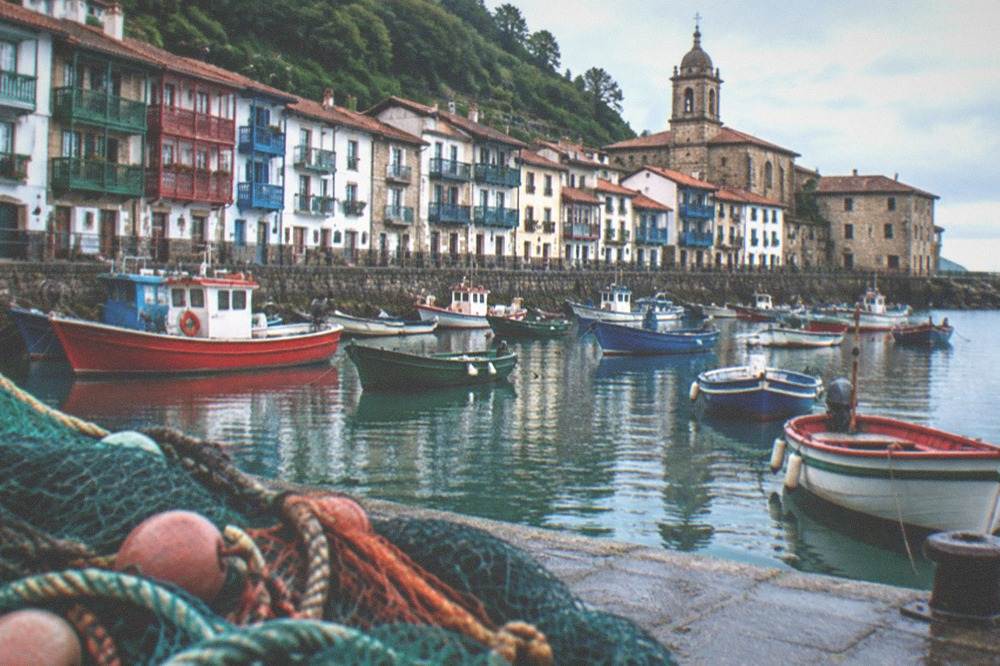
The border pairing is the third option, and it is the one our related tour covers: a coach day across to Biarritz, Bayonne and Saint-Jean-de-Luz. It shares no sights with Gaztelugatxe, so it works as a second day trip rather than a substitute, and the French Basque Country guide and the Biarritz day trip page cover it in depth.
What Does A Guided Gaztelugatxe Day Trip From San Sebastian Include?
A guided day trip from San Sebastián includes the road transport to the hermitage and back, a guide for the group, and in the standard pairing the continuation to Bilbao and the Guggenheim, with the listing stating the exact duration, price and meeting point. The small-group Gaztelugatxe and Bilbao excursion runs from the bus station area of the city. What is never included is a boat to the islet, because there is none: every visitor, guided or independent, walks the bridge and the steps.
The value of the guide on this particular route is local knowledge rather than access. The coast road has viewpoints and timing decisions that a first-time visitor will not know, and the excursion's schedule is built around the hermitage in the better morning light. The listing states the language options, the group size and the cancellation terms, and booking is through the operator's live listing.
For visitors who prefer the coast over the city on their day out, the Zarautz, Getaria and Zumaia half-day is the alternative excursion, and it covers the Gipuzkoa shore by vehicle with a guide. The Getaria guide and the Zumaia flysch guide describe what each stop holds.
What Should You Bring For The Gaztelugatxe Walk?
Bring walking shoes with grip, a rain jacket in every season, water, and layers for wind, because the path to the hermitage is exposed stone on an Atlantic headland and the Igeldo climate normals record 1,507 mm of rain a year across 141 rain days in this region. Sun cream matters too: July averages 196 sun hours and the path has no shade. Nothing technical is needed, the bridge and steps are built walkways, but wet stone underfoot is the main hazard.
The rain figures deserve respect, not fear. The table earlier on this page shows the pattern: the driest month, July, still averages 86 mm of rain over 9.8 rain days, and no month on this coast averages under that. A morning that starts clear can turn, and the walkway has no shelter between the carpark and the hermitage. The locals' rule, which the whole Basque coast lives by, is that the jacket goes in the bag even when the sky is blue.
Wind is the second factor. The islet stands in open Atlantic, and the crossing bridge funnels the breeze. A cap that fits in a pocket beats an umbrella, which the wind will win. Footwear is the one piece of kit that genuinely changes the day: the steps are worn stone, and trainers with flat soles are noticeably worse than anything with tread once the surface is damp.
Back in San Sebastián, the seasonal rules below govern what is open when you return, and they matter if your day trip shares a visit with a beach afternoon or an island boat.
| What | Season rule from the official pages |
|---|---|
| Beach lifeguards, all three city beaches | 1 June to 30 September; 10:00 to 20:00 from 15 June to 15 September |
| Santa Clara island boats | High season 1 June to 30 September, plus Easter and long weekends |
| Hondalea, the lighthouse installation | 1 June to 30 September, 11:00 to 18:30, free, no booking needed for the visit itself |
| Monte Urgull access | 1 May to 30 September 08:00 to 21:00; 1 October to 30 April 08:00 to 19:30 |
| Monte Igueldo funicular | Runs every 15 minutes when operating; downhill-only tickets are not sold, and rides close on rainy days |
One planning note that belongs to the whole region rather than the walk: a Gipuzkoa law, Norma Foral 3/2026, creates a tourist tax on paid accommodation from 1 January 2027, with bands of up to 6.50 EUR per person per night at the top category and at most 6 nights charged per stay, and under 18s exempt. Nothing is charged before that date.
Common Questions About Gaztelugatxe
Where exactly is San Juan de Gaztelugatxe?
It stands on a rocky islet on the Bizkaia coast of the Basque Country, Spain, west of San Sebastián on the stretch of shore you cross travelling towards Bilbao. It is not inside the city or the province of Gipuzkoa, which is why the standard visit is a day trip.
Can you reach Gaztelugatxe by public transport from San Sebastian?
Not directly. There is no train or bus to the site itself, so the practical options are an organised excursion from the city or a self-drive day along the coast road, parking at the site and walking out to the islet.
Is Gaztelugatxe the same place as the Dragonstone castle location?
The site served as a filming location for a major television series, and that question, including what was filmed and where the shots were taken, has its own dedicated page: see what was filmed at Gaztelugatxe.
Is the walk to the hermitage difficult?
The path is a built walkway of stone steps and a bridge, not a hike, but it is exposed to wind and rain and there is no shade. Shoes with grip and a rain jacket are the two items that matter most, and the walk's timing is covered on the dedicated page about how long it takes to walk to Gaztelugatxe.
Can you visit Gaztelugatxe and Bilbao in one day from San Sebastian?
Yes, and that is the standard pairing: the small-group excursion visits the hermitage and then continues to Bilbao and the Guggenheim, with the listing stating the full duration and departure point. Independent drivers can follow the same shape with their own timing.
Do you need to book Gaztelugatxe in advance?
The booking question, including what a ticket covers and when advance reservation matters in the busy season, has its own answer page: read do you need a ticket for Gaztelugatxe.
Where Should You Head After Gaztelugatxe?
The natural next step after Gaztelugatxe is either deeper into the Basque coast or across the French border: the Gipuzkoa shore towns of Zumaia, Getaria and Zarautz on one side, Hondarribia and the French Basque Country on the other, or a second day in Bilbao itself. Visitors with more time in the city can also work through the full list of things to do in San Sebastián, which anchors every day trip on this site.
The coast east of the hermitage rewards a slow second day. Zumaia's flysch, the layered rock walls inside the Basque Coast Geopark, is the geological counterpart to Gaztelugatxe's human landmark, and Getaria pairs the Balenciaga museum with the txakoli bodegas that supply the region's white wine. Hondarribia, on the estuary at the French border, is the third classic: a walled old quarter and a row of coloured fishermen's houses, close enough to France that the Saint-Jean-de-Luz guide continues the story across the river. The full round-up of things to do in San Sebastian ties every one of these days together.
Whichever direction you take, treat the hermitage as the anchor of a coast that deserves more than one day. The islet is the image everyone takes home, but the road between it and San Sebastián holds the flysch, the fishing towns, the txakoli and the border, and the excursion listings on this page cover each pairing with the schedule, price and departure point stated by the operator. Choose the pairing that matches your days in the city, book through the operator's live listing, and keep the rain jacket in the bag whatever the forecast says.