Cristina Enea Park
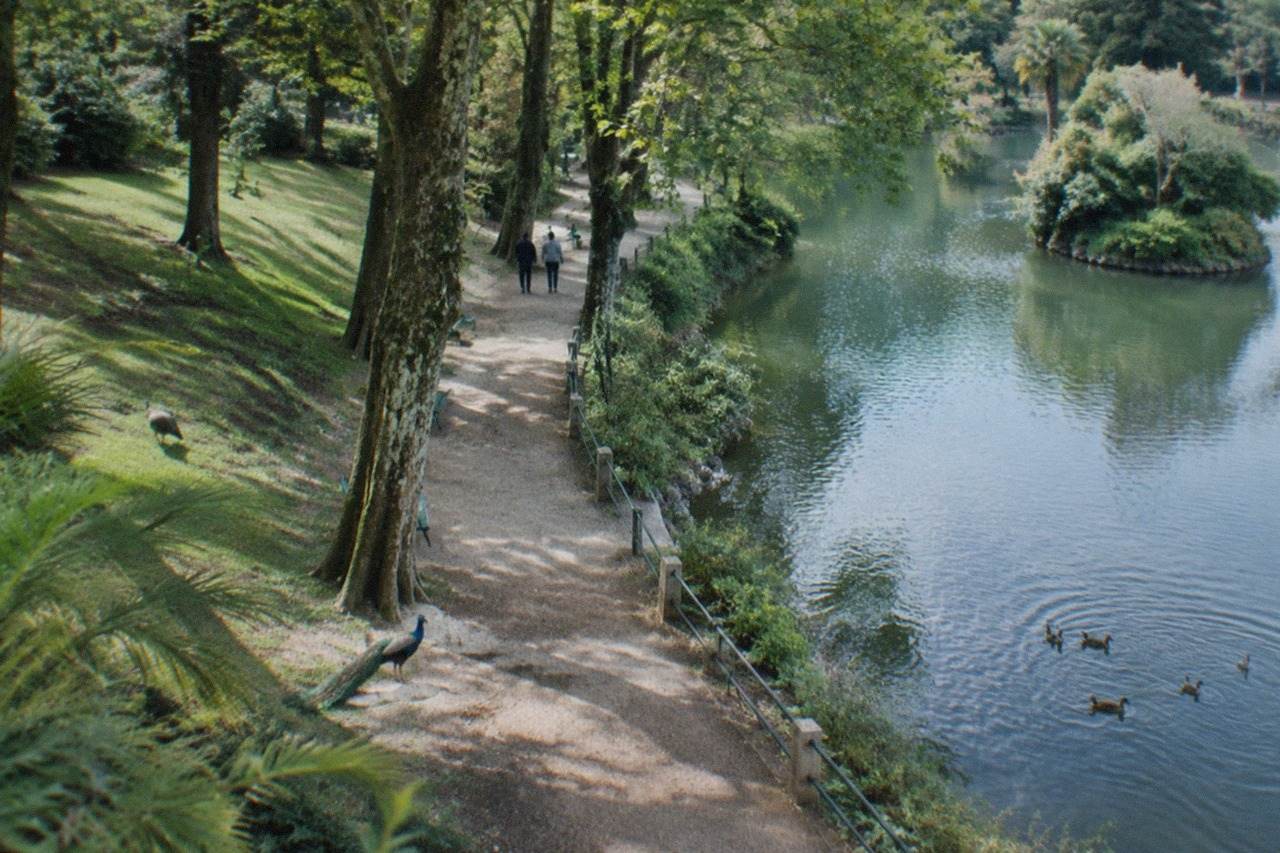
Cristina Enea Park is a small historic garden on the east side of San Sebastián, in the Basque Country, Spain, a quiet green pocket a short distance from the Urumea river and the city centre, known for its mature trees, its pond and its resident waterfowl.
Short answer
Cristina Enea Park is a free public garden in San Sebastián, Spain, between the Urumea river and the Egia district. It is open-air, needs no ticket and is most often visited as a calm half hour between the centre and the beaches.
Cristina Enea Park is a free public garden in San Sebastián, in the Basque Country, Spain, the city on La Concha bay whose official name is Donostia / San Sebastián. Donostia is the city's Basque name, and Cristina Enea is one of its Basque-named places: "Enea" is a Basque ending meaning "ours", attached here to a personal name, in the same naming tradition that produced nearby mansions and palaces along the Urumea. The park sits on the east side of the river valley, between the water and the Egia district, and it works as the city's calmest patch of mature green, a place where the Belle Epoque street plan gives way to trees, a pond, winding gravel paths and waterfowl. It costs nothing to enter, it holds no ticket desk, and it asks nothing of a visitor except that they walk.
Many people arrive at Cristina Enea by accident, on the walk between the centre and the Tabakalera cultural building or the Egia side of the river, and then stay longer than planned. That is the right way to use it. This page lays out what the park is, what is inside it, how to reach it, when the weather is kindest, what surrounds it and how it fits into a day in the city, with the seasonal rules and the verified prices of everything nearby.
What Is Cristina Enea Park In San Sebastian?
Cristina Enea Park is a small landscaped public garden in San Sebastián, Basque Country, Spain, on the east bank of the Urumea river, laid out in the romantic garden tradition with mature trees, a pond with waterfowl, gravel paths and lawns. It is free to enter, it has no fence, no ticket and no closing kiosk, and it functions as the city's quietest green room, a contrast to the busy seafront of La Concha and the pintxo bars of the Parte Vieja.
The park belongs to the same family of nineteenth-century urban gardens as the grounds that run down from Miramar Palace to the bay: planted shade, water, and paths built for strolling rather than for sport. Its character is intimate. Where Monte Igueldo gives a funicular, an amusement park and a view from 250 metres up, and Monte Urgull gives a fortress hill with the Casa de la Historia near its summit, Cristina Enea gives none of that. It gives benches, ducks and peacocks, tall trees over a pond, and the sound of a city muffled by leaves.
That contrast is the park's value. San Sebastián is a compact city of about 189,866 registered residents, and its pressure points, the beach, the Old Town, the Boulevard, sit within a short radius of each other. A green space with no attraction inside it, no queue and no price is rare in that radius, which is why locals treat it as a shortcut worth detouring for and why it appears on the walking routes of guides who know the city's geography.
It is also a park that photographs quietly. The pond, the waterfowl and the tree canopy make it one of the softer entries on any list of San Sebastian photography spots, a place for portraits and dappled light rather than panoramas. If the plan for the day is built around the main sights, Cristina Enea is the half hour between two of them, not a destination that displaces one.
Where Is Cristina Enea Park And How Do You Get There?
Cristina Enea Park stands on the east side of the Urumea river in San Sebastián, Spain, between the riverbank and the Egia district, with the Tabakalera cultural building on the same side of the water. The city bus network reaches the surrounding streets, a single-journey dBus ticket paid in cash to the driver costs 1.95 EUR, and the same journey on a MUGI anonymous card costs 0.78 EUR, so the park is reachable for less than two euros from anywhere on a city bus route.
The geography is simple. The Urumea runs north through the city into the bay, and the bridges across it connect the centre to Egia. Cristina Enea sits inland of that crossing, on rising ground above the river, which is why it feels detached from the beach grid while still belonging to the central city. The nearest well-known landmarks are the Tabakalera building, the former tobacco factory turned cultural centre with free access to the building, and the Kursaal congress centre across the water towards the mouth of the bay.
The table below sets out the transport options with the fares the operators publish for exactly these journeys.
| Option | Fare | What the source says |
|---|---|---|
| dBus city bus, occasional ticket, cash to driver | 1.95 EUR | dBus fare page; cash payment does not allow free transfers |
| dBus night ticket | 2.65 EUR | dBus fare page, special night ticket |
| MUGI anonymous card, urban 1 and 0 jumps | 0.78 EUR | MUGI tariff table |
| MUGI personalised card, urban, trips 1 to 20 in the month | 0.59 EUR | MUGI tariff table, 69.5% off band |
| On foot from the centre | No fare | The park is inside the central walking city |
One detail worth knowing: the MUGI card itself has a purchase price this site does not publish, because the operator's page read for this destination did not state one. The fares above are per-journey prices, not card prices. For a visitor making one or two bus trips, the occasional ticket at 1.95 EUR is the honest number; for a longer stay, the card fares drop to under an euro a ride.
The train is a secondary option. The Euskotren Topo line's working terminus in the city is Amara station, on the far side of the centre, and the new underground through-stations beside La Concha have no published opening date: the Basque Government announced in June 2026 that the civil works were finished and fitting-out had begun, with no date attached. A visitor should plan around Amara and the buses, not around stations that do not yet exist.
What Can You See Inside Cristina Enea Park?
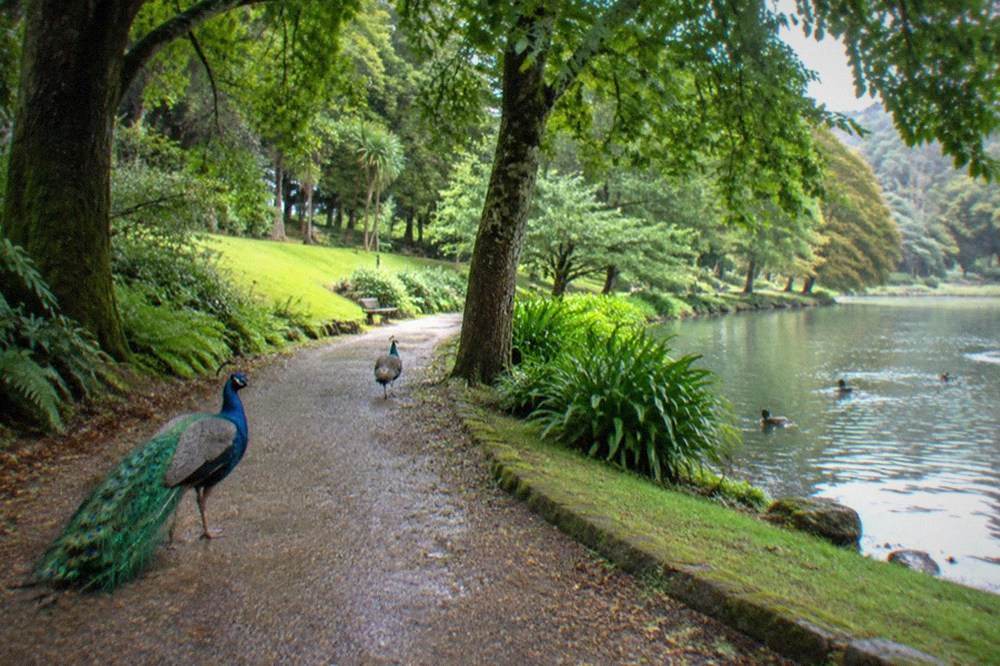
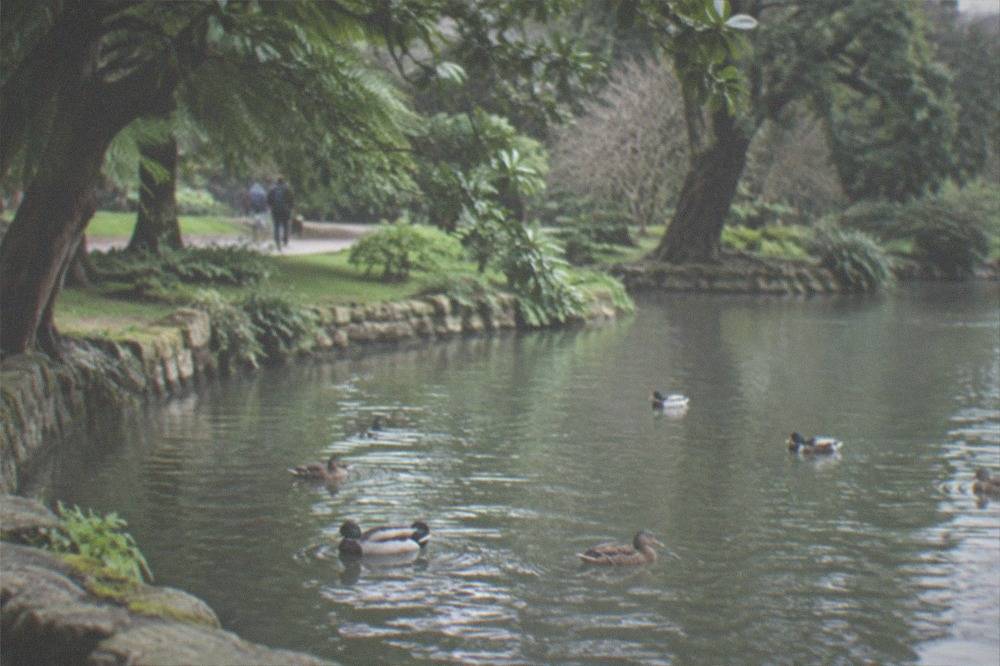
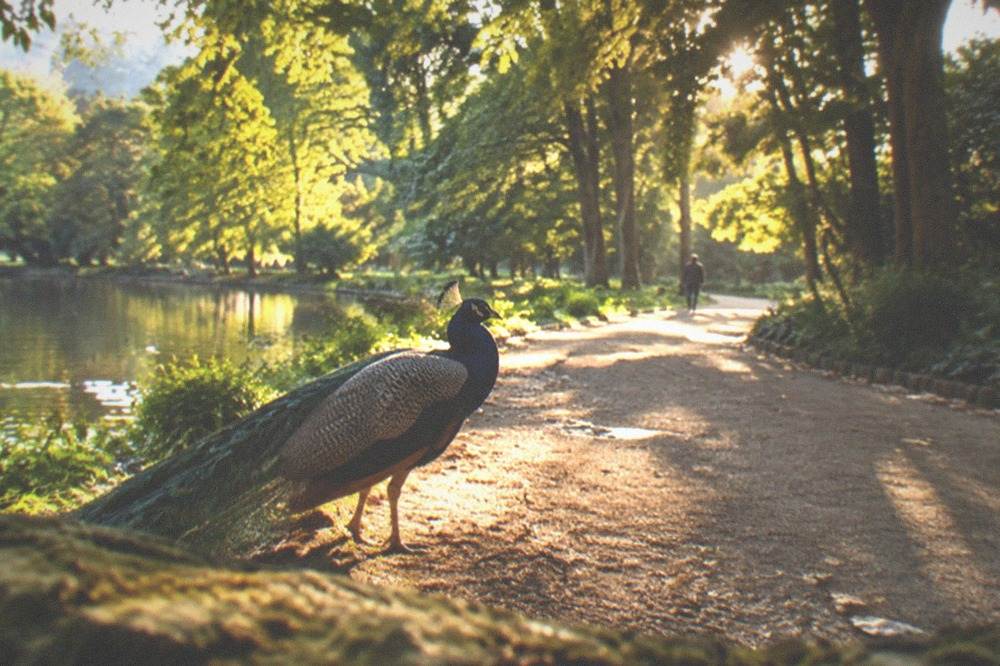
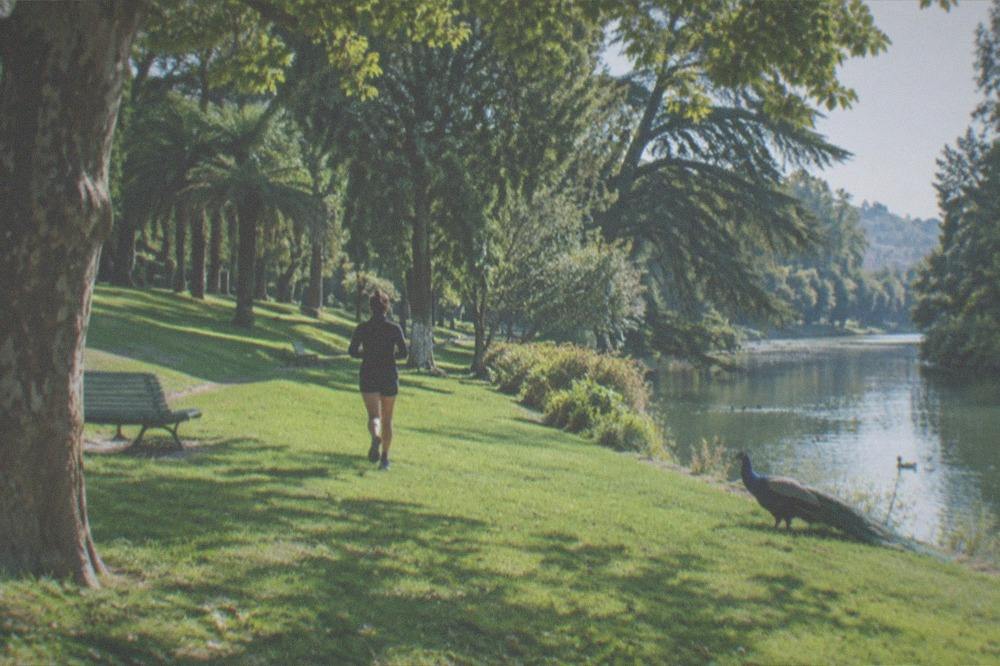
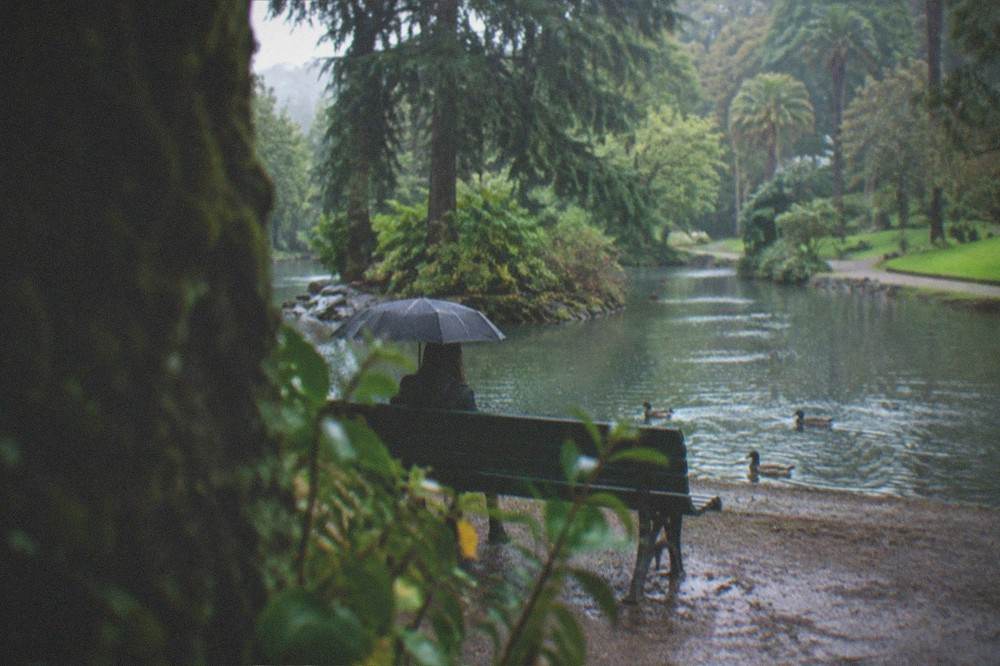
Inside Cristina Enea Park a visitor finds a pond with ducks and other waterfowl, resident peacocks that wander the lawns, tall mature trees including some of the largest in the city, gravel walking paths that loop the garden, lawns, benches and shaded corners. There is no playground headline act, no monument that dominates, no cafe inside the garden itself. The park's content is its planting and its birds, and the honest way to visit is a slow loop with no aim.
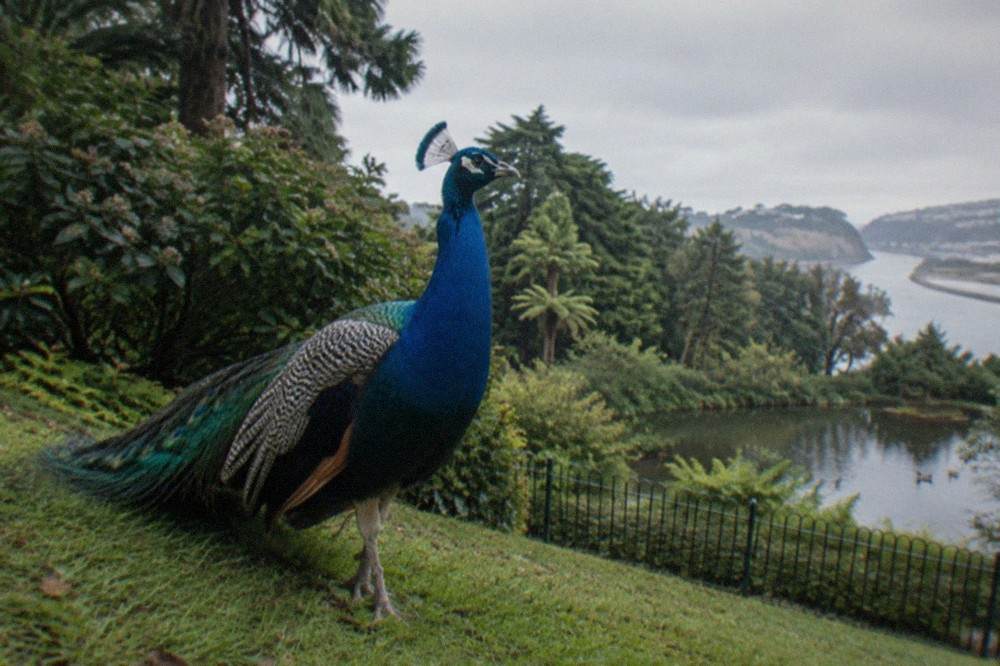
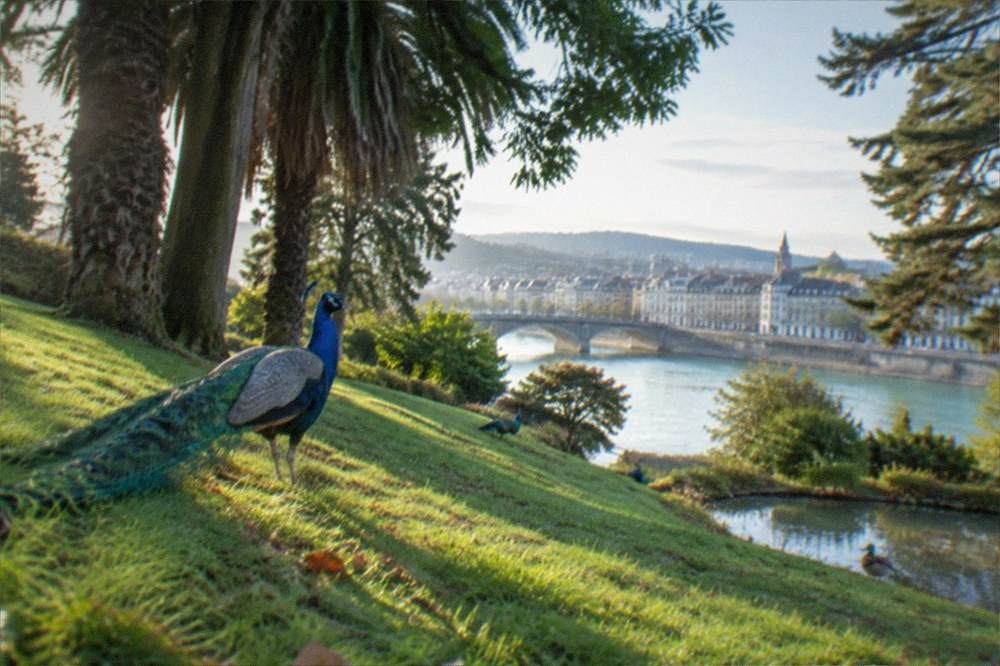
The peacocks are the park's signature. They are free-ranging within the garden, they are used to people, and they are the reason families with children detour here between heavier sights. The pond is the other anchor: a small body of water at the heart of the layout, ringed by paths, with waterfowl that are the loudest presence in the park. Around both, the tree cover does the quiet work. The garden holds specimens old enough that the canopy closes over the paths in summer, which matters in a city where August averages 19.5 degrees mean temperature but also 117 mm of rain, and where shade is the difference between a comfortable walk and a hot one.
The table below summarises what the park contains and what each element offers a visitor, so the loop can be planned around interests rather than walked blind.
| Element of the park | What it is | Who it serves best |
|---|---|---|
| The pond | Central water feature with resident ducks and waterfowl | Families, photographers, anyone stopping more than ten minutes |
| The peacocks | Free-ranging birds on the lawns and paths | Children and first-time visitors |
| The tree canopy | Mature ornamental and shade trees over the main paths | Summer visitors, shade seekers, portrait photographers |
| The gravel path network | Looping paths through the garden, gentle gradients | Walkers cutting between the centre and Egia |
| The lawns and benches | Open grass and seating under the trees | Picnics, reading, rest between sights |
A practical note on etiquette: the peacocks are the park's, not the visitor's. Feeding them, chasing them for a photograph or handling the waterfowl is against the spirit of a small urban garden and against the posted rules of managed green spaces generally. The right visit is a passive one. Look, sit, walk on.
For visitors who want more than a garden, the surrounding blocks carry the weight. The Tabakalera building is free to enter, open Tuesday to Sunday and holidays from 10:00 to 21:00, closed Mondays, with its exhibition halls on floors 0 and 1 open Tuesday to Sunday and holidays from 11:00 to 13:00 and 16:00 to 20:00. The Tabakalera guide covers it in full, and the pairing, garden then gallery, is the natural hour on the Egia side of the river.
When Is The Best Time To Visit Cristina Enea Park?
The best time to visit Cristina Enea Park is between May and September, when the mean temperature runs from 14.4 to 19.5 degrees and the canopy is in full leaf. July is the driest month at 86 mm of rain and May gives 181 hours of sun. The park is open-air and free year round, but November is the wettest month at 169 mm over 13 rain days, so a garden visit then is a matter of luck between showers.
The climate record matters more for a park than for any indoor sight, because a park has no roof. AEMET's normals for its Igeldo station, which sits 250 metres up on Monte Igeldo so the seafront runs slightly warmer than these values, give the full picture for a garden visit.
| Month | Mean C | Rain mm | Rain days 1 mm+ | Sun hours |
|---|---|---|---|---|
| Jan | 8.5 | 141 | 13.2 | 98 |
| Feb | 8.7 | 110 | 11.6 | 107 |
| Mar | 10.3 | 113 | 12.4 | 144 |
| Apr | 11.3 | 138 | 13.4 | 157 |
| May | 14.4 | 120 | 12.2 | 181 |
| Jun | 16.9 | 90 | 10.6 | 189 |
| Jul | 18.9 | 86 | 9.8 | 196 |
| Aug | 19.5 | 117 | 10.5 | 190 |
| Sep | 18.0 | 111 | 10.1 | 179 |
| Oct | 15.5 | 159 | 11.8 | 140 |
| Nov | 11.3 | 169 | 13.0 | 102 |
| Dec | 9.1 | 151 | 12.4 | 93 |
Read the table honestly. This is a wet Atlantic city: 1,507 mm a year over 141 rain days, and no month averages under 86 mm. July is the driest single month and still carries rain on about ten days. August, the warmest month, is wetter than June, July or September. What the table gives a park visitor is not a promise of dryness but a ranking of odds: June and July are the statistically kindest pairing of warmth and low rainfall, September keeps the warmth at 18.0 degrees mean while adding only a little rain over June, and October to January is when the umbrella earns its place in the bag.
Time of day matters as much as month. The park is at its best in the hours either side of midday in the cooler months, when the sun reaches the lawns, and in the morning in summer, before the heat builds on the unshaded walks of the seafront. There is no crowd problem to plan around: this is not La Concha on an August afternoon. The monthly rhythm of the city's hotel stays, 245,769 overnight stays in August 2025 against 115,910 in January, shows when visitor pressure peaks, and a garden away from the beach barely feels it.
Is Cristina Enea Park Free To Visit?
Yes, Cristina Enea Park is free to enter, with no ticket, no desk and no charge of any kind, because it is an unfenced public garden in the middle of San Sebastián, Spain. Everything a visitor does inside it, walking the paths, sitting on the lawns, watching the peacocks and the pond, costs nothing. The only money a visit can involve is the transport to reach it, and a single dBus journey paid in cash costs 1.95 EUR.
This makes it one of the entries that carries a genuine zero in a city whose headline attractions are mixed on price. The table below places it against nearby sights whose own pages publish their prices, so a day's budget can be planned around it. The wider set of guides lives on San Sebastian Spain Guide.
| Place | Entry cost | Source detail |
|---|---|---|
| Cristina Enea Park | Free | Public garden, no ticket |
| Tabakalera building | Free access | Own site, closed Mondays |
| San Telmo Museoa | 10.00 EUR general, 4.00 EUR reduced, free every Tuesday | Own site, winter and summer hours differ |
| Monte Igueldo funicular, return | 5.50 EUR adult, 2.50 EUR child up to 7 | Own site, ticket includes entry to the grounds |
| Monte Igueldo grounds and viewpoint, on foot or by vehicle | 3.00 EUR per person | Own site |
| Chillida Leku, Hernani | 14 EUR adults, 10 EUR groups, students and over 65, 7 EUR under 18 | Own site, closed Tuesdays and Wednesdays |
Two cautions on that table. First, Monte Igueldo sells no downhill-only funicular ticket, so the idea of walking up and riding down does not work; the return fare is the fare. Second, the free Tuesday at San Telmo is the single best free-culture slot in the city, and it pairs naturally with a free morning in the garden on the same day of the week.
Free does not mean without rules. The park is a managed green space: dogs, cycling and ball games follow the city's general park rules rather than a visitor's preference, and the seasonal notices posted at the entrances are the authority on the day. The city council's parks pages, not this site, are where the current detail lives.
What Is Near Cristina Enea Park In San Sebastian?
The neighbours that matter most around Cristina Enea Park are the Tabakalera cultural building beside it on the Egia side of the Urumea, the Kursaal congress centre by the river mouth, the Buen Pastor cathedral back across the water in the centre, and the riverbank walk that connects them, with La Concha beach and the Old Town a short distance further west. The park works best as the green pause inside a walking circuit taking in a gallery, a riverbank and a cathedral in one loop.
The circuit works in either direction. East to west: start in the park, cross to the centre, pass the Buen Pastor cathedral, whose year, spire height and visiting hours this site does not publish because no official page states them, and continue to the Boulevard and the Old Town. West to east: do the heavy sights first, the La Concha beach, the Old Town, the aquarium, and finish with the garden when legs want shade and a bench.
The table below lists the walkable neighbours in the order a loop naturally visits them, with the verified detail that matters for each.
| Neighbour | What it is | Detail that matters |
|---|---|---|
| Tabakalera | Cultural centre in the former tobacco factory | Free access, closed Mondays, halls open 11:00 to 13:00 and 16:00 to 20:00 |
| Kursaal | Congress centre and concert halls by the river mouth | Rafael Moneo's design, chosen in 1990, inaugurated 23 August 1999 |
| Buen Pastor cathedral | The centre's main church | No visiting hours or admission figure published on an official page |
| Urumea riverbank | The walk along the water toward the bay | Open-air, free, part of the central walking city |
| La Concha beach | The main city beach, 1,350 m long | Lifeguards 1 June to 30 September only |
| Monte Urgull | The fortress hill between the Old Town and the bay | 08:00 to 21:00 from 1 May to 30 September, 08:00 to 19:30 from 1 October to 30 April |
The seasonal column in that table is not decoration. The lifeguard season on all three city beaches runs 1 June to 30 September, with hours of 10:00 to 20:00 from 15 June to 15 September and 13:30 to 19:30 from 16 to 30 September. Monte Urgull closes at night, earlier in winter. The island boat's high season is 1 June to 30 September. A visitor building a day around the park and the bay in October is getting a city with different operating hours than the one in August, and the garden, alone among these, changes nothing.
For visitors stretching the radius, the green options scale up. Monte Igueldo gives the funicular and the panorama from the west, Monte Urgull gives history and the best view down onto La Concha, and Miramar Palace, built in 1893 at the request of Queen María Cristina and designed by the English architect Selden Wornum, gives gardens that run down to the sea. Cristina Enea is the smallest and the calmest of the city's green set, and that is exactly its role.
Can You Combine The Park With A Guided Tour Of San Sebastian?
Yes, Cristina Enea Park combines well with a guided tour, because the walking tours of the historic centre start and finish within the central radius the park belongs to, and the park works as the quiet half hour before or after a guided walk. A visitor who takes a guided walk in the morning, eats pintxos at midday and spends the early afternoon in the garden and the Tabakalera has a full day that never rushes.
The natural pairing is a city walking tour, and the roster's own listing for the must-see walk describes a walk of the historic centre with a small group or a private option. The walking tours guide covers the full range, from the paid walks to the free, tip-based GuruWalk tours, which this site names plainly because they are free or pay what you want and are not its product: the historic free tour with a radioguide starts at Plaza Cervantes, and the English-only "Explore Donostia: Your First Adventure" walk starts at the Buen Pastor cathedral, which is itself on the park's circuit.
For a visitor who prefers wheels to footsteps, the bike options fit the same geography. The city is flat end to end along the bay, which is what the bike tour listings describe, and a small-group electric bike tour over the city's bike-lane network passes through the central districts the park sits among. You can Check availability for the small-group e-bike tour, or read the bike tours guide for the full comparison of the regular and electric options.
The honest framing is this: no tour goes to Cristina Enea, and none needs to. A garden with peacocks and a pond explains itself. What a tour adds is everything around it, the Old Town's street logic, the story of the city's destruction and rebuilding, the Belle Epoque expansion, the reasons the city looks the way it does. Do the tour, then keep the garden for the unplanned hour.
Common Questions About Cristina Enea Park
Is Cristina Enea Park free?
Yes. It is an unfenced public garden in San Sebastián with no ticket, no desk and no charge of any kind. The only cost a visit can involve is the transport to reach it, and a single dBus journey paid in cash to the driver is 1.95 EUR.
Where is Cristina Enea Park in San Sebastian?
It stands on the east side of the Urumea river, between the riverbank and the Egia district, a short distance from the Tabakalera cultural building and the bridges that connect the centre to the east of the city.
Are there peacocks in Cristina Enea Park?
Yes. Free-ranging peacocks and a pond with ducks and other waterfowl are the park's best-known features. They are accustomed to visitors, but feeding or chasing them is against the spirit and the posted rules of a managed city garden.
When is the best month to visit Cristina Enea Park?
June and July give the kindest statistics, with July the driest month at 86 mm of rain and June at 90 mm, and mean temperatures of 16.9 and 18.9 degrees. September stays warm at 18.0 degrees. November is the wettest month at 169 mm, and no month in the city's record averages under 86 mm.
Can you combine Cristina Enea Park with Tabakalera?
Yes, and it is the natural pairing. The Tabakalera building is beside the park on the same side of the river, admission to the building is free, it is open Tuesday to Sunday and holidays from 10:00 to 21:00, and it is closed on Mondays.
Is Cristina Enea Park good for children?
Yes, mainly because of the peacocks and the pond. It is a calm garden rather than a playground, so it works best as a short stop inside a day that carries bigger sights, not as the day's main event.
How Should You Plan A Visit To Cristina Enea Park?
Plan Cristina Enea Park as a free half hour inside a walking day, not as a destination: arrive on foot or by city bus, walk the loop past the pond and the peacocks, sit under the canopy if the weather allows, and step out to the Tabakalera or back across the river toward the centre. Visit between May and September for the best odds of warmth and the fullest leaf cover, keep an umbrella in every month, and spend nothing except, at most, a 1.95 EUR bus fare.
The park rewards low expectations and punishes none. A visitor who arrives wanting a spectacle will be disappointed by a garden; a visitor who arrives wanting ten quiet minutes between the Kursaal and the cathedral will get exactly that, with peacocks. In a city whose headline acts are a beach, a bay, a funicular and more Michelin-starred kitchens than almost anywhere in Spain, the smallest green space in the centre asks the least and gives the calmest hour of the day, and that is a fair trade for anyone's itinerary.