San Sebastian Photography Spots And Viewpoints
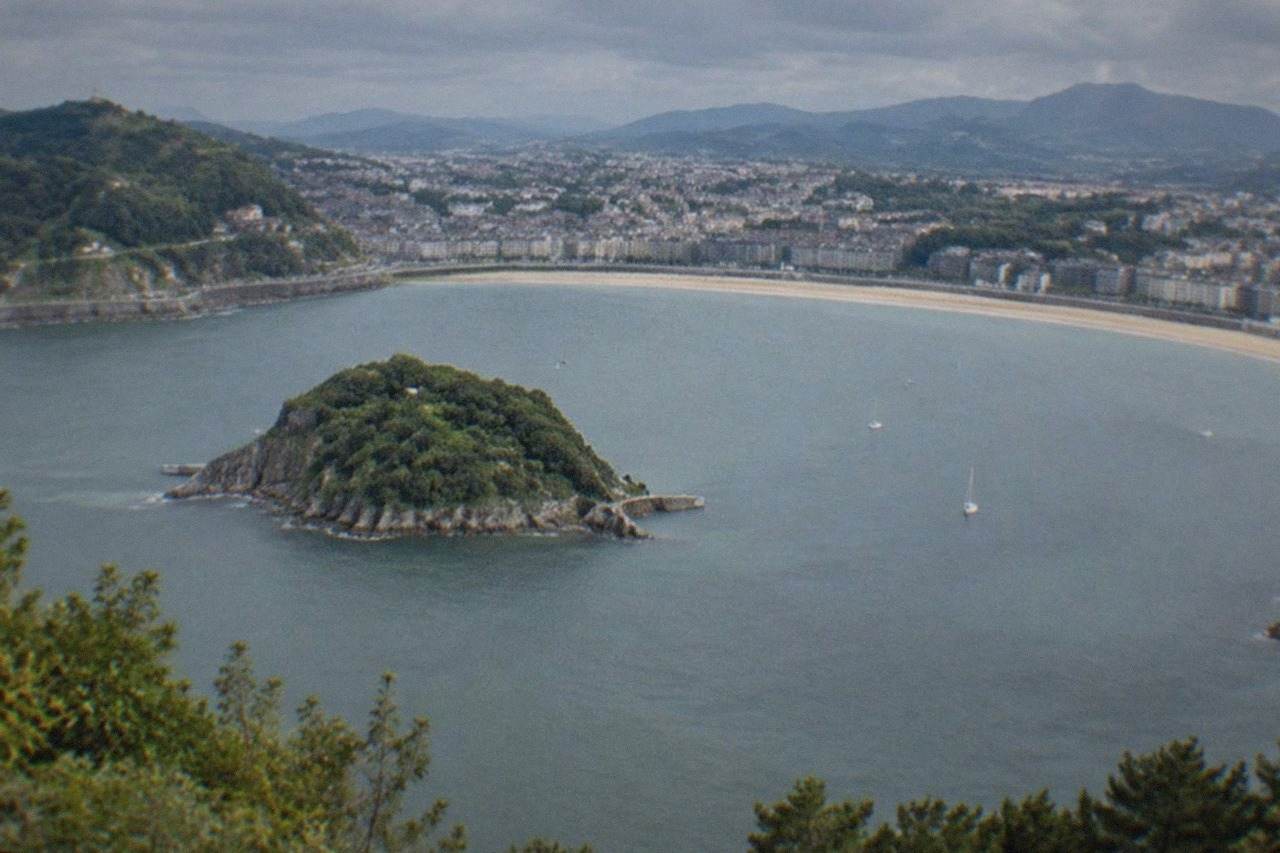
San Sebastián, in the Basque Country of Spain, is a city built around a single photographic subject: the shell-shaped bay of La Concha, framed by two hills and an island.
Short answer
The best photography spots in San Sebastián are the Monte Igueldo funicular viewpoint, the Peine del Viento at the west end of Ondarreta, the Monte Urgull path up from the Old Town, the Zurriola beach and Kursaal side of the river, and the island of Santa Clara, reached by boat from the harbour.
San Sebastián, in the Basque Country of Spain, is a city built around a single photographic subject: the shell-shaped bay of La Concha, framed by two hills and an island. The city's official name is Donostia / San Sebastián, and Donostia is the Basque name you will hear on the street. Its population on the municipal register at 1 January 2025 was 189,866, which makes it a small city with an outsized share of postcard viewpoints, and nearly all of them sit within a walk or a short ride of one another. This page lays out where the frames are, what each one costs or when it opens, and how the Atlantic light and rain shape the shooting day.
Where Are The Best Photography Spots In San Sebastian?
The best photography spots in San Sebastián are the Monte Igueldo funicular viewpoint above the west end of the bay, the Peine del Viento sculptures at the end of Ondarreta, the Monte Urgull slopes above the Old Town, the Kursaal and Zurriola side of the River Urumea, and Santa Clara island itself, reached by boat from the harbour. Each one frames the same bay from a different height and angle, and together they cover the classic shots of the city.
Two hills close the bay, Monte Igueldo on the west and Monte Urgull on the east, and the island of Santa Clara sits in the middle of the water. Every wide shot of the city is some arrangement of those three plus the beach. The tourism board describes La Concha as a sandy, shallow beach where the tide often limits the usable area, and the council gives it a mean length of 1,350 metres, which is the curve that carries the whole composition. If you want the city in one frame, you go high; if you want the texture, you stay low and work the promenade, the rails and the sand.
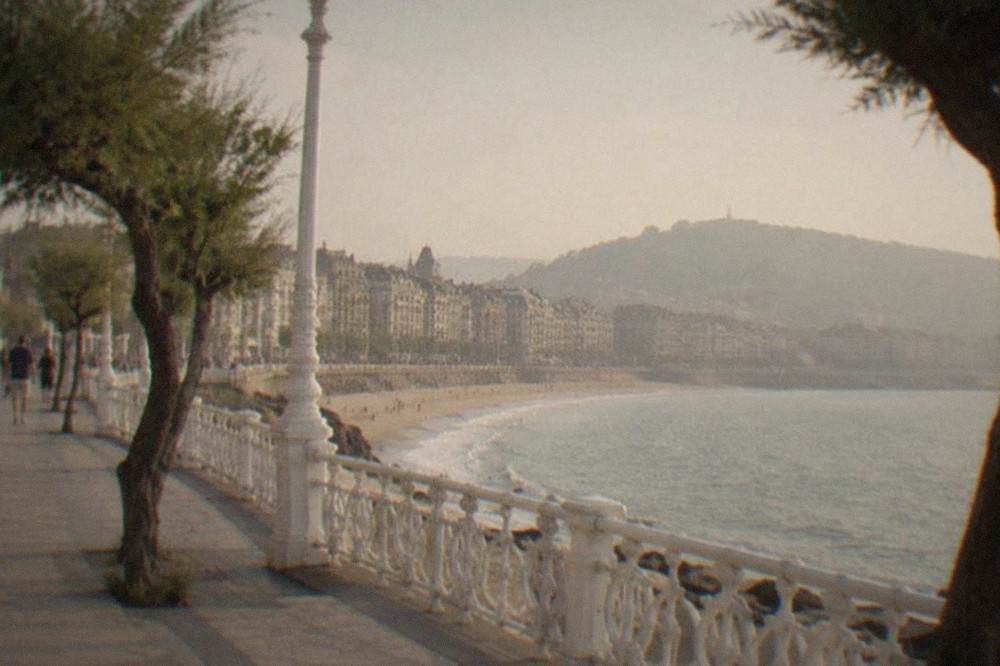
The table below is the working shortlist: where each spot is, what it photographs best, and what it costs or when it runs, using the figures each venue or operator publishes itself.
| Spot | What it photographs best | Access and cost |
|---|---|---|
| Monte Igueldo viewpoint | The full bay curve, island, both hills | Funicular return 5.50 EUR adult, 2.50 EUR child; ticket includes grounds entry |
| Peine del Viento | Steel sculptures against breaking Atlantic waves | Free, at the west end of Ondarreta beach |
| Monte Urgull | Old Town rooftops, the bay from the east | Free; open 08:00 to 21:00 from 1 May to 30 September, to 19:30 from 1 October to 30 April |
| Santa Clara island | The city skyline seen from the water | Boat 5 EUR return in high season, weather permitting |
| Kursaal and Zurriola | Modern architecture, surf, river mouth | Free, on foot across the river |
| La Concha promenade | The railing, the bay, the island | Free, the whole length of the beach |
For a first visit, the sequence that works is low then high: shoot the promenade railing early, take the funicular up for the wide bay frame in the afternoon, and finish on Urgull at sunset looking back at the whole city. If you are planning a longer stay, the how many days in San Sebastian question is worth settling first, because each of these spots rewards a different hour and a rushed day forces you to shoot them all in the same flat light.
What Can You Photograph From Monte Igueldo?
Monte Igueldo gives the single most complete view of San Sebastián: the entire 1,350 metre curve of La Concha, Ondarreta, Santa Clara island and Monte Urgull in one frame from the top. The funicular that carries you up opened on 25 August 1912, and the tourism board calls it the oldest in the Basque Country. A return ticket costs 5.50 EUR for an adult and 2.50 EUR for a child up to 7 years, and it includes entry to the grounds at the top.
The funicular's own site lists the fares and the detail that matters to a photographer: the return ticket includes entry to the grounds and viewpoint, while arriving by vehicle or on foot costs 3.00 EUR per person for the grounds alone. It normally runs every 15 minutes, on the hour, quarter past, half past and quarter to, and more often when it is busy. One thing the home page states plainly: downhill-only funicular tickets are not on sale, so the plan of walking up for the exercise and riding down does not exist here. You buy the return, or you walk both ways.
The rides at the amusement park at the top close on rainy days, and this is a wet Atlantic city: AEMET's normals for its Igeldo station, which sits 250 metres up on this same hill, record 1,507 mm of rain a year over 141 days with at least 1 mm. Even July, the driest month, averages 86 mm over about 10 rain days. The seafront runs slightly warmer than the station values because of the altitude difference, but the rain rule holds everywhere: build a wet-weather alternative into any viewpoint plan. The San Sebastian weather page carries the full monthly table.
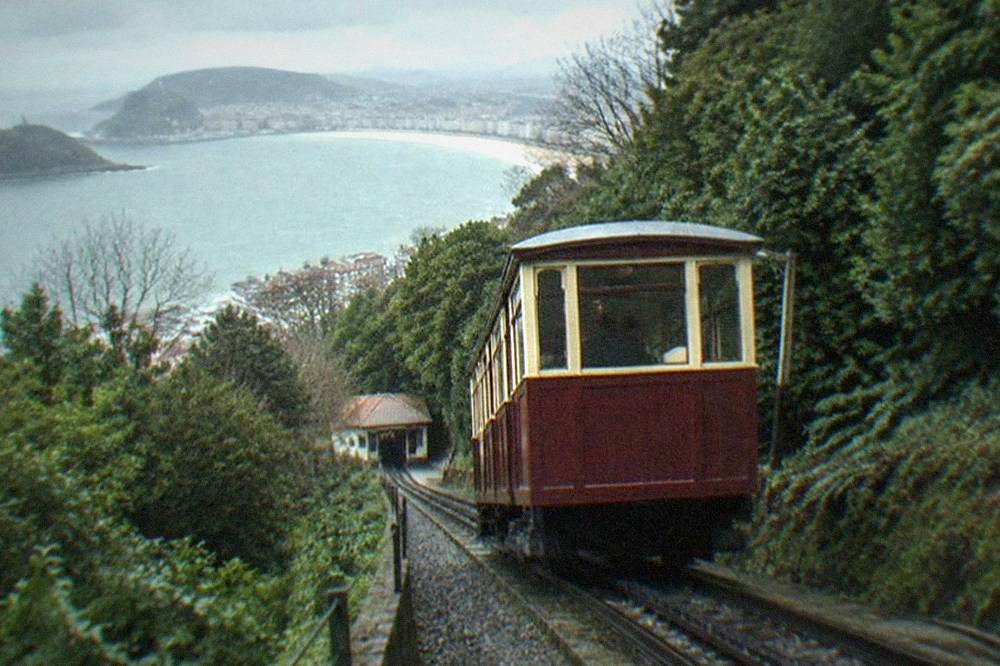
The photography itself is straightforward and rewarding. From the terrace at the top you shoot down the whole bay with a wide lens, and the curve of La Concha reads best when the tide leaves a full band of sand. The island sits centred in the frame, and Urgull with its Christ statue closes the right edge. Late afternoon gives the warm light across the water; morning leaves the city side in softer, flatter light. The amusement park's vintage rides and signage are a second, smaller subject at the top, the kind of retro detail that photographs well in the same light.
Walking down is legal and free beyond the grounds entry, but it is a long descent on a road, and the funicular's wooden cars are themselves one of the city's better close subjects: a rack railway with open timber bodies that has run since 1912. Shoot the car at the bottom station before boarding, because the top station is more crowded.
Which Bay-Level Spots Give The Classic La Concha Shots?
The classic La Concha shots come from three places: the promenade railing itself, which traces the whole beach curve; the Peine del Viento at the west end, where three steel sculptures by Eduardo Chillida meet the open Atlantic; and the water, from one of the harbour boats, which is the only angle that puts the city skyline behind the island. The railing and the sculptures are free, and the island boat costs 5 EUR return in high season.
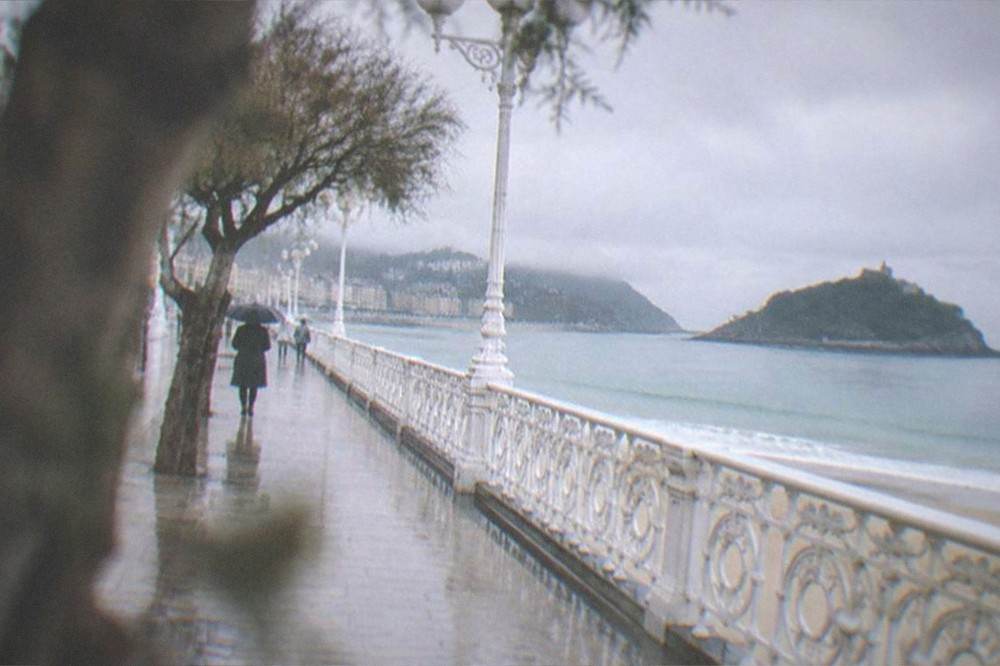
The railing is the city's most repeated motif, a white ironwork line that follows the beach for its full length. It photographs best in the first and last hour, when the sun is low enough to catch the bay, and it works as a leading line for anything walking the promenade. The council describes La Concha as sandy and shallow, with the tide often limiting usable area, which means the beach itself changes shape through the day: a wide shot at low sand and a wide shot at high water are two different photographs of the same place.
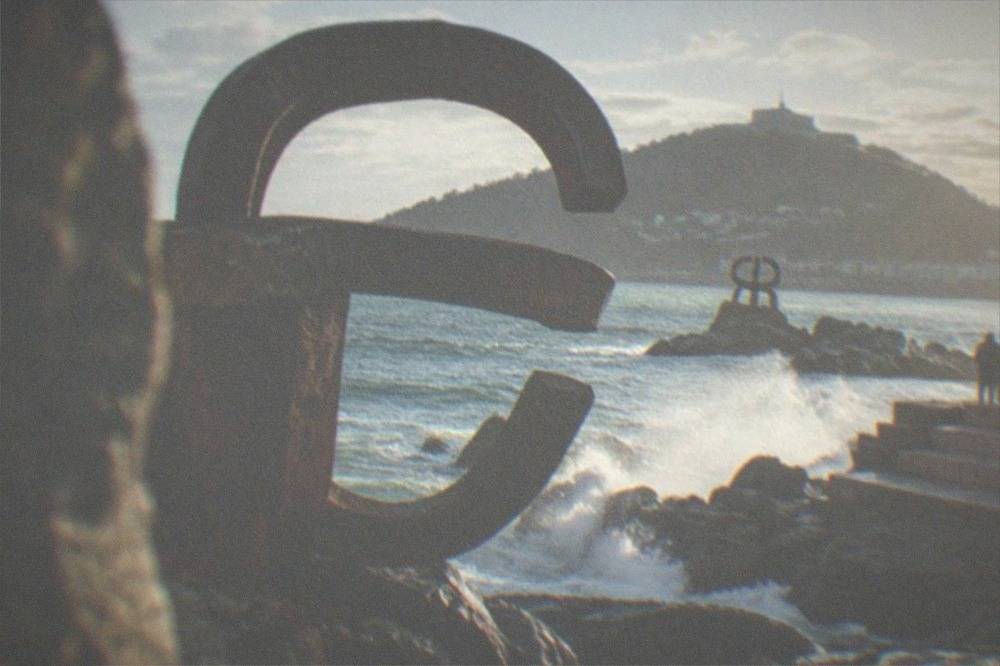
At the far west end, past Ondarreta, the Peine del Viento is the sculpture to shoot. The tourism board gives its facts plainly: three steel works of more than nine tonnes each, anchored to the rocks at the end of Monte Igueldo, created in their definitive form in 1977 and given to the city by Chillida, standing on a pink granite plaza by the Basque architect Luis Peña Ganchegui. The waves here are the subject as much as the steel: the sculptures sit where the open Atlantic hits the rocks, and on a day of swell the spray comes over the plaza. The council's Ondarreta page notes the walk to the Peine del Viento starts at that beach's west end.
The council's figures for the three beaches are worth carrying in your head, because each beach photographs differently and the sizes explain why.
| Beach | Mean length | Mean width | Character, per the council |
|---|---|---|---|
| La Concha | 1,350 m | 40 m | Sandy and shallow, tide often limits usable area |
| Ondarreta | 600 m | 100 m | Sandy, heavy use, the Peine del Viento walk starts at its west end |
| Zurriola | 800 m | 110 m | Sandy, fairly open, strong swell, remodelled in 1994 |
Zurriola, on the Gros side of the river, is the third bay-level subject and the most kinetic: the council flags its strong swell, and it is the surf beach, so the frames there are boards, waves and the Kursaal's two cubes of sandstone glass behind. The Kursaal, Rafael Moneo's building officially inaugurated on 23 August 1999 after his 1990 competition win, photographs well from the Zurriola sand and from the river mouth bridge. For the full beach picture, the San Sebastian beaches page covers all three in detail.
The water angle deserves a morning of anyone's trip. The bay boat with a stop at Santa Clara is a sailing with audio commentary and an island stop, and the ticket is valid for one day, which means you can ride out, shoot the skyline from the island, and come back on a later crossing.
The island itself is a small subject with one big view. The boat's high season runs 1 June to 30 September, plus Easter and long weekends, with departures every 30 minutes from 10:00 to 19:00, weather and sea permitting, and the last boat back from the island leaves at 20:00 in June to September. The operator sells the return at 5 EUR from the kiosk on the day. From the island's low ground you shoot the full skyline, La Concha stacked behind Urgull, and it is the only place in the city where that whole composition sits over water.
Where Do You Shoot The Old Town And The River?
The Old Town, the Parte Vieja, photographs from three heights: the slopes of Monte Urgull, which look down on its rooftops and out over the bay; the river bridges, which frame the Kursaal against the Gros side; and street level itself, where the narrow streets, the Plaza de la Constitución and the market produce the close work. Urgull is free and open 08:00 to 21:00 from 1 May to 30 September, closing at 19:30 for the winter half of the year.
Urgull is the eastern hill, the one with the Christ statue and the Castillo de la Mota at the top, and its access hours are the tourism board's: 08:00 to 21:00 in the May to September half of the year, 08:00 to 19:30 from 1 October to 30 April, and closed at night. The hill closes at sunset in practice, which is also when it photographs best, so the last hour of the opening window is the one to claim. From the upper paths the Old Town's dense roofscape fills the foreground and the bay curves away behind it, and the Castillo de la Mota holds the Casa de la Historia de Urgull, a small museum run by San Telmo.
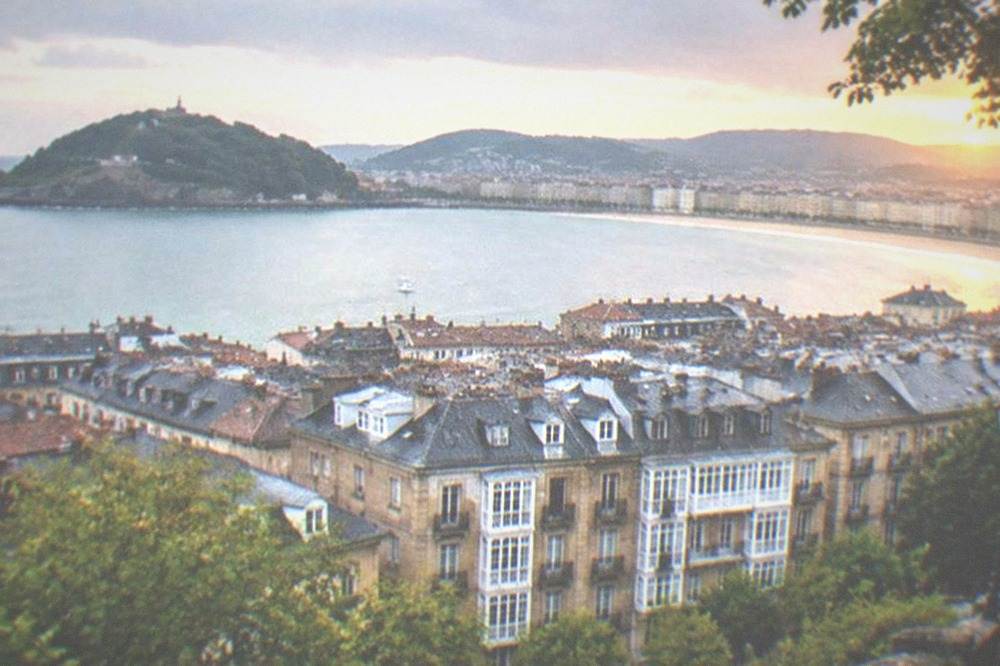
Street level in the Parte Vieja is a different discipline. The streets are narrow, the light is shafted and hard at midday, and the best hours are the soft ones at each end of the day. The Plaza de la Constitución, with its numbered balcony doors, is the classic frame, and the market, La Bretxa, gives the produce and stall work. The pintxo bars that line the same streets are the Old Town's other subject: counters loaded with gildas, txangurro and the day's specials, shot at close range in warm bar light. The pintxos in San Sebastian page explains what each of those things is, and the best pintxo bars page names where to find them.
A guided walk through the Old Town is also, incidentally, a route past most of its best corners, and the city highlights tour covers the Old Town and the Romantic Area on foot with separate English and Spanish departures.
The river side is the modern counterweight. The River Urumea runs between the Old Town and Gros, and its bridges give clean lines toward the Kursaal and the Zurriola surf. The Victoria Eugenia theatre and the Hotel María Cristina sit on the west bank upstream, and the Gros side's low rooftops and the Kursaal cubes make the strongest architectural pair in the city. Shoot the river mouth at the end of the day, when the low sun comes straight along the water.
What Light And Weather Should You Plan Around?
AEMET's normals for its Igeldo station, the period 1981 to 2010, show a city with 1,816 hours of sun a year but rain in every month: July, the driest, still averages 86 mm over about 10 rain days, and November, the wettest, averages 169 mm. Mean temperatures run from 8.5 C in January to 19.5 C in August, and the station sits 250 metres up on Monte Igeldo, so the seafront runs slightly warmer than these values.
The practical reading for a photographer is that no season is safe from rain and no season is without good light. The sun hours climb from 93 in December to 196 in July, and the rain days fall from 13.2 in January to 9.8 in July, which makes the May to September window the one most people choose. The mean daily maximum peaks at 22.5 C in August against 11.0 C in January. The best time to visit page goes into this in depth. What the table below adds is the light budget month by month, and the surprise inside it: August, the busiest month, is wetter than June, July or September, at 117 mm against 90, 86 and 111.
| Month | Mean max C | Rain mm | Rain days 1 mm+ | Sun hours |
|---|---|---|---|---|
| January | 11.0 | 141 | 13.2 | 98 |
| March | 13.4 | 113 | 12.4 | 144 |
| May | 17.7 | 120 | 12.2 | 181 |
| July | 21.8 | 86 | 9.8 | 196 |
| August | 22.5 | 117 | 10.5 | 190 |
| September | 21.1 | 111 | 10.1 | 179 |
| November | 14.0 | 169 | 13.0 | 102 |
| December | 11.6 | 151 | 12.4 | 93 |
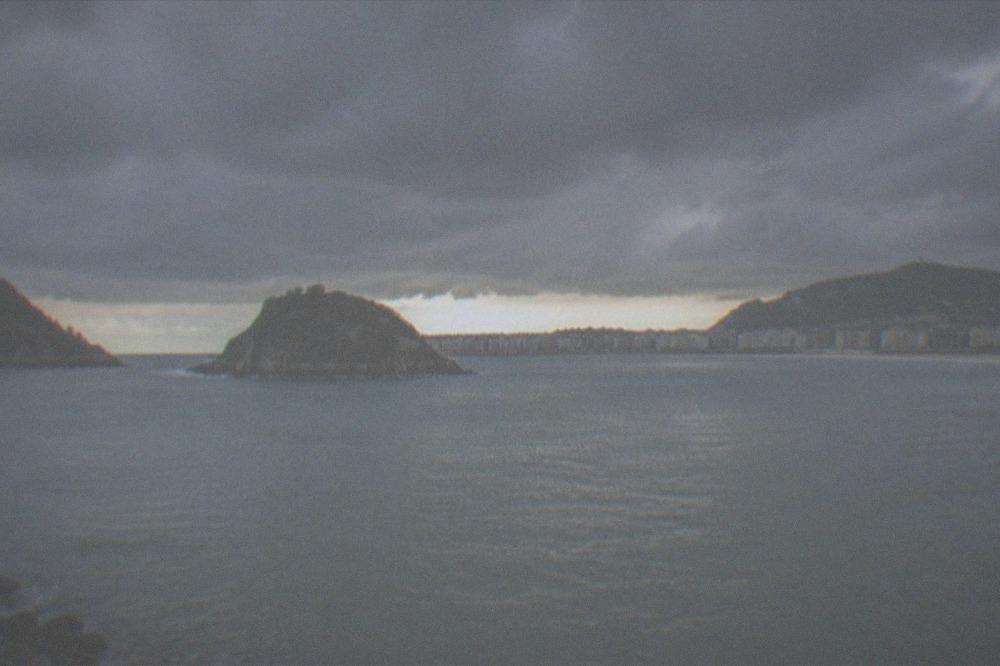
Storm light is a real asset here, not a consolation prize. Atlantic weather systems move fast, and the hours before and after a front often give the most dramatic sky of a whole week over the bay: heavy cloud over Urgull, a band of clear sky at the horizon, and white water at the Peine del Viento. The funicular rides close on rainy days, and the island boats depend on weather and sea, so on a wet day the plan shifts to the Old Town, the museums and the promenade under cover, which is exactly what the rainy-day alternatives on this site cover.
Which Day Trips From San Sebastian Are Worth The Camera?
The day trips from San Sebastián that reward a camera most are the Gipuzkoa coast towns of Getaria, Zarautz and Zumaia, the fishing village of Hondarribia with the bay settlement of Pasaia, and the Chillida Leku museum in Hernani, all of them within the province and each a different subject: coast and flysch, harbour architecture, and monumental sculpture in a landscape.
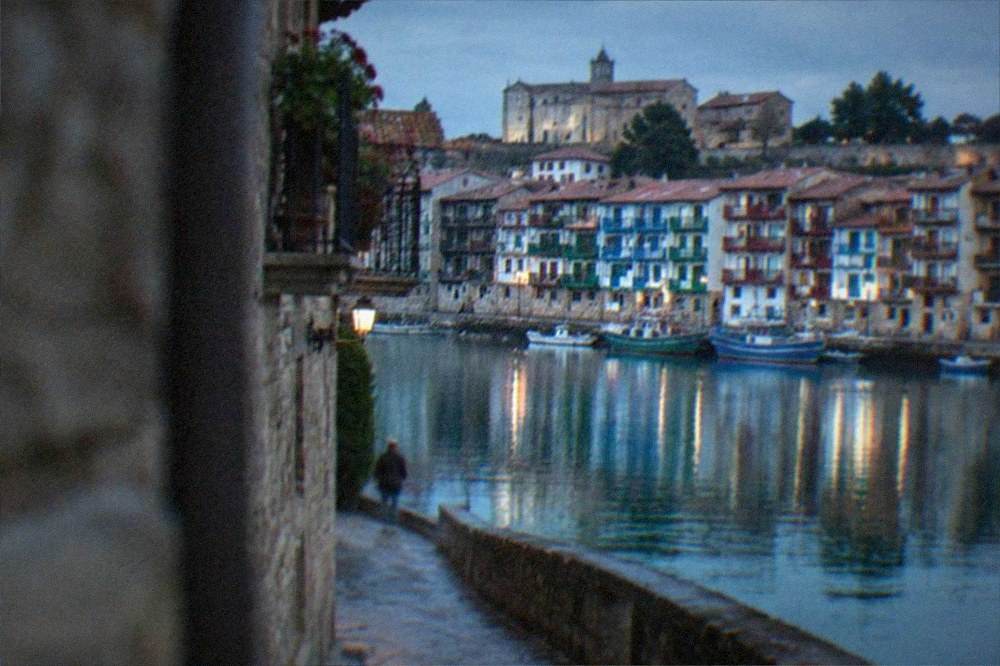
Getaria is the classic: a fishing town on a headland, the home of txakoli vineyards and the Balenciaga museum, and a working harbour that photographs at any hour. Zarautz gives a long beach curve backed by a town, and Zumaia sits inside the Basque Coast UNESCO Global Geopark, a member of the geoparks networks since 2010 and a UNESCO Global Geopark since 2015, where the flysch rock layers read as graphic bands along the cliffs. The tourism board lists the coastal Camino de Santiago stages through the same stretch, Pasaia to Donostia and Donostia to Orio among them, which is a way of walking some of this coast with a camera rather than riding past it.
| Day trip destination | Photographic subject | Distance character |
|---|---|---|
| Getaria | Fishing harbour, headland, txakoli country | Coast town west of the city, in Gipuzkoa |
| Zarautz | Long beach and town front | Coast, west of Getaria |
| Zumaia | Flysch cliffs inside the Geopark | Coast, the far end of the same run |
| Hondarribia | Coloured harbour houses and old quarter | East, near the airport at Hondarribia |
| Pasaia | Deep inlet, whaleship yard at Albaola | East, the harbour is inside the urban bus fare zone |
| Chillida Leku, Hernani | Large steel and granite sculpture in a farmstead landscape | Inland, a separate municipality from San Sebastián |
Hondarribia, next to the airport, is the nearest of them: a fortified old quarter and a harbour of coloured houses, and the half-day trip there also covers Pasajes de San Juan and San Pedro, the two settlements on the Pasaia inlet. Albaola, the shipyard in Pasaia building the San Juan whaleship, is a working subject rather than a static one. Chillida Leku, in Hernani, holds more than 40 of Chillida's large works in a restored farmstead's grounds, open every day 10:00 to 19:00 except Tuesday and Wednesday, with adults at 14 EUR, and the free car park makes it the easiest museum day trip in the province. A guided visit of the museum can be booked from the city.
Which Tours Help A Photographer In San Sebastian?
The tours that serve a photographer in San Sebastián are the ones that move you through the best frames with a local deciding the route: a small-group electric bike tour over the city's bike-lane network, the bay boat with its island stop, the city highlights walk, and the pintxo evenings that put you inside the Old Town's bar interiors after dark. A private sailboat with a local skipper is the one that gives an angle nothing on land can match.
The bike option covers ground fast, which matters on a short visit: the small-group electric bike tour runs on the city's bike lanes and takes in the beaches and the bay in one loop. The boat has been covered above. The pintxo tours are the evening play, and they double as a way to shoot bar counters you would otherwise hesitate to stand photographing, because you are there as a diner with a guide who knows the houses. The eight-pintxo, five-drink tasting that pairs each pintxo with Denomination of Origin wines is the version of this that keeps the whole evening in one organised run through the Old Town Edge.
A cooking class is the other food-adjacent angle: hands-on, with local chefs, a wine and cider tasting, and the meal you cook, which gives a different kind of kitchen photography from the bar crawl. The class runs in the city centre.
| Tour | Kind | What it gives a camera |
|---|---|---|
| Small-group electric bike tour | bike | The bay and beaches in one loop, fast |
| Bay boat with island stop | boats | The skyline from the water, island landings |
| City highlights walk | walking | The Old Town and Romantic Area at street pace |
| Pintxo tasting paired with wines | food | Bar interiors and counters in the evening |
| Private sailboat with local skipper | boats | Open-water angles for your own group only |
The private sailboat is the splurge: a private trip with a local skipper for your group alone, time enough on the bay, which for a photographer means the skipper can be asked to hold an angle. It is the only way to put the sun behind the whole city from open water.
Common Questions About San Sebastian Photography Spots
Where is the best view of La Concha bay for photos?
The Monte Igueldo funicular viewpoint, at the top of the west hill. The funicular return costs 5.50 EUR for an adult and the ticket includes entry to the grounds, and from the terrace the whole 1,350 metre curve of La Concha, the island and Monte Urgull sit in one frame.
Can you photograph the Peine del Viento sculptures up close?
Yes, and for free. The three steel works stand on a public granite plaza at the west end of Ondarreta beach, where the walk to them begins. They were created in their definitive form in 1977 and given to the city by Eduardo Chillida, and on days of Atlantic swell the waves break over the rocks around them.
When is Monte Urgull open for sunset photography?
From 1 May to 30 September the hill is open 08:00 to 21:00, which covers the sunset hour, and from 1 October to 30 April it closes at 19:30. It is closed at night in all seasons, so in the winter half of the year the last light has to be shot from the bottom.
Can you take photos from Santa Clara island?
Yes. The island boat's high season runs 1 June to 30 September, plus Easter and long weekends, with departures every 30 minutes from 10:00 to 19:00, weather and sea permitting, and a 5 EUR return ticket bought at the kiosk on the day. From the island you shoot the full city skyline over the water.
Is San Sebastian good for photography in winter?
Yes, with planning. AEMET's Igeldo station shows December as the darkest month at 93 sun hours and January with 141 mm of rain over 13.2 rain days, but the same numbers mean storm light, empty frames and a bay that photographs dramatically. The funicular rides close on rainy days and the island boats depend on the sea, so keep the Old Town as the wet-day branch.
Do you need a ticket to photograph the Monte Igueldo viewpoint?
The funicular return at 5.50 EUR adult includes entry to the grounds, and arriving by vehicle or on foot costs 3.00 EUR per person for the grounds and viewpoint. There is no downhill-only funicular ticket, so the return fare or a walk both ways are the only options.
One last planning note: the busiest frames here are also the public ones. The railing, the sculptures, both hills and the island all belong to everyone, and the only paid viewpoints are the funicular and the grounds on Monte Igueldo. Everything else in this guide is free to stand on, which makes San Sebastián a city that can be photographed well without spending much. If you are drawing up a wider plan around these spots, the things to do in San Sebastian page is the full index, and San Sebastian Spain Guide covers every neighbourhood, beach and season in between.