What Does Rick Steves Say About San Sebastian, Spain?
What the American guidebook writer covers when he writes about San Sebastián, Spain, from the pintxos bars of the Old Town to the beaches of La Concha bay, and what the record says about each of them.
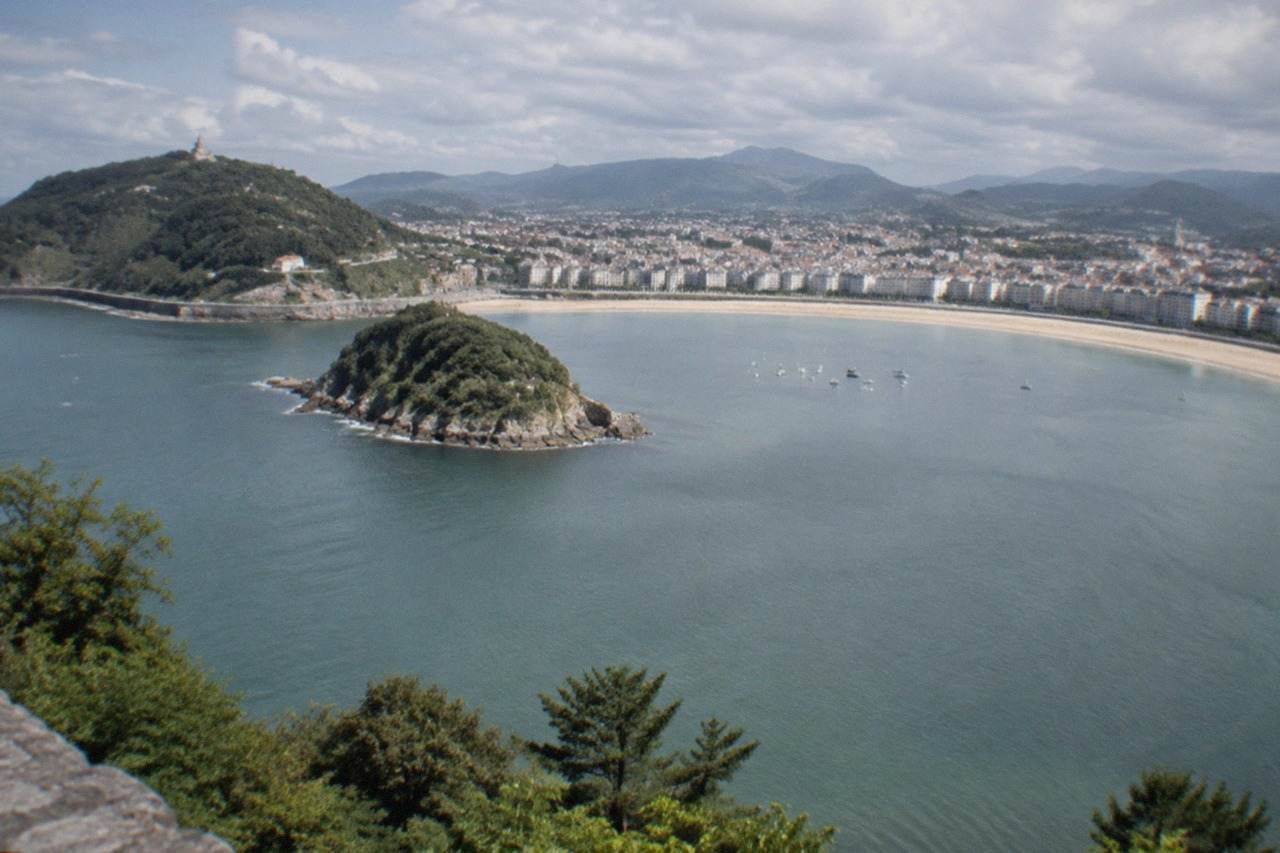
Rick Steves has made a career of telling American travellers which European destinations deserve a place on a short itinerary, and San Sebastián, the Basque city on La Concha bay in Gipuzkoa, Spain, is one he has returned to across editions of his Spain guidebook. His name carries real weight with a particular kind of visitor: someone who plans from a paperback rather than a feed, books fewer cities for longer stays, and wants a place to justify itself. San Sebastián, whose Basque name is Donostia, is exactly the sort of city that argument favours, a compact, walkable place where the food culture is the main sight and the bay supplies the scenery for free.
What Does Rick Steves Say About San Sebastian, Spain?
Rick Steves presents San Sebastián as one of Spain's great food cities and a rewarding stop on any northern Spain route, building his coverage around the pintxos bars of the Old Town, the curve of La Concha beach, and the city's distinct Basque character. He frames it as a place to slow down and eat well rather than to sprint between monuments, and he treats the surrounding Basque coastline, the cider houses and the fishing villages, as part of the same story.
That framing, food first and sights second, is not a lazy shorthand. It matches what the official record shows. The MICHELIN Guide Spain 2026 counts 11 stars across 6 restaurants inside the municipality, including two three-star houses, Akelaŕe and Arzak, and the tourism board's own gastronomy pages treat eating as the city's principal attraction. The Old Town, the Parte Vieja, holds one of the densest concentrations of pintxo bars anywhere, and the local drinking custom is built around moving from bar to bar rather than settling in one.
Steves also makes a point that many first-time visitors miss: this is the Basque Country, not the Spain of flamenco and bullfighting that older guidebooks led with. The city's official name is Donostia / San Sebastián, and the street signs, the festivals and the food all belong to a culture with its own language, Euskara. For a fuller picture of that, see language in San Sebastian.
Why Does The City Deserve That Kind Of Praise?
San Sebastián earns guidebook enthusiasm on three verifiable grounds: a bay and beach setting that the city council documents in detail, a food scene with 11 Michelin stars across 6 restaurants inside the city in the 2026 guide, and a compact centre that puts almost everything within a short walk. It also has a genuinely Atlantic climate, with 1,507 mm of rain a year over 141 rain days at the AEMET Igeldo station, which no honest guide omits.
The beaches are the first thing many people see, and the council publishes exact figures for all three. La Concha runs 1,350 metres with a mean width of 40 metres, Ondarreta 600 metres, and Zurriola 800 metres with the strong swell that makes it the surfers' beach. Lifeguards cover all three from 1 June to 30 September. The council's own page for La Concha notes that the tide often limits the usable area, a detail worth knowing before you plan a beach day.
The rain matters too. AEMET's climate normals for the Igeldo station, the series covering 1981 to 2010, show that even July, the driest month, averages 86 mm over about 10 rain days, and November is the wettest at 169 mm. Steves' readers, who tend to travel with a paperback and a rain jacket anyway, are well suited to a city where the weather changes by the hour. The seafront runs slightly warmer than the station values, since the station sits 250 metres up on Monte Igeldo.
Here is what the council's beach pages and the AEMET record give for the three city beaches and the rainiest months:
| Beach | Mean length | Mean width | Council note |
|---|---|---|---|
| La Concha | 1,350 m | 40 m | Sandy and shallow; the tide often limits usable area |
| Ondarreta | 600 m | 100 m | Sandy; the walk to the Peine del Viento starts at its west end |
| Zurriola | 800 m | 110 m | Sandy and fairly open, with strong swell |
| Month | Mean temperature | Rain mm | Rain days (1 mm or more) |
|---|---|---|---|
| July | 18.9 C | 86 | 9.8 |
| August | 19.5 C | 117 | 10.5 |
| November | 11.3 C | 169 | 13.0 |
The rainiest month question comes up so often that this site covers it in full elsewhere, in what is the rainiest month in San Sebastian.
Does He Point Visitors Toward The Pintxos Bars?
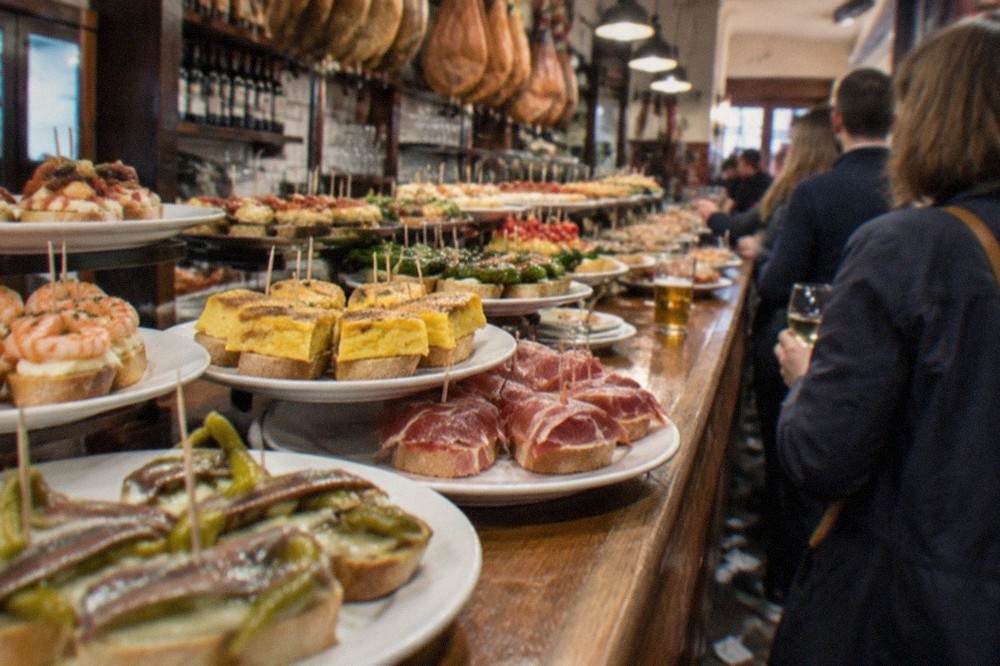
Yes, the pintxos bars of the Old Town are the single thing Steves most consistently directs visitors toward, and the city's own tourism board does the same. Pintxos are small servings, typically a slice of bread topped with anything from anchovies to slow-cooked meat, eaten standing at the bar with a drink, and the custom is to move between bars rather than sit down for one long meal. The Old Town concentrates dozens of these bars within a few narrow streets.
The word itself is Basque, and the practice is the city's signature. The tourism board's gastronomy pages treat the pintxo crawl as the essential evening activity, and the bars of the Parte Vieja are where most of it happens. A first-timer faces a wall of choices, which is why a guided tasting has value: someone local decides which bars and which pintxos, and the pacing takes care of itself. This site's own guide to what are pintxos covers the basics, and the question of where the locals eat in San Sebastian is worth reading before you copy anyone's bar list.
The drinks matter as much as the food. The local white is txakoli, a lightly sparkling wine poured from a height, and the cider houses of Gipuzkoa run the txotx season from the middle of January to the end of April by the tourism board's wording, a ritual where cider is poured straight from the barrel. The city's most famous drink is its own subject, and the two answers overlap less than you would think. Other pages covering the same trip are gathered on San Sebastian Spain Guide.
For a structured introduction to the bar scene, a tasting walk with a guide is the most reliable first evening. The related tour below does exactly that, with paired wines at each stop, and you can Check availability on the operator's live listing.
Does He Treat The City As A Base For Day Trips?
Yes, Steves' coverage of the wider Basque Country is part of his case for the city, and the region rewards it: the fishing town of Getaria, the border town of Hondarribia, the cider houses of Astigarraga and the flysch coast at Zumaia are all within easy reach, and the province of Gipuzkoa holds 19 Michelin stars across 11 restaurants in the 2026 guide, more than the city alone. The Basque Coast UNESCO Global Geopark, covering Zumaia, Deba and Mutriku, sits on that same coast.
The day-trip network is unusually good for a city of this size. The Euskotren Topo runs from the Amara station towards the French border at Hendaia, and the coastal Camino de Santiago route passes through the city as stage two of the tourism board's six-stage listing, from Pasaia into Donostia and on to Orio. The city's position, 20 km from the airport at Hondarribia and 45 km from Biarritz across the French border, makes it a natural base for travellers who want one hotel and several towns.
The food argument extends outward too. Elkano in Getaria holds one Michelin star for grilled fish, and Asador Etxebarri in the hills above, a place many food travellers rank among the best in the world, is within reach of the same route. A fuller treatment of the options is in this site's guide to day trips from San Sebastian.
How Does His View Compare With What The Record Shows?
Steves' portrait of San Sebastián holds up well against official sources: the food reputation is backed by 11 Michelin stars across 6 city restaurants in the 2026 guide, the beach figures match the council's own pages, and the Basque identity is real and visible in the city's signage and festivals. Where a guidebook simplifies, the record adds texture: the city is not a UNESCO World Heritage Site, its only World Heritage link is the Camino route that crosses it, and it was European Capital of Culture in 2016.
A few corrections matter for anyone planning from a guidebook, whatever the edition. The city is wet by Spanish standards, with rain on roughly 10 days even in July, so a beach-only plan is a gamble. Martín Berasategui, one of the three-star names always attached to the city, is actually in Lasarte-Oria, a separate municipality, and Mugaritz is in Errenteria; the 6 restaurants and 11 stars counted inside the city are the honest city figure. And the funicular up Monte Igueldo, which opened in 1912 and which the tourism board calls the oldest in the Basque Country, sells no downhill-only ticket, so plan to ride both ways or walk both ways.
The festivals calendar is another thing guidebooks compress. Tamborrada falls on 20 January every year, the Santo Tomás fair on 21 December, Semana Grande runs the week of 15 August, and the Bandera de La Concha regattas, first held in 1879, take place on the first two Sundays of September. Anyone weighing a longer stay against a quick pass through should read is 4 days in San Sebastian too much before booking.
Common Questions About Rick Steves And San Sebastian
What does Rick Steves say about San Sebastian, Spain?
He presents it as one of Spain's outstanding food cities and a rewarding base in the Basque Country, built around the pintxos bars of the Old Town, the setting on La Concha bay, and day trips along the Basque coast. His framing, eat well and slow down, matches what the official record shows: 11 Michelin stars across 6 restaurants inside the city in the 2026 guide, and a compact centre where the food is the main attraction.
Does Rick Steves recommend San Sebastian over Bilbao?
His coverage treats the two cities as complements rather than rivals, San Sebastián for food and beaches, Bilbao for the Guggenheim and a bigger-city feel. The comparison is a real planning question, and this site covers it directly on its page about whether it is better to stay in Bilbao or San Sebastián.
Is San Sebastian worth visiting if you are not a foodie?
Yes. The bay, the three beaches, the walks on Monte Urgull and Monte Igueldo, and the cultural calendar from Jazzaldia to the film festival give the city plenty beyond the table. The food is the headline, but the setting alone, a shell-shaped bay with an island in the middle, justifies the trip.
What is the best time of year to visit San Sebastian?
July and August are the warmest months, averaging 18.9 and 19.5 C, but August is also the busiest for hotel stays and wetter than July, with 117 mm of rain against July's 86 mm. May, June and September combine milder temperatures with fewer crowds, and every month carries some rain, so pack for it whenever you come.
How many days should you spend in San Sebastian?
Two or three nights work well: one for the Old Town and pintxos, one for the beaches and either Monte Igueldo or Monte Urgull, and one for a day trip to Getaria, Hondarribia or across the French border. Food-focused travellers with bookings at the top restaurants often add a fourth night.
The short version is that Steves' recommendation holds up: San Sebastián is a city where the plan is simple, walk the bay, eat your way through the Old Town, and let the weather decide the rest, and the only real mistake is treating it as a single afternoon on the way to somewhere else.