Is San Sebastian Safe?
San Sebastián, the Basque Country's bay-front city whose official name is Donostia / San Sebastián, is a compact place where the main safety questions are the sea, the rain and late-night streets, not crime. This page sets out what the official sources say about each of them.
Short answer
San Sebastián is a small, walkable city where the practical risks are coastal and seasonal: strong swell at Zurriola, lifeguards only from June to September, rain on roughly ten days a month even in summer, and hills that close at dusk. Emergencies are 112 and the local police are 092.
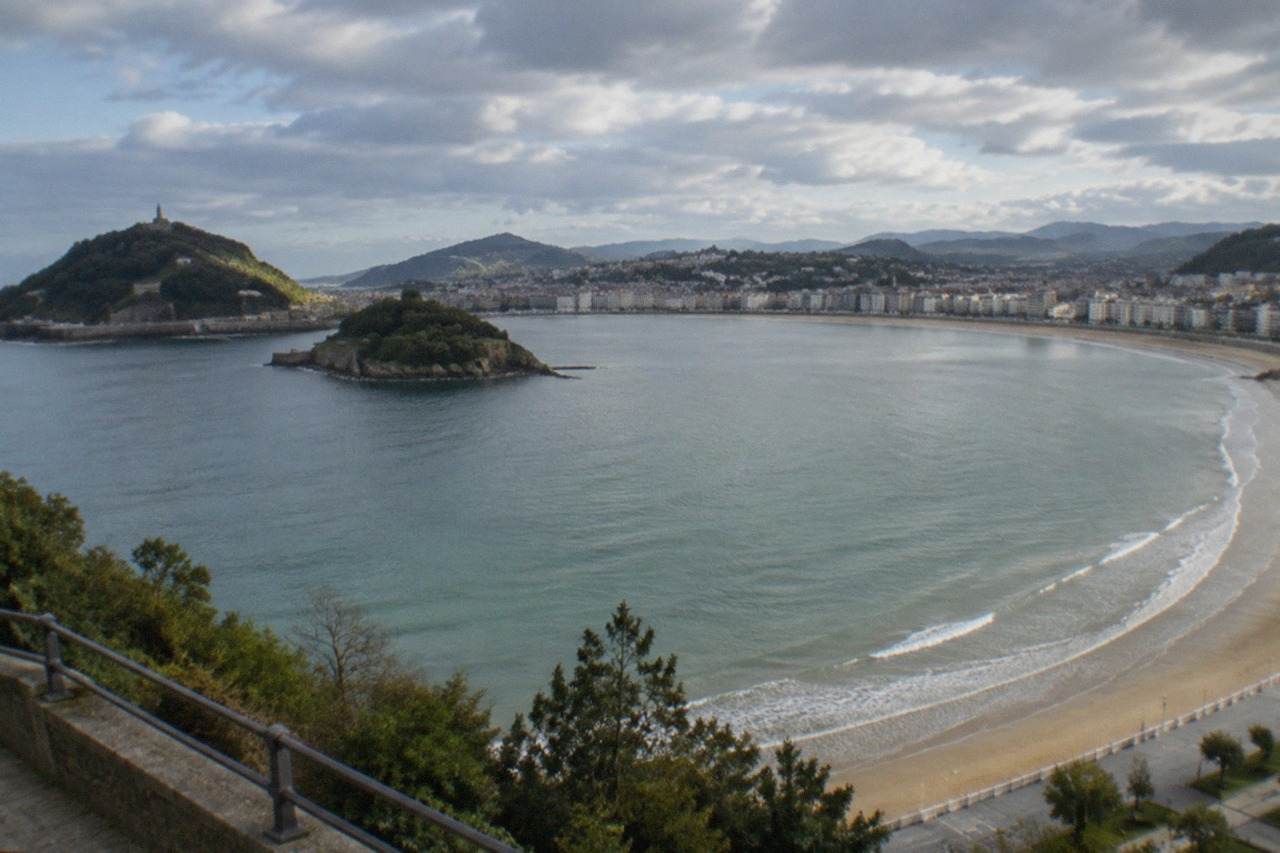
San Sebastián, in the Basque Country of northern Spain, is a city of 189,866 residents wrapped around a single bay, and the honest answer to whether it is safe is that the things most likely to spoil a visit are not the things travellers usually fear. The city's official name is Donostia / San Sebastián, and its three beaches, two wooded hills and dense Old Town all sit within a walkable half-hour of each other. That compactness shapes the whole safety picture: fewer roads to cross at speed, fewer distant districts to get lost in, and a coastline where the real decisions are about which beach, which month and which hour.
This page works through the question the way the official sources frame it: the sea and the lifeguard season, the night-time Old Town, the hill paths and their closing hours, the rain, the buses and trains, and the numbers to call if something does go wrong. Where a figure exists in an official source it is given here, and where no official figure exists, this page says what a visitor can check themselves rather than guessing.
Is San Sebastian Safe
Yes: San Sebastián is a small, walkable city with police under both the local Guardia Municipal and the Basque Ertzaintza, and no safety issue that the official tourism board flags as a reason not to come. The risks worth planning for are environmental, not criminal: strong swell on Zurriola, lifeguards only from 1 June to 30 September, hills that close at a set hour, and rain on roughly ten days a month even in July.
The tourism board's own practical information page lists the emergency numbers and gives no travel warning for the city. That absence is itself the finding: official Spanish and Basque sources treat San Sebastián as a normal, safe European city, and the pages a visitor should read are the beach pages, the mountain pages and the weather, because those are where the season rules live.
The season rules matter more than any general statement. Lifeguards, the island boat's high season, the Hondalea art installation in the island lighthouse and the assisted bathing service all run 1 June to 30 September, and outside that window a visitor is swimming, sailing and walking with fewer safety nets. The table below gathers the seasonal services that affect safety, all from the council and operator pages.
| Seasonal service | Dates | Hours or detail | Source level |
|---|---|---|---|
| Beach lifeguards, all three beaches | 1 June to 30 September | 10:00 to 20:00 from 15 June to 15 September; 13:30 to 19:30 from 16 to 30 September | City council beach pages |
| Parasol and lounger hire | 15 June to 30 September | La Concha and Zurriola; Ondarreta also hires tents | City council beach pages |
| Assisted bathing for reduced mobility | 15 June to 15 September | On the city's beaches | City council beach pages |
| Santa Clara island boat, high season | 1 June to 30 September, plus Easter and long weekends | Red line every 30 minutes, 10:00 to 19:00, weather and sea permitting | Operator's tariff page |
| Hondalea, in the island lighthouse | 1 June to 30 September | 11:00 to 18:30, sessions every half hour, free, no booking needed for the visit itself | Council Hondalea page |
| Monte Urgull open hours | 1 May to 30 September, 08:00 to 21:00 | 1 October to 30 April, 08:00 to 19:30 | Tourism board page |
Read that table as a planning tool, not a list of closures. A September visit still gets lifeguards, but only until 19:30 from the 16th onwards. An October visit gets none of it, and the sea does not know the difference.
Is The Old Town Safe For Tourists At Night
The Old Town, the Parte Vieja, is the densest part of San Sebastián's night life and it stays busy late, which is the main reason it behaves safely: pintxo bars, restaurants and crowds keep the streets occupied well past midnight, and the district is small enough that the walk back to most central hotels is short and lit. The realistic night-time problems are noise, spilled glasses and ordinary crowd care, not violence.
The Old Town's layout helps. The bars cluster along 31 de Agosto, Fermin Calbeton and the streets between the Boulevard and the port, and the whole district is a few blocks wide, so a visitor is rarely more than a few minutes from a main road, a taxi rank or the seafront promenade, which stays lit and walked at all hours. Plaza de la Constitución, the old square at its heart, sits at the centre of it all.
Late-night eating is a local habit, not an exception. Pintxo bars fill again after the evening meal, and the streets between them carry foot traffic until the early hours. A traveller who wants a quieter base can stay in Gros, across the river, or the Centro district and walk in for the evening, a journey of ten to fifteen minutes along the Urumea or the bay. The things to do in San Sebastian page maps how the districts fit together.
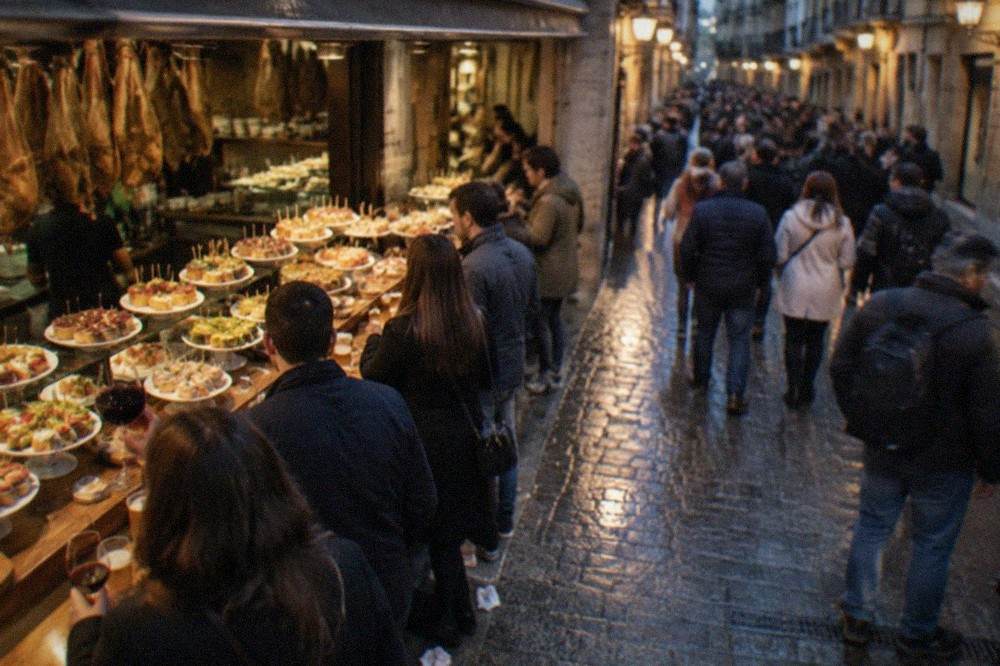
A guided walk on the first evening is one way to learn the district's geography before exploring it alone at night.
The Old Town is also where many visitors first meet the city's pintxo culture, and a small-group crawl with a local guide covers the bar-to-bar movement safely on the first night, when the streets are unfamiliar.
Are The Beaches Of San Sebastian Safe For Swimming
All three of San Sebastián's beaches are council-managed sandy beaches with lifeguards from 1 June to 30 September, but they are not interchangeable: La Concha is shallow and sheltered, Ondarreta is wide and family-oriented, and Zurriola is the surf beach where the council's own page warns of strong swell. Swimming outside the lifeguard season or hours is a personal risk decision on an Atlantic coast.
The council's beach pages give the dimensions and the character of each beach, and the differences are the safety advice. La Concha averages 1,350 metres long and 40 metres wide, with shallow water and a tidal range that shrinks the usable area. Ondarreta runs 600 metres by 100 metres, described by the council as a mass-use family beach. Zurriola is 800 metres by 110 metres, remodelled in 1994, and its own council page states plainly that it has strong swell. That is the beach for surfers, and the page for surfing in San Sebastian covers it in depth.
| Beach | Mean length | Mean width | Council's description | Lifeguard season |
|---|---|---|---|---|
| La Concha | 1,350 m | 40 m | Sandy, shallow, tide often limits usable area | 1 June to 30 September |
| Ondarreta | 600 m | 100 m | Sandy, mass use, family beach | 1 June to 30 September |
| Zurriola | 800 m | 110 m | Sandy, fairly open, strong swell | 1 June to 30 September |
The bay's own boat gives a second, useful view of the water. The bay sailing with a stop on Santa Clara Island runs on a ticket valid for one day, with audio commentary, and it shows visitors the shape of the bay, the island and the two headlands from the water before they swim in it.
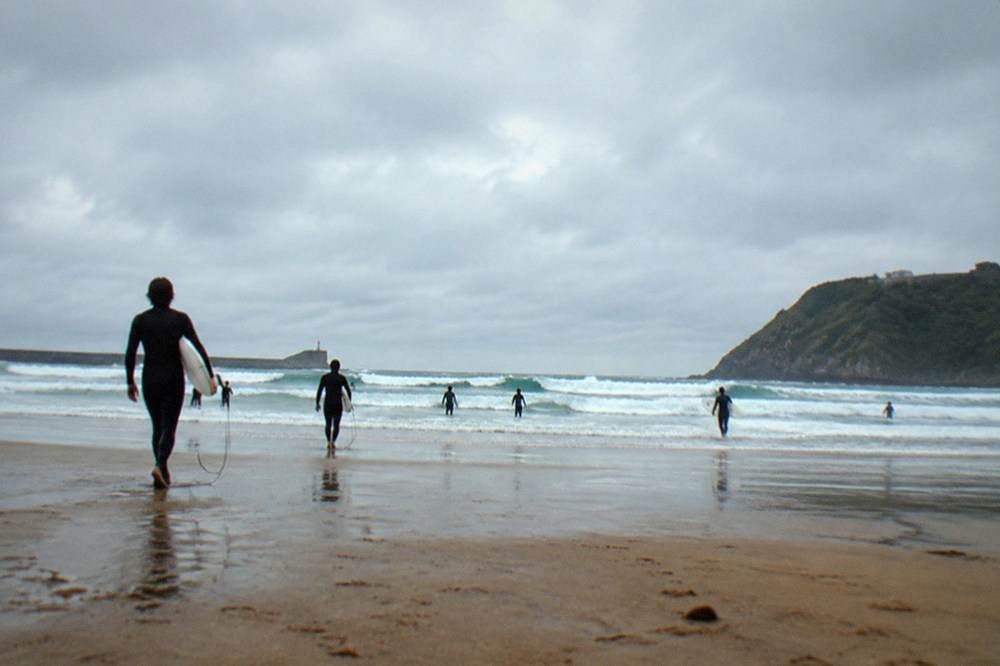
Two sea rules deserve emphasis because they are seasonal and easy to miss. First, the lifeguards leave after 30 September and their hours already shorten to 13:30 to 19:30 from 16 September, so an autumn swim happens without them. Second, the island boat's high season is the same 1 June to 30 September window, and outside it the operator says departures must be consulted, because the sea decides. A visitor who wants a fuller picture of the coast can read the San Sebastian beaches guide.
What Should You Know About Pickpockets And Scams
No official source publishes a crime rate or a pickpocket statistic for San Sebastián, and this page will not invent one, but the practical advice from the city's own character is straightforward: the crowds worth guarding are the pintxo-bar queues, the Semana Grande fireworks on the seafront and the peak August beach, and the precautions are the ordinary ones, front pockets, closed bags, and no wallet on the beach towel while swimming.
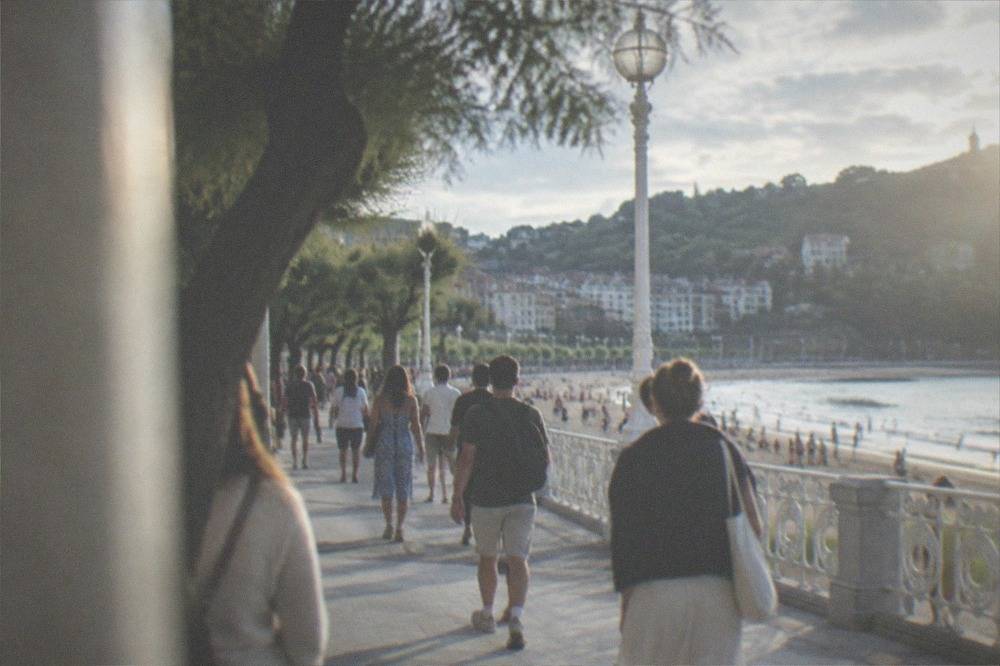
The crowd calendar is predictable because the city's hotel numbers are published. INE's occupancy survey for the Donostia-San Sebastián tourist point, which counts hotels only, recorded 2,199,966 overnight stays in 2025, with August the peak month at 245,769 and July second at 239,124. July and August together are 22 percent of the year's hotel stays. That is when the seafront is at its densest, and when a bag left on a towel or a phone in a back pocket is most exposed.
| Month 2025 | Hotel overnight stays | Month 2025 | Hotel overnight stays |
|---|---|---|---|
| January | 115,910 | July | 239,124 |
| February | 119,367 | August | 245,769 |
| March | 156,670 | September | 216,759 |
| April | 200,055 | October | 207,158 |
| May | 205,326 | November | 147,334 |
| June | 211,534 | December | 134,960 |
The figures come from INE's hotel occupancy survey and cover hotels only, not apartments or hostels, so the real summer population is higher still. The practical reading: in August the city holds a little over twice the hotel guests it holds in January, and the crowds concentrate on two beaches, one Old Town and one promenade.
Fireworks week deserves a special mention. Semana Grande runs the week of 15 August, Saturday to Saturday, and its International Fireworks Competition pulls the whole seafront into one crowd after dark. It is the single densest regular event of the year on the promenade, and the standard crowd precautions apply there more than anywhere else in the city. The San Sebastian festivals calendar gives the fixed dates.
Is San Sebastian Safe For Solo Travellers And Families
Solo travellers and families face the same city, and it suits both: the centre is compact and walkable, the family beach infrastructure runs through the summer, including assisted bathing for reduced mobility from 15 June to 15 September, and a solo visitor eating in the Old Town is in company rather than alone. Families should note the seasonal limits, and solo walkers should note that the hills close at a set hour.
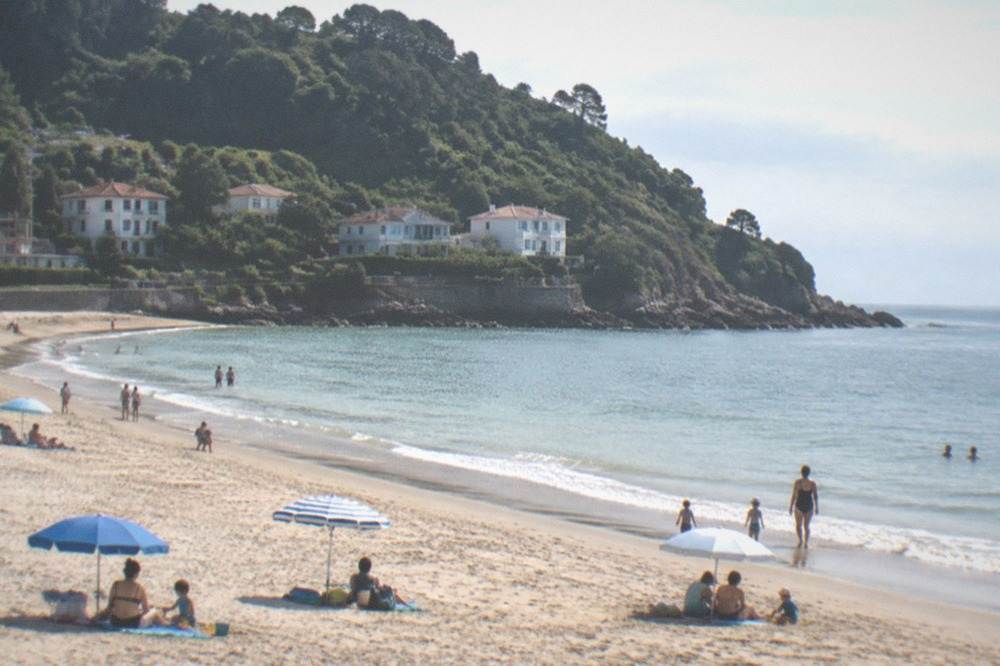
For families, the council's beach infrastructure is the real safety story. Parasol and awning hire runs 15 June to 30 September on all three beaches, and the assisted bathing service for visitors with reduced mobility runs 15 June to 15 September. Ondarreta, the widest and calmest of the three, is the council's mass-use family beach, and its west end is the start of the walk to the Peine del Viento sculptures.
For solo travellers, the city's eating culture does a lot of quiet work. Pintxo bars are standing-room social spaces where a single visitor is unremarkable, and the bar-to-bar rhythm of the Old Town means an evening can be built from five short stops rather than one long table. The pintxos in San Sebastian guide explains how the custom works.
A first-day orientation walk is worth it for anyone travelling alone, and the city highlights walk covers the Old Town and the Romantic Area with separate English and Spanish departures.
Is It Safe To Walk The Hills And Coastal Paths
The two hills that flank the bay, Monte Urgull and Monte Igueldo, are both safe, managed walks, but each has rules: Urgull has published access hours, 08:00 to 21:00 from May to September and 08:00 to 19:30 the rest of the year, and it is closed at night, while Igueldo's funicular closes on rainy days and sells no downhill-only ticket. The coastal Camino path out of the city is a waymarked route with guided hikes for the longer stretches.
Urgull is the city's own hill, wooded, with the Castillo de la Mota at the top and the Casa de la Historia museum inside it, run by San Telmo. The tourism board's page gives the access hours above, and the hill's closure at night is the rule that catches evening walkers: the sunset view from the English Cemetery or the fortifications has a deadline, and in winter that deadline is 19:30.
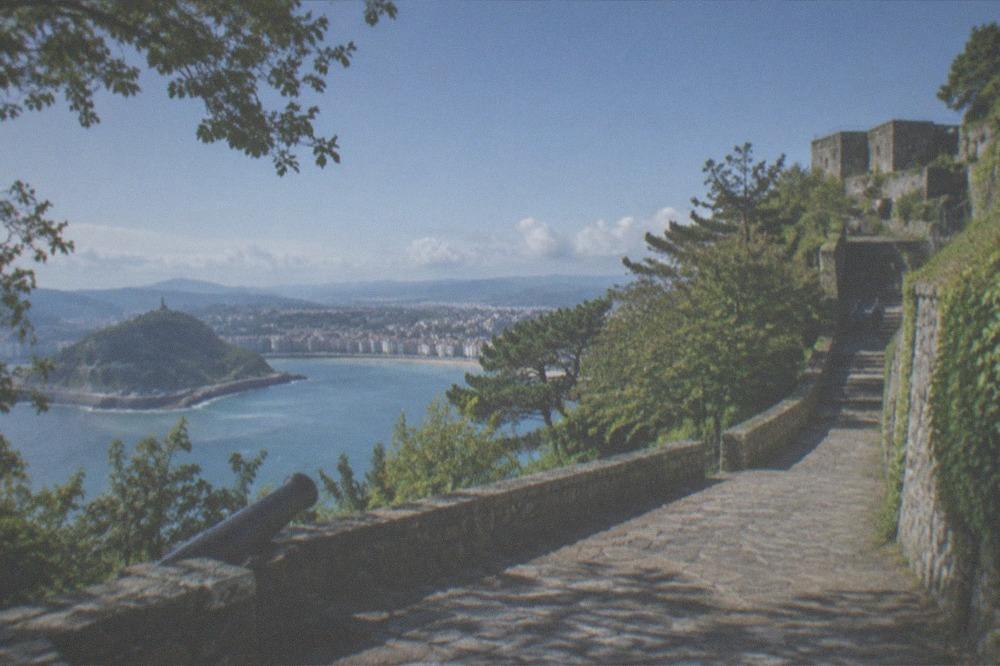
Igueldo's rules come from the funicular's own site. The funicular opened on 25 August 1912, runs normally every 15 minutes, and its return ticket, 5.50 EUR for an adult, includes entry to the grounds at the top. Two details are safety-relevant. The home page states that tickets for the downhill funicular journey are not on sale, so the walk-up-ride-down plan does not exist. And the operator's own FAQ says rides close on rainy days, which in a city with 141 rain days a year is a plan-shaping fact, not a footnote. The Monte Igueldo guide has the full detail.
Beyond the city, the coastal route of the Camino de Santiago crosses San Sebastián, with the tourism board listing Pasaia to Donostia and Donostia to Orio as consecutive stages, and a guided hike over Mount Ulia follows the Camino out of the city toward the lighthouse. The Camino del Norte guide covers the route.
Does The Weather Change The Safety Picture
Yes, materially: AEMET's climate normals for the Donostia / San Sebastián Igeldo station record 1,507 mm of rain a year over 141 rain days, and even July, the driest month, averages 86 mm across about ten days with rain, so wet streets, wet steps and reduced visibility are part of the city's normal condition. The station sits 250 m up on Monte Igeldo, so the seafront runs slightly warmer than these values, but no visitor should plan around a dry week.
| Month | Mean temperature | Rain mm | Days with 1 mm or more | Sun hours |
|---|---|---|---|---|
| January | 8.5 C | 141 | 13.2 | 98 |
| April | 11.3 C | 138 | 13.4 | 157 |
| July | 18.9 C | 86 | 9.8 | 196 |
| August | 19.5 C | 117 | 10.5 | 190 |
| November | 11.3 C | 169 | 13.0 | 102 |
Two readings of that table matter for safety. August is wetter than June, July or September, 117 mm against 90, 86 and 111, so the peak beach month is not the dry one. And November, the wettest month at 169 mm, combines with the end of the lifeguard season and the shorter Urgull hours, 19:30 from 1 October, to make late autumn the season that rewards the most care on steps and paths.
The rain also explains a safety habit locals take for granted: the funicular to Monte Igueldo closes on rainy days, the island boats sail weather and sea permitting, and the Peine del Viento sculptures at the western end of the bay stand on rocks that take the full force of Atlantic waves. Watching the sea from there is the point of the place, standing where it breaks is not.
Is Public Transport In San Sebastian Safe And Easy
Public transport in San Sebastián is a single fare system, MUGI, covering city buses, regional buses and the Euskotren rail network, with a cash city-bus fare of 1.95 EUR and a night ticket of 2.65 EUR, and it is the normal, well-used way residents move, which is itself the safety case. The Topo line runs from Amara to Hendaia across the French border in 37 to 38 minutes.
| Ticket | Urban, 0 or 1 jump | 1 jump | 2 jumps | 3 jumps |
|---|---|---|---|---|
| Occasional, cash | 1.95 EUR | 2.90 EUR | 5.40 EUR | 7.90 EUR |
| Night ticket | 2.65 EUR | 3.70 EUR | 6.45 EUR | 8.95 EUR |
| MUGI anonymous card | 0.78 EUR | 1.16 EUR | 2.16 EUR | 3.16 EUR |
The fares come from the MUGI tariff page and the dBus city-bus fare page, and the urban ticket covers Donostia and the Pasaia harbour ferry connection. Cash paid to the driver does not allow free transfers, which is the one detail that catches visitors out on a multi-bus evening.
The airport has one trap worth knowing. The tourism board's page on reaching the city still names line E21 as a year-round airport bus, but the operator removed the airport stop from E21 on 1 June 2026, and its own list of airport services is E20, E23, E25, E27, E28, E29 and E30, with E30 the direct Donostia to airport line. A traveller relying on the stale page waits for a bus that never boards at the terminal. The getting around San Sebastian guide keeps the current picture.
For trips further out, a coach day tour removes the driving and the parking entirely, and the trio below covers a city walk, a food evening and a full day beyond the border.
What Are The Emergency Numbers And Entry Rules
Emergencies in San Sebastián are 112, the European number, and the local police, the Guardia Municipal, are on 092, with the Basque police force, the Ertzaintza, listed by the tourism board on 088. Spain is in the Schengen area of 29 countries, the currency is the euro, and the EU's own page states that ETIAS is not in operation and no applications are collected, so no visitor needs to apply for one before travelling.
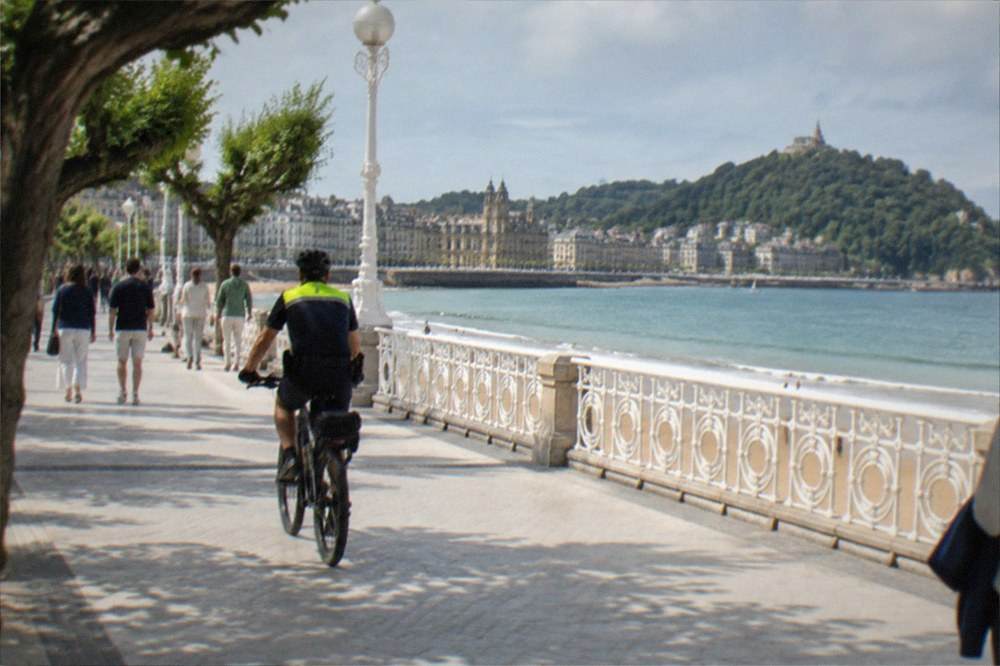
The numbers, as the tourism board's practical information page lists them: 112 for emergencies, 092 and 943 48 13 20 for the Guardia Municipal, and 088 and 943 53 86 06 for the Ertzaintza. The Ertzaintza is the Basque Country's own police force, a regional force distinct from Spain's national ones, and it shares policing of the city with the municipal force.
| Situation | Number | Who answers |
|---|---|---|
| Any emergency | 112 | European emergency line |
| Local police matter | 092 | Guardia Municipal, San Sebastián |
| Basque police matter | 088 | Ertzaintza |
| Island boat information | 943 000 450 | Motoras de la Isla, the island boat operator |
On money and documents: the euro is the currency, every official price in the city is quoted in it, and the tourist tax that Gipuzkoa's Norma Foral 3/2026 creates does not take effect until 1 January 2027, so no visitor pays it before that date. The law sets bands per person per night, with at most six nights charged per stay and under-18s exempt, and each council picks its own rate inside the bands. San Sebastián's own rate has no published ordinance yet, so this page prints none.
On entry: the Schengen area counts 29 countries, 25 EU states plus Iceland, Norway, Switzerland and Liechtenstein, and Spain is a member. Visitors from Schengen countries cross the nearby French border with no checks, and the Euskotren Topo line to Hendaia makes that border a 37 to 38 minute train ride from Amara. The EU's travel page states plainly that ETIAS is not in operation and collects no applications, so any site telling a traveller to buy one is selling something that does not exist yet.
Common Questions About San Sebastian Safety
Is San Sebastian safe for tourists at night?
The Old Town stays busy with pintxo-bar trade well past midnight, the district is small and lit, and the walk back to central hotels is short. The ordinary crowd precautions, front pockets and closed bags, are enough in the busiest streets.
Is it safe to swim at La Concha?
La Concha is the sheltered, shallow beach of the three, with lifeguards from 1 June to 30 September, 10:00 to 20:00 from 15 June to 15 September and 13:30 to 19:30 from 16 to 30 September. Outside those hours and dates, swimming is a personal decision on an Atlantic coast.
What is the emergency number in San Sebastian?
112 for any emergency, 092 for the local Guardia Municipal, and 088 for the Ertzaintza, the Basque police force.
Is Zurriola beach dangerous?
The council's own page for Zurriola describes it as fairly open with strong swell, which is why it is the surf beach. It suits confident swimmers and surfers, and families usually prefer Ondarreta or La Concha.
Can you walk up Monte Igueldo and take the funicular down?
No. The funicular's own home page states that tickets for the downhill journey are not on sale, so the trip has to be a round-trip ride or a deliberate walk both ways, and rides close on rainy days.
Do I need ETIAS to visit San Sebastian?
No. The EU's own page states that ETIAS is not in operation and no applications are collected at this point, so no traveller should apply for one or pay anyone offering it.
The short version of this whole page: San Sebastián is a safe city that asks for seasonal common sense, swim inside the lifeguard hours, walk the hills inside their opening hours, carry rain gear in every month, and keep 112 in mind for the rare occasion it is needed. For everything the city is known for beyond safety, start with the San Sebastian Spain Guide and its guide to what San Sebastian is known for.