Parking In San Sebastian
San Sebastián, the Basque city on La Concha bay whose official name is Donostia / San Sebastián, is compact, walkable and wet, and a car is usually the wrong way to see it. This page sets out what is actually verified about parking here, and what to do instead.
Short answer
Parking in San Sebastián is scarce and the city is small enough that most visitors never need a car. The one verified parking fact is free parking during a visit to Monte Igueldo. For everything else, the honest answer is to arrive by bus or train and use the city's flat, cheap public transport.
San Sebastián, in the Basque Country of Spain, is a city built around a bay rather than around roads, and its official name, Donostia / San Sebastián, reflects the two languages spoken on its streets. It packs a historic centre, three beaches and two hills into a municipality of about 189,866 registered residents, which means the distances that matter are short and the street space is old, narrow and contested. Anyone asking about parking here is really asking a different question underneath: whether a car earns its place on this trip at all. This page answers both, using only what official sources state, and it flags the one parking fact that is actually verified for this city, free parking during a visit to Monte Igueldo, rather than inventing the rest.
Is It Easy To Park In San Sebastian?
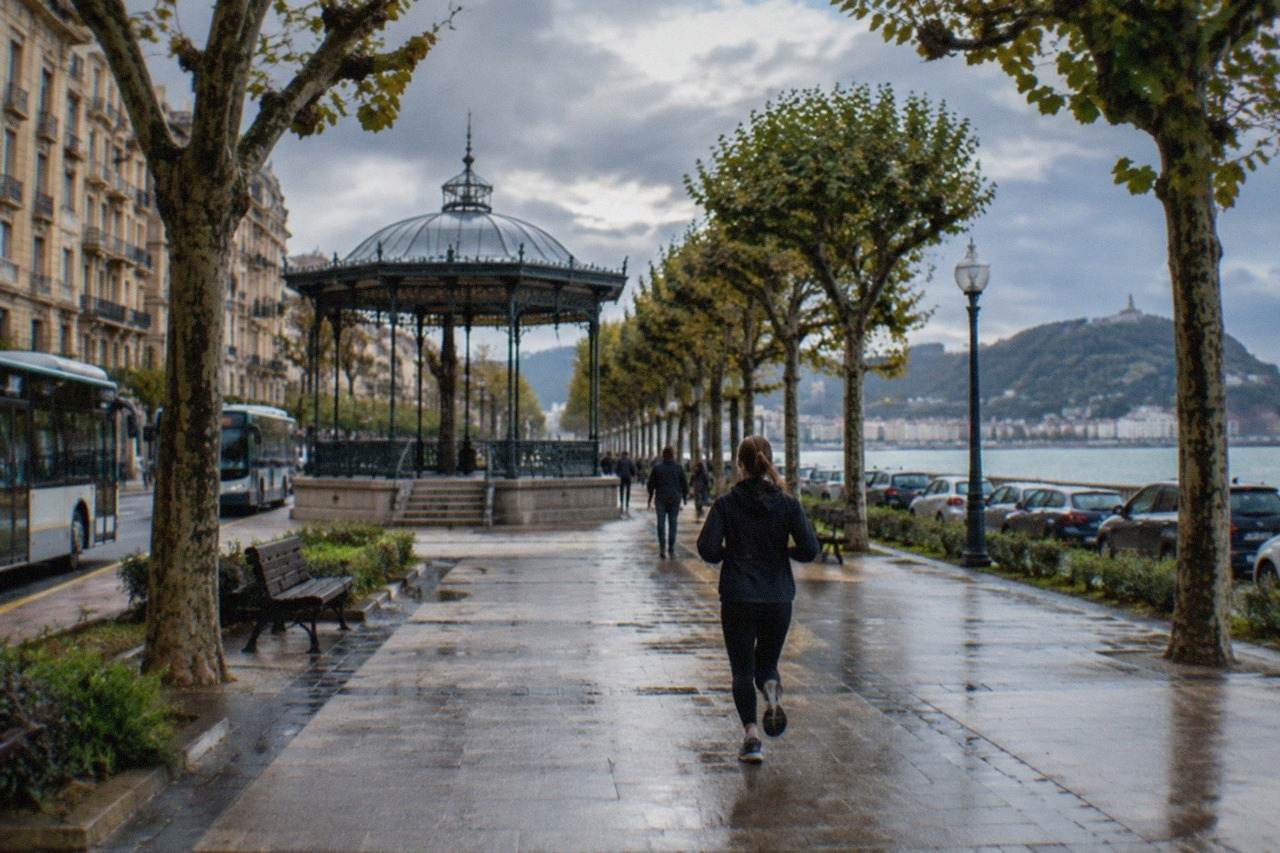
No, parking in San Sebastián is genuinely difficult, because the city was laid out long before the motor car and its street plan has not been rebuilt around one. The Parte Vieja old town and the streets behind La Concha are narrow, and the beaches draw heavy summer traffic. The reliable pattern is to park once on arrival and then not touch the car until departure.
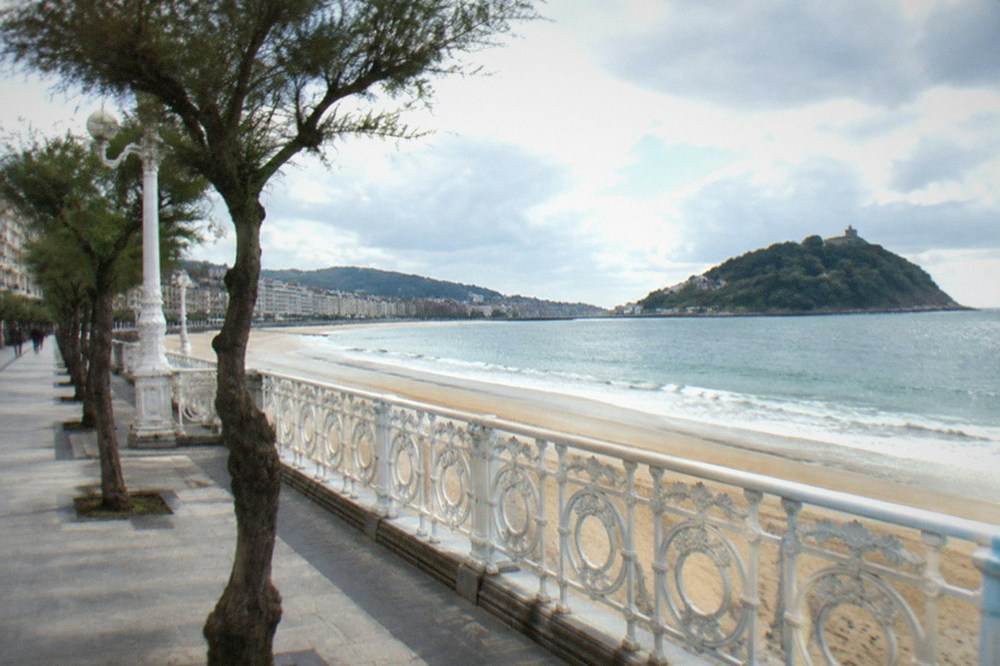
That is not a dodge, it is the shape of the place. The council's own beach pages describe La Concha as 1,350 metres long and Ondarreta as 600 metres, with Zurriola at 800 metres, and all three sit within an easy walk of the centre. The tourism board groups the city's sights so tightly that a visitor staying anywhere between the Gros district and the Antiguo can cover most of the highlights on foot. A car that sits in one place for three days is cheaper and calmer than one that hunts for a new space four times a day.
The city's rain changes the calculation too. AEMET's climate normals for its Igeldo station, on Monte Igeldo at 250 metres altitude, record 1,507 mm of rain a year over 141 days, and even July, the driest month, averages 86 mm. Walking is still the best way around, but a wet city rewards a plan that minimises the distance between the door of where you are staying and the door of where you are going, which is another argument for parking once. The broader case for the city, warts and rain included, is laid out in is San Sebastian worth visiting, and the question of how long to allow is covered in how many days in San Sebastian.
Where Can You Park Near The Centre Of San Sebastian?
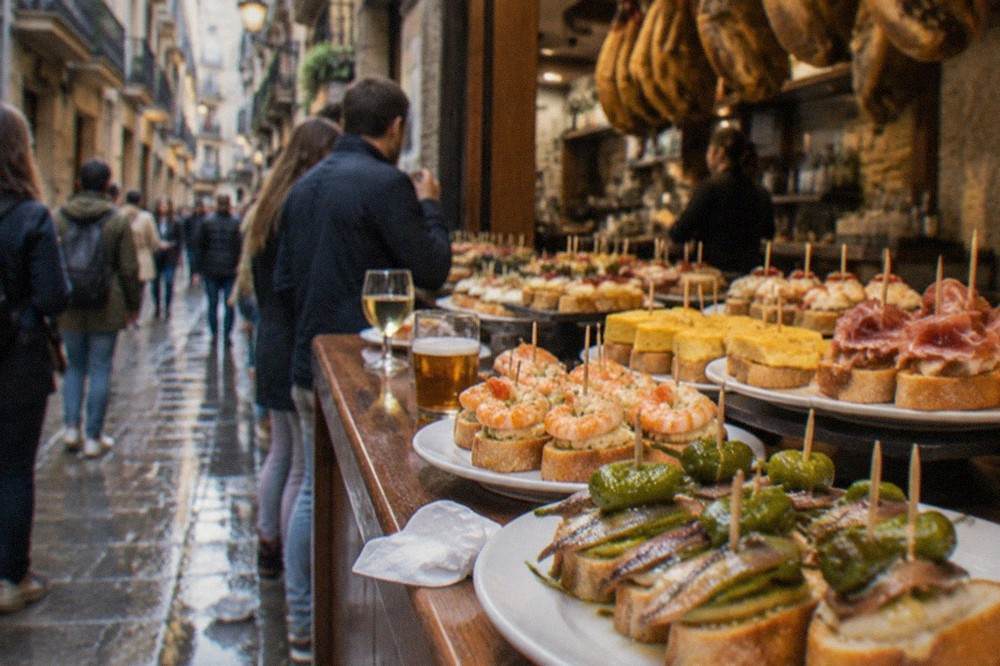
No specific central car park in San Sebastián can be named on this page, because none had its location, opening hours or price checked against an official source. What is verified is the geography that makes central parking hard: the old town and the beachfront are the oldest, tightest parts of the city, and the council's three beaches are all sandy strips that the summer crowd walks to rather than drives to. Plan to park wherever your accommodation directs you and explore on foot.
The beach figures come from the city council's own pages, and they explain a lot about why the seafront feels crowded in August. The table below shows what the council records for each beach.
| Beach | Mean length | Mean width | Mean area | Council note |
|---|---|---|---|---|
| La Concha | 1,350 m | 40 m | 54,000 m2 | Sandy and shallow; the tide often limits usable area |
| Ondarreta | 600 m | 100 m | 60,000 m2 | Sandy, heavy use; the walk to the Peine del Viento starts at its west end |
| Zurriola | 800 m | 110 m | 88,000 m2 | Sandy and fairly open, with strong swell; remodelled in 1994 |
Those numbers matter for parking because every one of those metres is served by the same limited street network. La Concha's usable area already shrinks with the tide, so the crowd density on the sand is high even before anyone counts cars. The council's lifeguard season, 1 June to 30 September on all three beaches, marks the months when the pressure on the surrounding streets is at its worst, and the assisted bathing service for reduced mobility runs a shorter window, 15 June to 15 September. If you are driving in during those months, arrive with the assumption that the last stretch will be on foot whatever you do.
The strongest counterweight to all of this is that the city rewards walkers unusually well. The bay, the Parte Vieja, Monte Urgull and the Peine del Viento at the end of Monte Igeldo form a loop that a reasonably fit visitor covers in a day, and the hills have their own rules: Monte Urgull, for instance, is closed at night, with access hours of 08:00 to 21:00 from 1 May to 30 September and 08:00 to 19:30 from 1 October to 30 April. A car cannot follow you up there anyway.
Guided options also take the parking question off the table entirely for the hours they run, and the trio above covers three different ways to do that: a coach day trip, a walking tour of the centre and an electric bike ride over the city's bike-lane network. Between them they touch the old town, the Romantic Area and the beaches without a single search for a space.
Should You Bring A Car To San Sebastian At All?
Usually no. San Sebastián is small, flat along the bay, served by a single-zone bus system with a cash fare of 1.95 EUR, and reachable by coach from Bilbao airport and by rail along the coast, so a car adds cost and friction to a trip that barely needs one. The exceptions are travellers continuing into rural Gipuzkoa or the French Basque coast at their own pace, and even then the city itself is best entered by public transport and the car parked on arrival.
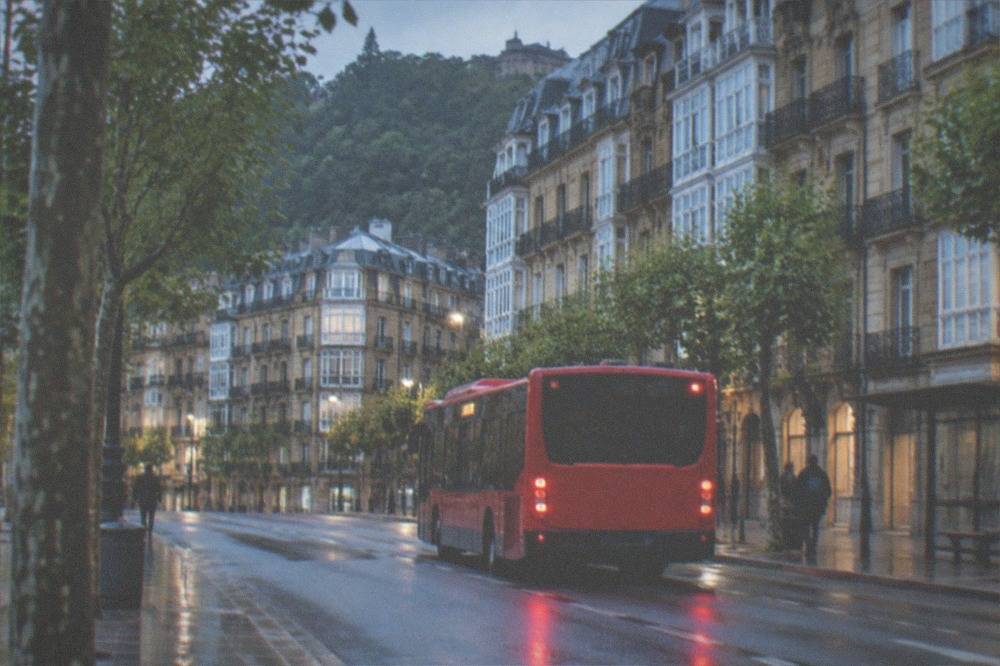
The comparison that decides it is between what a car costs to keep in a city, in fees, in time and in stress, and what the alternatives cost. The alternatives here are unusually cheap and unusually well documented. The dBus city network's own fare page lists a cash occasional ticket at 1.95 EUR and a special night ticket at 2.65 EUR, and the MUGI card system, which covers city buses, Lurraldebus regional buses and Euskotren trains across Gipuzkoa, prices an anonymous card trip inside the urban zone at 0.78 EUR. Cash payment on dBus does not allow free transfers, the operator notes, which is one reason the card is the better tool for a multi-stop day.
There is also a cost arriving in 2027 that drivers and non-drivers alike will share. Norma Foral 3/2026 of Gipuzkoa, published in the Boletín Oficial del País Vasco on 25 June 2026, creates a tourist tax on paid stays from 1 January 2027, with bands per person per night that each council sets inside, for example up to 6.50 EUR for five-star hotels and up to 3.50 EUR for tourist apartments, charged for at most six nights and exempting under 18s. Nobody pays it before that date, and the rate San Sebastián's own council will apply has not been confirmed on an official page, so no single figure for this city can be printed. It applies to accommodation, not to parking, but it belongs in any honest budget for a trip here.
The one place a car is a genuine convenience is the city's own hill of Monte Igueldo, whose own site states that parking during the visit is free if you come by road. That is the single verified parking fact on this page, and it is worth having: the hill's funicular and viewpoint are among the city's signature sights, and driving up removes the queue for the funicular from the equation. The details of that visit, including the funicular's own fares, are covered further down this page.
A shared coach day trip is the cleanest answer for a visitor who wants to leave the driving to someone else for a full day, and the Pamplona option above does exactly that, with a bilingual guide and lunch left to arrange yourself. For a shorter taste of the same idea, the small-group electric bike tour covers the city itself on two wheels, which is the mode San Sebastián is arguably best suited to of all.
What Does It Cost To Leave The Car Behind In San Sebastian?
A single cash bus ride in San Sebastián costs 1.95 EUR, or 2.65 EUR on the special night ticket, while a MUGI anonymous card trip inside the urban zone costs 0.78 EUR and a one-jump trip beyond it, such as the Euskotren Topo ride to Hendaia, costs 2.90 EUR as an occasional fare. Those are the fares the operators themselves publish, and they are the numbers to weigh against whatever your car costs to park, feed and worry about.
The full MUGI tariff, from the system's own fare page, prices trips by the number of zone jumps, and the table below shows the tiers that matter to a visitor. The urban zone is defined on that page as Donostia and the Pasaia motorboat area, so the harbour ferry sits inside the urban fare.
| Ticket | Urban, 0 jumps | 1 jump | 2 jumps | 3 jumps |
|---|---|---|---|---|
| Occasional ticket, cash | 1.95 EUR | 2.90 EUR | 5.40 EUR | 7.90 EUR |
| Night ticket | 2.65 EUR | 3.70 EUR | 6.45 EUR | 8.95 EUR |
| MUGI anonymous card | 0.78 EUR | 1.16 EUR | 2.16 EUR | 3.16 EUR |
The Topo train is the quiet star of that tariff. Computed from Euskotren's own timetable data, the ride from Amara-Donostia to Hendaia on the French border takes 37 to 38 minutes, with departures every 30 minutes on the busiest service day, and the occasional fare is 2.90 EUR, matching the MUGI one-jump cash fare. That is a cross-border excursion for less than the price of a coffee in most capitals, with no parking at either end. One caveat: a new underground section of the Topo inside the city is under construction, and the Basque Government announced in June 2026 that the railway civil works are complete with fitting-out under way, but no opening date has been published, and Amara remains the working terminus.
The cost question runs both directions, of course, and the broader budget picture, from pintxos to hotels, is covered in is San Sebastian expensive. What the transport numbers here show is that the penalty for arriving without a car is close to zero, while the penalty for arriving with one is a daily search for space in a city that was never drawn with cars in mind.
How Does Parking Work At Monte Igueldo?
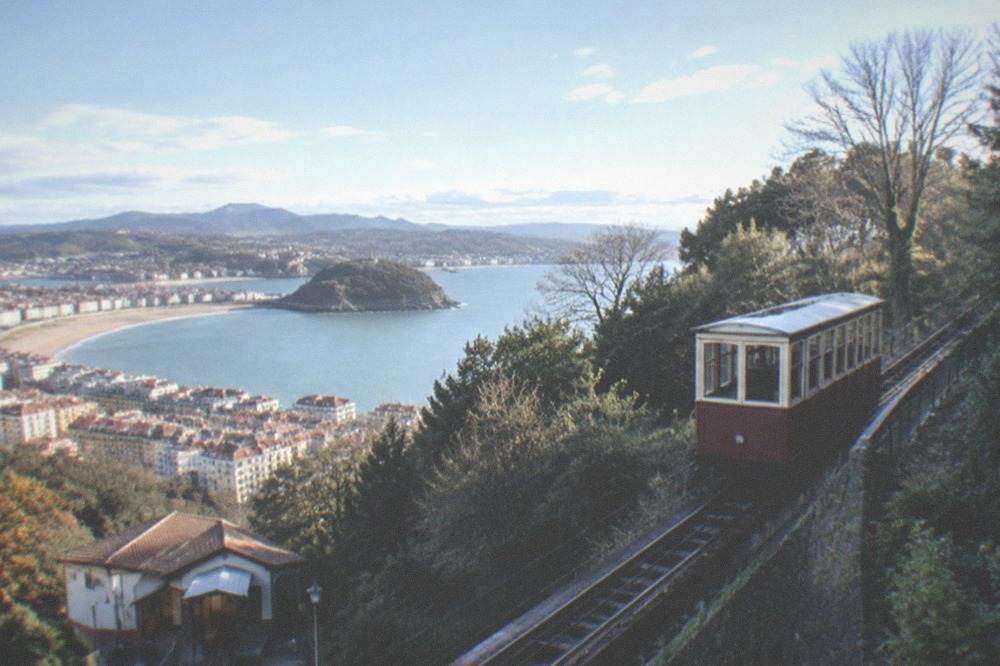
Monte Igueldo, the hill at the west end of San Sebastián's bay, offers free parking during your visit if you arrive by road, according to the site's own home page, and the funicular that also serves the hill charges 5.50 EUR for a return adult ticket and 4.00 EUR for a single, with the return ticket including entry to the grounds. Entry to the grounds and viewpoint for anyone arriving by vehicle or on foot is 3.00 EUR per person.
The funicular itself is a piece of working history: it opened on 25 August 1912, and the tourism board calls it the oldest funicular in the Basque Country, a rack railway with wooden cars. It normally runs every 15 minutes, on the hour, quarter past, half past and quarter to, with extra runs when it is busy, according to the operator's own FAQ. Two practical warnings come straight from the operator's pages: downhill-only funicular tickets are not on sale, so the idea of walking up and riding down does not work here, and rides close on rainy days, which in a city recording rain on about 141 days a year is a real planning factor rather than a footnote. The full index of guides sits on San Sebastian Spain Guide.
| Monte Igueldo ticket | Adult | Child, up to 7 years |
|---|---|---|
| Funicular return, grounds entry included | 5.50 EUR | 2.50 EUR |
| Funicular single | 4.00 EUR | 1.50 EUR |
| Grounds and viewpoint entry, by vehicle or on foot | 3.00 EUR per person | 3.00 EUR per person |
| Special ticket, animals and packages | 2.50 EUR | 2.50 EUR |
Group discounts of a 4.50 EUR return fare apply to groups of 20 or more, disabled card holders and San Sebastián Card holders, but the operator states that group discounts do not apply on weekends, holidays or long weekends. The hill's daily opening hours sit behind a date selector on the site and could not be read from the page text, so check the operator's own site before setting out. The payoff at the top is the view over the bay and the Peine del Viento below, Eduardo Chillida's three steel sculptures, each weighing more than nine tonnes, anchored to the rocks with a pink granite plaza by the architect Luis Peña Ganchegui.
What If You Are Driving In From The Airport?
If you are arriving at San Sebastián Airport at Hondarribia, 20 km from the city, do not plan around bus line E21, because the operator states it has not stopped at the airport since 1 June 2026, despite a stale tourism page that still names it. The lines the operator currently lists as serving the airport are E20, E23, E25, E27, E28, E29 and E30, and E30 is the direct service between the city and the airport.
That E21 correction matters because it is exactly the kind of detail a general search result gets wrong, the tourism board's own page still carries the old line. The operator's airport page is the source that counts, and the E30 page carries a timetable as a PDF, stamped as updated in June 2026, with the warning that times are approximate because of traffic. The journey time from the airport and its fare zone are not stated in the sources read for this page, so neither is printed here.
| Lurraldebus airport line | Status per the operator |
|---|---|
| E21 | Does not stop at the airport since 1 June 2026 |
| E30 | Direct service, Donostia to and from the airport |
| E20, E23, E25, E27, E28, E29 | Listed among the airport services |
Arrivals at Bilbao Airport, 105 km away, have their own long-distance coach option: the Basque Government's airport page lists the PESA Lurraldebus service with a San Sebastián fare of 17.10 EUR and a journey of roughly 75 minutes, running hourly through the day, though that page carries no date and the operator should be re-checked before any booking. Biarritz Airport in France sits 45 km away, and the tourism board lists direct service to San Sebastián, but no operator, fare or frequency for that route could be confirmed from an official page, so none is stated here. The full arrival picture, including which airport to choose, is worth reading before you commit to a flight.
Does The Weather Change The Parking Picture In San Sebastian?
Yes, because San Sebastián is a wet Atlantic city, not a Mediterranean one, and the rain changes both the walking you will do and the funicular rides you will not. AEMET's normals for its Igeldo station, period 1981 to 2010, record 1,507 mm of rain a year over 141 days, with November the wettest month at 169 mm and July the driest at 86 mm. August, at 117 mm, is wetter than June, July or September.
The station sits at 250 metres on Monte Igeldo, so the seafront runs slightly warmer than these values, but the pattern holds: there is no dry month here, and any plan built around guaranteed sunshine is built on sand. The table below gives the rain figures for the months when visitors come.
| Month | Mean temperature | Rain mm | Days with 1 mm or more | Sun hours |
|---|---|---|---|---|
| May | 14.4 C | 120 | 12.2 | 181 |
| June | 16.9 C | 90 | 10.6 | 189 |
| July | 18.9 C | 86 | 9.8 | 196 |
| August | 19.5 C | 117 | 10.5 | 190 |
| September | 18.0 C | 111 | 10.1 | 179 |
| October | 15.5 C | 159 | 11.8 | 140 |
For a driver, the practical reading is that the Monte Igueldo funicular closes on rainy days, so the free parking at the top is only a plan A. For everyone else, the rain is an argument for the compact, sheltered shape of the city: the old town's pintxo bars, the market and the museums sit close enough together that a downpour costs you a few minutes rather than a soaked drive. The month-by-month detail, including which months balance rain against crowds best, is in the best time to visit and San Sebastian weather.
Can You Skip The Car For Day Trips From San Sebastian?
Yes, and for most day trips a car is actively worse, because the best destinations around San Sebastián are places where parking is harder than in the city itself. Getaria, Hondarribia, Pasaia, Zarautz and Zumaia are small coastal towns, Biarritz and Saint-Jean-de-Luz sit across a border where a coach handles the paperwork-free drive, and the cider houses of Astigarraga are served by the same MUGI fare system as the city buses.
The coach day trips solve the problem completely. The trio below covers a shared Pamplona run, a guided walk of the city centre for the day you stay put, and an electric bike tour that turns the flat bay into your road. The trade-off with a shared coach is simple: you trade the freedom of a steering wheel for a guaranteed space at every stop, and in high summer that trade is almost always worth it.
The Camino de Santiago offers a third answer for the energetic: the tourism board lists the coastal route's stages through Gipuzkoa, and the city sits on stage two, Pasaia to Donostia, and stage three, Donostia to Orio, so a car-free walking day is built into the landscape. The cider season adds a seasonal one, with the txotx ritual running from the middle of January to the end of April by the tourism board's rule, and a cider house visit with lunch included removes the question of who drives home. Neither needs a car park, and both are among the experiences that make the region what it is.
For the day you give the car, or the parking meter, a rest, the shared Pamplona coach above is the model: one departure point, one bilingual guide, and a day along the bull run route with lunch left open to choose yourself. The same logic scales down to a half day, which is what the walking tour in the trio offers for the city itself.
The city highlights walk covers the Old Town and the Romantic Area on foot, with separate English and Spanish departures, and it is the answer for the visitor whose car is parked for the week and who wants the centre explained rather than merely crossed. Between the coach, the walk and the bike, the only thing left to decide is which day each one gets.
Common Questions About Parking In San Sebastian
Is parking free anywhere in San Sebastian?
The one verified free parking fact for the area is Monte Igueldo, whose own site states that parking during your visit is free if you come by road. No central car park in the city had its prices checked against an official source for this page, so treat any specific figure you read elsewhere with caution and confirm with your accommodation before arrival.
Do I need a car in San Sebastian?
Almost never. The city is compact, the bay is flat, the cash bus fare is 1.95 EUR and the MUGI card fare inside the urban zone is 0.78 EUR, and the Topo train reaches the French border at Hendaia in about 37 to 38 minutes. A car earns its keep only for self-directed touring into rural Gipuzkoa or along the French coast at your own pace.
Can I park at Monte Igueldo?
Yes, the hill's own home page states that parking during the visit is free for those arriving by road. Remember that the funicular closes on rainy days, that downhill-only tickets are not sold, and that grounds entry is 3.00 EUR per person for those arriving by vehicle or on foot, while the funicular return at 5.50 EUR includes grounds entry.
Is there a bus from San Sebastian Airport into the city?
Yes, but not line E21: the operator states E21 has not stopped at the airport since 1 June 2026. The current airport lines are E20, E23, E25, E27, E28, E29 and E30, and E30 is the direct service between the city and the airport. The journey time and fare zone are not stated in the official sources read for this page.
What is the best way to get around San Sebastian without a car?
On foot first, then by dBus city bus at 1.95 EUR cash or 0.78 EUR on a MUGI anonymous card, and by Euskotren Topo for trips along the coast, where the occasional fare to Hendaia is 2.90 EUR. Note that cash bus payment does not allow free transfers, so a card saves money on any day with more than one ride.
Does the tourist tax affect drivers visiting San Sebastian?
The tax applies to accommodation stays, not to parking, and it is not charged before 1 January 2027. Norma Foral 3/2026 of Gipuzkoa sets bands per person per night, such as up to 6.50 EUR for five-star hotels and up to 3.50 EUR for tourist apartments, charged for at most six nights with under 18s exempt. The rate San Sebastián's own council will apply has not been confirmed on an official page, so no single city figure can be given.
The short version of all of it: San Sebastián is a city that rewards arriving light, and the verified numbers, a 1.95 EUR bus ride, a 5.50 EUR funicular return, free parking on Monte Igueldo, all point the same way. Park once if you must, then let the bay, the old town and the Topo train do the moving, and save the car for the day trips a coach can drive better anyway.