How Long Does It Take To Walk To Gaztelugatxe?
How long the walk to Gaztelugatxe takes from San Sebastián, what the climb to the hermitage involves, and how to fit it into a day trip from the Basque Country's La Concha bay city.
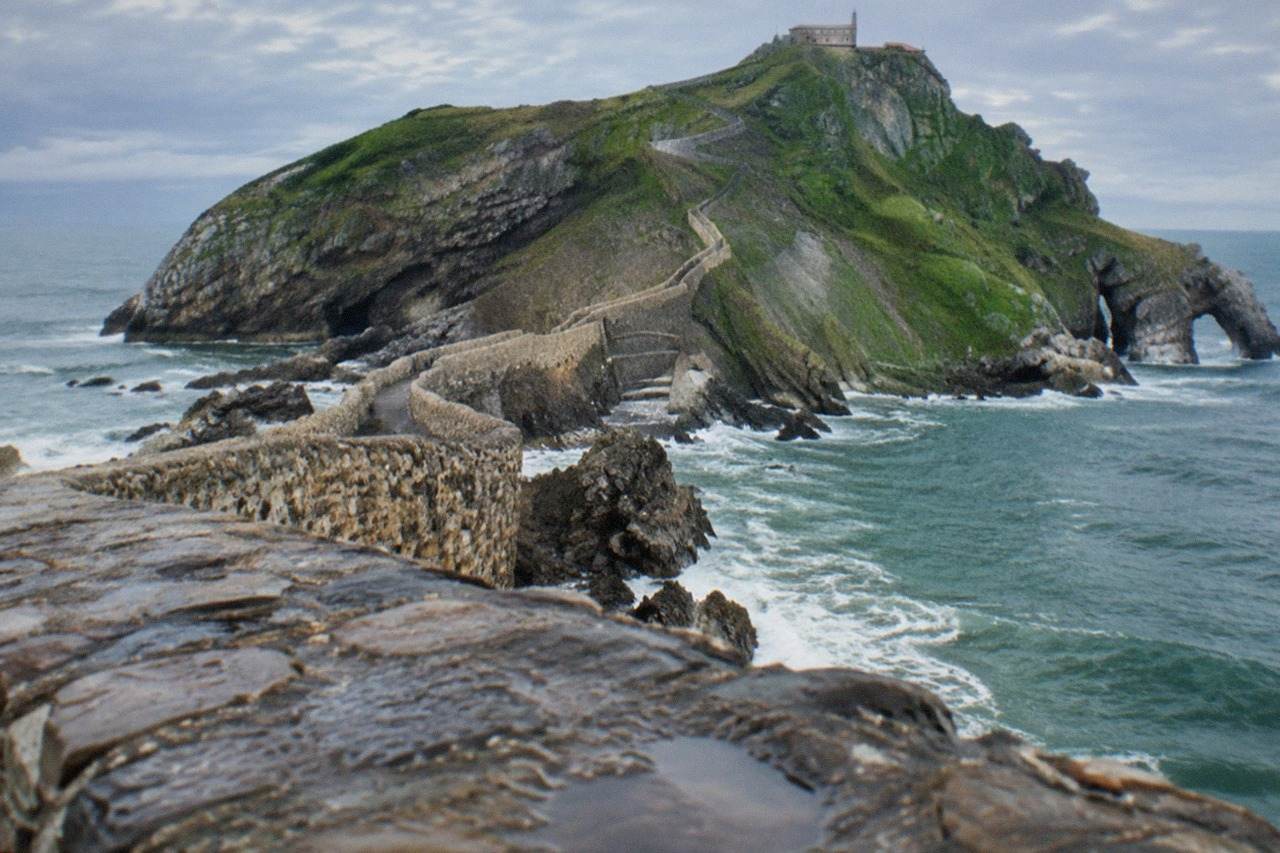
Gaztelugatxe is a rocky islet on the Basque coast, crowned by a small hermitage and reached across a stone causeway and up a long staircase, and every visit from San Sebastián, the Basque name Donostia, is a day trip out along the coast toward Bilbao. The question of how long the walk takes has two honest parts: the climb itself, and the day you spend getting there and back. The official record this site works from publishes no single walking time for the staircase, so this page describes what the walk actually is, what a visit from San Sebastián involves, and where to check the current detail before you set out.
How Long Does It Take To Walk To Gaztelugatxe?
The walk to Gaztelugatxe is the climb from the causeway up a narrow stone staircase to the hermitage on the summit, and no official source in this site's verified record publishes a single walking time for it. The shape of the visit is certain: you cross the causeway to the foot of the rock, climb the steps to the hermitage, and return the same way. Budget the climb as the slowest part of your day, and check current access detail before travelling from San Sebastián.
That answer may feel evasive, so it deserves an explanation. A great many pages on the internet print a precise minute count for the staircase, and those numbers disagree with each other, which is usually the sign of a figure nobody has checked at the source. This site, San Sebastian Spain Guide, publishes only what an official or primary source confirms, and what Gaztelugatxe's sources confirm is the geography and the access, not a timed ascent.
What the record does confirm is that the monument is a hermitage on a rocky islet, that it sits on the Basque coast reached on a day trip from San Sebastián, and that small-group tours from the city run there and continue to Bilbao and the Guggenheim on the same day. The full Gaztelugatxe day trip guide on this site covers the journey in detail, including the practical questions that change from season to season.
One planning point is worth fixing early: the staircase is a there-and-back walk on a single narrow route. There is no loop, no second path and no road to the top. Everyone who reaches the hermitage climbs the same steps, in both directions, whatever the weather is doing, and on this coast the weather does a great deal. AEMET's normals for its Igeldo station above San Sebastián record 1,507 mm of rain a year over 141 rain days, and even July, the driest month, averages 86 mm. A wet staircase above the Atlantic is a different walk from a dry one, and the time it takes changes with it.
Where Is Gaztelugatxe From San Sebastian?
Gaztelugatxe is not in San Sebastián, and no walk within the city reaches it. It is a coastal islet with a hermitage, visited from San Sebastián as a day trip along the Basque coast in the direction of Bilbao, and the small-group day tours from the city pair it with Bilbao and the Guggenheim museum in a single outing. The city itself, whose official name is Donostia / San Sebastián, sits on La Concha bay in Gipuzkoa.
The geography matters because search results for this question are full of confusion between places that share the name. The San Sebastián that Gaztelugatxe belongs to is the Basque city on La Concha bay, in the province of Gipuzkoa in northern Spain. It is not San Sebastián in Puerto Rico, not the San Sebastián Winery in St. Augustine, Florida, and not San Sebastián de los Reyes near Madrid. Gaztelugatxe itself lies outside the city entirely, on the coast to the east, which is why every visit is a day trip.
The table below sets out the realistic ways to build the visit into a stay in San Sebastián, using only what the verified tour record states about each option.
| Option | Starts from | What it involves | Suits |
|---|---|---|---|
| Small-group day tour pairing Gaztelugatxe with Bilbao and the Guggenheim | San Sebastián bus station | Coach or minibus day to the hermitage, then on to Bilbao and the Guggenheim | Visitors who want the coast and the city in one outing |
| Independent drive | Your own car or rental | You drive the coast road yourself and walk out to the islet at your own pace | Travellers who want to set their own schedule |
| Gaztelugatxe as part of a wider Basque Coast Geopark day | San Sebastián, by vehicle | The islet sits on the same stretch of coast as the flysch at Zumaia, inside the Basque Coast UNESCO Global Geopark | Visitors with two or more days for the region |
The Geopark line in that table is not decoration. The Basque Coast UNESCO Global Geopark covers Zumaia, Deba and Mutriku, has been a member of the European and Global Geoparks Networks since 2010 and a UNESCO Global Geopark since 2015, and this site has a full guide to the flysch coast around Zumaia that explains how the two combine. A traveller with a car and a spare day can see the islet in the morning and the flysch cliffs in the afternoon.
What Is The Walk To Gaztelugatxe Actually Like?
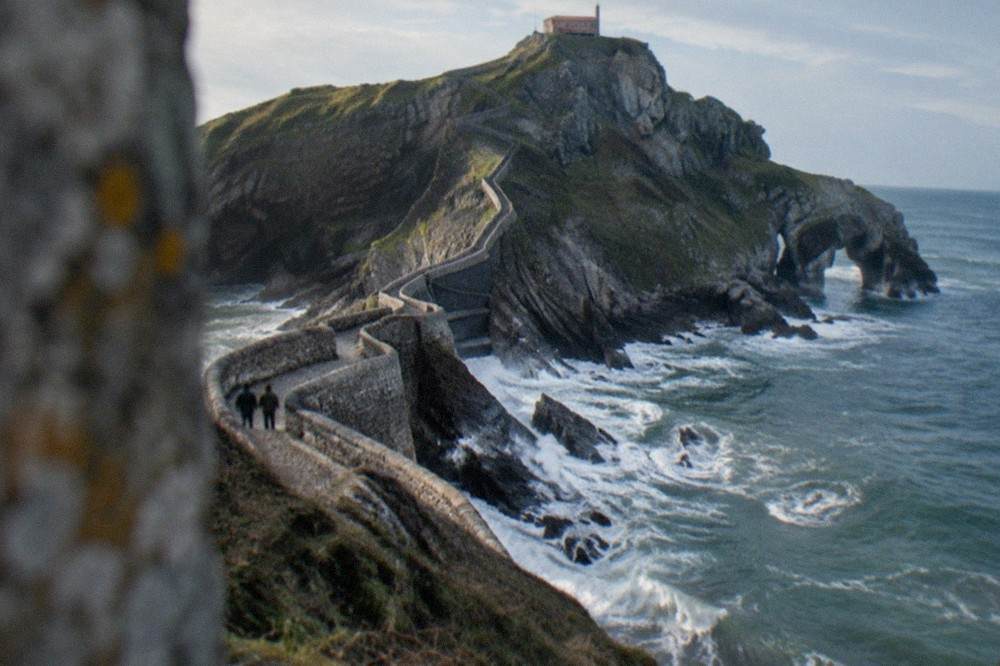
The walk is a stone causeway out to the foot of the rock, then a narrow staircase that climbs the islet to the hermitage at the summit, and you retrace every step on the way back. There is no road, no lift and no alternative route. The staircase is exposed to the Atlantic weather on both sides, and there is no step count, no timed ascent and no shade description, so treat any precise figure you read elsewhere with caution.
Describing the thing itself is more useful than a number anyway. The islet rises from the sea as bare rock, and the path hugs its spine. The causeway crosses the water below it, and from there the steps begin. The hermitage at the top is a small building with a long history of pilgrimage, and the tradition attached to it is part of why the climb exists at all: people have been walking up this rock to ring the bell and make a wish for centuries, long before the viewpoint car parks and the tour coaches. Other pages covering the same trip are gathered on San Sebastian Spain Guide.
The exposure is the detail that changes the experience most. The Basque coast here faces the open Atlantic, and AEMET's climate normals for the San Sebastián station show what that means in practice: November averages 169 mm of rain, October 159 mm, and January 141 mm, with rain days in every single month of the year. On a bright June morning the staircase is a pleasure and a photo opportunity. In an October squall it is a wet, windy, careful walk, and the same climb can take half again as long.
That weather reality is also why the honest answer to the timing question is a range rather than a figure. A dry staircase in comfortable temperatures is climbed at one speed. A crowded staircase in August, when the causeway and steps carry the summer peak of visitors, is climbed at another. And a wet staircase in February, when the Basque coast is at its stormiest, is climbed at a third. The official record publishes none of these times, and this site will not invent them.
What can be planned around is the day as a whole. The small-group day tours from San Sebastián that include Gaztelugatxe continue to Bilbao and the Guggenheim afterwards, which tells you the visit fits comfortably inside a full day excursion alongside a second major sight. If you are driving yourself, plan the route, the parking approach and the access questions in advance, because they change and they are worth confirming before the day itself.
How Hard Is The Gaztelugatxe Walk From San Sebastian?
The difficulty is moderate and comes almost entirely from the staircase: a continuous stone climb with the sea below, taken at your own pace, with a return descent on the same steps. Nothing suggests the path requires equipment or a guide. Wear shoes with grip, take water, and do not attempt the climb in rough weather or high winds. The journey from San Sebastián itself is not a walk at all, it is a drive or coach ride of day-trip length.
For comparison, the steepest walk inside San Sebastián that this site documents in detail is the climb on Monte Urgull, the hill between the Old Town and the sea, whose access hours the tourism board publishes as 08:00 to 21:00 from May to September and 08:00 to 19:30 the rest of the year. The Mount Urgull climbing time page covers that walk. Gaztelugatxe is a different order of outing: not a city hill but a coastal monument, and the effort budget belongs to the whole day.
Families and less confident walkers do make the climb, but the record gives no age guidance, no accessibility statement and no mobility detail for the staircase, so check current conditions with the site or your operator before promising the top to anyone. The Gaztelugatxe ticket questions page on this site covers the access and admission questions, which change and are worth confirming before you travel.
When Is The Best Month To Walk Gaztelugatxe From San Sebastian?
The best months for the walk, judged from AEMET's published normals for the San Sebastián station, are June and July, which have the lowest rainfall of the year at 90 mm and 86 mm respectively, the fewest rain days at 10.6 and 9.8, and the most sun hours at 189 and 196. August records 117 mm of rain, and the October to January period is the wettest stretch of the year.
The full picture from AEMET's 1981 to 2010 normals, recorded at the Igeldo station at 250 m above the city, is worth reading before you pick a date. The seafront runs slightly warmer than these values, but the pattern holds.
| Month | Mean max C | Rain mm | Rain days | Sun hours |
|---|---|---|---|---|
| Jan | 11.0 | 141 | 13.2 | 98 |
| Feb | 11.5 | 110 | 11.6 | 107 |
| Mar | 13.4 | 113 | 12.4 | 144 |
| Apr | 14.5 | 138 | 13.4 | 157 |
| May | 17.7 | 120 | 12.2 | 181 |
| Jun | 20.0 | 90 | 10.6 | 189 |
| Jul | 21.8 | 86 | 9.8 | 196 |
| Aug | 22.5 | 117 | 10.5 | 190 |
| Sep | 21.1 | 111 | 10.1 | 179 |
| Oct | 18.5 | 159 | 11.8 | 140 |
| Nov | 14.0 | 169 | 13.0 | 102 |
| Dec | 11.6 | 151 | 12.4 | 93 |
Two honest readings follow from that table. First, there is no dry month on this coast: even July, the driest, averages 86 mm of rain over about ten days, so a waterproof belongs in the bag whatever the date. Second, the wettest months, November at 169 mm and October at 159 mm, are exactly the months when an exposed stone staircase above the Atlantic is at its least forgiving. If your dates are fixed in late autumn, plan the walk for the morning, watch the forecast, and keep an alternative in mind: this site's rainiest month page and its guide to indoor options cover the city end of that problem.
The summer trade-off is crowds. July and August are the peak hotel months in San Sebastián, with August the single busiest month of the year in the INE hotel series, and the staircase carries that pressure too. June offers nearly the same weather with fewer people on the steps. September is a strong compromise: 111 mm of rain, 21.1 C mean maximums and 179 sun hours, with the family crowds gone.
Common Questions About Walking To Gaztelugatxe
How long does it take to walk to Gaztelugatxe?
The walk is the causeway out to the rock and the stone staircase up to the hermitage, taken there and back. No official source in this site's verified record publishes a timed ascent, so budget generously, treat the climb as the slowest part of a day trip from San Sebastián, and check current access detail with the site or your tour operator.
Is Gaztelugatxe worth visiting from San Sebastian?
Yes, for travellers with two or more days in the region. The islet and its hermitage are among the most striking sights on the Basque coast, and small-group day tours from the city pair it with Bilbao and the Guggenheim. This site's page on whether Gaztelugatxe is worth visiting weighs the case in full.
Do you need a ticket for Gaztelugatxe?
Access arrangements for the islet change and are confirmed on the day by the managing body, so check before you travel. This site keeps the detail on its Gaztelugatxe ticket page, which is updated when the official position changes.
Can you visit Gaztelugatxe and Bilbao in one day from San Sebastian?
Yes. Small-group day tours from the San Sebastián bus station run exactly that pairing, visiting the hermitage and then continuing to Bilbao and the Guggenheim museum. Independent drivers can do the same route themselves, though the parking and access logistics are worth confirming in advance.
What is the best month for the Gaztelugatxe walk?
June and July, on AEMET's published normals: the lowest rainfall of the year at 90 mm and 86 mm, the fewest rain days, and the most sun hours. June has close to July's weather with smaller crowds. Avoid October and November if you can, the two wettest months at 159 mm and 169 mm.
A day on the Gaztelugatxe staircase earns an evening off your feet, and San Sebastián is the right city for it. The premium pintxo, wine and market tour below starts at the Boulevard and works through the Old Town with reserved seating at each bar, which is exactly the meal a day of coastal walking deserves. Check availability for the evening you get back.
However you build the day, treat the staircase with respect rather than a stopwatch. The hermitage has been climbed by pilgrims for centuries, the weather on this coast changes fast, and the visitors who enjoy Gaztelugatxe most are the ones who left the city early, carried a waterproof in every month, and gave the walk whatever time the Atlantic allowed.