What Is The Rainiest Month In San Sebastian?
November is the rainiest month in San Sebastián, Basque Country, Spain, averaging 169 mm of rain. AEMET's Igeldo station data explains the city's wet Atlantic climate month by month.
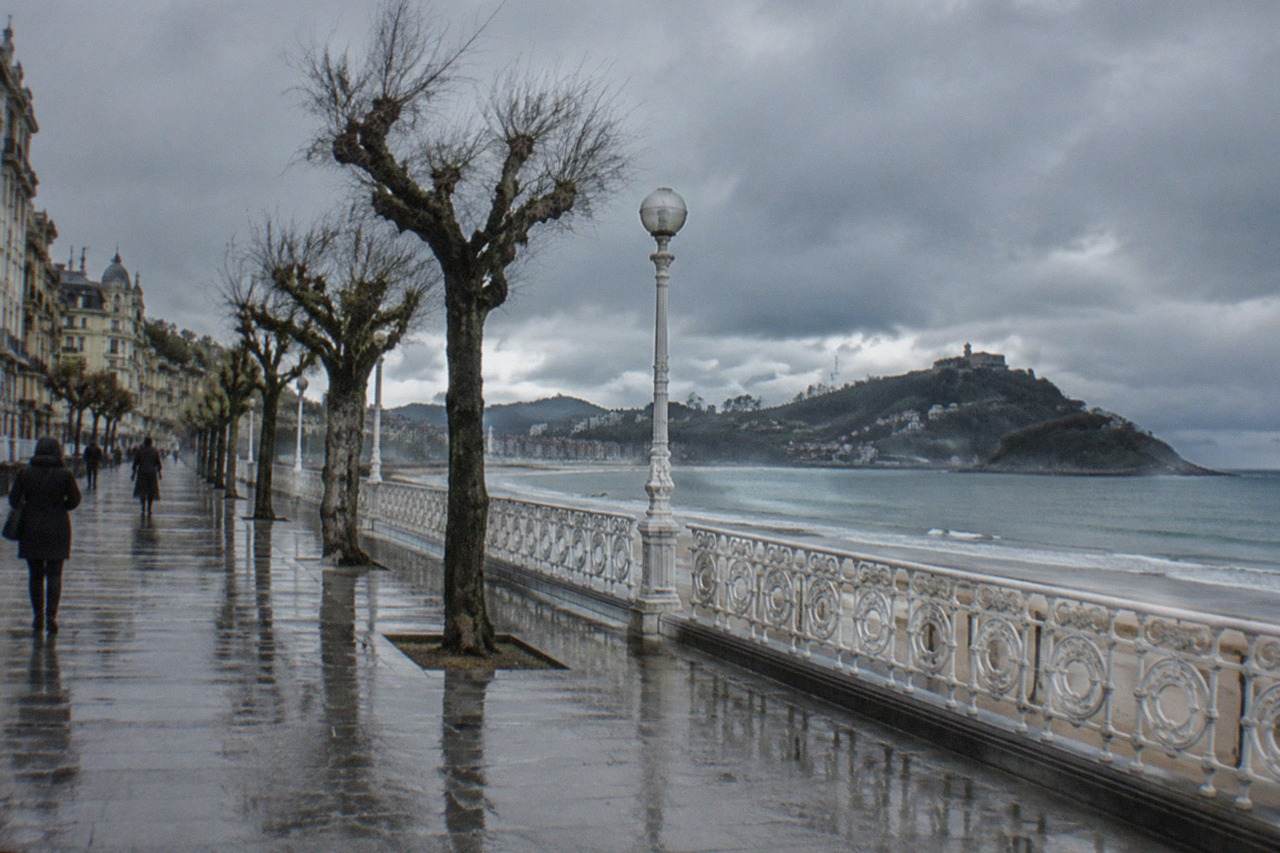
San Sebastián, in the Basque Country of northern Spain, is a wet Atlantic city, and the question of its rainiest month has a clear answer in the published climate record. AEMET, the Spanish state meteorological agency, keeps a station called Donostia / San Sebastián, Igeldo, sitting 250 metres up on Monte Igeldo, and its climate normals for the period 1981 to 2010 put November firmly at the top of the rainfall table. The city's Basque name is Donostia, and its official municipal name is Donostia / San Sebastián, but the rain does not care which name you use: it arrives off the Bay of Biscay year after year, in every single month, without exception.
What Is The Rainiest Month In San Sebastian?
November is the rainiest month in San Sebastián, averaging 169 mm of rain over about 13 days with at least 1 mm of precipitation, according to AEMET's climate normals for its Igeldo station, which cover the period 1981 to 2010. The station sits 250 metres up on Monte Igeldo, so the seafront below runs slightly warmer and slightly drier than these figures suggest. December follows closely behind, with 151 mm over 12.4 rain days.
The gap between November and everything else is real but not enormous. October records 159 mm, December 151 mm, and January 141 mm, so the four-month block from October to January carries the bulk of the year's rain. The annual total is 1,507 mm spread over 141.1 days with measurable rain, which works out to rain on roughly two days in every five across the year. That annual figure comes from the same AEMET normals for the Igeldo station, and it is the number that explains the city's green hills, its lush parks such as Cristina Enea, and the umbrella racks outside every pintxo bar in the Parte Vieja.
One detail worth knowing before packing: November is also one of the darkest months on the sunshine table, with just 102 hours of sun against July's 196. The month pairs its peak rainfall with short days and a mean temperature of 11.3 C, with a mean daily maximum of 14.0 C. It is a month for long lunches and museum afternoons rather than beach time, and the city's own rhythm reflects that: hotel occupancy figures from INE show November 2025 brought 147,334 overnight stays in the city's hotels, well down on the 245,769 of the August peak.
How Much Rain Does Each Month Get In San Sebastian?
Every month of the year averages at least 86 mm of rain in San Sebastián, and no month in the AEMET Igeldo record is dry. July is the driest at 86 mm over 9.8 rain days, while November peaks at 169 mm over 13.0 days. The monthly figures below come from AEMET's climate normals for the period 1981 to 2010, the series the station itself publishes, and the seafront typically runs a little milder than the station's elevated position records.
The table below shows the full monthly picture, combining rainfall, rain days and sunshine hours from the same AEMET normals.
| Month | Rain (mm) | Days with 1 mm or more | Sun hours | Mean max (C) |
|---|---|---|---|---|
| January | 141 | 13.2 | 98 | 11.0 |
| February | 110 | 11.6 | 107 | 11.5 |
| March | 113 | 12.4 | 144 | 13.4 |
| April | 138 | 13.4 | 157 | 14.5 |
| May | 120 | 12.2 | 181 | 17.7 |
| June | 90 | 10.6 | 189 | 20.0 |
| July | 86 | 9.8 | 196 | 21.8 |
| August | 117 | 10.5 | 190 | 22.5 |
| September | 111 | 10.1 | 179 | 21.1 |
| October | 159 | 11.8 | 140 | 18.5 |
| November | 169 | 13.0 | 102 | 14.0 |
| December | 151 | 12.4 | 93 | 11.6 |
Two surprises hide in that table. The first is April, which records 138 mm and 13.4 rain days, marginally more rain days than November itself, even though April sits in the spring half of the year. The second is August, the warmest month and the peak of the tourist season, which at 117 mm is wetter than June, July and September. A summer visitor who packs only beachwear is gambling. The August rain tends to fall in heavier, shorter bursts than the long drizzly fronts of November, but it falls all the same, and INE's hotel data show August 2025 was the city's busiest month for hotel overnight stays, with 245,769 nights recorded, so plenty of visitors meet it.
Why Does It Rain So Much In San Sebastian?
San Sebastián rains so much because it sits on the Atlantic coast of the Basque Country, directly in the path of the wet westerly fronts that cross the Bay of Biscay, and AEMET's Igeldo station records 1,507 mm a year as a result. The city's climate is Atlantic, not Mediterranean: mild winters, warm but unsettled summers, and rain in every month. Its latitude puts it level with northern Portugal and central Spain's northern edge, but its exposed coastline does the rest.
Westerly and northwesterly winds pick up moisture across the bay and drop it on the first high ground they meet, which in the city's case includes Monte Igeldo, Monte Urgull and the Ulia headland east of the Kursaal. The station's own position, 250 metres up on Monte Igeldo, means it catches slightly more rain than the seafront promenade below, so a day the station logs as wet can still hold dry hours down by La Concha. This is a city where the weather forecast is read hour by hour rather than week by week. The full index of guides sits on San Sebastian Spain Guide.
The rain is also the reason the place looks the way it does. The green hills around the bay, the gardens of Miramar Palace running down to the sea, and the park at Cristina Enea all depend on that 1,507 mm annual total. The same record that makes November a poor month for the beach makes the city one of the greenest urban settings on the Spanish coast. For a fuller month-by-month breakdown of temperatures and sunshine alongside the rainfall, the site's San Sebastian weather guide carries the complete AEMET table.
What Is The Driest Month In San Sebastian?
July is the driest month in San Sebastián, averaging 86 mm of rain over 9.8 days with measurable rainfall, and it also records the most sunshine of any month, according to AEMET's Igeldo normals. But even July is not dry in any absolute sense: 86 mm is more rain than many inland Spanish cities see in their entire summer, and roughly one day in three still carries some rain.
The practical reading of July is that it offers the city's best odds rather than a guarantee. The mean daily maximum reaches 21.8 C and the mean minimum 16.0 C, so evenings stay warm, and the seafront runs a touch warmer than the station's elevated figures. September, at 111 mm and 179 sun hours, is the other month visitors often underestimate: it is warmer than June on the mean maximum, 21.1 C against 20.0 C, yet slightly wetter, at 111 mm against 90 mm.
For anyone weighing the driest month against the quietest one, the hotel occupancy record adds a useful angle. July and August together account for 22 percent of the year's hotel overnight stays in the city, and August, the busier of the two, is also the wetter one at 117 mm. September's 216,759 overnight stays sit below August's 245,769, while its rainfall sits below October's. The site's guide to the best time to visit San Sebastian works through those trade-offs month by month.
Does The Rain Ruin A Trip To San Sebastian?
Rain does not ruin a trip to San Sebastián, because the city's main attractions are built for it: pintxo bars, covered markets, museums and a compact walkable centre that moves indoors without effort. AEMET's record shows rain is possible in every month, so the locals plan around it rather than against it, and the city's cultural venues keep full hours through the wettest weeks of the year.
The indoor layer is deep. San Telmo Museoa, in the Old Town, opens Tuesday to Sunday, 10:00 to 19:00 from 1 November to 31 March and 10:00 to 20:00 from 1 April to 31 October, charges 10.00 EUR general admission and 4.00 EUR reduced, and is free for everyone every Tuesday. Tabakalera, the former tobacco factory turned culture centre, offers free access Tuesday to Sunday and holidays from 10:00 to 21:00, with its exhibition halls open 11:00 to 13:00 and 16:00 to 20:00. The Aquarium keeps its doors open all year except 25 December, 1 January and 20 January, running daily 10:00 to 20:00 in July and August.
| Venue | Hours | Admission |
|---|---|---|
| San Telmo Museoa | Tuesday to Sunday, 10:00 to 19:00 winter, 10:00 to 20:00 summer | 10.00 EUR, free every Tuesday |
| Tabakalera | Tuesday to Sunday and holidays, 10:00 to 21:00 | Free access |
| Aquarium | Daily 10:00 to 20:00 in July and August; closed Mondays October to March except long weekends | On the venue's own ticketing |
| Chillida Leku, Hernani | Daily 10:00 to 19:00 except Tuesday and Wednesday | 14 EUR adults, 7 EUR under 18 |
Then there is the eating. A wet afternoon in the Parte Vieja is arguably the city's signature experience, moving from bar to bar with a glass of txakoli while the rain comes off the bay. The Old Town pintxo crawl scene works in any weather, and a guided food tour turns a rainy stretch into the plan rather than the fallback.
The Old Town's covered arcades and the bar density around Plaza de la Constitución mean a visitor can eat well for hours without standing in the open. The site's overview of things to do in San Sebastian separates the weatherproof options from the beach-and-boat ones, which is the split that matters when the forecast turns wet.
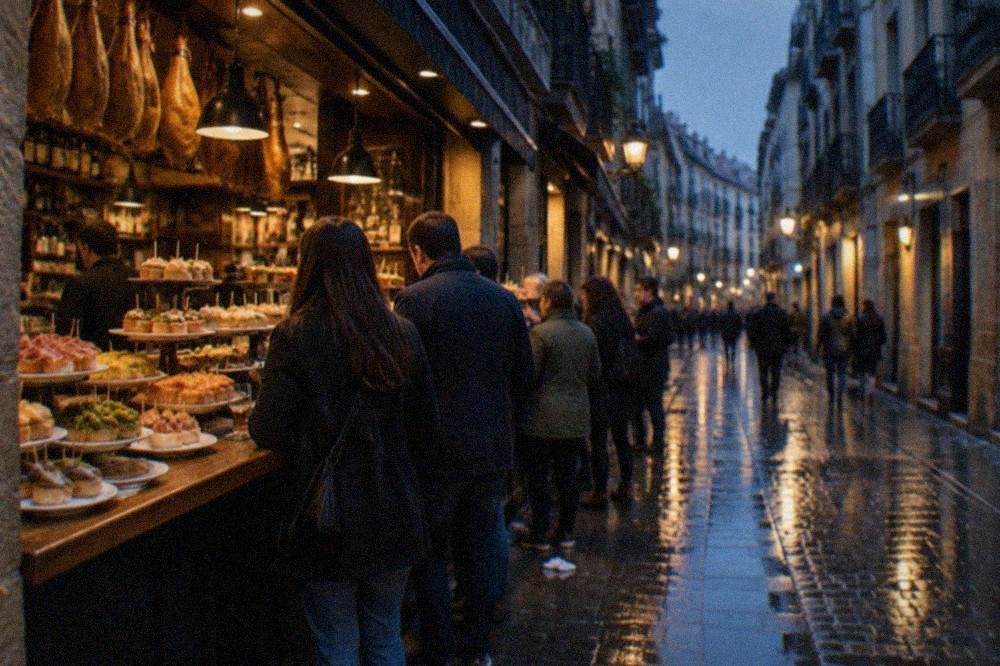
A rainy stretch is also the moment the city's food culture earns its reputation. The same weeks that empty the beaches fill the bars, and the tours that suit the weather best are the ones built around tables, kitchens and market halls rather than viewpoints. The three options below cover that ground: a small-group cooking experience that opens with a market visit, a short guided walk that ends with a pintxo and a drink included, and the capped eight-guest pintxo tour this page recommends as its rainy-day plan.
Common Questions About San Sebastian Rain
What is the rainiest month in San Sebastian?
November is the rainiest month in San Sebastián, averaging 169 mm of rain over about 13 rain days at AEMET's Igeldo station, based on the climate normals for 1981 to 2010. October and December follow, at 159 mm and 151 mm respectively.
Does it rain a lot in San Sebastian?
Yes. AEMET's Igeldo station records 1,507 mm of rain a year over 141 days with at least 1 mm, and no month averages under 86 mm. It is a wet Atlantic city, not a dry Mediterranean one.
What is the driest month in San Sebastian?
July is the driest month, averaging 86 mm over 9.8 rain days, and it also has the most sunshine, 196 hours. Even so, rain remains possible on some July days.
Is August rainy in San Sebastian?
August averages 117 mm of rain over 10.5 days, which makes it wetter than June, July or September despite being the warmest month of the year. August rain often falls in shorter, heavier bursts rather than all-day drizzle.
When is the wet season in San Sebastian?
The wettest stretch runs from October to January, when every month averages at least 141 mm. November is the peak at 169 mm, and the sunshine total drops to between 93 and 140 hours a month across that block.
Is San Sebastian worth visiting in November?
Yes, if the plan leans on food and museums rather than beaches. Hotel overnight stays in the city drop well below the summer peak in November, the pintxo bars run at full tilt, and San Telmo Museoa is free every Tuesday of the month.
The short version: pack for rain whenever you come, check the hour-by-hour forecast rather than the daily one, and treat a wet day as a pintxo day. November earns its reputation as the rainiest month in San Sebastián, but the city has spent a century perfecting the indoors.