Is Mallorca Or San Sebastian Better?
A plain comparison of Mallorca and San Sebastián in the Basque Country, Spain: food, beaches, weather, reachability and trip length for the Spanish city.
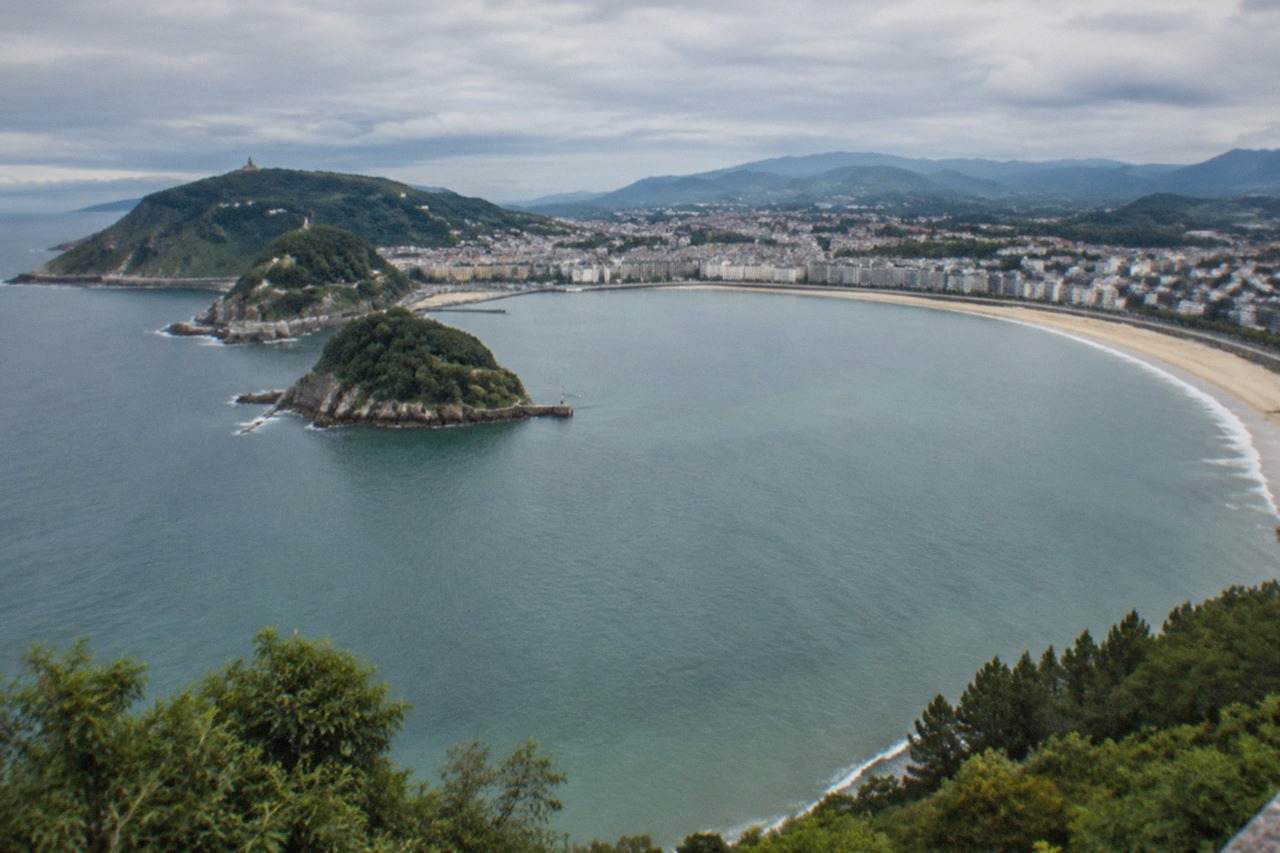
Mallorca and San Sebastián could hardly be more different destinations, and the honest answer is that the better one depends entirely on what the trip is for. San Sebastián, known in Basque as Donostia, is a compact city of 189,866 people on La Concha bay in Gipuzkoa, in the Basque Country of northern Spain. Mallorca is the largest of the Balearic Islands, a Mediterranean destination whose whole economy leans on sun, sea and long beach seasons. One is a food-and-city break that can be walked end to end, the other an island built for a slower, sunnier, more sprawling kind of holiday.
Is Mallorca Or San Sebastian Better?
San Sebastián is the better choice for a short trip built around food, walking and city life, while Mallorca is the better choice for a beach-centred holiday with dependable summer sun. The Basque city packs 11 Michelin stars across 6 restaurants inside its municipal boundaries, per the MICHELIN Guide Spain 2026, into a walkable centre, but its weather is wet Atlantic greenery. Mallorca trades that gastronomic density for a Mediterranean beach season San Sebastián simply does not have.
Neither place is a substitute for the other, so the comparison is really a question about the holiday you want. A visitor who books San Sebastián expecting a sun-and-sand week will meet AEMET's Igeldo station figures: 1,507 mm of rain a year spread over 141 rain days, and even July, the driest month, averages 86 mm. A visitor who books Mallorca expecting the pintxo-bar density of the Old Town, the Parte Vieja, will not find it. Deciding which is "better" means deciding which of those two promises matters more.
For the Spanish city, the strongest argument is concentration. Three beaches, two walkable hills, an island in the bay and a food scene that runs from two-euro pintxos to three-star dining all sit within roughly a crescent of bay. The strongest argument for the island is scale and season: a far larger landmass, many separate resort towns, and a summer climate built around swimming rather than around ducking into the next bar when a shower arrives.
Which Suits A Food-Loving Traveller Better?
For food, San Sebastián wins decisively. The MICHELIN Guide Spain 2026 lists 11 stars across 6 restaurants inside the city itself, including the three-star houses Akelaŕe and Arzak, and the wider province of Gipuzkoa holds 19 stars across 11 restaurants. Mallorca has good food but nothing that matches this density in so small a space, and the Basque city adds the pintxo-bar culture of the Old Town on top of the formal dining.
The city's food reputation is not only about stars. The everyday format is the pintxo bar: a small skewered or bread-based bite taken standing at the counter with a drink, moving from bar to bar through the Parte Vieja. The premium end of that culture is bookable, and a guided tasting walk pairs eight pintxos and five drinks with Denomination of Origin wines, led in English or Spanish.
Beyond the bars, the city's calendar is shaped by eating and drinking seasons. The txotx cider-house season runs from the middle of January to the end of April in the tourism board's wording, centred on the cider houses of Astigarraga next door, where the cider is poured straight from the barrel at height and a flat-rate meal follows. Txakoli, the lightly sparkling local white wine, is the other regional signature, and the fishing town of Getaria, a short trip along the coast, is its heartland.
Mallorca's food culture is real, with its own markets, olive oil, almond groves and a growing restaurant scene, but it does not carry the same weight of formal recognition per square kilometre, and the island's dining is spread across towns you drive between rather than stacked along three pedestrian streets. A traveller whose trip is built around eating should pick the Basque city without much hesitation.
What About Beaches And Swimming?
Mallorca is the better beach destination by a wide margin, because its swimming season is longer and its climate is built for it. San Sebastián has three genuine sandy city beaches, La Concha at 1,350 metres, Ondarreta at 600 and Zurriola at 800, per the city council's own figures, but the lifeguard season on all three runs only from 1 June to 30 September, and the Atlantic water and air are cooler than the Mediterranean.
The council's beach page states the details plainly. La Concha is sandy and shallow, with the tide often limiting the usable area; Ondarreta is the family end, with the walk to the Peine del Viento starting at its west end; Zurriola is the open, strong-swell beach, remodelled in 1994, and it is where the surfers go. Between mid-June and mid-September lifeguards watch all three from 10:00 to 20:00.
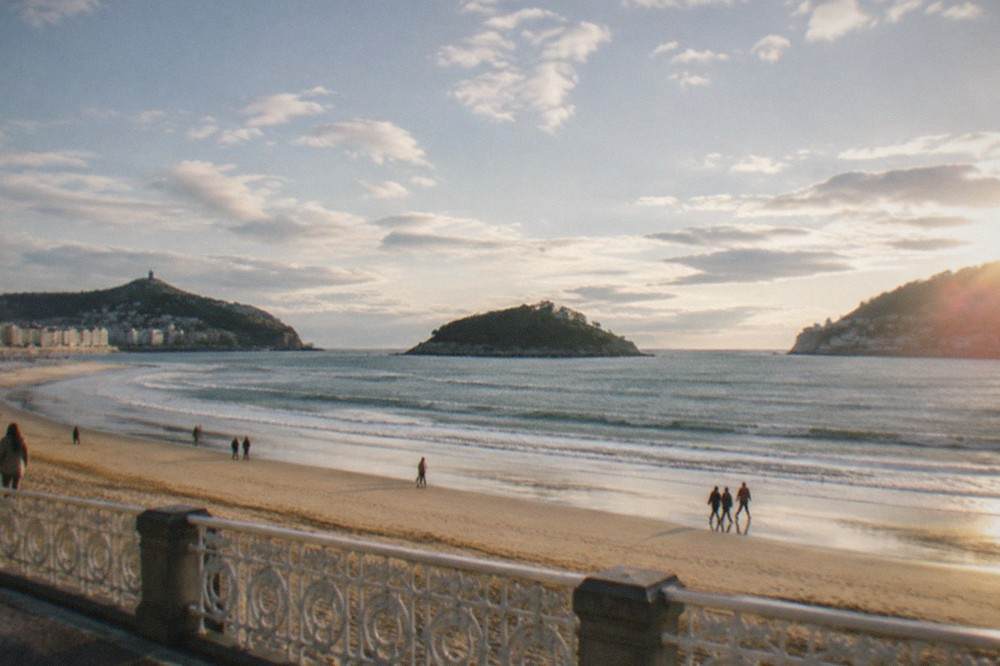
The honest limitation is the water and the sky. The Atlantic here is cooler than the Mediterranean, and the rain arrives on roughly ten days even in the driest month of July. Swimming in San Sebastián is perfectly possible in summer, and plenty of locals swim year-round, but a beach-first holiday is a gamble with the weather in a way it is not on a Balearic island in August.
The council's own numbers for the three city beaches:
| Beach | Mean length | Mean width | Mean area | Character, per the council |
|---|---|---|---|---|
| La Concha | 1,350 m | 40 m | 54,000 m2 | Sandy and shallow, tide often limits usable area |
| Ondarreta | 600 m | 100 m | 60,000 m2 | Sandy, high use, the Peine del Viento walk starts at its west end |
| Zurriola | 800 m | 110 m | 88,000 m2 | Sandy, fairly open, strong swell, remodelled in 1994 |
If your question is really which beach inside the city to pick, the answer depends on whether you want calm shallow water or surf, and that comparison is covered in full on which San Sebastian beach is better.
How Does The Weather Compare?
Mallorca has a Mediterranean climate with hot, dry summers; San Sebastián has a wet Atlantic climate, and the two should not be confused. AEMET's climate normals for its Igeldo station, period 1981 to 2010, give the city 1,507 mm of rain a year over 141 rain days, with no month averaging under 86 mm. August, at 117 mm, is wetter than June, July or September, so even peak summer carries a real chance of rain.
The station sits 250 m up on Monte Igeldo, so the seafront runs slightly warmer than these values, but the pattern holds: green hills, frequent showers, mild summers by Spanish standards. July, the driest month, averages a mean maximum of 21.8 C. That is comfortable walking weather, not sunbathing weather, and it is the reason the city's landscape looks the way it does. Other pages covering the same trip are gathered on San Sebastian Spain Guide.
| Month | Mean max C | Rain mm | Days with 1 mm or more | Sun hours |
|---|---|---|---|---|
| January | 11.0 | 141 | 13.2 | 98 |
| April | 14.5 | 138 | 13.4 | 157 |
| July | 21.8 | 86 | 9.8 | 196 |
| August | 22.5 | 117 | 10.5 | 190 |
| November | 14.0 | 169 | 13.0 | 102 |
The practical reading for a traveller choosing between the two: if the holiday collapses when it rains, Mallorca is the safer bet, and November, the wettest month in the city at 169 mm, is exactly the wrong time to test that. If the holiday survives a shower because the point is bars, restaurants and museums, the city's weather is a minor inconvenience, and the rain is why everything is green. The wettest-month question in detail is answered on the rainiest month in San Sebastian.
Which Is Easier To Reach And Get Around?
San Sebastián is far easier to get around once you are there, because it is a genuinely walkable city of 189,866 residents with everything a visitor wants inside a bay-side core, while Mallorca requires a car or transfers to see beyond one resort base. Reaching the island is usually a direct flight; reaching the city means flying into San Sebastián, Biarritz or Bilbao airport, arriving by train, or driving.
The tourism board lists three airports within a little over 100 km of the city: San Sebastián Airport at Hondarribia, 20 km away, Biarritz at 45 km and Bilbao at 105 km. From the United States there are no direct flights, so most long-haul visitors connect through Madrid, Barcelona or Paris, a question covered on flying to San Sebastian from the US. Mallorca, by contrast, has one of Spain's busiest airports with a huge range of direct European routes, which is a real advantage for it.
On the ground the comparison flips. The city's core, the bay, the Old Town and the two hills can all be done on foot, and the walkability question is examined at length on is San Sebastian a walkable city. The bus fare within the city is 1.95 EUR in cash per the dBus fare page, and the MUGI card cuts that to 0.78 EUR for urban trips. Mallorca's attractions, from the Serra de Tramuntana to the east-coast coves, are scattered across a large island, so a visitor typically rents a car or commits to one base.
One honest cost note for the city: Gipuzkoa's Norma Foral 3/2026 creates a tourist tax that takes effect on 1 January 2027, with bands per person per night that each council sets, up to 6.50 EUR for five-star hotels and up to 3.50 EUR for tourist apartments, charged for at most six nights, with under 18s exempt. Before that date no visitor pays it, and the rate the city itself will apply has not been published, so no single figure can be given here.
Which Is Better For A Short Trip?
For a short trip of one to four days, San Sebastián is clearly better, because the city's entire appeal fits inside a compact bay-side walk and the food scene rewards every evening. Mallorca needs longer: a long weekend on the island tends to become one resort town plus a beach, while the same time in the Basque city covers the Old Town, two beaches, a hill, an island boat and a serious dinner every night.
The city's scale is its strength for short visits. Monte Urgull is open from 08:00, closing at 21:00 from May to September and 19:30 the rest of the year, per the tourism board. The Santa Clara island boat runs its high season from 1 June to 30 September, with a 5 EUR return ticket on the direct red line, and the Hondalea installation in the island lighthouse is free and needs no booking, only the boat. The Monte Igueldo funicular, running every 15 minutes since 1912, adds a viewpoint over the whole bay for a 5.50 EUR adult return. None of this needs a car or more than a couple of days.
For a first visit that wants structure without a fixed group time, a self-guided option works well here: the city's cultural sights and scenic trails can be covered with an audio tour played at your own pace, and you can Check availability on the operator's live listing.
Four days is generally considered the comfortable upper limit for the city itself, and whether that is too much is its own question, answered on is four days in San Sebastian too much. Beyond four days, the better move is not to slow down in the city but to use it as a base: Bilbao and the Guggenheim, the French Basque towns of Biarritz and Saint-Jean-de-Luz, the fishing port of Hondarribia and the txakoli country around Getaria are all short trips away, and a coach day to Bilbao, the Guggenheim and the Gaztelugatxe hermitage is bookable from the bus station.
Mallorca rewards the opposite shape of trip: a week or two, one or two bases, and time to drive the mountain roads. So the rule of thumb is simple. Short, food-led, city-led trip: the Basque city. Long, sun-led, beach-led holiday: the island. And anyone torn between the two should read the fuller comparison of staying in Bilbao or San Sebastian, since the northern-city question often sits behind this one.
Common Questions About Mallorca Or San Sebastian
Is Mallorca or San Sebastián better?
San Sebastián, in the Basque Country of Spain, is better for a short, food-led city break, with 11 Michelin stars across 6 restaurants inside the city per the MICHELIN Guide Spain 2026. Mallorca is better for a beach-centred holiday with a longer, warmer swimming season and a drier Mediterranean summer.
Is San Sebastian warmer than Mallorca?
No. AEMET's normals for its Igeldo station give the city a July mean maximum of 21.8 C and 1,507 mm of rain a year, a wet Atlantic climate. Mallorca's Mediterranean summer is hotter and drier, which is the main reason to pick the island over the city.
Can you swim in San Sebastian like in Mallorca?
You can swim, but the season is shorter and the Atlantic is cooler. Lifeguards are on duty on all three city beaches only from 1 June to 30 September, and La Concha, Ondarreta and Zurriola are Atlantic beaches, not Mediterranean ones.
Which is better for food, Mallorca or San Sebastian?
San Sebastián. The city holds 11 Michelin stars across 6 restaurants in the MICHELIN Guide Spain 2026, and the province of Gipuzkoa holds 19 stars across 11, plus the pintxo-bar culture of the Old Town. Mallorca eats well but does not match this density.
Is San Sebastian more expensive than Mallorca?
Both can be expensive in high season, but the cost structures differ. The Basque city's everyday eating, pintxos at the counter, can be cheap, while its starred dining is among the most sought-after in Spain. A Gipuzkoa tourist tax also takes effect on 1 January 2027, up to the band maximums set by the provincial law.
How many days do you need in San Sebastian versus Mallorca?
The city works well in one to four days because everything sits inside a walkable bay-side core, and longer stays are best spent on day trips to Bilbao, Biarritz or Getaria. Mallorca rewards a week or more, since its sights are spread across a large island and usually need a car.