Is San Sebastian Or Seville Better?
A plain comparison of San Sebastián in the Basque Country and Seville: food, weather, beaches, costs and which city suits which traveller.
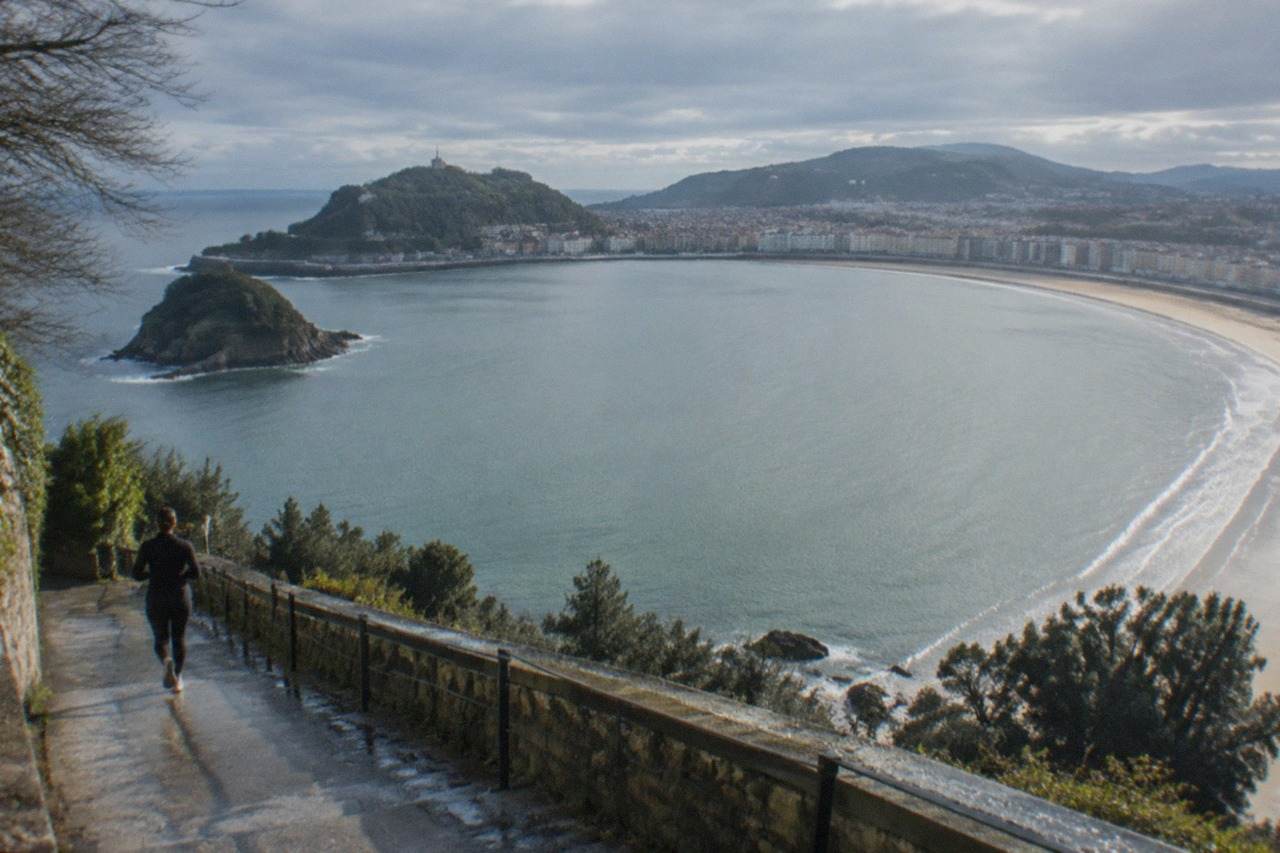
San Sebastián, whose Basque name is Donostia and whose official municipal name is Donostia / San Sebastián, sits on La Concha bay in Gipuzkoa in the Basque Country, in the green corner of Spain that faces the Atlantic. Seville sits inland in Andalusia, on the Guadalquivir river, and belongs to a different Spain entirely: hot, dry, monumental, built around a cathedral, a royal palace and two thousand years of layered history. Comparing them is not a question of which city is objectively better, because they barely compete. It is a question of which one matches the trip you are actually planning, and the honest answer depends on food, weather, pace and what you want to do between meals.
Is San Sebastian Or Seville Better?
Neither city is better for everyone, and the choice splits by what the trip is for. San Sebastián wins for eating, coastal walks and a compact, walkable bay city you can cover on foot. Seville wins for monumental sightseeing, flamenco, Moorish architecture and reliably hot, dry weather. San Sebastián is wet, green and small, with 1,507 mm of rain a year over 141 rain days. Seville is a larger inland city with a fierce summer.
Pick the food and the coast, or pick the monuments and the heat.
That rain figure deserves its place in the first paragraph, because it is the single fact that visitors to San Sebastián tend to get wrong. AEMET's climate normals for its Igeldo station, the period 1981 to 2010, show that even July, the driest month, averages 86 mm of rain over about ten rain days. This is an Atlantic city. Nobody should book it expecting a Mediterranean summer, and anyone who wants guaranteed sun for a week of sightseeing will be happier in Seville.
The reverse also holds. A traveller who cares mainly about eating, one of the most common reasons to come to this coast, will find San Sebastián does something Seville does not: the MICHELIN Guide Spain 2026 counts 11 stars across 6 restaurants inside the city, including two three-star houses, Akelaŕe and Arzak, alongside a pintxo bar culture that runs every night in the Old Town. Seville has an excellent tapas tradition of its own, but it is a different tradition, fried and cold-brewed and built around sherry, not the Basque bar crawl.
Which City Has The Better Food Scene?
San Sebastián has the stronger claim for eating specifically, and it is not close. The MICHELIN Guide Spain 2026 lists 11 stars across 6 restaurants inside the city, the txotx cider house season runs from the middle of January to the end of April, and the Old Town's pintxo bars serve small dishes paired with txakoli, the local white wine. Seville answers with Andalusian tapas: fried fish, jamón, gazpacho and sherry. Both eat late and both eat well, but only one is a global reference city for cooking.
The pintxo is the unit of eating here. It is a small piece, usually on bread, ordered one at a time at the bar and eaten standing, and the Old Town, the Parte Vieja, packs dozens of bars into a few narrow streets. The rhythm of an evening is to move between them, one pintxo and one drink per bar. The tourism board describes the txotx cider season as running from the middle of January to the end of April, when cider houses around the city pour straight from the barrel, and the cider house meal that goes with it is a fixed menu eaten at long communal tables. If that sounds like your kind of night, Seville cannot replicate it.
Seville's counter-argument is real. Its tapas culture is older in feel, built around fried fish from the nearby coast, jamón ibérico, gazpacho and orange-scented salads, with sherry from Jerez an hour away. The setting is different too: you eat in tiled bars under orange trees, not in a dense northern Old Town two streets from a cold bay. A reasonable summary is that Seville feeds you well as part of a monumental city, while San Sebastián is a city you visit in order to eat.
For a first visit, a guided walk that ends in the bars solves two problems at once: orientation and the question of which bars to start in. A shared pintxo tour led by a local does the same for the evening, and a half-day out to Hondarribia and the Pasajes fishing villages shows what the surrounding coast eats.
What About Weather And The Best Time To Visit?
Seville is hotter and drier at every point of the year, and San Sebastián is mild, green and wet, with AEMET's Igeldo station recording 1,507 mm of rain annually over 141 rain days. July is San Sebastián's driest month and still averages 86 mm. August, at a mean of 19.5 C, is its warmest. Seville's summer heat is famous and intense, which pushes its own best season into spring and autumn. Neither city offers a dry summer in the same shape.
The table below shows the San Sebastián side of that comparison, from AEMET's normals for the Igeldo station, period 1981 to 2010. The station sits 250 m up on Monte Igueldo, so the seafront runs slightly warmer than these values. No equivalent verified table for Seville is carried on this site, so Seville's weather is described in character rather than in numbers.
| Month | Mean C | Mean max C | Rain mm | Days with rain >= 1 mm | Sun hours |
|---|---|---|---|---|---|
| January | 8.5 | 11.0 | 141 | 13.2 | 98 |
| April | 11.3 | 14.5 | 138 | 13.4 | 157 |
| July | 18.9 | 21.8 | 86 | 9.8 | 196 |
| August | 19.5 | 22.5 | 117 | 10.5 | 190 |
| November | 11.3 | 14.0 | 169 | 13.0 | 102 |
Two honest readings follow from that table. First, San Sebastián's summer is genuinely pleasant, with mean maxima of 21.8 C in July and 22.5 C in August, but it is not a beach-and-blue-sky guarantee: August is wetter than June, July or September, with 117 mm over 10.5 rain days. Second, the city's shoulder months are not a consolation prize. May averages 181 sun hours and September 179, both with mild temperatures and fewer visitors than August, which is the peak hotel month. INE's hotel occupancy data for 2025 records 245,769 overnight stays in August against 115,910 in January, so the crowd pressure is strongly seasonal.
Seville inverts this. Its summers are hot enough that locals and guidebooks alike steer visitors toward March to May and October, and its spring is when the orange trees and the April fair make the city look its best. If your dates are fixed to July or August and you want heat, Seville is the surer bet. If you want to escape heat, the Basque coast is one of the few places in Spain where a July afternoon can call for a light jacket in the evening.
Which Is Easier To Reach And Get Around?
Both are reachable without a car, and San Sebastián is the smaller and more walkable of the two. San Sebastián's centre, beaches and Old Town sit within flat walking distance of each other, and the city's bus system charges a 1.95 EUR occasional cash fare. Seville is a much larger city, with its monumental core walkable but its districts spread wider, so it rewards a longer stay. San Sebastián works as a two or three day city.
The walkability difference matters more than it sounds. In San Sebastián, La Concha beach, the Old Town, the Centro and the Gros district form one continuous flat strip along the bay, and the council's figures put La Concha at 1,350 m long, so the whole seafront is a single walk. Monte Urgull, the headland between the two beaches, is open from 08:00 to 21:00 between 1 May and 30 September and until 19:30 the rest of the year, and its paths connect the Old Town to the far end of Zurriola without touching a road. The rest of the planning pages sit on San Sebastian Spain Guide.
Getting there differs too. San Sebastián's own airport at Hondarribia is 20 km away and small; Bilbao, 105 km away, is the larger hub, and Biarritz in France is 45 km. Seville has a major airport with far more connections and a high-speed rail line from Madrid. An itinerary built around Andalusia is easier to assemble by train; the Basque Country rewards a slower approach and pairs naturally with Bilbao, Biarritz and the French Basque coast. The question of which city to fly into often answers the wider question of which region the trip belongs to.
Which City Suits Beaches And Nature Better?
San Sebastián wins the beach question outright, because it has three sandy city beaches and Seville is an inland river city with none. The council lists La Concha at 1,350 m, Ondarreta at 600 m and Zurriola at 800 m, all sandy, with lifeguards from 1 June to 30 September. Seville's summer water is a municipal pool or a day trip. For hills, coastal paths and the Camino de Santiago, the Basque coast is also the stronger region.
Zurriola, in the Gros district, is the open one: the council describes it as fairly exposed with a strong swell, which is why it is the surfing beach. La Concha is shallow and sheltered, and the council notes that the tide often limits its usable area. Ondarreta, at the west end under Monte Igueldo, is the family beach, and the walk to the Peine del Viento, Eduardo Chillida's three steel sculptures anchored to the rocks, starts from its far end. All three are free public beaches, and the lifeguard season, 1 June to 30 September, defines the swimming year.
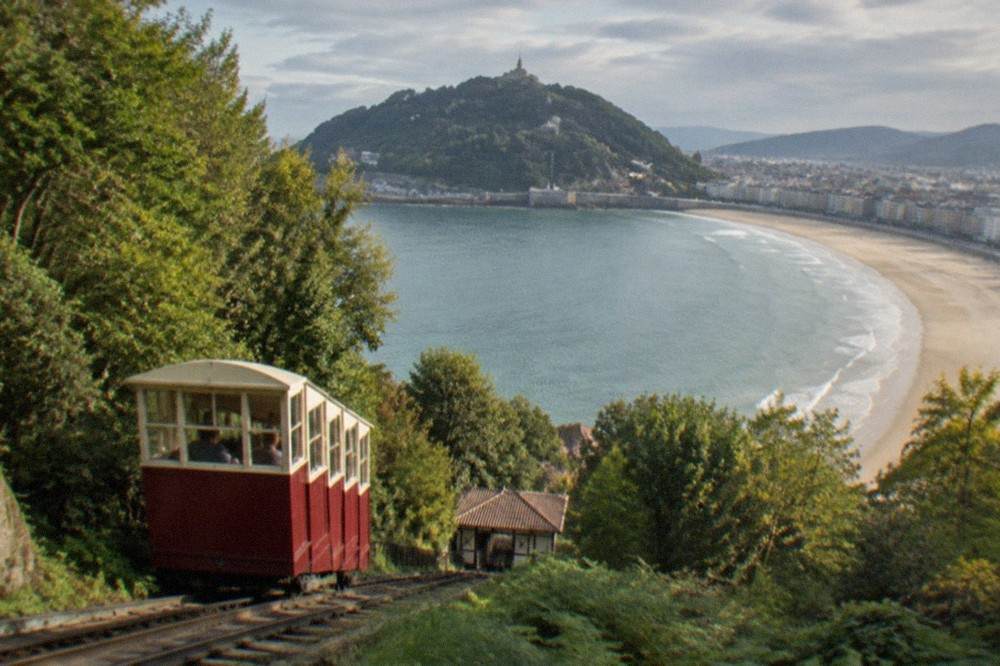
Beyond the beaches, the setting is hilly and green. Monte Igueldo's funicular, opened on 25 August 1912 and described by the tourism board as the oldest in the Basque Country, climbs from Ondarreta to a viewpoint over the whole bay, and its own site lists a 5.50 EUR adult return fare. The coastal route of the Camino de Santiago crosses the city, with Pasaia to the east and Orio to the west as the neighbouring stages. Seville's great outdoor spaces are its riverside, its parks and its patio gardens, lovely in their own right, but it cannot offer a swim before dinner.
Which Is Better For A Short Trip?
San Sebastián is the better short trip, and Seville is the better week. San Sebastián's sights, beaches and eating streets compress into two or three days without strain, and a two-hour guided walk of the historic centre covers the essentials on day one. Seville's cathedral, royal palace, barrios and day trips to Córdoba or Granada need four or five days before it stops feeling rushed. A weekend goes north; a week goes south.
The comparison pages on this site make the same point from other angles. Travellers weighing San Sebastián against Bilbao face a similar size question, and the answer there also turns on how many days are available, as the Bilbao or San Sebastian comparison sets out. Against Mallorca, the same logic applies: the island rewards a slower, longer stay, and that comparison comes down to trip length as much as to character.
Budget behaves differently in the two cities. Seville is generally the cheaper city for accommodation and everyday eating, though this site publishes no verified price table for either city's hotels, so no figure is offered here. What can be said with sources is that San Sebastián's costs concentrate in food: the pintxo bars themselves are casual and can be inexpensive, while the starred restaurants and the premium food tours sit at the top of the scale. The is San Sebastian expensive to eat out page covers that side in detail. One planning note for 2027 and beyond: Gipuzkoa's Norma Foral 3/2026 creates a tourist tax from 1 January 2027, charged per person per night up to six nights, with rates set by each council inside provincial bands and under 18s exempt. It is not charged before that date.
Of those three options, the historic centre walk is the one that fits a short trip best, because it front-loads the city's layout on the first morning and leaves the rest of the visit free for the bars, the beaches and the hills. It runs in a small group or as a private option, with English departures.
Common Questions About San Sebastian Or Seville
Is San Sebastian Or Seville better?
Neither is universally better. San Sebastián, in the Basque Country on La Concha bay, is the stronger choice for food, beaches and a compact walkable stay of two or three days. Seville is the stronger choice for monumental sightseeing, flamenco and hot, dry weather, and rewards four or five days.
Which city is better for food, San Sebastian or Seville?
San Sebastián has the stronger global reputation for eating. The MICHELIN Guide Spain 2026 counts 11 stars across 6 restaurants inside the city, and the Old Town's pintxo bars, the txotx cider season and the txakoli wine country around it make the city a food destination in itself. Seville's Andalusian tapas are excellent but part of a broader city trip.
Does it rain more in San Sebastian than in Seville?
Yes, considerably. AEMET's Igeldo station records 1,507 mm of rain a year over 141 rain days for San Sebastián, and even July averages 86 mm. Seville is an inland Andalusian city with hot, dry summers. This site publishes no verified Seville rainfall table, so the comparison is stated in character rather than in numbers.
Can you swim in San Sebastian?
Yes. The city has three sandy beaches, La Concha, Ondarreta and Zurriola, all public and free, with lifeguards on duty from 1 June to 30 September. Zurriola is the surfing beach with a strong swell; La Concha is shallow and sheltered.
Is San Sebastian walkable?
Very. The centre, the Old Town and all three beaches form one flat strip along the bay, and Monte Urgull's paths connect the Old Town to Zurriola on foot. The city bus occasional fare is 1.95 EUR in cash. Seville's monumental core is also walkable, but the city is much larger.
Which city is cheaper?
Seville is generally the cheaper city for hotels and everyday meals, though this site publishes no verified price table for either city. San Sebastián's spending concentrates in food, from inexpensive pintxo bars to starred restaurants, and a Gipuzkoa tourist tax takes effect on 1 January 2027 at a rate each council sets within provincial bands.
The clean summary is this: choose San Sebastián for the eating, the bay and a short, dense, walkable stay on the green Atlantic coast, and choose Seville for the monuments, the heat and a longer southern itinerary. A trip that can fit both, north for three days and south for four, is the only answer that genuinely beats choosing.