Which Is Better, San Sebastian Or Valencia?
A practical comparison of San Sebastián in the Basque Country and Valencia for food, beaches, weather, cost and crowds, so you can pick the Spanish city that fits your trip.
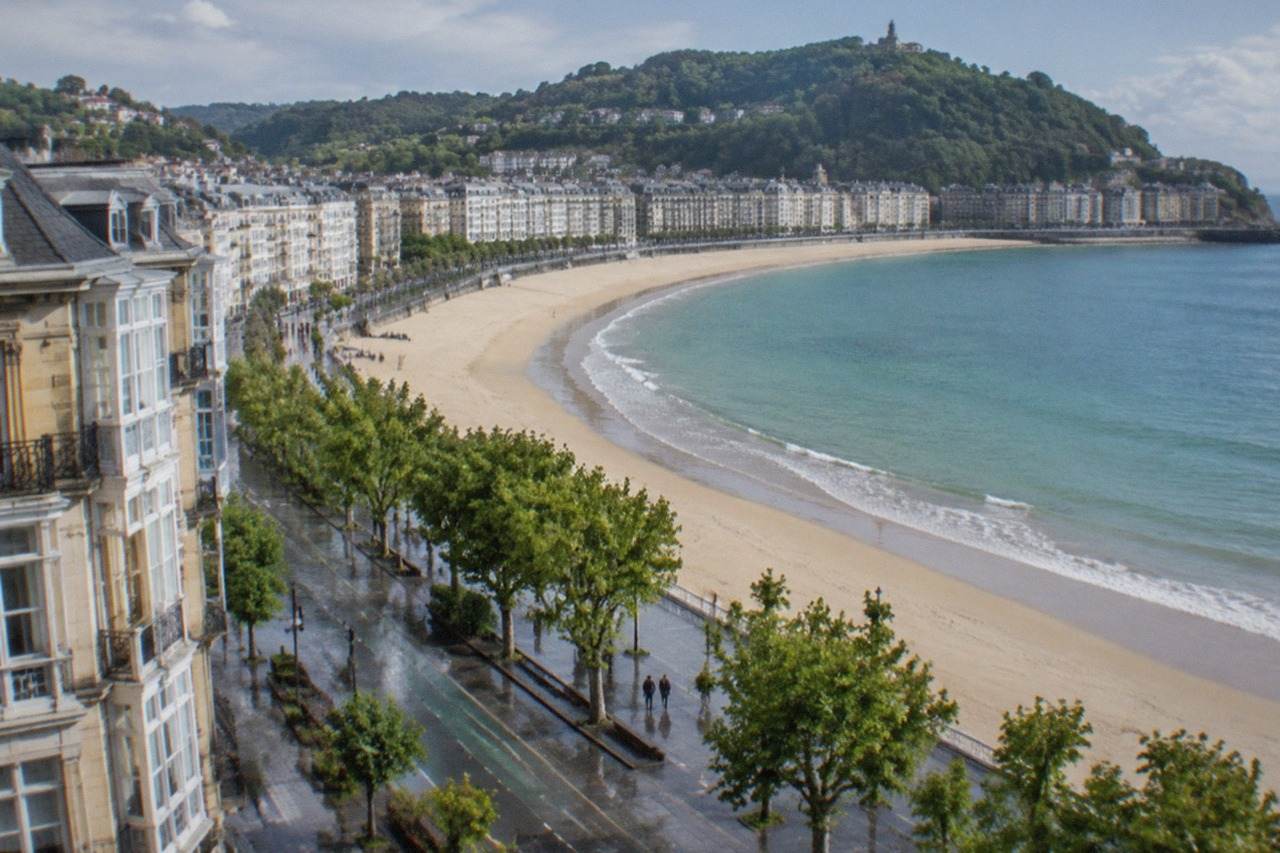
San Sebastián, in the Basque Country of northern Spain, and Valencia, on the Mediterranean coast, are two of Spain's most visited cities, and they reward completely different travellers. San Sebastián, whose Basque name is Donostia, is a compact Atlantic city built around a shell-shaped bay, with a pintxo culture and a Michelin-starred restaurant scene that few cities of under 200,000 residents can match. Valencia is a far larger Mediterranean port, the third-biggest city in the country, with a dry sunny summer, a broad urban beach and a historic centre built on centuries of trade. Neither is simply "better": the right answer depends on whether your trip is built around eating, or around sun, scale and a classic Spanish summer.
Which Is Better, San Sebastian Or Valencia?
For food, city character and a walkable bayside setting, San Sebastián is the stronger choice; for a sunny beach holiday, a bigger city's range and a drier summer, Valencia wins. San Sebastián concentrates 11 Michelin stars across 6 restaurants inside the city in the MICHELIN Guide Spain 2026, plus a pintxo bar scene that fills the Old Town every evening, while Valencia offers a Mediterranean climate, a wide city beach and a larger, cheaper urban playground.
Pick San Sebastián for a short eating-focused trip, Valencia for sun and space.
The honest way to frame this comparison is by trip type. A visitor with three or four days, an interest in Basque cooking and a tolerance for Atlantic weather will get more out of San Sebastián than out of almost any other Spanish city. A visitor who wants a hot dry summer, a long sandy beach at the edge of town and more nightlife than one compact centre can hold will be happier in Valencia.
Which City Has The Better Food Scene?
San Sebastián has one of the densest high-end food scenes of any city its size: 6 restaurants holding 11 stars inside the municipality in the MICHELIN Guide Spain 2026, including the three-star houses Akelaŕe and Arzak, alongside a pintxo bar culture that runs through the Parte Vieja every night. Valencia cooks a respected regional cuisine centred on rice dishes, but its Michelin footprint does not match the Basque city's, and its tapas culture is a different, less bar-to-bar tradition.
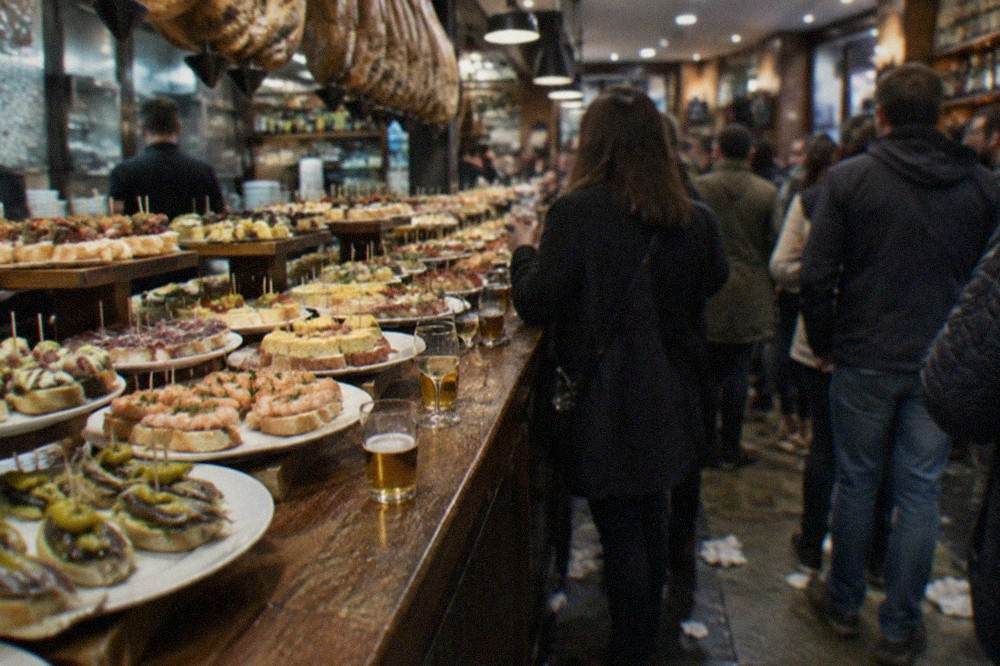
The Basque city's advantage is concentration. The Old Town, the Parte Vieja, packs pintxo bar after pintxo bar into a few narrow streets, and the evening ritual of moving from bar to bar, one small dish and one drink at a time, is the city's defining social activity. The starred layer sits on top of that: Akelaŕe and Arzak inside the city, and Martín Berasategui a short drive away in the separate municipality of Lasarte-Oria. The province of Gipuzkoa as a whole holds 19 stars across 11 restaurants in the same edition.
Valencia's answer is paella in its home region, plus a market culture and a growing modern restaurant scene in a much bigger city. It is a genuinely good place to eat. It is simply a different proposition: fewer of the world's benchmark restaurants per square kilometre, and a less intense bar-crawl tradition. A reader weighing the two purely as an eating destination should also read what food is San Sebastian famous for and how many 3-star Michelin restaurants are there in San Sebastian.
The table below sets the verified Michelin record for San Sebastián against the qualitative difference, because no equivalent verified count for Valencia is in this site's research.
| Measure | San Sebastián | Valencia |
|---|---|---|
| Michelin stars inside the city (Guide Spain 2026) | 11 across 6 restaurants | Not counted in this site's research |
| Three-star restaurants in the city | 2 (Akelaŕe, Arzak) | Not counted in this site's research |
| Defining everyday food culture | Pintxo bars in the Old Town | Rice dishes in the home region of paella |
| Typical evening format | Bar to bar on foot | Restaurant-centred dining |
Which City Has Better Weather For A Beach Trip?
Valencia has the better beach-trip weather: a hot, dry Mediterranean summer against San Sebastián's wet Atlantic climate, which records 1,507 mm of rain a year over 141 rain days at AEMET's Igeldo station, and where even July, the driest month, still averages 86 mm. San Sebastián's beach, La Concha, is the more beautiful urban beach between the two, but the weather around it is far less reliable, so Valencia is the safer choice if swimming and sunbathing are the point of the trip.
This is the one comparison where the answer is not close. AEMET's climate normals for the Igeldo station, the 1981 to 2010 series, show a city where no month averages under 86 mm of rain. November is the wettest at 169 mm, and August, at 117 mm, is actually wetter than June, July or September. The station sits 250 m up on Monte Igeldo, so the seafront runs slightly warmer than these values, but the pattern holds: sun hours peak at 196 in July, and rain can arrive in any month.
Valencia's Mediterranean summer is the thing San Sebastián cannot offer: long dry stretches and heat, against a northern city where the sea stays cool and the forecast often carries a rain line. What San Sebastián offers instead is scenery. La Concha is a 1,350-metre sandy bay with an island in the middle of it, and the council describes it as shallow and sandy, with the tide often limiting the usable area. Ondarreta and Zurriola, the city's other beaches, add 600 and 800 metres of sand. Lifeguards are on all three only from 1 June to 30 September.
| Month | San Sebastián mean C | San Sebastián rain mm | San Sebastián rain days |
|---|---|---|---|
| January | 8.5 | 141 | 13.2 |
| April | 11.3 | 138 | 13.4 |
| July | 18.9 | 86 | 9.8 |
| August | 19.5 | 117 | 10.5 |
| November | 11.3 | 169 | 13.0 |
The figures are AEMET's normals for the Igeldo station, the period 1981 to 2010. A reader planning around the rain should also see what is the rainiest month in San Sebastian.
Which City Is Easier And Cheaper To Visit?
San Sebastián is the easier city to visit on foot: the centre, the beaches and the Old Town sit within a compact bay, and the whole pintxo evening culture works without a car or a metro. Valencia is bigger and generally cheaper to eat and sleep in, but it spreads across a much larger area, so a visitor trades compactness for lower prices and more choice.
Neither city is hard to reach, though San Sebastián's nearest airports are small and most long-haul visitors connect through Madrid, Bilbao or Barcelona.
Walkability is San Sebastián's quiet strength. The city's three beaches, the Parte Vieja, the Romantic Area and the two hills that frame the bay, Urgull and the Monte Igueldo funicular, all sit close together, and a visitor can cover the essentials without opening a transport app. The Monte Urgull access hours run 08:00 to 21:00 from 1 May to 30 September and 08:00 to 19:30 the rest of the year, so even the hill walks fit a day on foot. The San Sebastian walkability question covers this in more detail.
Valencia compensates with scale and price. As a much larger city it has a wider range of accommodation and generally lower restaurant prices, and its beach sits at the end of an easy tram and bus ride rather than a five-minute walk from the centre. For cost, San Sebastián has a reputation as one of Spain's more expensive cities, driven partly by its food scene, and the detailed answer is in is San Sebastian the most expensive city in Spain.
One cost note that applies to neither city's current prices but to San Sebastián's near future: Gipuzkoa's Norma Foral 3/2026 creates a tourist tax that takes effect on 1 January 2027, with bands per person per night, at most 6 nights charged, and under 18s exempt. Before that date no visitor pays it, and the city council's own rate inside the bands has not been published, so no single figure can honestly be printed here.
Which City Is Better For A Short Trip?
San Sebastián is the better short-trip city: two or three days cover the bay, the Old Town, the pintxo bars, one hill and a museum such as San Telmo, whose general admission is 10.00 EUR with free entry for everyone every Tuesday. Valencia rewards a longer stay, because its sights, its beach and its neighbourhoods are spread across a big city, so a rushed weekend there touches less of the place. A first-time visitor with limited days gets more per hour in San Sebastián.
The arithmetic of a short break favours the compact city. San Sebastián's headline sights sit inside a walkable bay: La Concha, the Parte Vieja, Monte Urgull, the Peine del Viento sculptures at the foot of Monte Igeldo, and the funicular up the hill itself, which opened in 1912 and runs every 15 minutes. Day trips add the Gipuzkoa coast, Getaria and Zumaia among them, all reachable for a half-day. Whether four days is too many is its own question, answered at is 4 days in San Sebastian too much.
Valencia needs the extra days. Its historic centre, its market, its science and arts complex and its beach are distinct zones of a large city, and a weekend visitor ends up choosing two of the four. For a week-long holiday, that variety is an advantage. For a Friday-to-Sunday trip, it becomes a series of trade-offs.
Which Should You Choose For Your Trip?
Choose San Sebastián if the trip is built around food, walking and coastal scenery, and you accept that it rains year-round; choose Valencia if you want a hot dry summer, a big city's choice of hotels and nightlife, and lower everyday prices. Travellers who care most about eating should choose the Basque city without hesitation, and travellers who care most about guaranteed sun should choose Valencia the same way. A split trip, Valencia first and San Sebastián after, is also workable.
The deciding questions are simple. Is the centrepiece of the trip a series of meals, or a series of afternoons on hot sand? Does a rain forecast in July spoil the plan, or just move dinner an hour earlier? San Sebastián's rain, 141 days a year with a millimetre or more, is the price of its green hills and its food culture, and the visitors who love the city are the ones who plan around the weather rather than against it.
For the eating-first traveller, the practical route in is a pintxo tour of the Old Town, and the self-guided option below suits anyone who prefers their own pace to a group walk.
Common Questions About San Sebastian Or Valencia
Is San Sebastian more expensive than Valencia?
San Sebastián has a strong reputation as one of Spain's more expensive cities, driven by its high-end food scene and its popularity as a food destination. Valencia, as a larger city with a wider accommodation base, generally offers cheaper restaurants and hotels. The full cost picture for the Basque city is covered on this site's page about whether San Sebastián is the most expensive city in Spain.
Which city has better beaches?
Valencia has the better beach weather, with a hot dry Mediterranean summer. San Sebastián has the more beautiful urban beach setting: La Concha is a 1,350-metre sandy bay, but the Atlantic climate brings rain in every month, with July, the driest, still averaging 86 mm at AEMET's Igeldo station.
Is San Sebastian good for a first trip to Spain?
It is a distinctive first trip rather than a typical one. San Sebastián shows the Basque Country's own culture, language and food, which differ sharply from the Mediterranean image many visitors arrive with. Travellers wanting classic sun-and-beach Spain usually fit Valencia or the south better.
How many days do you need in San Sebastian?
Two or three days cover the bay, the Old Town, one hill and the pintxo bars comfortably, with a fourth day freed for a coast trip to Getaria or Zumaia. The city's compactness is what makes a short stay work so well.
Does it rain a lot in San Sebastian compared with Valencia?
Yes. AEMET's normals for the Igeldo station record 1,507 mm of rain a year over 141 rain days, an Atlantic pattern with no dry month. Valencia's Mediterranean climate is built around exactly the long dry summers the Basque coast lacks.
Can you combine San Sebastian and Valencia in one trip?
Yes, though they sit at opposite ends of northern and eastern Spain and the journey between them is a long one by train or car. Most split trips pair San Sebastián with Bilbao or Biarritz instead, since those cities are within easy reach of the Basque coast.
The choice between the two cities, in the end, is a choice between two ideas of a Spanish holiday: the Atlantic food capital where the rain jacket shares the suitcase with the appetite, or the Mediterranean port where the beach towel does. Travellers who choose the first can start planning with San Sebastian Spain Guide, and the eating, walking and weather pages there cover every part of the Basque side of the decision.