What Is The Monte Igueldo Funicular?
The Monte Igueldo funicular is a 1912 rack railway that climbs from Ondarreta beach to the viewpoint above La Concha bay in San Sebastián, Basque Country, Spain. Here is what it is, what it costs and how it runs.
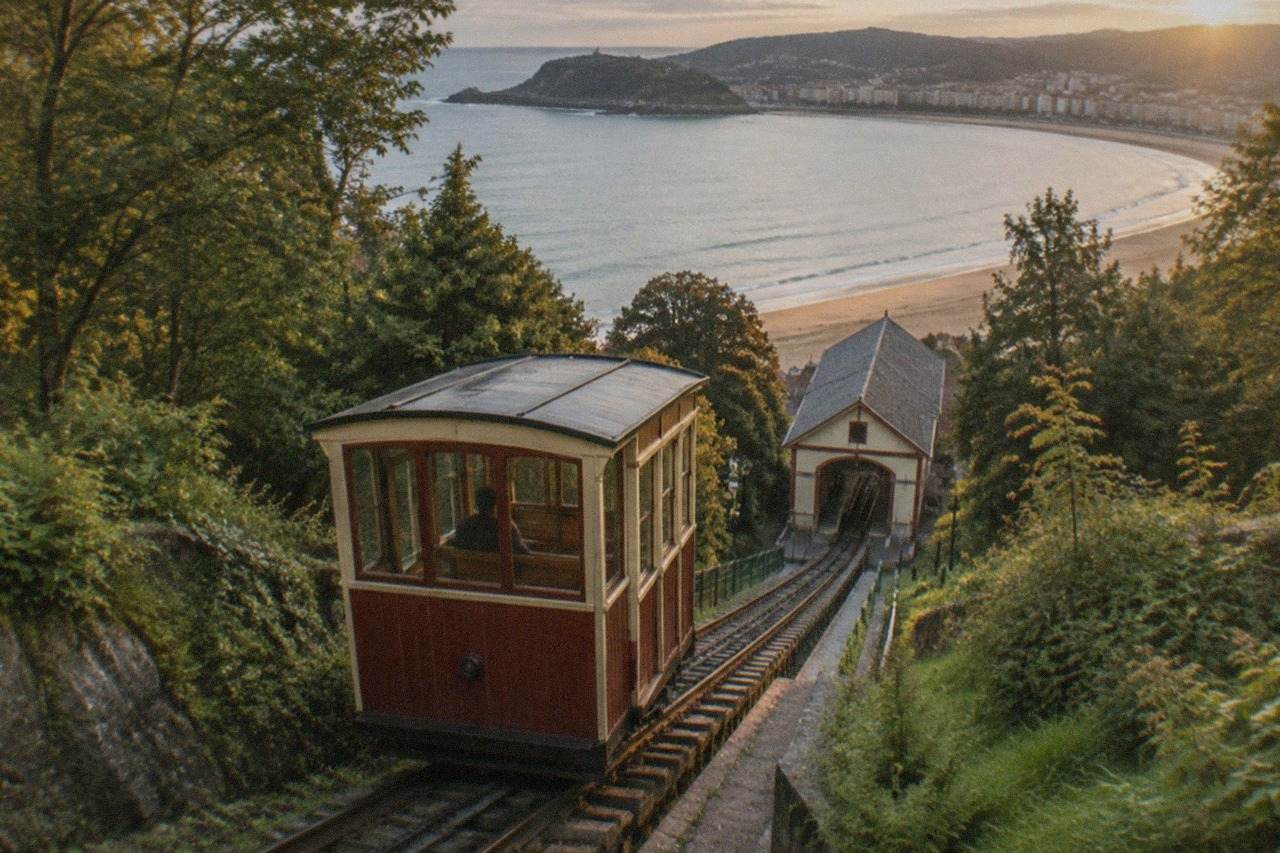
The Monte Igueldo funicular is a rack railway that climbs the hill at the west end of La Concha bay in San Sebastián, the Basque Country city in Spain whose official name is Donostia / San Sebastián. It opened on 25 August 1912, and the tourism board calls it the oldest funicular in the Basque Country. Its wooden cars still leave from a station beside Ondarreta beach and haul visitors up to the Monte Igueldo grounds, where the viewpoint over the bay is one of the recognised sights of the city. This page explains what the funicular is, what it costs, how often it runs and what the rules are at the top.
What Is The Monte Igueldo Funicular?
The Monte Igueldo funicular is a rack railway, opened on 25 August 1912, that carries passengers from a lower station beside Ondarreta beach up the Monte Igueldo hill on the western edge of San Sebastián. The tourism board describes it as the oldest funicular in the Basque Country, a rack railway with wooden cars. The return ticket includes entry to the grounds and viewpoint at the top, which look out over the whole of La Concha bay.
The hill itself, and the grounds, park and viewpoint at the top, are covered in detail on the Monte Igueldo attraction page. The funicular is the historic way up: a short, steep climb on a toothed rail, in cars that have kept their wooden bodies. The lower station sits at the end of Ondarreta, the beach the council lists at 600 m long, and the ride finishes at the top of the hill where the grounds open onto the bay panorama.
What makes it more than a lift is what it connects. Ondarreta's west end is where the walk to the Peine del Viento begins, the 1977 Eduardo Chillida work anchored to the rocks below, with its pink granite plaza by the Basque architect Luis Peña Ganchegui. A visitor can walk that seaward promenade, then ride the funicular up and see the same rocks from a couple of hundred metres above.
How Old Is The Funicular, And What Kind Of Railway Is It?
The funicular opened on 25 August 1912, which makes it more than a century old, and the tourism board calls it the oldest funicular in the Basque Country. It is a rack railway: the cars grip a toothed rail between the running rails, which is how they hold the steep gradient up the hill. The cars are wooden, and the funicular's own site presents them as part of the original character of the ride.
Rack railways exist because ordinary adhesion wheels slip on steep slopes, so a cog system is the standard engineering answer for gradients a tram could never climb. The funicular's own site lists the fares and the operating rules, and its FAQ says the cars normally run every 15 minutes, on the hour, quarter past, half past and quarter to, with more frequent departures when it is busy.
The date matters for what you are looking at. When the funicular opened, La Concha was already a belle époque resort, and the ride up the hill was built for exactly the kind of visitor who still takes it: someone who wants the bay laid out below in one view. The wooden cars, the rack mechanism and the station buildings are of that era, which is why the tourism board treats the funicular as a heritage sight in its own right and not just transport.
If you would rather see the city on foot before you head uphill, these three tours are a good fit for the same day.
What Does The Monte Igueldo Funicular Cost?
A return funicular ticket costs 5.50 EUR for an adult and 2.50 EUR for a child up to 7 years, and the ticket includes entry to the grounds and viewpoint at the top. A single costs 4.00 EUR adult and 1.50 EUR child. Anyone arriving by vehicle or on foot pays 3.00 EUR per person for grounds and viewpoint entry, and parking is free during the visit.
Groups of 20 or more, disabled card holders and San Sebastián Card holders pay 4.50 EUR return.
The funicular's own site publishes those fares, and one detail on it decides how you should plan the trip: group discounts do not apply on weekends, holidays or long weekends. The council's beach pages give the surrounding context, with Ondarreta at the foot of the hill described as a sandy beach with heavy summer use.
| Ticket | Adult | Child (up to 7) |
|---|---|---|
| Funicular return, grounds included | 5.50 EUR | 2.50 EUR |
| Funicular single | 4.00 EUR | 1.50 EUR |
| Grounds and viewpoint only, on foot or by vehicle | 3.00 EUR per person | 3.00 EUR per person |
| Group of 20+, disabled card, San Sebastián Card, return | 4.50 EUR | 4.50 EUR |
| Special ticket, animals and packages | 2.50 EUR | 2.50 EUR |
The comparison to hold in your head is simple: the difference between the 5.50 EUR return and the 3.00 EUR grounds entry is the funicular ride itself, and the return fare already covers what you would have paid to walk in. The full cost picture, including what people ask about cash and payment, is on the page do you need cash for Monte Igueldo, and the wider budget question is answered at how much does it cost to visit Monte Igueldo.
One rule from the funicular's own home page changes the arithmetic completely: tickets for the downhill funicular journey are not on sale. There is no walk-up, ride-down option, so the walking route described at can you walk up to Monte Igueldo has to be a round trip on foot, or you buy a return and use both directions.
How Often Does It Run, And What Are The Rules At The Top?
The funicular normally runs every 15 minutes, departing on the hour, quarter past, half past and quarter to, with extra departures when it is busy, according to its own FAQ. The rides close on rainy days, which in San Sebastián is a real possibility in any month. The grounds ticket is included in the funicular fare, parking is free during the visit, and no downhill-only ticket is sold, so the return fare is the only way to ride down.
The rainy-day closure is not a footnote. AEMET's climate normals for its Igeldo station, the period 1981 to 2010, record 1,507 mm of rain a year over 141 rain days, and even July, the driest month, averages 86 mm across about 10 rain days. The station sits 250 m up on Monte Igeldo, so the seafront runs slightly warmer than those numbers, but the pattern is what it is: this is a wet Atlantic city, and the funicular's own FAQ tells you the rides stop when the rain comes. Check the sky before you commit to the top, and have a rain plan for the day. Everything else covered here is indexed on San Sebastian Spain Guide.
The other season rule worth knowing sits at the bottom of the hill. The council's beach pages state that lifeguards cover all three beaches from 1 June to 30 September, with hours of 10:00 to 20:00 from 15 June to 15 September and reduced hours either side. That does not affect the funicular, but it affects the beach you walk through to reach it.
| What the funicular's own site states | Detail |
|---|---|
| Departures | Every 15 minutes, on the hour, quarter past, half past, quarter to |
| Busy periods | More frequent departures |
| Rain | Rides close on rainy days |
| Downhill-only tickets | Not on sale |
| Parking | Free during the visit |
| Group discounts | Not on weekends, holidays or long weekends |
What Can You See From The Top Of Monte Igueldo?
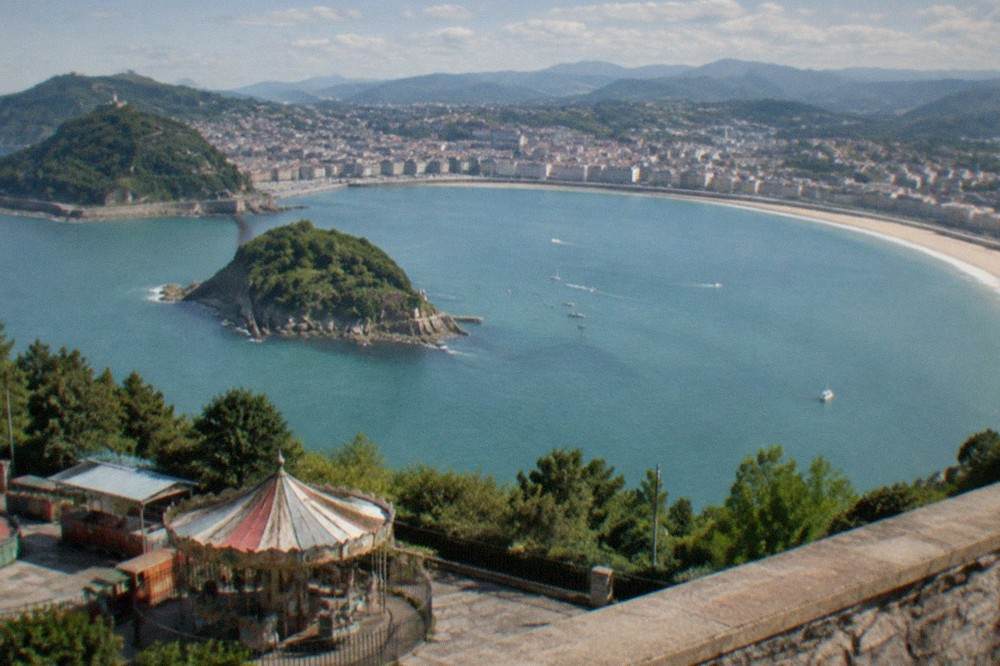
From the Monte Igueldo grounds you look east over the whole of La Concha bay: La Concha beach itself, the 1,350 m arc of sand the council measures, Santa Clara island in the middle of the water, Monte Urgull closing the bay at the far end, and the city built around it. The viewpoint is inside the grounds, and the funicular ticket includes entry, so the ride and the view arrive as one package.
The panorama is the reason the hill has been a visitor sight for over a century. Monte Urgull on the opposite headland carries its own history, the Castillo de la Mota at its summit, and the tourism board lists its access hours: 08:00 to 21:00 from 1 May to 30 September and 08:00 to 19:30 from 1 October to 30 April. The Monte Urgull page covers that hill in full.
Below the viewpoint, at sea level, the Peine del Viento sits at the west end of Ondarreta: three steel sculptures by Eduardo Chillida, each of more than nine tonnes, anchored to the rocks, with the granite plaza by Peña Ganchegui. Chillida created the definitive work in 1977 and gave it to the city. From the top of Monte Igueldo you see the plaza from above; from the promenade you stand in it, with the sea breaking into the sculpted funnels cut into the rocks.
Is The Funicular Worth It Compared With Walking?
For many visitors the return funicular ticket is worth it, because the 5.50 EUR fare includes the 3.00 EUR grounds entry and buys the one ride in the city with genuine heritage character, the 1912 wooden cars. Walking up is possible and costs only the 3.00 EUR grounds entry per person, but there is no downhill-only ticket, so a walk up still means walking down. The choice is really about legs and weather, not value.
The two hills are not interchangeable. Monte Urgull is the free one, with the old fortress and the bay on one side and the Parte Vieja at its foot, and its hours are published. Monte Igueldo is the paid one, with the funicular, the grounds and the amusement park at the top, and its character is resort-era pleasure rather than military history. A first visit can reasonably do Urgull on foot in the morning and Igueldo by funicular in the afternoon.
Weather should decide the order. The AEMET normals show July averaging 196 sun hours against November's 102, but no month in the table is rain-free, and the funicular's own FAQ says rides close on rainy days. If the forecast is wet, the funicular day is the one to move. The wider question of whether the hill justifies the trip at all is argued out at is Monte Igueldo worth visiting, and the transport options from the centre are laid out at how to get to Monte Igueldo from San Sebastian.
If a day of hills and viewpoints has earned you a seat at a bar, these are the tours that end with the city's food in front of you.
Common Questions About The Monte Igueldo Funicular
What is the Monte Igueldo funicular?
It is a rack railway that opened on 25 August 1912 and climbs from a station beside Ondarreta beach to the Monte Igueldo grounds above La Concha bay in San Sebastián. The tourism board calls it the oldest funicular in the Basque Country, and it still runs wooden cars.
How much does the funicular cost?
A return ticket is 5.50 EUR for an adult and 2.50 EUR for a child up to 7 years, and it includes entry to the grounds and viewpoint. Singles cost 4.00 EUR and 1.50 EUR. Grounds entry on foot or by vehicle is 3.00 EUR per person.
Can you walk up and take the funicular down?
No. The funicular's own home page states that tickets for the downhill journey are not on sale, so there is no walk-up, ride-down option. Either buy a return and ride both ways, or walk the round trip on foot.
How often does the funicular run?
The funicular's FAQ says it normally departs every 15 minutes, on the hour, quarter past, half past and quarter to, with more frequent departures when it is busy. Rides close on rainy days.
Does the funicular ticket include the viewpoint?
Yes. The funicular's own site states that the ticket includes entry to the grounds, and the grounds include the viewpoint over La Concha bay.
The funicular is a 1912 machine doing a job it has never stopped doing, and that is the whole of its appeal: a wooden car, a toothed rail, and the best view of La Concha bay arriving at the top as part of the fare.