Does It Rain A Lot In San Sebastian?
AEMET's Igeldo station records 1,507 mm of rain a year in San Sebastián, Basque Country, Spain. Here is what that means for a trip, month by month.
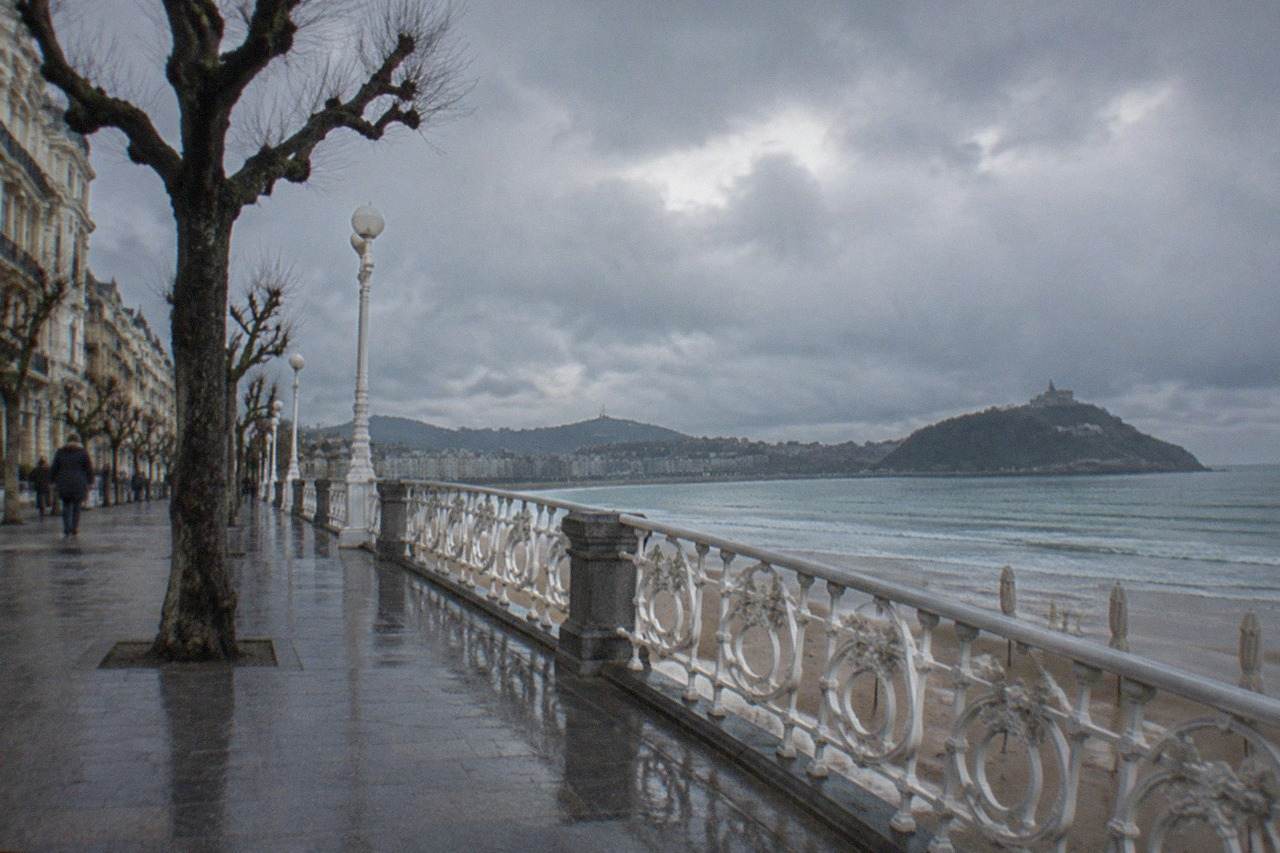
San Sebastián, in the Basque Country of Spain, is a wet Atlantic city, and any guide that tells you otherwise is selling you somebody else's weather. The city on La Concha bay, whose official name is Donostia / San Sebastián, sits on the green northern coast where fronts roll in off the Bay of Biscay, not on the dry Mediterranean side of the country. AEMET's climate normals for its Igeldo station, on the hill of Monte Igeldo above the city, record 1,507 mm of rain a year spread over 141 days with at least 1 mm of rain. That is the honest starting point for planning any trip here.
The nuance matters, though. Rain here rarely arrives as all-day downpours that erase your plans. It arrives as showers, drizzle off the sea, and grey mornings that clear by afternoon, and the city is built for it: covered bar counters, a compact centre, museums within a short walk of one another. This page gives the numbers from AEMET's own station data, month by month, and then the practical side, which indoor plans work best and which ones need a dry window.
Does It Rain A Lot In San Sebastian?
Yes, it rains a lot in San Sebastián by almost any Spanish standard. AEMET's Igeldo station, the official station for the city, records 1,507 mm of rain across 141 days with at least 1 mm a year, and no month averages less than 86 mm. Even July, the driest month of the year, still averages 86 mm of rain over about 10 rain days, so there is no such thing as a guaranteed dry week here.
The station itself sits 250 m up on Monte Igeldo, which means the seafront below runs slightly warmer and often slightly drier than the official figures suggest. That is a small comfort, not a change of category. The climate is Atlantic, green and changeable, and the city's parks, hills and the green mountains framing La Concha exist because of exactly this weather. The trade-off is real: the same rain that keeps the surroundings lush also means you should pack a light rain jacket in any month, including high summer.
Sunshine is not the problem people assume it is. The station records 1,816 hours of sun a year, from a low of 93 hours in December to a high of 196 in July. Summer days are long and often genuinely bright between showers. Winter is where the grey settles in, with November and December combining high rainfall with the year's lowest sunshine totals.
Which Month Is The Wettest In San Sebastian?
November is the wettest month in San Sebastián, averaging 169 mm of rain over about 13 rain days at AEMET's Igeldo station, followed by October at 159 mm and December at 151 mm. The driest month is July at 86 mm, then June at 90 mm, and September at 111 mm. The wettest stretch of the year runs from October through January, when every month averages at least 141 mm.
The table below shows the full year from AEMET's published normals for the Igeldo station, covering the period 1981 to 2010, the series the station page publishes. Read it before booking, and read the August row twice, because it surprises people.
| Month | Mean temp C | Rain mm | Days with 1 mm+ rain | Sun hours |
|---|---|---|---|---|
| Jan | 8.5 | 141 | 13.2 | 98 |
| Feb | 8.7 | 110 | 11.6 | 107 |
| Mar | 10.3 | 113 | 12.4 | 144 |
| Apr | 11.3 | 138 | 13.4 | 157 |
| May | 14.4 | 120 | 12.2 | 181 |
| Jun | 16.9 | 90 | 10.6 | 189 |
| Jul | 18.9 | 86 | 9.8 | 196 |
| Aug | 19.5 | 117 | 10.5 | 190 |
| Sep | 18.0 | 111 | 10.1 | 179 |
| Oct | 15.5 | 159 | 11.8 | 140 |
| Nov | 11.3 | 169 | 13.0 | 102 |
| Dec | 9.1 | 151 | 12.4 | 93 |
Two readings of that table are worth spelling out. April, at 13.4 rain days, actually edges out November's 13.0 for the number of days with rain, even though November delivers far more water in total. And August, at 117 mm, is wetter than June, July or September: the peak holiday month carries real rain, usually in short heavy bursts rather than long grey days. If your question is which month to avoid for rain specifically, the answer is on this table and also in more detail on the companion page about the rainiest month in San Sebastian.
Does Summer Stay Dry In San Sebastian?
No, summer does not stay dry in San Sebastián, and no month of the year does. AEMET's Igeldo station shows July, the driest month, still averaging 86 mm of rain over about 10 rain days, while August averages 117 mm, which is more rain than June, July or September receive. A summer visit here means warm days on the beach interrupted by showers, not a dry Mediterranean summer.
The pattern is different from southern Spain. Mean temperatures peak at 19.5 C in August with a mean daily maximum of 22.5 C, warm enough for the beach but rarely scorching, and the rain that falls in summer often comes in short, heavy afternoon or evening bursts that clear the air. Locals plan around it without thinking: the beach in the morning, bars and museums when the sky closes, back out in the evening. The INE hotel occupancy figures show how little the rain deters anyone: August 2025 was the year's peak month with 245,769 hotel overnight stays in the city, well over twice January's total, and July and August together accounted for 22 percent of the whole year's hotel nights. The wider set of guides lives on San Sebastian Spain Guide.
If you are choosing between summer months on weather alone, June and July are the drier picks at 90 mm and 86 mm. August buys you the warmest sea and the biggest festival atmosphere, Semana Grande, at the price of the wettest summer month. None of the three is a gamble in the way a November weekend is.
What Can You Do In San Sebastian When It Rains?
The best rainy-day plans in San Sebastián are the pintxo bars of the Parte Vieja, the free-entry Tabakalera cultural centre, a cooking class, and San Telmo Museoa, which is free every Tuesday. The city's core is compact and mostly covered at bar level, so rain costs you little time: the Old Town's bars, the museums and the market sit within a short walk of one another, and an umbrella is enough for the gaps between them.
The Old Town is the natural refuge. Pintxo bars are dense, warm and social, and a crawl from bar to bar is itself the city's signature activity, rain or no rain. A small-group guided crawl through the Old Town keeps the route short and the stops chosen for you, which is exactly what you want when the weather is closing in.
The museums hold up well as a wet-weather circuit. San Telmo Museoa, in the Old Town against the slope of Monte Urgull, is open Tuesday to Sunday, 10:00 to 19:00 in winter and 10:00 to 20:00 in summer, with general admission at 10.00 EUR and free entry for everyone every Tuesday. Tabakalera, the former tobacco factory near the river, has free access to the building Tuesday to Sunday until 21:00, with exhibition halls open in two daily sessions. The Aquarium, on the harbour edge, keeps long hours through the year and stays open daily in July and August, though from October to March it closes on Mondays unless a long weekend intervenes. The council's own beach pages note that the lifeguard season on all three beaches runs only from 1 June to 30 September, which tells you the seafront is a seasonal pleasure and the indoor city is the year-round one.
A cooking class turns a wet afternoon into the highlight of a trip, and the city has several that include a market visit or a full meal you cook yourself. For a self-paced option, an audio tour keeps you moving between covered arcades, churches and squares without depending on a guide standing in the rain. The full range of options, including the rainy-day shortlist, is covered on the site's pintxos and food tours page.
Does Rain Ruin A San Sebastian Trip?
Rain does not ruin a San Sebastián trip, because the city's three headline activities, eating pintxos, drinking txakoli or cider, and walking a compact historic centre, are barely affected by wet weather. What rain does change is the beach and the hill viewpoints, so the practical rule is to keep the seafront and the funicular plans flexible and hold a bar, museum or kitchen plan in reserve for the hours when the sky closes.
Two seasonal details are worth building a plan around. The Monte Igueldo funicular's own site notes that rides close on rainy days, and it sells no downhill-only ticket, so a wet day can end a hill plan entirely rather than just dampen it. On the other side of the ledger, Hondalea, the Cristina Iglesias installation in the Santa Clara island lighthouse, is free and needs no booking, but the council lists its season as 1 June to 30 September only, with the boat to the island depending on weather and sea, so it is a fair-weather plan by definition.
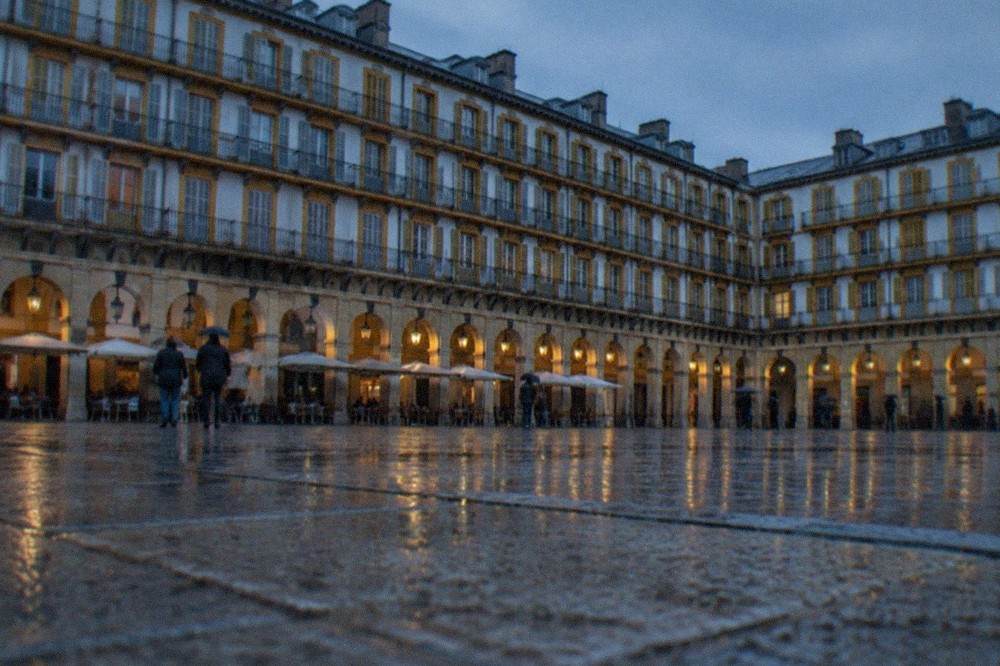
The city's walkability is the quiet advantage here. Everything in the centre, from La Concha to the Old Town to the Gros neighbourhood, sits within a flat walk of roughly half an hour, so retreating indoors costs minutes, not a taxi ride. If you are weighing that compactness against other cities, the site's page on whether San Sebastian is a walkable city covers it in detail.
Common Questions About Rain In San Sebastian
Does it rain a lot in San Sebastian?
Yes. AEMET's Igeldo station records 1,507 mm of rain a year over 141 days with at least 1 mm, and no month averages under 86 mm. It is a wet Atlantic city, green and changeable, not a dry Mediterranean one.
What is the rainiest month in San Sebastian?
November, averaging 169 mm of rain over about 13 rain days at the Igeldo station. October follows at 159 mm and December at 151 mm, so late autumn into early winter is the wettest stretch of the year.
Is summer dry in San Sebastian?
No. July, the driest month, still averages 86 mm over about 10 rain days, and August averages 117 mm, more than June, July or September. Summer rain tends to come in short heavy bursts rather than lasting grey days.
Does it rain more in San Sebastian than in southern Spain?
Yes, by a wide margin. The northern Atlantic coast is the wet part of the country, and the 1,507 mm annual total at the Igeldo station reflects that. The green hills around the city exist because of this weather.
What should I pack for rain in San Sebastian?
A light rain jacket or compact umbrella in any month, including July and August, plus shoes that handle wet cobbles in the Old Town. Showers are frequent but usually short, so heavy rain gear is rarely necessary.
The short version: come expecting rain, book around it rather than against it, and let the bars, the kitchens and the museums absorb the wet hours the way the city itself does.