How Do People Dress In San Sebastian?
How locals and visitors dress in San Sebastián, Basque Country, Spain: what the Atlantic climate demands, what pintxo bars expect, and what to pack for La Concha.
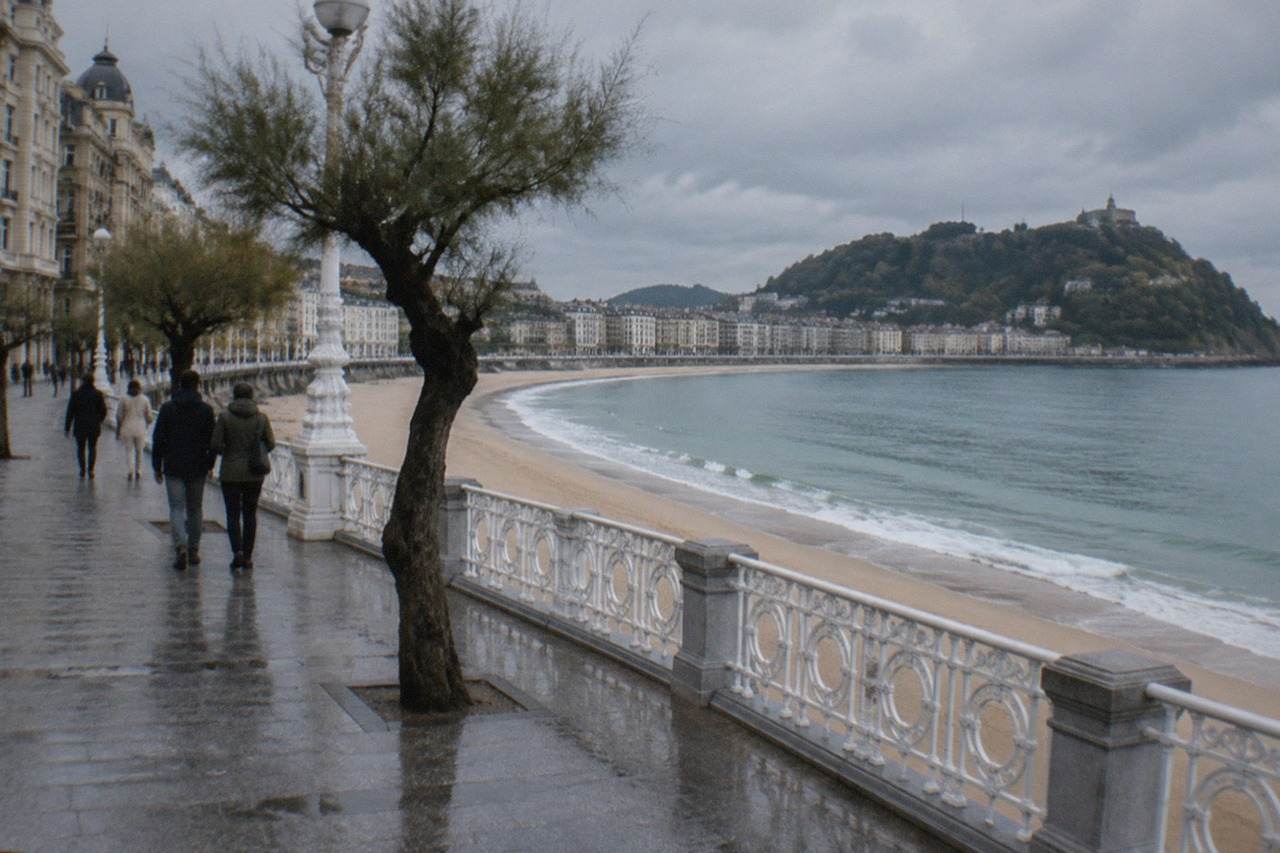
San Sebastián, the Basque city on La Concha bay whose Basque name is Donostia, is not a place where people dress up to be seen, and it is not a place where beachwear carries the day either. The city's own climate sets the dress code more than any social rule does: AEMET's normals for its Igeldo station record 1,507 mm of rain a year over 141 rain days, so the people who live here own good shoes and a real rain jacket, and they wear them often. The look on the street is best described as neat, practical and understated, with a smart-casual register for evenings that never tips into formal.
How Do People Dress In San Sebastian?
People in San Sebastián dress in neat, practical, smart-casual clothes that can absorb rain: good shoes rather than flip flops, a proper jacket rather than a hoodie, and layers that come off when the sun appears. Locals do not dress formally for pintxo bars or everyday restaurants, and beachwear stays on the beach. Only a small number of top restaurant tables call for anything dressier than a shirt and clean trousers.
That answer surprises visitors who arrive expecting either a Mediterranean resort look or a fashion-city one. San Sebastián is neither. It is an Atlantic city where the seafront promenade fills with walkers in rain shells on a Sunday in February, and where the same people will be out again in July, because July still averages 86 mm of rain over about ten rain days. The wardrobe logic here is built around a simple fact: the weather changes within a single afternoon, so the clothing has to change with it.
What that means in practice is that the base layer of local dress is ordinary European smart-casual. Men wear jeans or chinos with a shirt or a plain knit; women wear the same trousers with sweaters, or dresses with a jacket on top. Sneakers are everywhere and entirely accepted, but they are clean sneakers, and the shoe that matters most is one that grips wet stone. The Old Town's cobbles and the promenade's granite are slick after rain, and the locals' footwear reflects decades of that.
What Does The Weather Mean For How People Dress In San Sebastian?
The weather means dressing for 141 rain days a year: AEMET's Igeldo station records 1,507 mm annually, and no month averages under 86 mm, so a packable rain layer is standard local equipment in every season. Even the driest month, July, averages 86 mm over 9.8 rain days, and November, the wettest, averages 169 mm over 13 days.
The numbers deserve a look before the wardrobe does. The station sits 250 m up on Monte Igeldo, so the seafront runs slightly warmer than these values, but the pattern holds everywhere in the city.
| Month | Mean max C | Mean min C | Rain mm | Rain days 1 mm+ |
|---|---|---|---|---|
| January | 11.0 | 5.9 | 141 | 13.2 |
| April | 14.5 | 8.1 | 138 | 13.4 |
| July | 21.8 | 16.0 | 86 | 9.8 |
| October | 18.5 | 12.4 | 159 | 11.8 |
| November | 14.0 | 8.7 | 169 | 13.0 |
Read that table as a packing list. Winter in San Sebastián is damp and mild rather than bitter: January's mean maximum is 11.0 C, so locals wear wool coats and scarves, not skiwear. Summer is warm but never reliably dry: August averages 117 mm of rain, more than June's 90 or September's 111, which is why a local in August carries a light rain shell in a daypack even on a morning that starts bright. The umbrella is common here, but the hands-free locals tend to prefer hoods and jackets, because the wind off the bay can turn an umbrella inside out in a minute.
The layering habit is the single most useful thing to copy. A t-shirt under a sweater under a rain shell covers a San Sebastián day from any month of the table above, and each layer comes off in turn as the afternoon warms. Visitors in a single thick layer are the ones who look uncomfortable, not the ones who look unfashionable.
If the forecast turns against you entirely, the city has a full page of rainy-day ideas, and the same wardrobe logic applies indoors: museums and pintxo bars are casual enough that wet shoes and a rain jacket at the door bother nobody. The rainiest month question is answered in detail on its own page, and the short version matters here because it is the same month locals reach for their heaviest coats.
How Do People Dress For Pintxos And Dinner In San Sebastian?
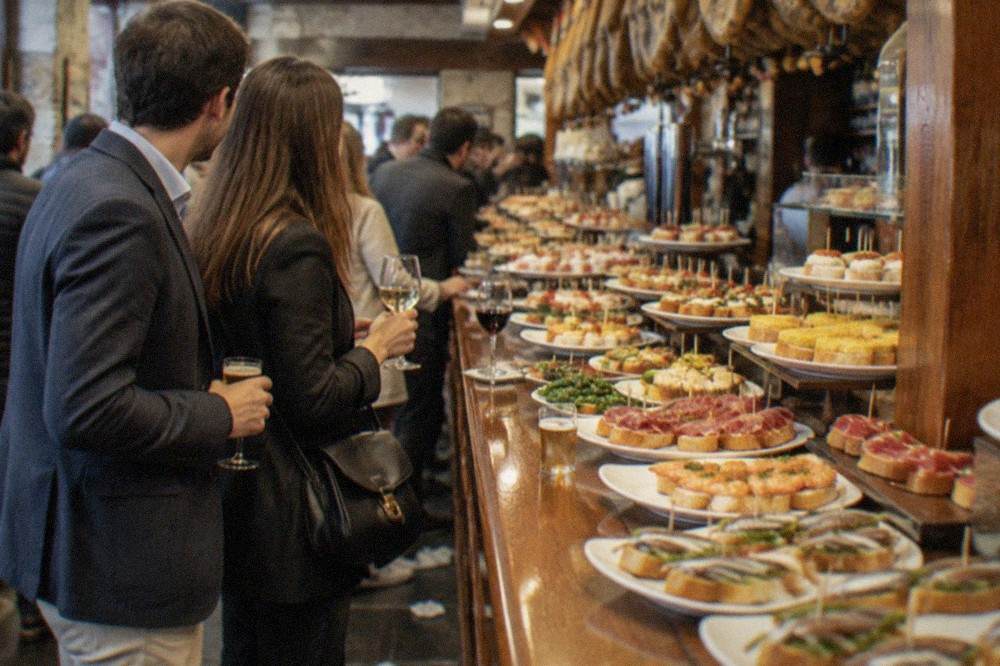
For pintxo bars and everyday dinner in San Sebastián people wear smart-casual clothes: dark jeans or trousers, a shirt or a blouse, a jacket, and shoes that can stand on a bar floor for an hour. Nobody wears a suit, nobody wears beach clothes, and a visitor in clean casual clothing will not be underdressed at any ordinary pintxo bar in the Old Town.
The pintxo evening is the city's main social ritual, and the dress code around it is deliberately low-key. The bars are crowded, standing-room affairs where people hold a drink in one hand and a pintxo in the other, so the clothing people choose is clothing that survives a squeeze: nothing long that drags on the floor, nothing delicate that a spilled glass of txakoli would ruin, and nothing so formal that it looks like a costume. Locals read the evening as an extension of their day clothes with one notch added: the same trousers, a better shirt.
Timing matters more than fabric. The pintxo hour question has its own page, but the short version is that the evening pintxo run happens after dark, and the dress register rises with it slightly. What people wear at two in the afternoon for a quick gilda and a beer is more relaxed than what they wear at nine in the evening for a proper bar crawl through the Parte Vieja, and visitors who make that one-notch adjustment fit in completely.
Shoes deserve one repeat warning because the Old Town punishes bad ones. The streets are cobbled, the bar floors are tiled and often wet near the door, and the crawl covers real ground between bars. A leather shoe with a proper sole is the local default; a thin-soled fashion sneaker is the visitor's most common mistake.
What Should You Wear To A Michelin-Starred Restaurant In San Sebastian?
At the city's Michelin-starred tables the expectation is polished smart-casual: for men a jacket or a good shirt with dress trousers, for women a dress or tailored trousers with an elegant top, and in no case jeans, sneakers or beachwear. The MICHELIN Guide Spain 2026 counts 11 stars across 6 restaurants inside the city, and each house sets its own tone, so check the restaurant's own page before booking.
This is the one corner of San Sebastián life where the dress code rises above the street, and it rises because the dining is the city's flagship export. The counts are worth being precise about: the 2026 edition gives the city 6 restaurants holding 11 stars, with Akelaŕe and Arzak both carrying three stars at a San Sebastián address, while Martín Berasategui's three stars sit in Lasarte-Oria, a separate municipality that is never "in San Sebastián". The full breakdown is on the three-star count page, and the dress expectations at the most famous house are covered on the Arzak dress code page.
The honest rule at these tables is that nobody will turn a clean, neat guest away, but the room itself sets a standard and the local guests meet it. A man in a collared shirt and a jacket is exactly right; a man in a suit is slightly over the register unless it is a celebration; a man in shorts is the only genuine mistake. Women in the room tend toward dresses or tailored pieces rather than anything overtly casual, and the shoe question resolves itself here, because these are sit-down dinners where the cobbles do not apply.
One practical note that belongs to the city rather than to fashion: the top tables book out far ahead, especially in August, which the INE hotel data shows as the year's peak month for overnight stays in the city. The wardrobe decision is easier than the reservation decision.
How Do People Dress On The Beach And Boardwalk In San Sebastian?
On the beaches and the boardwalk people wear ordinary beach clothing in summer, with one local habit that stands out: the walk from the apartment to the sand is short and central, so locals carry beachwear rather than wearing it across town, and they change the register completely by evening. The council's lifeguard season runs 1 June to 30 September on all three beaches, which is also the honest swimwear season.
La Concha is a city beach in the fullest sense: it sits 1,350 m long and 40 m wide in the middle of the municipality, and the people on it in July have often walked ten minutes from home. That geography shapes dress. A local does not cross the Centro in a swimsuit; the swimsuit goes in a bag, or on under clothes, and comes out at the sand. Visitors who do the same blend in, and visitors who spend the afternoon in the Old Town in beachwear stand out, not because anyone objects but because the local habit is different.
The boardwalk between La Concha and Ondarreta is the city's catwalk in the loosest sense, and what it shows is the same practical register as everywhere else: walking shoes, layers, and a jacket tied at the waist even in July, because the sea breeze off the bay is real. Zurriola, the surf beach, has its own look, with wetsuits on the sand and a younger, more sports-driven crowd in the surrounding Gros bars; the surf wardrobe is covered on its own terms in the city's surf pages.
The evening rule is the one that matters for visitors planning a single day: beach morning, pintxo evening is the classic San Sebastián summer shape, and it requires a full change of clothes, not a change of shoes.
What Should You Pack For San Sebastian?
Pack for wet Atlantic weather at any time of year: a proper rain jacket, shoes with grip, and two or three layers per day, with the warm months needing the same rain shell as the cold ones. A smart-casual set for evenings, one polished outfit if a top restaurant is on the plan, and swimwear only between June and September, when the lifeguards are on the beaches.
The packing table below follows the climate table above, and it is the practical answer to the whole dress question.
| Season | Daytime base | Evening addition | The item locals never skip |
|---|---|---|---|
| Winter, December to February | Coat, sweater, scarf | Same, plus an umbrella | Waterproof shoes |
| Spring, March to May | Layers, light jacket | Jacket or knit | Packable rain layer |
| Summer, June to August | T-shirt, shorts, swimwear | Shirt or blouse, trousers | Rain shell in a daypack |
| Autumn, September to November | Layers, warm jacket | Same as day | Umbrella plus hood |
Two packing notes finish it. First, the city is compact and walkable, which the walkability question covers in full, so shoes decide the quality of a visit more than any other single item in the bag. Second, nothing on this list needs to be bought new: the local wardrobe is ordinary European clothing, and the only genuinely local item is the rain layer, which a visitor from a dry climate is likely to own but unlikely to habitually carry.
Common Questions About How People Dress In San Sebastian
Do people dress formally in San Sebastian?
No. The city's everyday register is neat smart-casual, and only the Michelin-starred tables and a handful of top restaurants call for polished dress. Even there, a jacket and good trousers are the ceiling, not a suit.
Can you wear shorts in San Sebastian?
Between June and September, yes, on the beaches and in casual daytime settings. The local habit is to change out of beachwear before the evening, and shorts at a pintxo bar after dark read as a visitor's mark rather than a local one.
Do you need an umbrella in San Sebastian in summer?
Yes, or better, a hooded rain shell. AEMET's Igeldo normals show July, the driest month, still averaging 86 mm of rain over 9.8 rain days, and August is wetter than June, July or September. Many locals prefer a jacket to an umbrella because of the wind off the bay.
What shoes should you wear in San Sebastian?
Shoes with real grip. The Old Town is cobbled, the promenade is granite, and both are slick after rain, which happens on roughly 141 days a year. Clean sneakers are fine everywhere casual; thin-soled shoes are the most common visitor mistake.
Is there a dress code at pintxo bars?
No bar enforces one. The unwritten register is smart-casual, chosen for standing in crowds: nothing that drags, nothing delicate, and shoes that survive a wet tiled floor near the door.
The short version of all of it: dress for rain, dress to walk, and add one smart-casual notch after dark, and you will match the city exactly. For everything beyond the wardrobe, the San Sebastian Spain Guide covers the food, the beaches and the day trips that this wardrobe is built for.